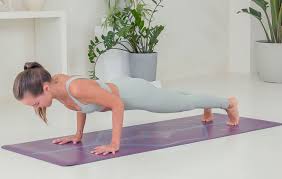
Top Exercises for IT Band and Outer Knee Pain
Introduction:
The connective tissue known as the Illiotibial band, or IT band, extends from the hip to the outside of the tibia, directly below the knee, along the lateral thigh. Inflammation caused by contact between the IT band and the thigh bone, frequently with repetitive knee flexion and extension, is the cause of IT band pain. Pain on the outside of the knee results from this inflammation, particularly when jogging, walking, hiking, and cycling are done repeatedly.
Who Gets IT Band Pain?
Due to the repeated nature of the activities, runners and cyclists frequently experience IT band pain. Overtraining, gluteus medius muscle weakness, or tight hip flexors that put an excessive amount of strain on the IT band are the usual causes of pain.
This injury can result from increasing mileage too aggressively or from ramping up a running program too rapidly. Additionally, if you fail to stretch your lower body or don’t give yourself enough time to recover between exercises, you may get lateral knee pain. Jogging in worn-out shoes, jogging downhill, and running on banked surfaces are additional risk factors.
What is your IT band?
A tendon called the iliotibial (IT) band runs from the top of your pelvic bone to the outside of your leg, directly under your knee. The IT band essentially aids in knee flexion, or bending the knee, particularly during running.
The IT band is attached to the tensor fascia latae (TFL), a hip muscle that facilitates hip abduction and broad leg swing. Additionally, the TFL helps you stay upright without lowering your hips or overstressing your low back.
What causes IT band syndrome?
Iliotibial band (ITB) syndrome is frequently caused by overuse of the TFL. The TFL tightens and pulls on the thigh bone, causing the IT band to scrape against it each time your knee bends and straightens. This contact eventually results in friction and pain.
There are a few factors that contribute to TFL overuse injuries in the first place. One is weakness in your glutes, especially the glute medius and glute minimus, two smaller butt muscles that aid in hip stability during movement. The TFL frequently steps in to assist when these muscles aren’t as powerful as they should be, particularly while engaging in a hip-intensive exercise like jogging. This muscle ultimately puts forth more effort.
Additionally, your TFL band may become overworked if you spend a lot of time sitting, especially in conditions that call for extensive hip flexion and hip abduction.
What are symptoms of a tight IT band?
When a person with ITB syndrome bends or straightens their knee, they often experience severe pain on the outside of the knee, right above the kneecap. IT band knee ache can occasionally go up the thigh to the hip; therefore, it’s possible that your IT band will cause hip pain.
Some people only experience this pain during physical activity, especially running. Nonetheless, some people may experience pain when they are not working out.
How do you treat IT band pain?
Stretching by itself may help some people with their IT band pain, but because this isn’t always the case, it’s crucial to take into account both strategies.
By using foam rolling, applying heat, and/or stretching, you may improve your flexibility by relaxing your front hip. Additionally, by regularly performing workouts that focus on the glute medius and minimus, you may develop these muscles.
It’s also crucial to cut back on the activities that are irritating your IT band. Try jogging or cycling shorter distances; if the pain continues, quit these activities completely. After that, you might wish to see a physician or physical therapist to be assessed and given a customized treatment plan.
How often should you stretch your IT band?
IT band stretches can be performed as frequently as daily. Because it will take some time for your muscles to heal and regain strength, strength training should be done three times a week. Strength training can assist in correctly priming your muscles for running, so do it before you go for a run.
A little warning: The iliotibial band stretches and exercises shown below might not be sufficient to relieve your IT band pain, depending on how severe it is. If you have any of the following symptoms for a month, consult a physician or physical therapist: When you walk, climb stairs, or go from sitting to standing, you may experience stiffness, tugging, clicking, or cracking on the outside of your knee.
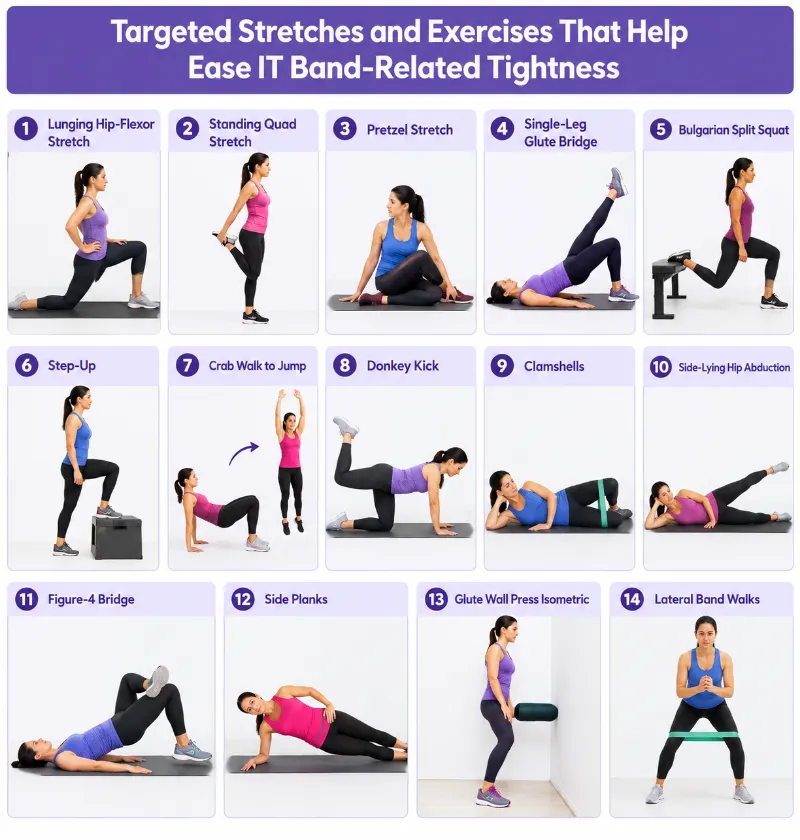
Targeted Stretches That Help Ease IT Band-Related Tightness:
Lunging Hip-Flexor Stretch:
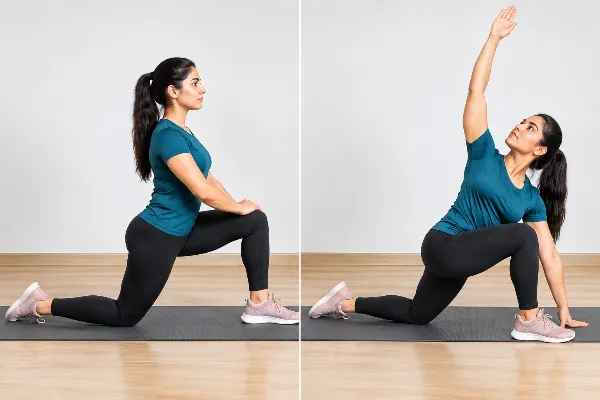
- On your right knee, kneel.
- Stretch your right hip toward the floor while bending slightly forward.
- You may further extend your hip flexor by squeezing your butt. This needs to be felt in the flexor of your right hip.
- Hold for a minimum of thirty seconds.
- Repeat on the other leg after switching sides.
This stretch can help release tension in your quads, glutes, and hips.
Standing Quad Stretch:
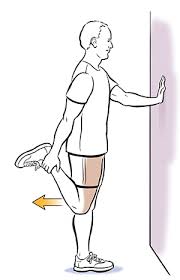
- Keep your feet together when you stand.
- Pull your left foot in the direction of your butt using your left hand.
- For balance, place one hand on a wall if necessary.
- To extend the front of your legs more, squeeze your glutes.
- Hold for a minimum of thirty seconds.
- On the other side, repeat.
This stretch works your TFL muscle as well as the front of your leg. Try putting your bent knee straight behind your standing leg while keeping your spine neutral for a deeper TFL stretch.
Pretzel Stretch:
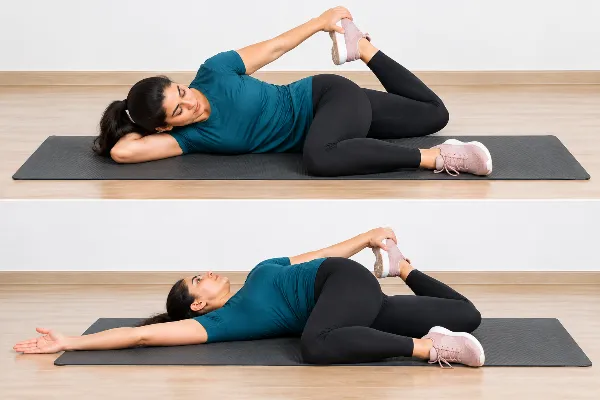
- Lying on your left side, place your head on your arm.
- As much as you can, bend your right hip and knee toward your chest before letting it fall to the ground.
- With your right hand, grasp your left foot while bending your left knee.
- Pull your lower leg behind your chest while gently bringing your upper shoulder blade toward the floor.
- Turn your head to glance over your right shoulder for a more dramatic spinal twist. Hold for thirty seconds.
The TFL may be lengthened with this stretch. Be careful to lift your lower leg behind your chest to fully extend the TFL.
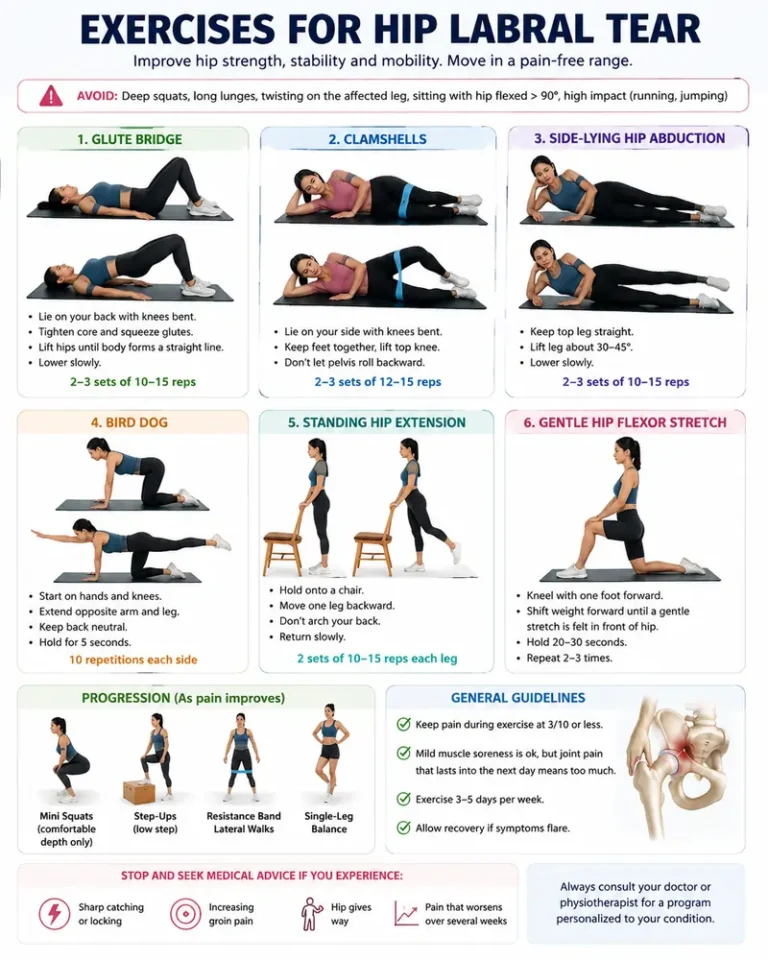
Single-Leg Glute Bridge:
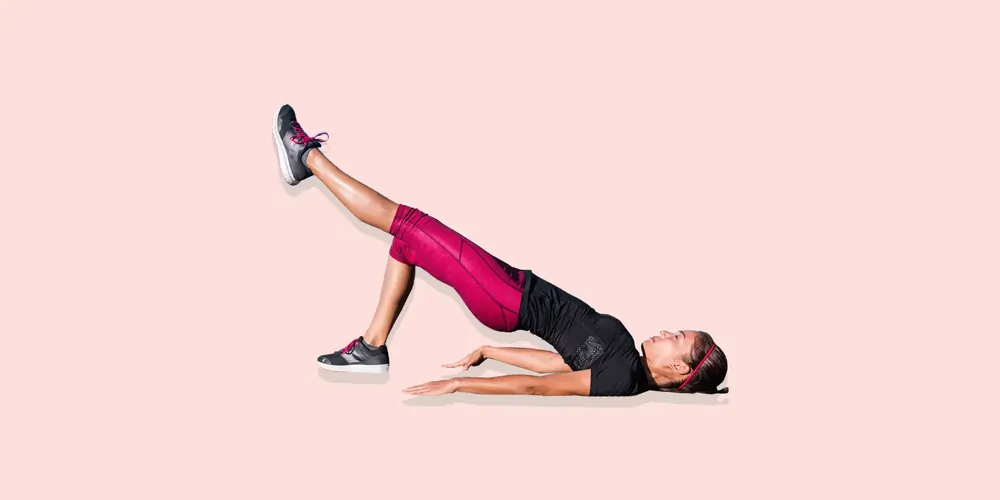
- Lie face up on the floor, knees bent, feet flat on the floor, hands by your sides. Press your low back onto the floor by using your core.
- Lift your left foot off the ground and stretch your leg from this posture.
- As you raise your hips and perform a glute bridge, push off your right foot, contract your core, and tighten your glutes.
- Return your hips to the floor slowly. This is one rep.
- Perform 15 repetitions on one side, then switch.
Your glute muscles, especially your glute medius and glute minimus, may be strengthened with this unilateral exercise.
Bulgarian Split Squat:
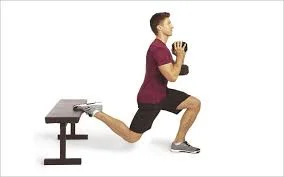
- With your back to your “bench,” stand. Place the top of your right foot, shoelaces down, on the bench while your left foot is on the ground a few feet forward of it.
- Put your hands behind your head and contract your core. If it seems more comfortable, you can alternatively keep your hands at your sides or clasp them to your chest.
- To lower yourself into a split squat, bend your knees. Your left knee should form a 90-degree angle so that your thigh is parallel to the ground, and your right knee should ideally be hanging over the floor. (Quick position check: Hop your left foot out a little more away from the bench if you are unable to do this without letting your left knee pass your left toes.)
- Drive through your left heel to go back to where you were. This is one rep.
- After 15 repetitions, switch sides and repeat.
A squat variation that works your glutes, quadriceps, hamstrings, inner thighs, and calf is the Bulgarian split squat.
Step-Up:
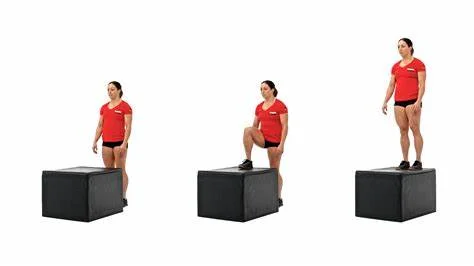
- Keep your feet hip-width apart and your hands by your sides while you stand in front of a strong box or step.
- Use your left foot to step onto your box, then your right foot to follow. When both feet are hip-width apart on top of the box, pause for a brief period.
- Return your left foot to the floor with control, then step your right foot to the floor to go back to where you were. This is one rep.
- After 15 repetitions, switch sides and repeat.
This popular lower-body exercise works your quadriceps, hamstrings, and calves in addition to strengthening your glutes. To further engage your glutes, bend forward while performing repetitions.
Crab Walk to Jump:

- With your feet hip-width apart and your core active, take a tall stance.
- To perform a quarter squat, send your hips back and bend your knees.
- While maintaining the squat stance, move your right foot to the right and let your left foot follow. Use your right foot to take two additional steps to the right.
- Leap to your feet, completely extend your legs, and send your arms behind you to gain speed.
- Immediately return to a squat after landing gently on the balls of your feet. On the opposite side, repeat. This is one rep.
- Repeat in different directions for 15 repetitions.
The lateral walk targets your hip abductors, the gluteus medius and minimus, whereas this exercise works your glutes.
Donkey Kick:
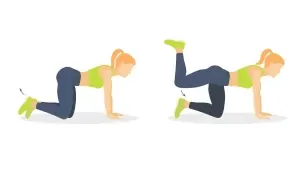
- With your knees beneath your hips, your wrists under your shoulders, and your core active, begin on all fours.
- Using your hamstrings and glutes, drag your right foot upward as you kick it toward the ceiling.
- Don’t tilt to the side, and maintain your stability by keeping your core active; stop before you arch your low back. Recall that this exercise is for strength rather than flexibility.
- Put your leg back where it was before. This is one rep.
- After 15 repetitions on that side, move to the opposite side and repeat.
Clamshells:
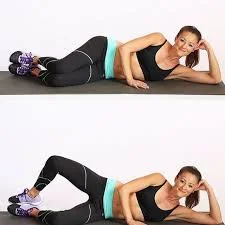
The gluteus medius muscle, which is crucial for hip stability, particularly during running, may be effectively activated with clamshells.
- Start by bending your knees to a 90-degree angle while resting on your side.
- Without allowing your torso to roll back, raise your upper knee as high as you can.
- Repeat after lowering the knee. You may wrap a resistance band around your thighs to make it harder.
Side-Lying Hip Abduction:
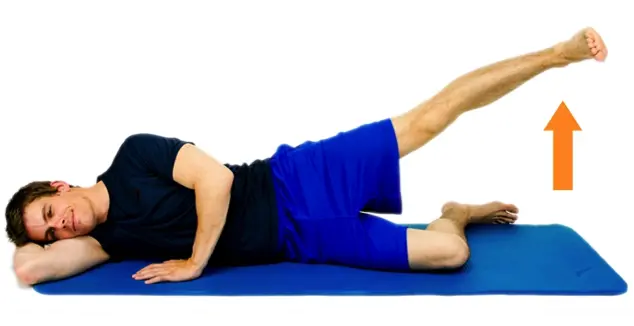
An additional excellent method for building up the gluteus medius muscle.
- Start by extending your upper leg in alignment with your torso while resting on your side.
- Take care not to let your upper leg slip forward when you raise it.
- For each leg, perform three sets of ten repetitions.
Figure-4 Bridge:

- To begin, lie on your back with your right knee bent and your right foot flat on the floor.
- Cross your left ankle over your right knee to form a “4” with your legs.
- Contract your right gluteus (buttocks) muscles to raise your hips off the ground.
- Return your hips to the floor slowly.
- For each leg, perform three sets of ten repetitions.
Side Planks:
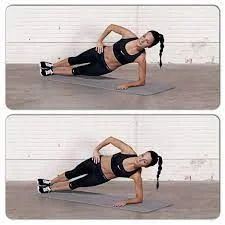
- Start by lying on your right side.
- Keeping your right foot and elbow balanced, lift your hips off the ground. Keep your glutes and core active.
- Repeat three times a day on the left and right after holding for thirty seconds.
Glute Wall Press Isometric:
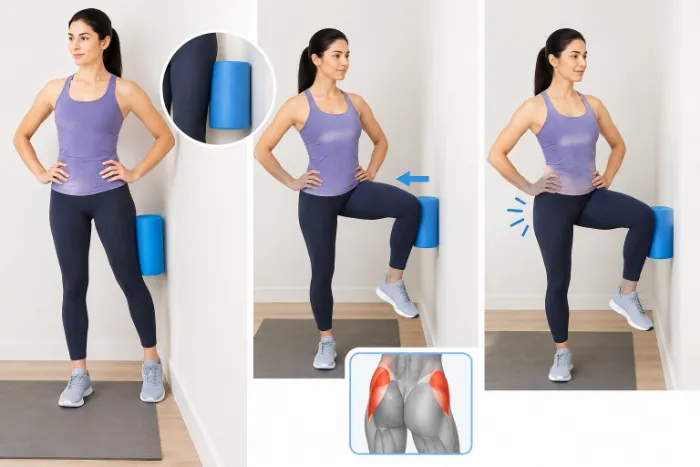
An isometric workout involves contracting a muscle without moving your body. Planks and wall sits are typical isometrics. This glute wall press isometric may be used to isolate the gluteus medius muscles, which support your hips when jogging, walking, and other activities.
- Start by placing a foam roller between your left thigh and the wall.
- Push your left leg into the foam roller while bending your left knee, then hold it there for five seconds. Your right side gluteal muscles should be contracting to provide stability. Perform two sets of ten repetitions, holding each leg for five seconds.
Lateral Band Walks:

- Put a resistance band around your ankles or feet. (The band may alternatively be positioned slightly below the knees.)
- Take ten to fifteen sideways steps while keeping your toes pointed forward.
- Go to the left three times and to the right three times.
Preventing IT band issues:
When working out, it’s important to take care of your body to prevent IT band issues. Maintain proper form and avoid pushing yourself too much. When exercising, always stretch, warm up, and cool down. You may want to use a foam roller to stretch your IT band.
Continue exercising to build and stretch your body. If you frequently engage in the same kind of repetitive exercise, this will also aid in balancing your body. At least three times a week, perform the exercises. Take at least one full day off each week to allow yourself to recover in between workouts.
How long does it take for the IT band to heal?
Usually, resting and healing will help your IT band mend. Next, try to increase your strength and flexibility to prevent recurrences in the future. Make sure the workouts don’t hurt. You can gradually resume your regular exercise regimen once you feel that balance has been restored.
It’s crucial that you increase your exercise gradually over time. Make sure your form and technique are proper by being extra cautious. Over the course of three to six weeks, improvements should be achieved, and regular activities should resume. Consult a physician about any regimens and modifications you are attempting.
Consult your doctor if, despite adopting conservative measures on your own, you do not experience changes. They may be able to offer alternative therapy modalities. They can determine whether the problem is actually with your IT band, and you can work together to develop the best course of action.
Complementary treatments:
Treatments for IT band problems that are additional and alternative include:
- Acupuncture
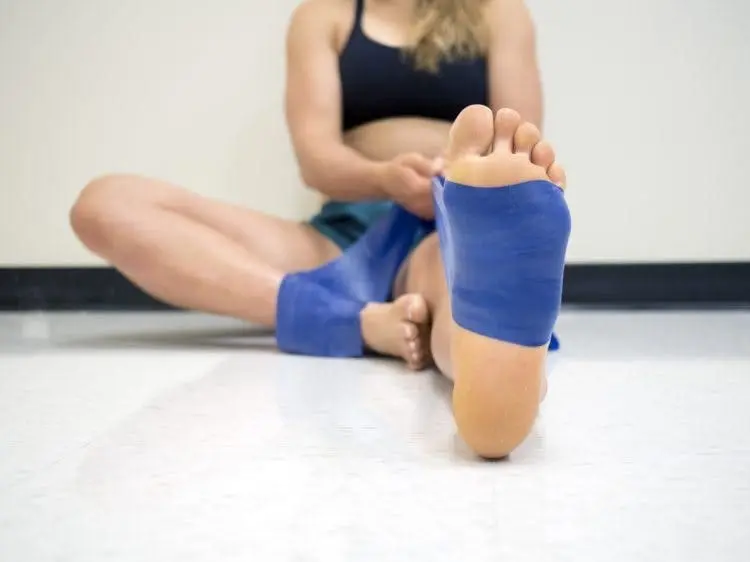
- Kinesio Tape Techniques
- Myofascial Release
- Sports Massage
- Yin Or Restorative Yoga
FAQs:
How Can You Relieve IT Band Pain on the Outside of Your Knee?
Strengthen your hip and glute muscles to correct poor lower-body mechanics and reduce acute pain to treat Iliotibial (IT) Band Syndrome pain on the outside of your knee.
What exercises can I do to relieve IT band pain in my knee?
Instead of vigorously stretching the thick IT band itself, strengthening the hip and glute muscles, such as the gluteus medius, and enhancing lower-body stability are the main strategies for relieving iliotibial (IT) band syndrome and outer knee pain.
Can a tight IT band cause knee issues?
In fact, knee pain is often caused by a tight or overtensioned iliotibial (IT) band, usually on the outer (lateral) side of the joint.
What is mistaken for IT band syndrome?
Iliotibial (IT) band syndrome is often confused with other hip and knee conditions that result in external lower body pain.
How to get rid of outer side knee pain?
You can employ self-care techniques, stretch and foam roll tense muscles, or consult a physician or physical therapist to relieve outside (lateral) knee pain.
Will IT band pain ever go away?
Yes, the pain in the IT band goes away. 50% to 90% of patients recover in 4 to 12 weeks with appropriate conservative treatment, such as physical therapy and hip strengthening. To prevent the pain from returning, it is essential to address the underlying hip and glute weakness.
Is walking good for an IT band injury?
For an IT (iliotibial) band injury, short, simple walking on level surfaces is usually safe as long as it doesn’t aggravate your symptoms or produce excruciating pain.
References:
- Dpt, B. B. P., & Dpt, B. B. P. (2026, April 23). 8 exercises to help IT band pain. Athletico. https://www.athletico.com/2021/05/14/8-exercises-to-help-it-band-pain/
- CPT, J. M. (2022, November 30). 8 IT band stretches and exercises to help relieve outer knee pain. SELF. https://www.self.com/gallery/it-band-stretches
- Cronkleton, E. (2018, August 18). IT band stretches, strength exercises, and more. Healthline. https://www.healthline.com/health/it-band#other-treatments