
Stroke Rehabilitation Exercises at Home for Beginners
Introduction:
For stroke sufferers who wish to increase their mobility, stroke exercises are a crucial resource. There is a crucial window of time up to 6–8 months following a stroke during which the greatest rehabilitation-related healing takes place. However, there is proof that neuroplasticity persists throughout life. In actuality, one of the best strategies to maintain recovery long after being released from inpatient rehabilitation is to maintain a regular exercise regimen at home.
By following the instructions on this website, you can perform full-body stroke workouts at home. To help you follow along, each section includes a video with a licensed therapist. This post includes something for everyone, whether your goal is to strengthen or increase your mobility, improve your fine motor abilities, or recover from paralysis.
Why is it so Important to do Exercises for Stroke Recovery?
Exercises for stroke rehabilitation are crucial since they help with the brain’s self-rewiring and enhance function. Additionally, they can assist in:
preventing depression, which is frequent following a stroke; improving blood flow to the brain; and helping in the healing process.
Exercise is essential for both physical and mental healing following a stroke. Exercise can help stroke survivors think more clearly and remember things better. Exercise increases BDNF, a substance that promotes the development of new brain connections and nerve cells.
How to Tailor Stroke Exercises to Your Capacity:
Before we begin, it’s critical to understand how to modify your stroke workouts to fit your degree of ability because survivors with paralysis require different methods than survivors with pre-existing strength or mobility. It’s crucial that all of these stroke exercises are difficult enough without being too simple to prevent further neuroplasticity.
Starting With Passive Exercise:
Before we begin, it’s critical to understand how to modify your stroke workouts to fit your degree of ability because survivors with paralysis require different methods than survivors with pre-existing strength or mobility. It’s crucial that all of these stroke exercises are difficult enough without being too simple to prevent further neuroplasticity.
Progressing with Active Exercise:
Active exercise can be continued by stroke survivors who have limited mobility and want to get well. This entails performing the exercise independently and without assistance.
Neuroplasticity is always the goal, regardless of whether you begin with whole or partial movement. By repeatedly completing your stroke exercises while paying close attention to your objectives, you can promote neuroplasticity.
Consistent practice and repetitive task exercises teach the brain to recognize the importance of a particular movement or function, encouraging it to form new neural connections and adapt through neuroplasticity. In simple terms, the more frequently you practice a movement, the better your ability to perform it becomes. Practicing these exercises daily can lead to greater improvements than performing them only once a week.
Additionally, concentrating on proper movement technique and understanding the purpose behind each stroke rehabilitation exercise can further enhance neuroplasticity and support recovery. Now, let’s explore a series of full-body exercises designed for stroke rehabilitation, beginning with the legs and gradually moving upward.
Stroke Recovery Exercises for Legs:
Leg exercises play an important role in stroke rehabilitation by helping survivors rebuild muscle strength, improve walking patterns (gait), and develop better balance. Regular lower-body training can also enhance stability and mobility, reducing the likelihood of falls—a key goal in the recovery process for individuals who have experienced a stroke.
Knee Extensions:
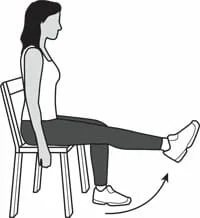
- Begin by sitting upright in a chair with your back straight and your posture properly aligned. Slowly lift one foot forward by straightening your knee and tightening the muscles at the front of your thigh (quadriceps). After holding this posture for three seconds, carefully return your foot to the ground.
- Perform the same movement with the opposite leg, alternating between both sides until you complete 20 repetitions in total (10 repetitions per leg). Keep your upper body upright and maintain proper posture throughout the exercise.
Seated Marching:
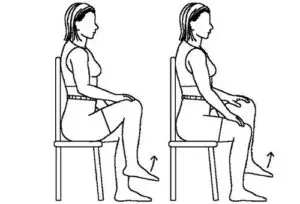
- This rehabilitation exercise helps strengthen the hip flexor muscles, which play an essential role in lifting the feet while walking and climbing stairs. Begin by sitting upright in a chair with your back straight. Slowly raise one knee toward your chest, lifting your foot off the floor as comfortably as possible.
- Gently lower your foot to the starting position, then perform the same movement with the opposite leg. Continue alternating between both legs until you complete 20 repetitions in total. Throughout the exercise, keep your abdominal muscles engaged, maintain an upright posture, and avoid leaning forward or slouching while lifting your knees.
Ankle Dorsiflexion Exercise:
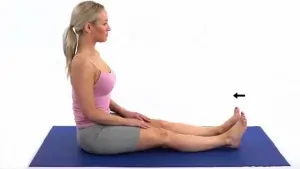
- This exercise is particularly helpful for stroke survivors who experience ankle stiffness or foot drop, a condition that makes it difficult to lift the front part of the foot due to limited dorsiflexion. Begin by sitting comfortably and placing your affected leg across the opposite leg.
- Gently pull your foot upward toward your shin, creating an ankle movement called dorsiflexion. Slowly move your ankle up and down in a controlled manner for 15–20 repetitions. After finishing, do the exercise again on the opposite side. If you are unable to move your foot independently, use your hand to guide it through the movement. This assisted technique is known as a passive range-of-motion exercise.
Stroke Exercises for Balance and Core:
Trunk-focused exercises are an important part of stroke rehabilitation, as they help strengthen the core muscles and improve postural control. These movements support better balance, enhance walking ability (gait), and increase overall body stability while helping reduce the risk of falls.
Trunk Rotation (Twists):
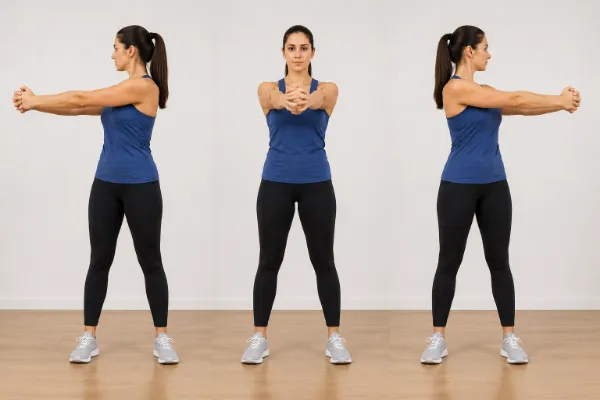
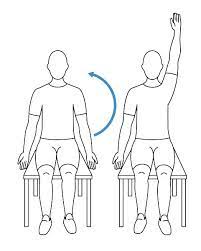
- This trunk rotation exercise is suitable for stroke survivors with different levels of physical ability. Begin by sitting upright in a chair, keeping your back straight and chest lifted. Place your right hand on the outer side of your left thigh and gently rotate your upper body toward the left, using your arm only as light support.
- Focus on creating the twisting movement through your abdominal and core muscles rather than relying on your arms. Rotate only within a comfortable range and avoid any movement that causes pain. Slowly return to the starting position and repeat the rotation 15 times. To make the exercise more challenging, fold your arms across your chest and perform the trunk rotations using your core muscles without assistance from your hands.
- The following two stroke rehabilitation exercises require a certain level of abdominal and core strength. If you notice your lower back lifting away from the floor while performing these movements, avoid these exercises until you have developed sufficient strength and control.
Knee to Chest:
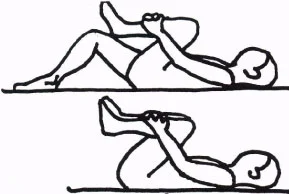
- The knee-to-chest is the name of this stroke exercise. Bring your right knee closer to your chest after beginning in a comfortable lying position. Squeeze your abdominals slightly at the top, then lower your leg back down. Additionally, you might experience a stretch in your glutes and hips. Make every effort to start the action from your core rather than your leg. Ten repetitions should be performed on each leg.
Toe Tap Core Exercise:
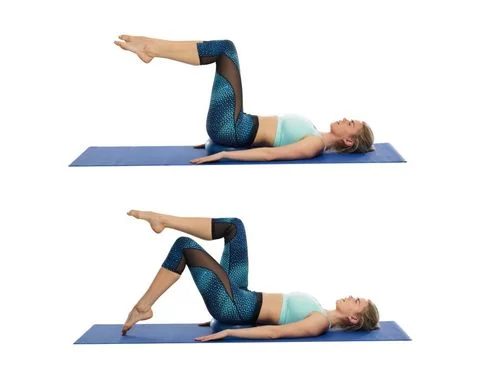
- Bend your knees and hips to a 90-degree angle while lying on your back. To maintain a neutral spine, flatten your lower back against the mat or ground by gently drawing in your abdominals. Make sure you can still breathe. Then, slowly lower your left leg to tap your foot and raise it back up using your core muscles. Repeat on both sides for a total of 20 repetitions.
- Throughout, keep your knee bent at a 90-degree angle and concentrate on starting the movement from your core rather than your legs. If you are struggling to prevent your lower back from rising off the ground. Instead of starting the march with both feet up, try starting with them down.
Stroke Rehab Exercises for Arms:
Exercises for the arms are very beneficial for returning to everyday tasks like dressing and using the restroom. Make sure to include these exercises for stroke healing in your everyday routine.
Tabletop Circle Exercise:

- Put both hands around a bottle of water and tie your fingers together. This exercise becomes a bilateral movement by using both sides of the body, which is beneficial for stroke rehabilitation since it activates both sides of the brain. Additionally, you can assist the other person with the movement by using your unaffected side.
- Start making big circular movements with your fingers intertwined around the bottle. For this exercise, you can guide your affected arm with your unaffected arm. Make ten deliberate, leisurely circles. Try moving in both clockwise and counterclockwise directions.
Unweighted Bicep Curls:

- Regaining the capacity to flex your arm and carry out activities like feeding yourself requires this stroke recovery exercise. Begin by bending your arm 90 degrees and placing your elbow on a table. After that, lower your hand back to the table after curling it toward your shoulder. Focus on isolating the movement at the elbow as you slowly repeat it ten times.
- Your triceps are activated when you go downward, while your biceps are activated when you move upward. This recuperation exercise isn’t meant to increase strength because it’s unweighted. Instead, it aims to promote neuroplasticity in the brain and improve motor control.
Open Arm Exercise:
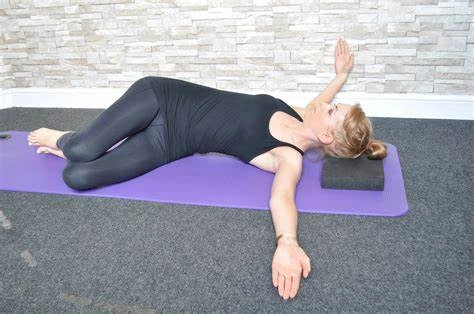
- This final arm rehabilitation exercise involves keeping your elbows near your sides while holding a water bottle in your injured hand. Next, maintain your elbows pinned to your sides and extend your arms such that your forearms extend to your sides. Go back to the center and repeat ten times slowly.
- Reaching, posture, and reversing the typical internal rotator hypertonicity pattern after a stroke all depend on this action, which is known as external rotation. To put it another way, this exercise helps prevent stroke survivors from having their affected arm “curled in” against their chest or out to the side due to the onset of spasticity and increased muscle tension.
Stroke Exercises for Shoulders and Upper Extremity:
After a stroke, shoulder rehabilitation exercises can help prevent and treat painful issues including frozen shoulder and subluxation.
Because the shoulder is a delicate joint that is prone to injury, it is crucial to do these exercises with extreme caution. You should never exercise to the point of excruciating pain, even though some pain or soreness in your muscles is typical. Before doing these exercises on your own at home, consult your therapist.
Weight Bearing Lean:
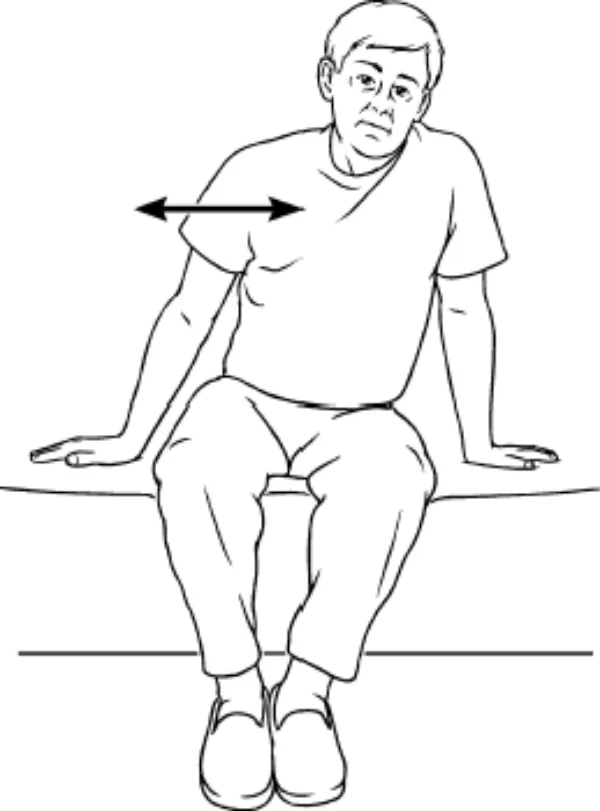
- Start this passive exercise by perching on the edge of a couch or bed. Using your unaffected hand to stabilize the elbow, gently support yourself on your affected arm approximately one foot away from your torso.
- Then lean into it softly. This is known as weight-bearing; the pressure you apply to your arm promotes bone and joint health and increases the recruitment of muscles for stability. Your affected side should feel a slight stretch or pressure. Return to center after holding the stretch for ten seconds if it feels good. For a total of three sets, repeat.
- For every workout, stay in a pain-free range.
Tabletop Lateral Pushing Exercise:

- This is a more vigorous workout. Begin by placing a water bottle on a nearby table within easy reach. Next, use the back of your hand to push it laterally across the table. After sliding it over, encircle the bottle with the front of your hand and push it back to its initial position.
- When performing these upper extremity workouts, try not to hike your shoulder. This is known as synergistic movement, and as your mobility increases, it should diminish.
Tabletop Forward Pushing Exercise:
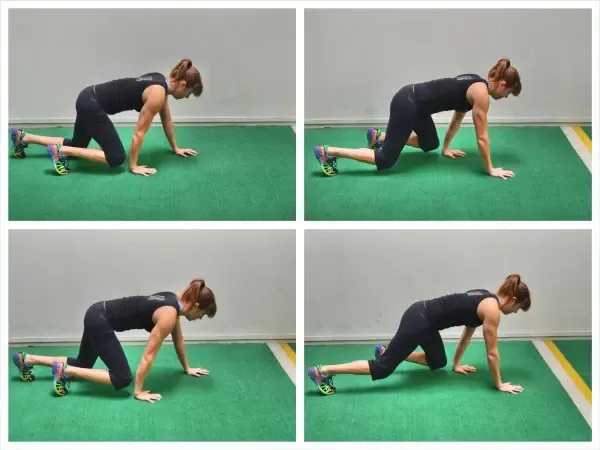
- This exercise is similar to the previous one, but you will push the bottle forward away from your body rather than sideways. Return the bottle to the beginning position after completing one repetition, then repeat. Don’t raise your shoulder; just keep your forearm on the table. Do ten repetitions in total.
Stroke Exercises for Wrists, Hands, and Fingers:
- Because hand function needs dexterity and fine motor coordination, it might be “stubborn” and take a while to recover, so we gave the hand more exercises than the other muscle groups. This gives you even more motivation to perform your stroke workouts repeatedly and consistently.
- The first three exercises are excellent for people who have no hand movement since they are passive. These initial exercises can serve as an excellent warm-up if you already have some movement.
Hand Surface Stretch:
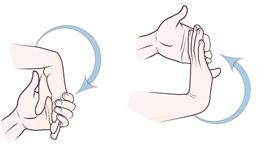
- Stretch your palm and fingers open over your leg or table to begin if your fingers are curled or clenched in a fist. This stroke rehabilitation exercise will excite the brain and help prevent or reduce contractures. Instead of only doing this during your stroke recovery activities, try doing it for one to two minutes at a time throughout the day.
- Never extend till it hurts, even if you might feel a pull.
Wrist Flexion and Extension:
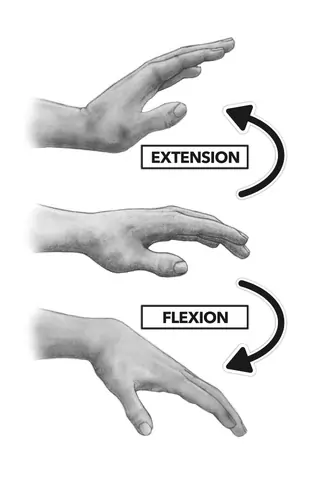
- This hand rehabilitation exercise involves placing your elbow on a table with your palm facing upward. Bend the wrist slowly up (flexion) and down (extension) with your unaffected hand. Make an effort to separate the movement to the wrist alone. Repeat ten times at a slow pace.
Wrist Windshield Wipers:
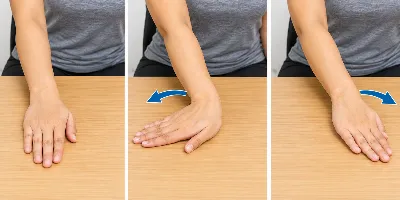
- Put the affected hand palm down on the table. With the unaffected hand, move it to the left and then the right. We refer to this movement of the windshield wipers as ulnar and radial deviation. Focus on initiating the movement with just your wrist. Repeat ten times at a slow pace.
Wrist Curl Exercise:
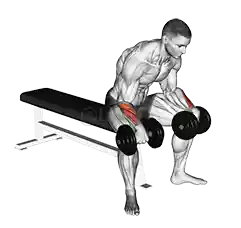
- To help isolate the wrist movement, hold the water bottle in your affected hand while using your non-affected hand to support your arm. Curl your wrist back up after letting it stretch. Repeat gently ten times.
- This recovery exercise gains some weight from the water bottle. You can skip it until your strength and mobility improve, or you can do it without the bottle if needed.
Hand Rolling Movement:
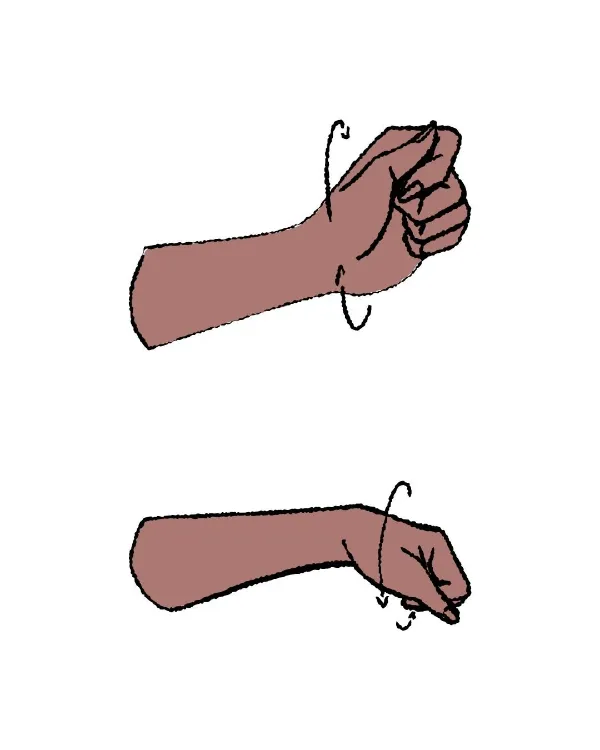
- Curl your fingers in to hold and squeeze the water bottle after placing it in the affected hand. Release your grip after three seconds of holding. Perform this stroke recovery exercise ten times in total.
Pen Spin (Advanced):

- Due to their decreased fine motor abilities, stroke patients may find hand exercises challenging. Your hand spasticity should gradually reduce, increasing your range of motion.
- When you’re ready, try spinning a pen with your affected fingers as part of this advanced stroke practice. This can be challenging, so if it challenges you but doesn’t frustrate you, go on.
Stroke Recovery Exercises for Paralysis:
You must engage in passive activity to recover from post-stroke paralysis. This entails employing your non-affected side or a caregiver to aid your affected limb during the movement.
Any movement from this guide can be used to design your own passive paralysis recovery routines. Specific stroke exercises that aid in the recovery of paralysis are listed below.
Palm Up and Down (Hands):

- Put the injured hand on a tabletop with the palm facing up. Then, use your unaffected hand to help flip your palm down. By doing this back and forth, you can flip your hand up and down ten times. Once more, attempt to start the motion with just your wrist and forearm.
- Despite its apparent simplicity, this exercise stimulates the brain and promotes neuroplasticity. It’s a fantastic approach to encourage healing if your affected hand is immobile.
Cane Stretch (Arm):

- In addition to improving shoulder mobility, this stroke recovery exercise tests your balance. Place your unaffected hand over your injured hand using a cane. Next, lean lightly and slowly onto the cane. Your affected arm should feel a slight stretch. Hold for three seconds, then go back to the middle. Do this five times.
- Next, lean lightly and slowly onto the cane. Your affected arm should feel a slight stretch. Return to the center after holding for three seconds. Do this five times.
- Along with moderate weight-bearing, this stroke exercise helps stimulate your affected side. You can do this while sitting with a cane close by and throughout the day as part of your regular stroke exercise regimen.
Lower Trunk Rotation (Core):
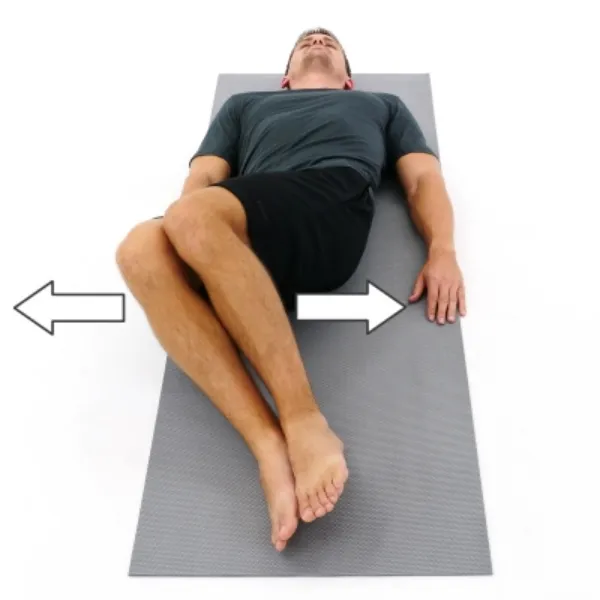
- This stroke paralysis exercise requires the assistance of a caregiver.
- To begin, lie on your back with your feet flat on the ground and your knees bent at a 90-degree angle. Next, lower your legs by twisting your trunk and letting your knees drop to the right. Repeat on the opposite side after raising your knees once more. Try starting with your abdominals for a total of 20 repetitions. You can balance yourself by using your arms.
Occupational Therapy Exercises for Stroke Patients:
It’s crucial to include your injured arm in functional tasks. Make every effort to perform as many daily duties as you can with your affected arm. These are some examples of occupational therapy exercises that you can perform with your hand or arm while performing daily tasks.
- Self-feeding (if you are still unable to handle utensils, try finger foods)
- Using a doorknob
- Opening a drawer or cabinet
- Switching on and off the tap
- Taking something off a table or the floor
- Laundry folding
- Using a toothbrush to apply toothpaste
- Cleaning a window, table, or countertop
- walking. Walking is one of the most popular stroke therapy activities for stroke victims. It improves balance, coordination, and muscular strength. As your skills advance, you must start out gently and progressively expand the distance.
- Additionally, exercises enhance strength, flexibility, and range of motion. Range-of-motion exercises are popular for recovery. Simple range-of-motion and stretching exercises can do this. Joint range of motion and flexibility are enhanced by these workouts.
- Another important component of rehabilitation is strength training. It can improve bone density, cardiovascular health, and muscle tone. Exercise is essential for stroke recovery because of this.
Tips for Staying Motivated to Do Stroke Rehabilitation Exercises at Home:
However, maintaining motivation to perform these workouts at home might be difficult. Here are some tips to maintain motivation:
- Set reasonable objectives. To avoid discouragement, you should create attainable goals. Discuss what kind of goals might be reasonable for you with your physical therapist.
- Create a strategy. After you have set your objectives, devise a strategy for achieving them. Jot down the exercises you plan to perform and the times you plan to execute them. You are more likely to maintain your fitness regimen if you have a strategy.
- Find someone to go along with. Exercises for stroke recovery might be more fun and help you remain on track if you do them with someone else. Ask a friend or relative to attend some of your sessions.
- Experiment. Exercises for stroke rehabilitation can be done in a variety of ways, so choose enjoyable ones. Try swimming or dancing if you’re not into traditional kinds of exercise.
- Reward yourself. Reward yourself with something you enjoy when you complete your goals. This will encourage you to continue working out.
FAQs:
How do you rehab a stroke patient?
A stroke patient’s rehabilitation procedure will differ based on their unique requirements and circumstances. Helping the patient regain as much function and independence as possible, however, is the top objective. This could entail speech, occupational, and physical therapy. Supporting the patient and their family throughout this journey is also important.
How can I exercise my brain after a stroke?
Cognitive rehabilitation, a form of therapy that aids in the relearning of lost skills, may be beneficial for certain individuals. Other folks might discover that mental exercises like memory games, puzzles, and brain teasers keep their minds active.
Does exercise help stroke recovery faster?
Exercise, according to many experts, facilitates the healing process by enhancing circulation and facilitating more effective self-healing. Exercise can also assist in lowering stress levels and enhancing general well-being, both of which can facilitate healing.
How long does it take to recover after a stroke?
The person and the severity of the stroke determine the response to this question. Generally speaking, though, most people will experience some improvement in the initial weeks or months. For up to a year or longer, some people might keep improving. The healing process can be impacted by a variety of factors, so creating a strategy that is personalized to your needs requires working together with a medical team.
What is the best exercise for legs after a stroke?
After a stroke, there is no one “best” leg exercise; so, the greatest option depends on your present level of strength, muscle tone, balance, and recuperation. Repetitive, task-specific exercises aid in strength restoration and brain-to-muscle retraining. Before beginning a new routine, always see a physician or physical therapist.
How to strengthen a weak arm after a stroke?
After a stroke, strengthening a weak arm requires regular, repeated activity that stimulates brain remodeling. You should start at your current level of competence and work your way up. In addition to preventing shoulder pain or compensation from your stronger side, working with a physical or occupational therapist ensures safe form.
Can you regain use of your legs after a stroke?
In fact, although the extent of recovery varies greatly, many stroke survivors are able to walk again and regain substantial use of their legs. Neuroplasticity, the brain’s capacity to remodel and create new connections via focused, repeated practice, is essential for recovery.
What type of stroke causes leg weakness?
Leg weakness can result from both hemorrhagic strokes (brain bleeding) and ischemic strokes (blocked blood vessels) that damage the brain’s movement-controlling regions. Which area of the brain or spinal cord is injured determines the precise pattern of weakness.
What are the common causes of loss of leg movement after a stroke?
Leg weakness (hemiparesis), paralysis (hemiplegia), or stiffness that prevents a leg from supporting weight or moving normally are all possible outcomes of a stroke. Emergency services should be contacted immediately if these symptoms appear abruptly, as they may indicate an active stroke.
What helps strokes heal faster?
The best approaches to accelerate stroke recovery are to begin focused therapy as soon as possible, usually within 24 to 48 hours, and to engage in regular, repetitive exercises. By rewiring healthy connections to replace lost functions, the brain uses neuroplasticity to recover and adapt.
References:
- Cscs, A. T. P. D. N. (2026, May 27). Stroke Exercises for the Full Body: How to recover mobility at home. Flint Rehab. https://www.flintrehab.com/stroke-exercises/
- Sheltering Arms Institute. (2025, April 25). Simple stroke recovery exercises & therapy you can do at home – Sheltering Arms Institute. https://shelteringarmsinstitute.com/rehablogs/simple-stroke-recovery-exercises-therapy-you-can-do-at-home/
- Dhanyamraju, S. (2024, July 22). Rehabilitation exercises for recovery after a stroke. Lone Star Neurology. https://lonestarneurology.net/stroke/stroke-rehabilitation-exercises/