Exercises for Knee Pain After Sitting
Introduction:
You’re not alone if prolonged sitting, whether at a desk or while driving, causes your knees to hurt, stiffen, or feel sore. Long periods of sitting reduce blood flow, tense the muscles surrounding the knee, and put additional strain on the joint. Pain, stiffness, and trouble standing or walking comfortably can result from this over time.
This article will teach you easy, physical therapist-recommended exercises to keep your joints moving freely, ease knee pain, and regain flexibility even after hours of sitting. These exercises are safe to do at home, at work, or while taking a roadside break.
Why Does Sitting Cause Knee Pain?
The knees are far less at risk for basic injury than many other joints. Regardless of age, they are designed to be constantly in action. Consequently, an abnormal condition is an abnormal condition for the knee. Other lifestyle issues that many individuals contend with, such as poor posture, frequent screen-related tilting, and utilizing a desk or chair that is too high, can have an effect. In particular, when sitting in a chair, your knees should be just below hip height, and your soles should be flat on the floor. If you sit in any other position, your knee joints will be stretched, even if you don’t feel it at the moment.
Knee pain may be a side effect if you have issues with your muscles, posture, or other systemic issues. For example, short or injured hip flexors, weak quadriceps, or poor circulation in your legs could all be contributing reasons.
What Are The Best Stretches To Reduce Knee Pain From Sitting?
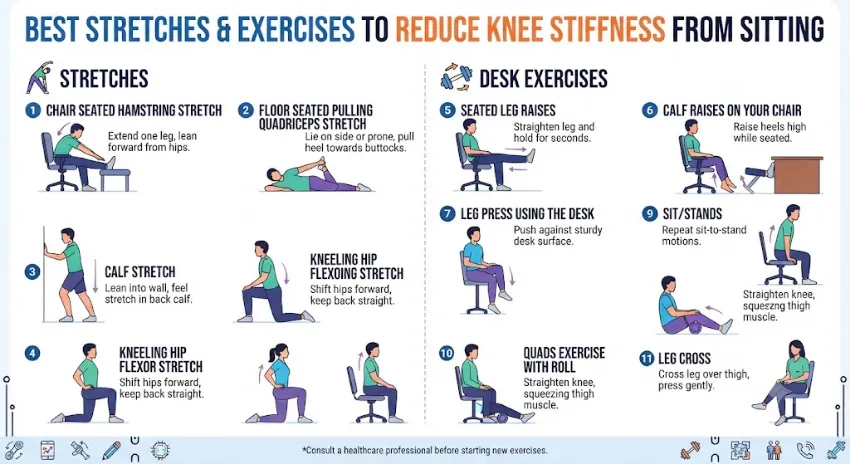
To avoid your knees becoming too tight after sitting, you should follow a comprehensive lower body stretching regimen. Keep in mind that there are several muscle groups surrounding the knee joint; therefore, none of them should be ignored. Some of the best stretches for knee pain include the following:
Chair Seated Hamstring Stretch:
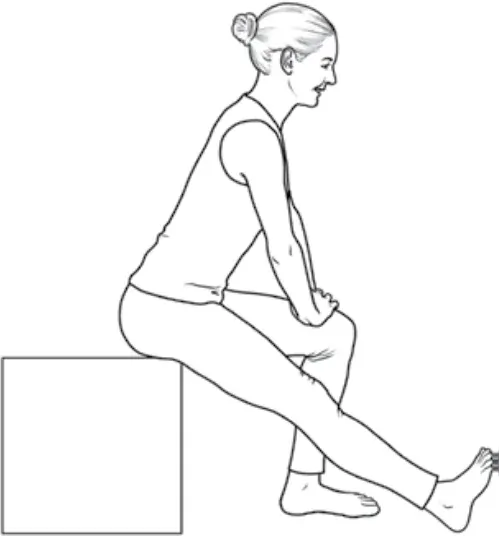
- This stretch can help you slowly develop improved sitting posture and stretch your hamstrings because it is done from a chair.
- First, maintain a straight back and relaxed shoulders while sitting as close to the edge of the chair as you can.
- Lean forward by simply shifting your hips, not your back, after extending one foot straight out with the heel on the ground.
- The back of your thigh will begin to begin to stretch.
- Switch and repeat after holding for no more than 30 seconds.
Floor Seated Pulling Quadriceps Stretch:
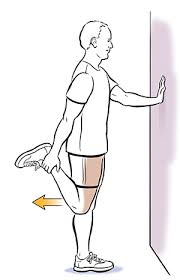
- Bend one knee and put the foot back on your buttocks while sitting on the floor with your legs out in front of you.
- Use your near hand to reach back, grab your ankle, and raise your foot toward your body.
- After 30 seconds of holding this pose, switch legs and repeat.
- This exercise will stretch the front of your thigh, and you might be surprised to find that it works on both legs equally.
Calf Stretch:
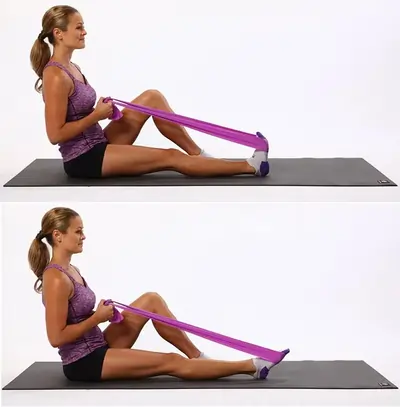
- The calf muscles, ankles, and knees all benefit from this simple stretch.
- Take a seat on the ground with one leg outstretched, toes pointing straight up, and one knee bent with the foot on the ground.
- Reach forward and grasp the stretched foot by the toes, then slowly pull back until you feel the stretch.
- Before transitioning, maintain this posture for roughly 15 seconds.
- Rather than using your hands, foot, or any other accessible device or any other equipment.
Kneeling Hip Flexor Stretch:
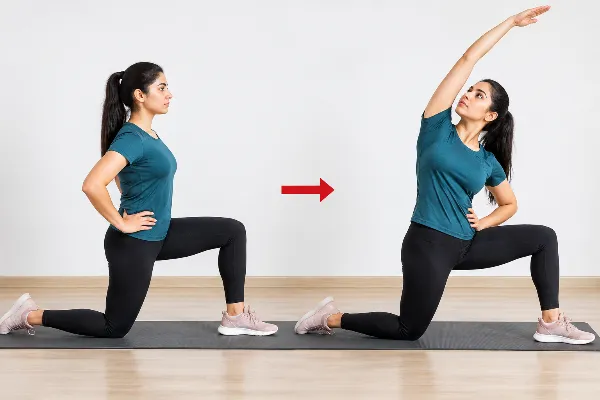
- Since a large portion of the stress that causes knee pain from sitting occurs in the hip flexors, it is crucial to keep them stretched and flexible.
- To stretch these muscles, kneel on one knee while bending the other, then place your foot flat on the floor.
- Maintaining a straight back and an upright head, bend forward with your hips until you feel a stretch.
- Before switching legs, hold this position for 15 to 30 seconds.
These desk-based workouts can help maintain the strength of your knees:
Seated leg raises:
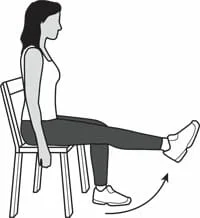
- You can strengthen your knees while working at your desk with this easy yet efficient exercise.
- Seated leg lifts include raising one leg straight out in front of you, holding it there for a little while, and then lowering it back down gently.
- Continue doing this with the opposite leg. Because they are important for knee stability, the quadriceps, the muscles in the front of your thighs, are the major emphasis of this exercise.
- By including this exercise in your daily routine, you may preserve and enhance the strength and stability of your knees even when sitting for long periods of time.
- Later in life, it helps avoid motor impairments.
Calf raises on your chair:
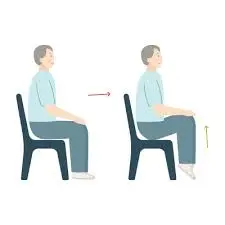
- You can perform calf raises while sitting on a chair. Calf muscles are the focus of this workout.
- Better knee support is a result of robust calves.
- The gastrocnemius, soleus, and calf muscles are activated when you sit up straight and raise your heels off the floor.
- This improves lower limb stability in general.
- With consistent training, calf raises can reduce stress in the knee joint and minimize the risk of knee injuries.
- You may switch to standing calf raises behind your chair or place weight on your lap as you become more at ease.
- This can make the exercise more intense, strengthening the calf muscles and encouraging stronger knees.
Leg press using the desk:
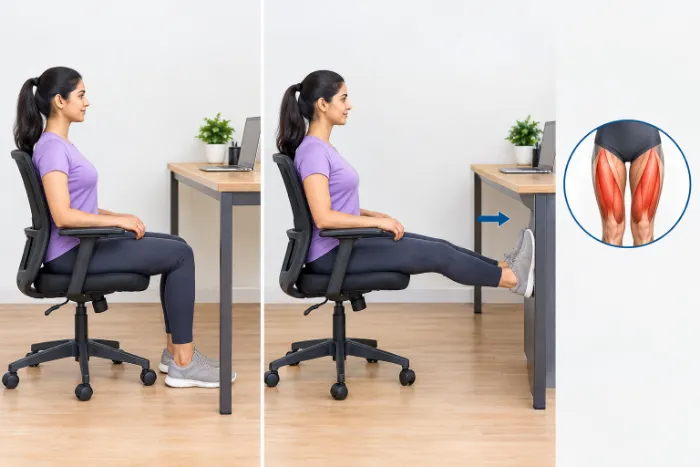
- While seated, press down on your desk and gently place your feet on the floor.
- This simulates the force applied to a leg press machine. Focus on your quadriceps and efficiently use your thigh muscles.
- This simple exercise may be done while seated to improve knee strength and stability.
- By improving knee support, quadriceps exercise lowers the chance of pain or damage from extended sitting.
- Regular use of this simple exercise while working at a desk might result in strong knees and muscular thighs.
- Additionally, it could reduce the tension that comes with prolonged sitting.
Seated marching:
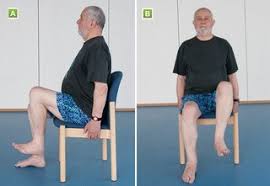
- Elevate each of your knees individually while remaining sitting, simulating a marching motion.
- This exercise provides a focused workout that can improve knee strength by efficiently using your quadriceps and hip muscles.
- Including this exercise in your program can help you maintain the general health of the lower limb muscles in addition to improving knee stability.
- This low-impact workout is particularly helpful while sitting for long periods of time.
- It also relieves joint pain and tight muscles.
Sit/stands:
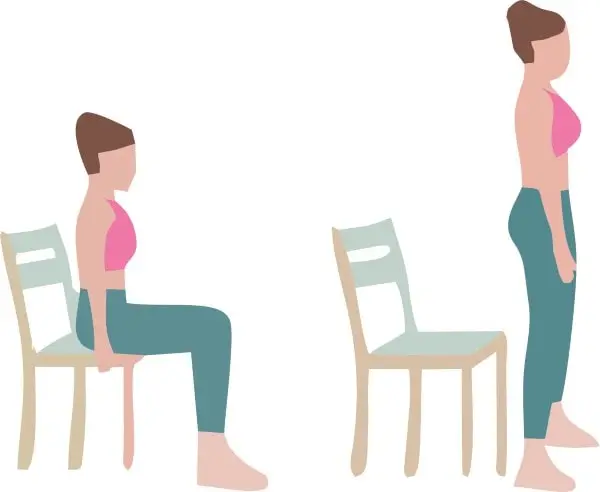
- Take a seat.
- Get up without using your hands for support, then return to your seat.
- Ensure that every movement is careful and slow.
- Continue until you run out of options.
- After a minute of rest, repeat two more times.
- If the chair is too low, start by getting up from a seat cushion and take it off when you’re done.
Quads exercise with roll:
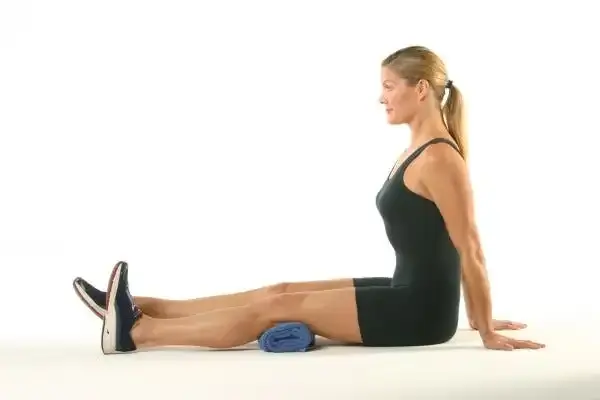
- Sit on the floor, couch, or bed with your legs out in front of you.
- Under one knee, place a rolled-up towel.
- As if to straighten your knee, apply pressure to the towel.
- Pull your foot and toes toward you so your heel rises off the ground and your calf muscles stretch.
- After five seconds of holding, relax for five seconds.
- After ten repetitions, switch to the other leg and continue the exercise.
Leg cross:
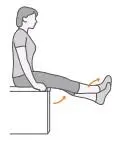
- Cross your ankles while you sit on the edge of a table, chair, or bed.
- To contract your thigh muscles, push the back leg forward and your front leg backward against one another.
- After holding this for as long as possible, let go.
- After a minute of rest, continue the process twice more. Repeat, switching legs.
Be careful of these mistakes:
Maintaining a healthy and active lifestyle is important, but one must exercise caution while adopting certain postures to avoid spraining their muscles. Make sure your chair is stable and positioned correctly before sitting. When performing these workouts, avoid bending.
Which Strengthening Exercises Help Avoid Sitting-Related Knee Pain?
The legs include some of the largest and strongest muscles in the body, and they all work together to provide structural support for the knee joint. To varying degrees, the quadriceps, hamstrings, and glutes all play this role, but they are all crucial for painless, smooth knee function.
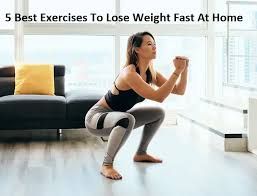
To increase the stability of your knee joint, you should think about doing a range of strengthening activities. There is no need to worry too much about equipment because lower body workouts may be performed extremely successfully using only bodyweight. For example, if you practice them regularly and every day, simple sitting leg raises are among the greatest exercises you can do for this reason.
The amount of support the knees receive may be greatly increased over time by performing bodyweight squats and similar, more static wall sits. You should also perform quadriceps isometrics or quad sets for these big, crucial muscles and ankle pumps to promote good blood circulation throughout the legs.
If you have knee pain, when should you see a physical therapist?
Sometimes sitting-related knee discomfort is mild enough to be relieved by making careful modifications to your daily routine, such as paying attention to your posture, doing the exercises mentioned above, and reducing the amount of time you spend seated. In many cases, though, you should get your knees treated by a specialist.
Pain that becomes worse over time, visible swelling or redness in the kneecap, feeling unsteady when jogging or walking, and any symptoms that interfere with everyday activities, work, or school are all warning signs. Because the underlying cause of the pain is probably more complicated or severe than simply being inactive, physical therapy will be beneficial in these situations. You won’t be able to alleviate your problems unless you address these possible reasons using different PT techniques.
FAQs:
How can I relieve knee pain caused by sitting?
You must break up recurrent stiffness by shifting postures, stretching tense muscles, and modifying the ergonomics of your workstation in order to reduce knee pain from sitting.
Which exercise should be avoided with knee pain?
Exercises that exert a lot of strain on the knee joint, such as deep bending and strong impact, should be avoided if you have knee pain.
What is the single best home exercise for knee pain?
The straight leg raise is the best exercise for general knee pain since it develops the quadriceps without placing undue strain on the knee joint.
How quickly can knee pain be relieved?
The RICE approach (Rest, Ice, Compression, and Elevation) in conjunction with over-the-counter anti-inflammatory drugs is the quickest way to reduce acute knee pain.
Is walking good for knee pain?
Walking helps lubricate the cartilage and strengthen the muscles surrounding the joint; thus, it is typically beneficial for knee pain.
What not to do with knee pain?
Deep squats, high-impact exercises, and ignoring your knee pain should all be avoided.
Is heat or ice better for knee pain?
Whether knee discomfort is fresh and swollen or old and stiff will decide whether heat or ice is preferable.
What sleeping position is best for knee pain?
Sleeping on your back with a cushion beneath your knees or on your side with a firm pillow between your knees are the ideal sleeping positions if you have knee pain.
References:
- Us3eNumb3rZERO, Us3eNumb3rZERO, & Us3eNumb3rZERO. (2026, January 29). Exercises to alleviate knee pain when sitting. JAG Physical Therapy in NY, NJ, & PA. https://www.jagpt.com/blog/exercises-to-alleviate-knee-pain-when-sitting/
- TIMESOFINDIA.COM. (2023, October 16). These exercises done while sitting at the desk can keep your knees strong. The Times of India. https://timesofindia.indiatimes.com/life-style/health-fitness/fitness/these-exercises-done-while-sitting-at-the-desk-can-keep-your-knees-strong/photostory/104247242.cms?picid=104460574
- Exercises for the knees. (n.d.). Arthritis UK. https://www.arthritis-uk.org/information-and-support/living-with-arthritis/health-and-wellbeing/exercising-with-arthritis/exercises-for-healthy-joints/exercises-for-the-knees