Physical Therapy After Bankart Repair
Introduction:
A torn labrum, a frequent injury following repeated dislocations, can be repaired with Bankart Repair Surgery, a minimally invasive orthopedic surgery, to alleviate shoulder instability. The procedure focuses on a Bankart lesion, which occurs when the labrum, a ring of cartilage that surrounds the shoulder socket, tears away from the bone. This injury can cause severe pain and functional limitations and is frequently caused by trauma, such as a fall or an event involving sports.
The main goal of Bankart Repair Surgery is to stabilize the shoulder joint so that patients can get back to their regular activities without worrying about dislocation and regain full range of motion. Usually, the treatment is carried out arthroscopically, which minimizes tissue damage and speeds up healing by using tiny incisions and a camera to guide the repair.
For those who have had several dislocations or who have chronic shoulder pain that interferes with everyday activities, Bankart Repair Surgery is especially beneficial. The procedure attempts to enhance overall shoulder function and avoid future dislocations by treating the underlying structural problems.
Why is Bankart Repair Surgery Done?
Patients may want to have Bankart Repair Surgery if they have any of the following symptoms of shoulder instability.
Frequent shoulder dislocations or subluxations; persistent pain in the shoulder joint, especially during overhead activities; a sense of the shoulder giving way during movement; limited range of motion or weakness in the shoulder
These symptoms frequently result from a Bankart lesion, which can happen for several reasons, such as:
- Traumatic injuries, including those sustained in sports or falls
- Athletes who play sports like baseball, tennis, or swimming frequently do repetitive overhead motions.
- Inadequate treatment for prior shoulder dislocations
Bankart Repair Surgery may be suggested if conservative measures, including physical therapy or bracing, are unable to relieve symptoms or restore shoulder stability. The severity of the symptoms, the frequency of dislocations, and the effect on the patient’s quality of life are usually taken into consideration while deciding whether to proceed with surgery.
Indications for Bankart Repair Surgery:
Numerous cases and diagnostic findings may suggest a requirement for Bankart Repair Surgery. Among them are:
- Recurrent Shoulder Dislocations: Patients who have had several dislocations are excellent candidates for surgery, especially if they happened with little trauma. After the initial occurrences, there is a considerable rise in the probability of further dislocations.
- Imaging Results: Diagnostic imaging, such as MRIs or CT scans, can identify a Bankart lesion or other structural abnormalities in the shoulder joint. These results support the diagnosis and direct the course of treatment.
- Physical Examination: An orthopedic specialist’s complete physical examination can evaluate shoulder range of motion and stability. Tests that assess the shoulder joint’s integrity, such as the relocation or apprehension test, might reveal important details about the necessity of surgery.
- Failure of Conservative Treatment: Surgery may be necessary if a patient has had a thorough rehabilitation program, which includes physical therapy and activity adjustment, but their symptoms have not significantly improved.
- Age and Activity Level: Bankart Repair Surgery may be more beneficial for younger, more active people, especially athletes. The choice to explore surgical treatments may be influenced by the desire to resume physically demanding activities or competitive sports.
- Bankart lesions are often accompanied by associated Hill-Sachs lesions, which are compression fractures on the humeral head. Their existence may affect surgical planning even though they might not need separate treatment.
Patients with chronic shoulder instability, severe pain, and functional limitations that do not improve with conservative measures may benefit from Bankart reconstructive surgery. The appropriateness of the surgery is determined in large part by the combination of imaging examinations, clinical evaluation, and patient history.
Types of Bankart Repair Surgery:
Although the primary goal of Bankart Repair Surgery is to repair the Bankart lesion, surgeons may use a variety of procedures depending on the patient’s particular requirements. There are two primary methods for doing Bankart Repair Surgery:
- Arthroscopic Bankart Repair: This minimally invasive procedure uses an arthroscope, a small camera that lets the surgeon see the shoulder joint, along with tiny incisions. The ruptured labrum is reattached to the glenoid or shoulder socket by the surgeon using hooks or sutures. This method usually leads to minimal scarring, faster healing, and less postoperative pain.
- Open Bankart Repair: An open surgical technique may be necessary if the anatomy is complex or there are several shoulder injuries. In order to have direct access to the shoulder joint, this approach requires a bigger incision. It may take longer to recover than arthroscopic repair, but it enables a more thorough assessment and management of related medical conditions.
Restoring stability to the shoulder joint and avoiding further dislocations are the same objectives of both methods. The surgeon’s experience, the patient’s particular condition, and the existence of any other injuries are some of the variables that influence the procedure selection.
In summary, Bankart Repair Surgery is an essential operation for people who have Bankart lesions causing shoulder instability. Patients may make educated judgments about their treatment options and work toward restoring a stable and functioning shoulder by being aware of the goals, indications, and types of surgery that are available.
Contraindications for Bankart Repair Surgery:
Even though Bankart repair surgery is a popular and successful treatment for shoulder instability, a patient may not be a good candidate for it due to certain circumstances. To guarantee the best results, patients and healthcare professionals must be aware of these contraindications.
- Severe Joint Degeneration: Patients with severe arthritis or shoulder joint degeneration may not be the ideal candidates for Bankart repair. In certain situations, the procedure might not offer the required level of pain relief or stability.
- Infection: If the shoulder or the tissues around it are actively infected, surgery might not be required. Before considering a Bankart repair, an infection needs to be treated and cleared out.
- Poor General Health: During surgery and anesthesia, patients with major underlying medical diseases, such as uncontrolled diabetes, heart disease, or respiratory problems, may be at higher risk. A thorough evaluation by a medical specialist is essential.
- Unable to Comply with Post-Operative Guidelines: Following therapy guidelines is necessary for a successful recovery following Bankart repair. Patients may not be good candidates if they are unable to commit to the required post-operative care.
- Age Considerations: Although age by itself is not a clear contraindication, older patients may be more vulnerable to problems and have differing healing capabilities. To decide if surgery is suitable, a thorough evaluation is required.
- Previous failed surgery: Patients who have had several failed shoulder surgeries may have scar tissue or other issues that make subsequent procedures more difficult.
- Psychological Factors: Patients should be carefully assessed for severe anxiety or psychological disorders that might make it difficult for them to recover from surgery. Before moving further, mental health help could be required.
- Anesthetic Allergies: During surgery, a history of severe allergic responses to anesthesia might be quite dangerous. It could be necessary to use different strategies or make detailed plans.
- Active Participation in High-risk Activities: Patients who participate in high-impact sports should get post-surgery counseling since resuming such activities too soon increases the chance of re-injury.
Healthcare professionals can better assist patients in choosing their course of treatment by being aware of these contraindications.
How to Prepare for Bankart Repair Surgery:
To guarantee a successful treatment and recovery, there are a number of crucial tasks involved in getting ready for Bankart repair surgery. This is a thorough approach to efficient preparation.
- Consultation with Your Surgeon: Make an appointment for a thorough consultation with your orthopedic surgeon. Talk about your allergies, current medicines, and medical history. Asking questions regarding the process, recovery, and anticipated results is also appropriate at this point.
- Pre-operative Examinations: Before the procedure, your surgeon could suggest many tests, such as imaging studies MRI or X-rays to determine the extent of the damage and make surgical plans.Blood tests: To look for any underlying medical conditions that could interfere with surgery.Cardiac Evaluation: A cardiac evaluation could be required for people with a history of heart disease.
- Medication Review: Talk to your doctor about all of your prescriptions. To lower the risk of bleeding, several drugs, particularly blood thinners, may need to be changed or stopped before surgery.
- Lifestyle Changes: Since smoking might hinder recovery, if you smoke, think about cutting back or stopping before surgery. Recuperation can also be aided by eating a balanced diet and drinking enough water.
- Make Support Arrangements: Make arrangements for someone to help you throughout the early recuperation period and to go with you on the day of the procedure. As you manage post-operative care, this assistance can be quite helpful.
- Observe Pre-Operative advice: Prior to surgery, your surgeon will give you detailed advice on what to eat and drink. The night before your surgery, you will usually be told not to eat or drink anything after midnight.
- Get Your House Ready: Clearing walkways, setting up a cozy place to relax, and keeping essential supplies close at hand will all help make your house recovery-friendly. Think about stocking up on simple meals.
- Put on Cozy Clothes: Wear comfortable, loose-fitting clothes that make it simple to reach your shoulder on the day of the procedure. Steer clear of jewelry and cosmetics as they might need to be taken off prior to the treatment.
- Mental Preparation: Anxiety before surgery is common. To calm your thoughts, practice relaxation methods like deep breathing, meditation, or visualization.
You can make sure that your Bankart repair procedure goes well and that you are prepared for a full recovery by following these preparation guidelines.
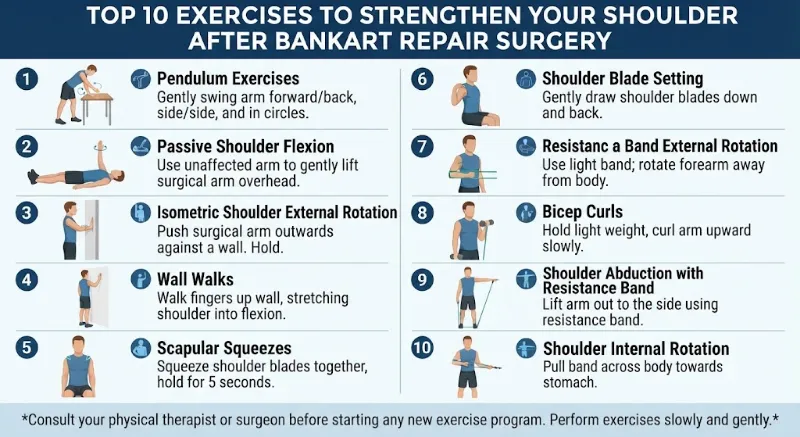
The Top 10 Exercises For Bankart Repair Surgery Shoulder Strength:
In order to restore shoulder stability, particularly following a dislocation, Bankart repair surgery is an essential treatment. Regaining strength, range of motion, and usefulness is largely dependent on post-surgery therapy. The top ten workouts suggested by professionals to guarantee a safe and successful rehabilitation are highlighted in this article.
Pendulum Exercises:
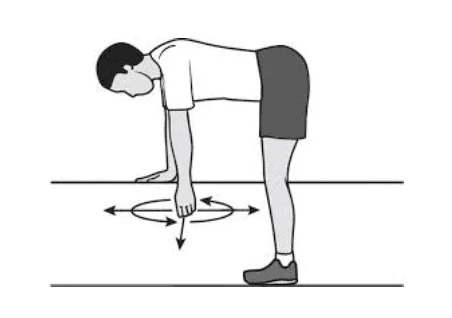
The goal is to gently mobilize the shoulder joint.
- With your arm reaching down, bend forward.
- To generate movement, move your body in little circles.
- Perform in each direction for one to two minutes.
Passive Shoulder Flexion:

Expanding shoulder range of motion is the target.
- Using a stick or your unaffected arm, gently raise the recovery arm forward.
- If you experience aches and pains, stop.
- Repeat ten to fifteen times.
Isometric Shoulder External Rotation:
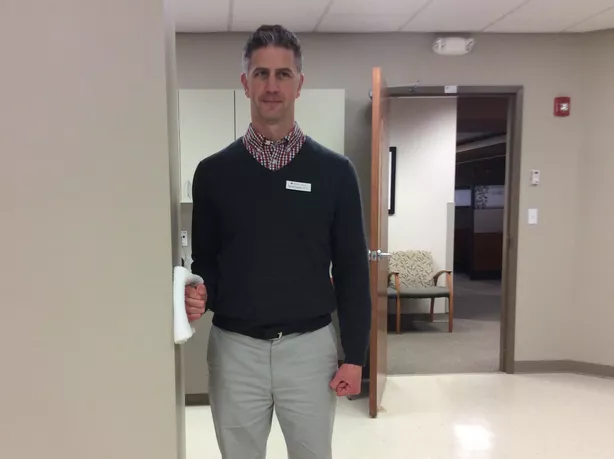
The objective is to strengthen the rotator cuff muscles.
- Take a neutral stance.
- Without moving your recovered arm, press it outward onto a sturdy surface.
- Repeat ten times, holding for ten seconds.
Wall Walks:

The goal is to gradually develop shoulder flexion.
- With your back to the wall, “walk” up it with your fingertips.
- Walk back down after pausing at the most comfortable location.
- Do ten to fifteen repetitions.
Scapular Squeezes:
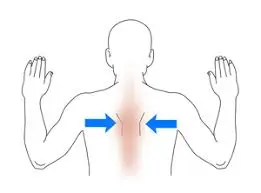
The goal is to improve shoulder stability by strengthening the scapular muscles.
- Maintain a straight back while sitting or standing.
- Gently press your shoulder blades together.
- After five seconds of holding, let go. Repeat ten to fifteen times.
Shoulder Blade Setting:
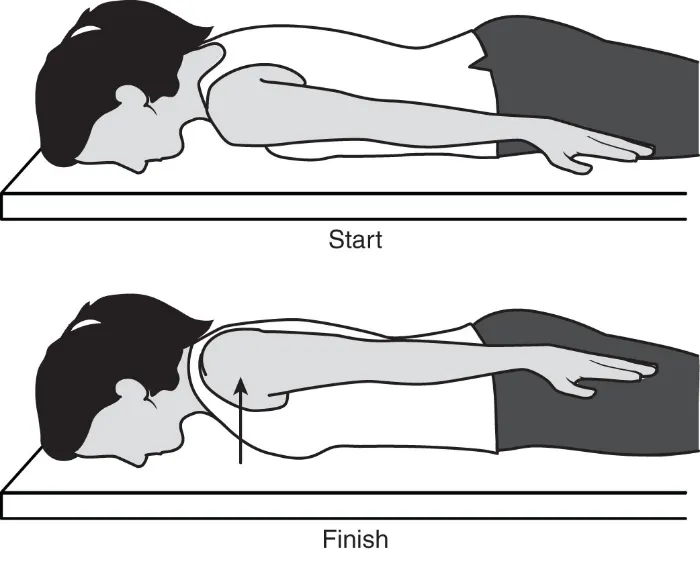
Goal: Engage the shoulder girdle’s stabilizing muscles.
- You can lie on your back or sit up straight.
- Without shrugging, gently bring your shoulder blade closer to your spine.
- Let go after holding for five to ten seconds. Do ten repetitions.
Resistance Band External Rotation:
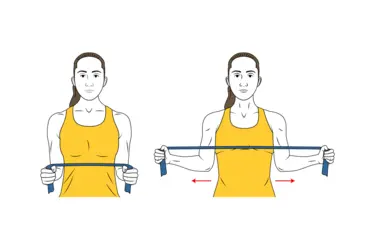
The objective is to make the external rotator stronger.
- At elbow height, attach a resistance band to a stable surface.
- Rotate your forearm outward while maintaining a 90-degree elbow bend.
- Perform ten to twelve repetitions in two or three sets.
Bicep Curls:

Goal: Regain arm strength without putting undue strain on the shoulder.
- Perform controlled bicep curls with modest weights (1-3 kg).
- Repeat ten to fifteen times over two to three sets.
Shoulder Abduction with Resistance Band:
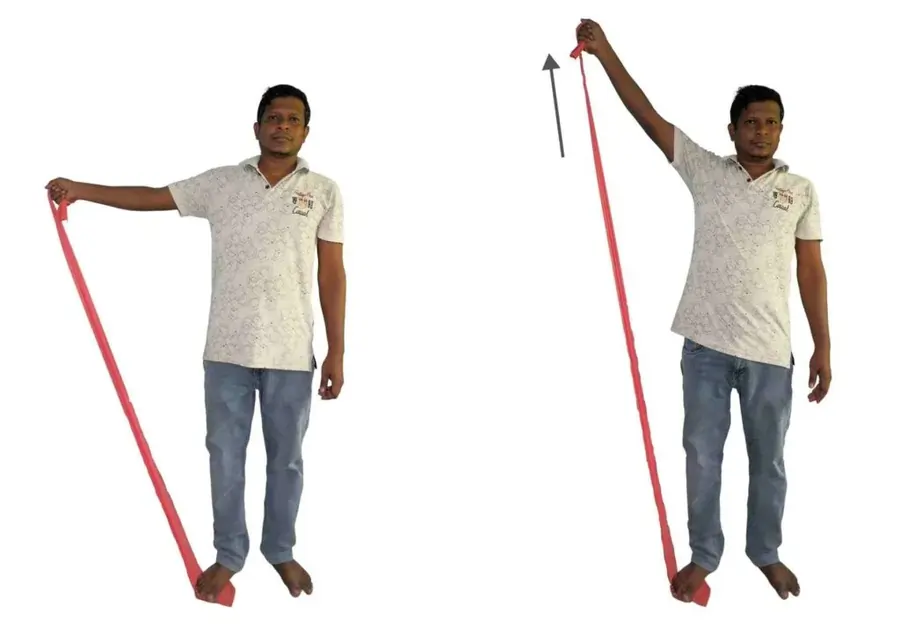
The goal is to make the deltoid muscles stronger.
- Place a resistance band beneath your foot as you stand.
- Raise your arm sideways to shoulder height slowly.
- Repeat 10–12 times while slowly lowering it.
Shoulder Internal Rotation:
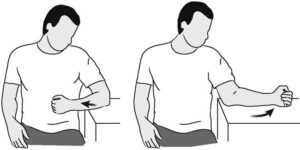
The goal is to strengthen internal rotator muscles to stabilize joints.
- A resistance band should be attached to a strong surface.
- Pull your hand toward your abdomen while maintaining a 90-degree elbow bend.
- Do 10–12 repetitions in 2–3 sets.
Risks of Re-Injury and Long-Term Concerns:
While most patients make a full recovery, there are certain long-term issues to be mindful of. Re-injury is a possibility, particularly for younger athletes participating in overhead or high-contact sports. Recurrence rates are somewhat greater in patients under 20 who resume contact sports.
Additionally, there is a slight chance of getting post-traumatic arthritis, especially if the initial injury caused considerable cartilage damage. Stiffness, pain, and decreased movement in later life are possible symptoms. This risk can be decreased by taking preventative steps, including being active, maintaining a healthy weight, and avoiding recurrent stress.
Rarely, issues including infection, nerve damage, or loose anchors may require revision surgery. Examples of symptoms that need to be evaluated immediately include clicking, locking, and chronic pain.
Conclusion:
Following Bankart repair surgery, rehabilitation is a path that requires perseverance and dedication. The goal of these top ten exercises is to progressively improve the strength, flexibility, and functioning of your shoulder. To ensure a safe and efficient recovery, always speak with your physiotherapist before beginning or changing your exercise regimen.
FAQs:
How long should you do physical therapy after shoulder surgery?
Depending on the particular technique, physical rehabilitation following shoulder surgery often lasts three to six months.
What is the recovery time for Bankart repair?
It usually takes 4 to 6 months for daily activities to recover from a Bankart repair, but it takes 6 to 9 months to get back to contact sports or hard lifting.
What is the physiotherapy protocol for Bankart repair?
In order to preserve the healing labrum and progressively restore strength and range of motion, a Bankart repair rehabilitation plan takes a staged approach over several months.
Is Bankart repair a major surgery?
Because a Bankart repair entails healing and reconnecting soft tissue to the bone inside a complicated joint, it is really regarded as a substantial orthopedic procedure.
What is the success rate of arthroscopic Bankart repair?
For stabilizing the shoulder and avoiding further dislocations, Bankart repair surgery typically has an 80% to 95% success rate.
Can a Bankart tear heal without surgery?
Because the labrum has a weak blood supply, a Bankart fracture typically cannot repair back to the bone on its own. However, with focused physical therapy, you may frequently restore a stable, functioning shoulder without surgery.
How long does a Bankart tear take to heal?
If you have surgery to repair a Bankart tear, rehabilitation usually takes 4 to 6 months; however, it may take 9 to 12 months to return to high-impact or contact sports.
References:
- Hospitals, A. (2025, November 14). Bankart Repair Surgery – Procedures, preparation, cost, and recovery. Apollo Hospitals. https://www.apollohospitals.com/procedures/bankart-repair-surgery
- Tarikausr. (2025, November 13). Top 10 exercises to strengthen your shoulder after Bankart repair surgery. A+ Orthopaedics & Sports Med Center|New Delhi. https://aosm.in/top-10-exercises-to-strengthen-your-shoulder-after-bankart-repair-surgery/
- Parveen, S. (2026, June 12). Life After Arthroscopic Bankart Repair: Recovery, Expectations, and Long-Term Outlook. MediGence. https://medigence.com/blog/life-after-arthroscopic-bankart-repair/