11 Best Home Exercises for Ankle Pain
Introduction:
The strength, stability, and range of motion of the entire foot are enhanced with foot and ankle workouts. They are among the most straightforward and efficient methods for treating the majority of foot pain problems.
Any weakness, stiffness, or tightness in the calf and foot can result in a variety of foot issues that can hurt not just the foot but also the knee, hips, and back.
Depending on your goals, you can select from a wide variety of foot and ankle workouts here. You’ll also get a ton of excellent advice on how to maximize the benefits of foot and ankle workouts.
What is ankle pain?
Ankle pain conditions include peroneal tendonitis, high ankle sprains, foot arthritis, posterior tibial tendonitis, and acute ankle pain without injury.
The primary range of motion for the flexible ankle joint is up and down. It has one wider, flat ligament on the interior of the joint and a complex of three ligaments on the outside. Other smaller ligaments, muscles, their tendons, and the nerves surrounding the joint all contribute to joint movement and dynamic stability.
Common Causes of Ankle Pain:
Among the more frequent ankle injuries we observe are
- Ankle sprains and syndesmosis injuries.
- Achilles tendon inflammation and ruptures.
- Ankle fractures.
- Nerve impingement and ankle neuralgia.
- Gout.
- Ankle arthritis.
- Plantar fasciitis and plantar fasciopathy.
- Rheumatoid arthritis and
- Ankle tendinitis.
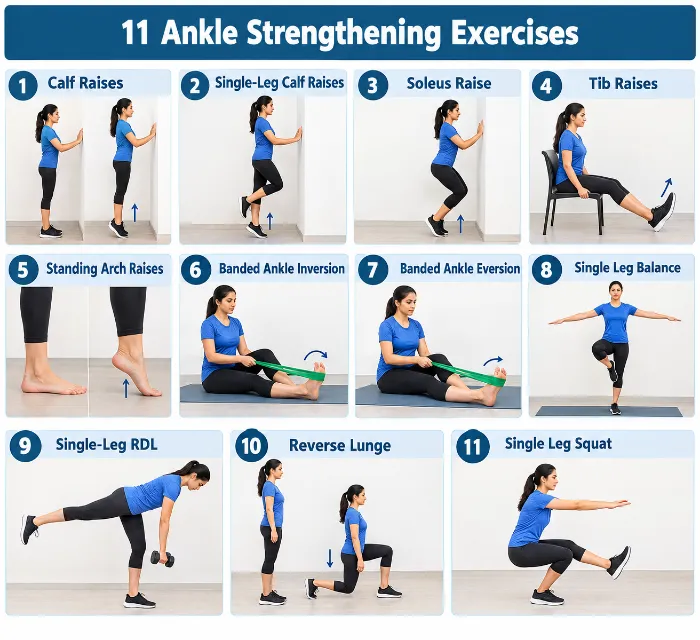
11 Ankle Strengthening Exercises:
The following exercises strengthen and stabilize the tendons and muscles around your ankle joint while also strengthening the calf, ankle, and foot muscles. Additionally, they will enhance balance. Try including these in your daily workout regimen. You can do these exercises as part of a resistance training program, as a warm-up or cool-down before or after activities, or during a brief office break.
Calf Raises:

Strength and range of motion in the lower body are improved with calf raises.
How to do it:
- To begin, place one hand on a table for balance and stand with your feet hip-width apart.
- Now lift your heels off the ground by pushing through the balls of your feet. As you maintain this position, concentrate on contracting your calf muscles.
- After that, let your heels drop back to the ground.
Single-Leg Calf Raises:
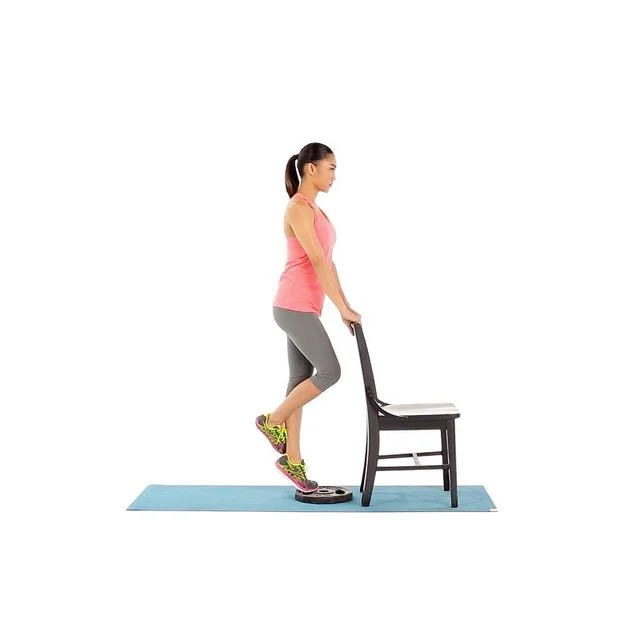
Balance is enhanced by this practice. It teaches your ankle to stay balanced when standing on one leg, which is crucial for running and walking.
How to do it:
- With your targeted foot flat on the ground and your opposing foot raised off the ground, stand with one hand on a table or wall for balance.
- To raise your heel off the ground, push up onto your toes. While you maintain this position, concentrate on contracting your calf muscles.
- Lower your heel to the beginning position.
Soleus Raise:
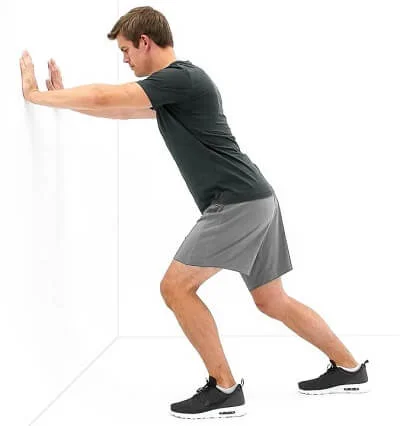
Similar to the calf raise, this exercise focuses on your soleus muscle, which is also necessary for ankle stability.
How to do it:
- Bend your knees, place one hand on a table for balance, and stand with your feet hip-width apart.
- Keeping your knees bent, push through the balls of your feet to lift your heels off the ground.
- Return your heels to the floor with ease.
Tib Raises:
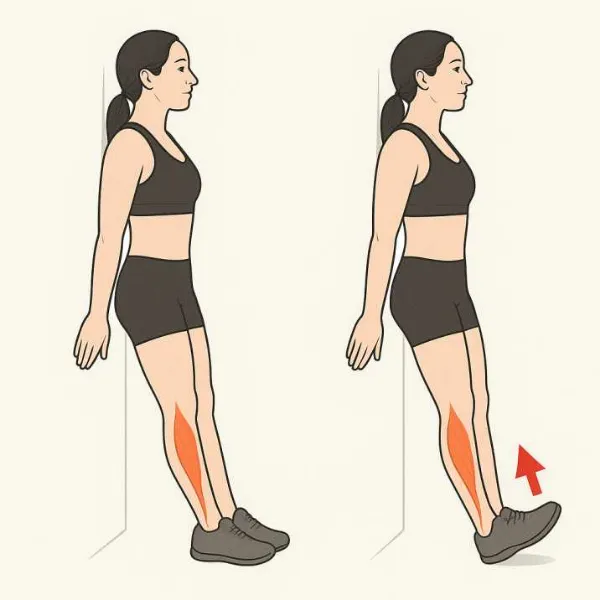
This exercise enhances foot, ankle, and shin strength. You’ll feel more balanced and comfortable when all of these structures are strong.
How to do it:
- Place your feet approximately a foot away from the wall while standing with your back against it.
- To get onto your heels, raise the front of your feet off the ground.
- Return your feet to the ground.
Standing Arch Raises:
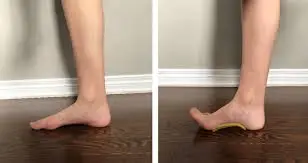
The small muscles on the underside of your foot are the focus of this exercise. To make your foot and ankle more stable, it’s crucial to develop the numerous little muscles beneath your feet that you rely on when standing and moving.
How to do it:
- Place your feet at a comfortable distance from one another.
- Slide the ball of your foot in the direction of your heel while maintaining its position. Your foot should feel as though it is arching upward in the middle.
- Pay attention to maintaining your foot’s arch.
- Return your foot to its initial position by relaxing it.
Banded Ankle Inversion:
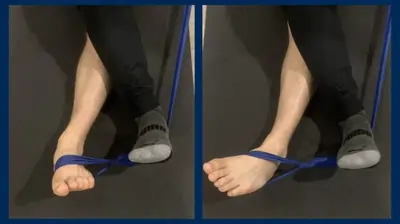
Your ankle muscles are the focus of this workout. It helps strengthen the internal ankle muscles that are crucial for stability.
How to do it:
- Wrap a looped resistance band from one of the table’s legs to the inside of your target foot while seated next to a table. Make sure the band is taut from the table leg to the inside of your foot by adjusting your foot.
- To extend the band while keeping your heel in place, lift your toes slightly off the ground and move the inside of your foot away from the table.
- Return your foot to its initial position.
Banded Ankle Eversion:
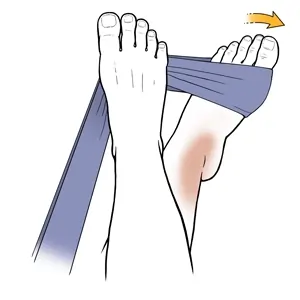
Similar to the ankle inversion, the goal of this exercise is to develop the muscles on the outside of your ankle.
How to do it:
- To begin, place your feet on their heels while you sit.
- Around the outside of your feet, close to your pinky toes, wrap a looped resistance band.
- While keeping your heel in place, extend the band by moving the front of your target foot out to the side.
- Return your foot to its initial position.
Single Leg Balance:
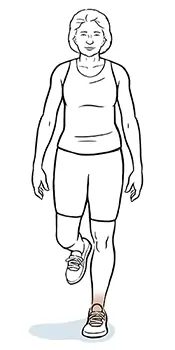
The muscles surrounding your ankle, knee, hip, and even lower back are all strengthened by this exercise. The main problem with ankles is stability, which it helps with.
How to do it:
- To start, take a comfortable, straight stance.
- To raise your foot off the ground, bend one knee and bring the heel up to your butt.
- To improve your balance, extend your other arm and grasp your foot with your hand.
- As you maintain this position, pay attention to your breathing and your balance.
- Return to standing after letting your foot drop to the ground.
Single-Leg RDL:

It enhances balance, strength, and mobility in the lower body.
How to do it:
- Place your feet at a comfortable distance from one another.
- Bend at your hips to bring your chest closer to the floor.
- Raise one leg toward the ceiling and off the ground behind you. As you hinge, your knee may be slightly bent.
- As you maintain this stance, focus your eyes on a location on the floor to aid with balance.
- Go back to the beginning position slowly.
Reverse Lunge:
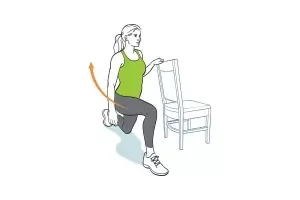
It also strengthens the entire lower leg.
How to do it:
- Place your hands on your hips or at your sides and stand with your feet comfortably apart.
- To land on the ball of your foot, take one leg back. Lower yourself into a lunge while bending your knees.
- With your front knee over your ankle, your front leg should bear the majority of your weight.
- As you hold this lunge stance, pay attention to your balance.
- As you straighten your legs and stand back up, push through your front foot.
Single Leg Squat:
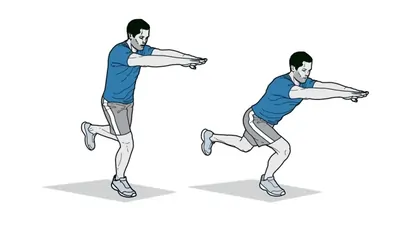
This is a more difficult movement, much like the reverse lunge. It makes you practice your balance while squatting, which calls for a lot of strength in your legs and ankles.
How to do it:
- Place one hand on a solid surface, such as a table or countertop, and stand.
- Raise one leg off the ground.
- Squat: Lean your chest slightly toward the floor, bend through your knee, and maintain a squat position.
- To straighten your knee and get back up on your feet, push through your foot.
Benefits of exercise for ankle pain:
Even if your ankle is painful or stiff, it is often safe and beneficial to move it in the proper manner. Mild exercise promotes blood flow, aids in the repair of tendons and ligaments, and prevents the joint from becoming too rigid. Instead of extensive rest or casts, clinical recommendations for ankle sprains and instability suggest early, supervised mobility and strengthening.
Exercise can help those with chronic ankle pain, such as arthritis, tendinopathy, or instability:
- Increase the power of the ankle and calf muscles that protect your ligaments.
- Regain balance and coordination to make the ankle appear less unstable and more stable.
- Over time, reduce pain and enhance everyday functioning and walking
Recovery can actually be slowed down by remaining still for extended periods of time. In order to improve long-term strength, balance, and return to activity, the majority of guidelines recommend short-term protection followed by moderate loading.
Exercises to avoid with ankle pain:
Ankle conditions are often aggravated by specific movements, particularly in the early stages following an accident or during a severe flare. Rather than being rigid regulations, these are broad recommendations. Exercise shouldn’t feel burning, sharp, or “giving way,” but rather demanding yet tolerable.
The following movements could be best to restrict or postpone:
- Cutting exercises and high-impact leaping should be done very soon after a sprain. According to guidelines, pain-controlled walking, strength, and balance should be prioritized before introducing running and leaping since the ankle can support greater loads.
- Deep landings on unstable surfaces or heavy single-leg hopping. In cases of significant Achilles tendon pain, fast hill sprints or strong calf loading may stress recovering ligaments and raise the risk of recurrent sprain. Slow, gradual loading is typically more beneficial for those with Achilles tendon issues than sudden, quick, or explosive attempts from the beginning.
- Long runs when the ankle feels unstable on rough surfaces. While you continue your strength and balance training, it is safest to start with flat, predictable surfaces to gain confidence and control.
How Do Exercises Help Prevent Ankle Injuries?
By strengthening the muscles, tendons, and ligaments that support the ankle joint, exercises can avoid ankle injuries. Walking, running, and climbing stairs are all made safer and easier by stronger ankles, which also improve balance, flexibility, and control.
Frequent ankle workouts also help your body become more adept at controlling motions and reacting fast to sudden twists or uneven steps. Exercises that focus on balance and stability can assist in enhancing body control and lower the incidence of ankle sprains.
Increasing ankle strength via regular exercise can enhance stability, facilitate more fluid movement, and eventually promote improved joint health.
How Often Should You Do These Exercises?
Depending on your current level of fitness and ankle condition, you can do ankle-strengthening exercises three to five times each week. Because your muscles, ligaments, and joints require regular exercise to improve strength and stability, consistency is more crucial than intensity. Over time, improving ankle control and lowering the risk of injury can be achieved by consistently dedicating a few minutes to strengthening, mobility, and balancing exercises.
Excessive stress might cause pain, so try not to increase the difficulty too rapidly. It’s also crucial to warm up before performing ankle exercises since it helps avoid extra stress and prepares your muscles and joints for movement. For safer outcomes, follow a regimen suggested by a medical expert if you are recovering from a prior ankle injury.
Common Mistakes to Avoid During Ankle Exercises:
To build strength and avoid unnecessary strain, do ankle exercises correctly. You may work out safely and achieve greater results by avoiding these mistakes:
- Increasing the speed of your workout too soon without giving your ankle time to adjust
- Avoiding pain or ache while carrying out the same movements
- Exercising incorrectly or with poor posture, balance, or technique
- Not warming up before beginning ankle-strengthening exercises
- Ignoring mobility and flexibility workouts instead of concentrating only on strength
Getting assessed at a joint care clinic can help discover underlying problems and direct appropriate therapy if ankle pain continues after following recommended workout routines.
FAQs:
Which exercise is best for ankle pain?
Although the most effective exercise for ankle pain can vary depending on your recovery stage, single-leg balancing and mild ankle circles are often the best places to start to increase stability and reduce stiffness.
What is the main cause of ankle pain?
Ankle sprains, which occur when the ligaments supporting the joint are strained or broken due to a sudden twist, roll, or misstep, are the primary and most frequent cause of ankle pain.
What is the best medicine for ankle pain?
Since they reduce both pain and swelling, over-the-counter nonsteroidal anti-inflammatory medications (NSAIDs) like naproxen or ibuprofen are usually the best treatments for ankle pain.
How long will it take to strengthen my ankle?
It takes two to four weeks of regular training to see the first improvements in ankle balance and stability, and six to eight weeks to see noticeable increases in joint durability and strength.
What is the best support for ankle pain?
Depending on the type and extent of your injury, the best support for ankle pain might range from straightforward compression sleeves for mild pain to stiff splints for severe pain.
What is the best treatment for ankle pain?
The RICE method—Rest, Ice, Compression, and Elevation—is the most effective initial step for acute injuries or flare-ups, but the optimal course of therapy for ankle pain depends on the underlying reason.
Which deficiency causes pain in the ankle?
A lack of vitamin D can cause ankle pain because it weakens bones and increases the risk of stress fractures and joint-related muscle pain.
Can ankle pain go away on its own?
Yes, with appropriate self-care, minor ankle pain from a small strain or sprain can go away on its own in a few days to a few weeks.
References:
- FPE Medical Review Board. (n.d.). Ankle Exercises: Strengthen & Stretch your feet – Foot Pain Explored. Foot-Pain-Explored.com. https://www.foot-pain-explored.com/ankle-exercises.html
- Keller, J. (2024, November 29). 5 Best ankle mobility exercises for ankle Pain. Keilor Road Physiotherapy Essendon. https://www.keilorroadphysio.com.au/blog-articles/2023/3/31/5-best-ankle-exercises-for-ankle-pain
- 10 best exercises to prevent ankle injuries. (n.d.-b). https://doctorkunalpatel.com/blog/orthopedics/best-exercises-to-prevent-ankle-injuries
- Calf raise. (n.d.). [Video]. Hingehealth. https://www.hingehealth.com/gb/en/resources/articles/ankle-strengthening-exercises/