Core Stabilization Exercises For Lumbar Pain
Introduction
Core stabilization exercises are an important part of managing lumbar pain and improving overall spinal support. The muscles of the abdomen, lower back, pelvis, and hips work together to stabilize the spine during everyday movements. When these muscles are weak or poorly coordinated, the lower back may experience increased stress and strain.
A well-designed core stabilization program focuses on improving muscle strength, endurance, balance, and control without placing excessive stress on the lumbar spine.
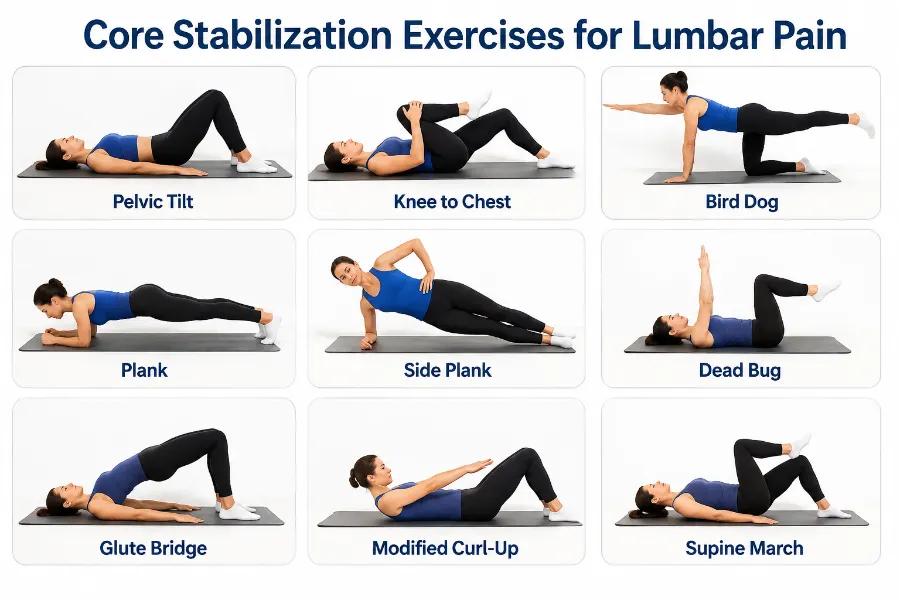
Exercises such as abdominal bracing, pelvic tilts, dead bugs, bridges, and bird dogs can help improve spinal stability and functional movement.
These exercises should be performed slowly and with proper technique. The goal is to maintain a comfortable, controlled position rather than simply performing a high number of repetitions. If an exercise causes sharp or worsening pain, it should be stopped and assessed by a qualified physiotherapist or healthcare professional.
The aim of a core stabilization program is not simply to strengthen the abdominal muscles but to help the entire trunk function as a unit. Consistent practice, correct technique, and gradual progression can contribute to better spinal control and improved confidence during everyday activities. If pain is severe, persistent, or accompanied by numbness, weakness, or other concerning symptoms, professional assessment should be sought before beginning an exercise program.
Lumbar pain is a common problem that can affect daily activities, work, exercise, and overall quality of life. One of the important factors in managing lumbar discomfort is improving the ability of the core muscles to support and control the spine.
The core includes the abdominal muscles, back muscles, pelvic muscles, diaphragm, and muscles around the hips. Together, these muscles help maintain spinal stability during movement.
Exercises to strengthen your lower back and core
Bird Dog
How to do it:
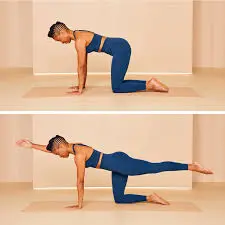
- Start on your hands and knees, placing your knees behind your hips and your hands under your shoulders.
- Before starting any activity, brace (contract) your core as tightly as you can.
- Raise your left arm and extend it forward until it is in line with your body while bracing your core. In the same motion, push your right leg backward until it is in line with your body.
- When doing this, it’s crucial to avoid bending your low back.
- After holding this posture for two to three seconds, gradually go back to the beginning position.
- Continue with your left leg and right arm.
- Do not arch your low back, and just extend your arm and leg as far as is comfortable.
Hold/Repetition: For ten repetitions, switch sides.
Glute Bridge With Band
Your back, gluteal, and core muscles will all be strengthened by this exercise.
How to do it:

- Start by lying on your back on the ground with your arms by your body, knees bent, and feet flat on the ground.
- Before you move, tighten your butt and brace your core.
- Lift your butt off the ground and keep squeezing it while bracing.
- After five seconds of holding this position, slowly return to the beginning position.
- You should feel your glutes activating throughout this exercise, so avoid hyperextending.
Hold/Repetition: five seconds of holding this position, and ten reps.
Squats
How to do it:
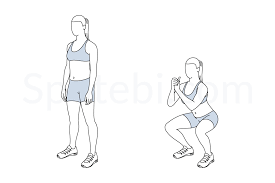
How to do:
- Starting from a standing stance, place your feet shoulder-width apart.
- Prepare your core and look directly ahead.
- Maintain a tight abdomen, then bend your knees to a 90-degree angle (as if you were sitting) and tilt at your hips.
- Use your legs first, then your glutes (squeeze your butt) to rise.
- Squatting at an angle more than 90 degrees is not advised. Your muscles will get stronger from even short squats.
Holdd/Repetition: Aim for ten to fifteen reps.
Plank
You may build your gluteal and deep core muscles with this workout.
How to do it:
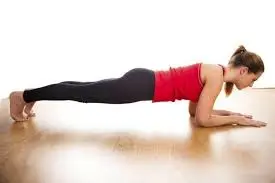
- Rest on your stomach.
- Start by placing your forearms against the mat.
- Lift your body until you are resting on your forearms.
- Make sure your spine is in a neutral posture, meaning that your butt is not up in the air or your lower back is drooping.
- After holding the plank posture for 20 to 30 seconds, drop to the floor.
- For the duration of the exercise, make sure your back remains straight.
Hold/Repetition: Try to perform this exercise two to five times.
Side Plank
The side plank is an excellent way to strengthen your lower back and sides of your core muscles.
How to do it:
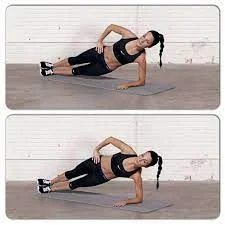
- Start by putting your body in a sideways position.
- Place your feet and legs together and position one elbow at a 90-degree angle.
- Now raise your hips off the ground while supporting your butt and core muscles.
- Use your feet and elbows to support your weight.
- Aim to maintain top-to-bottom alignment of your entire body.
- Maintain the raised posture for thirty seconds.
- Now do the side plank on the other side.
- Throughout the workout, make sure your back is aligned.
Hold/Repetition: On each side, repeat three times.
Dead Bug
In addition to strengthening the deep core, this exercise improves hip and trunk stability.
How to do it:
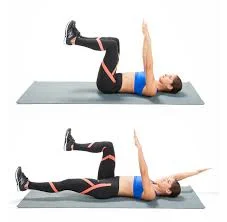
- Start by extending both arms toward the ceiling while resting on your back.
- Lift your legs (90-degree angle).
- Breathe out to lower your ribs, then try to flatten your back against the floor by bracing your core muscles and twisting your pelvis upward.
- This is the starting posture for this exercise, which you must maintain throughout.
- To begin the exercise, extend your left leg, straighten at the knee and hip, and lower it to just above the floor while keeping your lower back from bending.
- At the same time, drop your right arm back to just above the floor.
- Return your left leg and right arm to the beginning position while keeping your gluteal and abdominal muscles tight.
- Continue with your left arm and right leg.
Hold/Repetition
For 20 repetitions, switch sides.
Knee To Chest Stretch
How to do
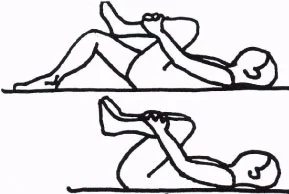
- Bend both knees while lying on your back.
- Hold one knee close to your chest for five to ten seconds.
- Go back to where you were.
- Continue with the opposite leg.
Hold/Repetition
Repeat this five to ten times for each leg.
Windshield Wipers
As you move the rest of your body, this specific exercise helps maintain your back’s stability. This exercise relieves back stiffness without putting additional strain on the spine. You may become more flexible, mobile, and limber when the low back loosens.
The windshield wiper exercise not only improves flexibility and lessens back pain, but it can also assist you in moving the rest of your body; this specific exercise helps maintain your back’s stability. This exercise relieves back stiffness without putting additional strain on the spine. You may become more flexible, mobile, and limber when the low back loosens.
The windshield wiper exercise not only improves flexibility and lessens back pain, but it can also assist you:
How to do
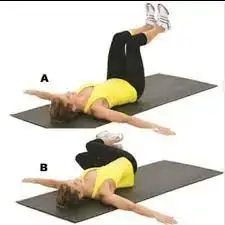
- Make your core stronger.
- Keep your hips steady.
- Take back control of your body.
Hold/Repetition: repeat 10 times
Pallof Press(Anti-Rotational Core Strength)
A lesser-known but incredibly powerful core exercise, the Pallof Press stresses anti-rotational stability, which is essential for shielding the spine from excessive twisting forces.
Why It Is Effective for Back Pain: Anti-rotational exercises, such as the Pallof Press, enhance deep core activation and lessen the incidence of lower back pain, according to physical therapy research. The Pallof Press improves the stabilizing muscles that shield the spine from rotational stress, in contrast to conventional core exercises that involve flexion or extension.
How to do
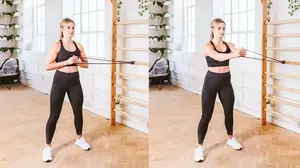
- At chest height, fasten a resistance band to a strong base.
- Hold the band at your chest with both hands while standing sideways to the anchor.
- To make the band tense, move away from the anchor.
- Press the band straight out in front of you gently while using your glutes and core.
- After holding for two to three seconds, go back to where you were.
Hold/Repetition
Do three sets of ten repetitions on each side.
Conclusion
Core stabilization exercises can be a valuable part of managing lumbar pain and improving spinal stability. By strengthening and coordinating the muscles of the abdomen, back, pelvis, and hips, these exercises can help improve posture, movement control, balance, and functional strength.
Exercises should always be performed with proper technique, controlled breathing, and gradual progression. Consistency is more important than performing a large number of repetitions. Start with simple exercises and increase the difficulty as strength and control improve.e
Regular practice may improve trunk control, posture, balance, and confidence with activities such as sitting, standing, walking, bending, and lifting. However, the goal is not simply to strengthen the abdominal muscles. Effective core training involves teaching the abdominal, back, pelvic, and hip muscles to work together while maintaining controlled spinal movement.
Remember that every person with lumbar pain may respond differently to exercise. If an exercise increases pain or causes new symptoms, stop the exercise and consult a physiotherapist or other qualified healthcare professional for appropriate guidance.
FAQs
What are some good core lumbar stabilization exercises?
To stabilize your spine, lessen lower back pain, and enhance control, lumbar core stability exercises target the deep abdominal and back muscles, such as the transverse abdominis and multifidus. The pelvic tilt, bird-dog, and dead bug are important basic movements.
What are the 3 big core stability exercises?
The modified curl-up, side plank (or side bridge), and bird-dog are the “Big 3” core stability exercises. They protect your spine and increase endurance without generating harmful bending.
How to tell if back pain is from a weak core?
If your lower back aches after standing or sitting for extended periods of time, gets better when you lie down, or flares up with basic movements like lifting or balancing on one foot, you can determine whether your back pain is caused by a weak core. Your lower back muscles overwork to maintain your spine when your core muscles are weak.
What are signs of a weak core?
Frequent pain or stiffness after sitting or standing, exhaustion from daily lifting, bad posture like bending over, and a lack of core stability are all indicators of a weak lower back. When back and core muscles lack strength, they overcompensate and tire quickly under simple loads.
What muscles are weak with lower back pain?
Weakness in supporting muscle groups, particularly the glutes, abdominals, and deep core stabilizers, is often the source of back pain. Fatigue, tension, and pain result from the lower back muscles having to overwork to compensate when these main supporting muscles are weak.
References
- Turetsky, L., & Turetsky, L. (2023b, November 1). 6 Exercises to strengthen lower back and core muscles. Back Intelligence (Creators of PostureFlow App). https://backintelligence.com/exercises-to-strengthen-lower-back/
- Drdan & Drdan. (2025, February 7). The three Best Core Exercises for Back Pain: A Research-Backed Approach. Central Ohio Spine and Joint. https://cospineandjoint.com/best-core-exercises-for-back-pain/
- Cadman, B. (2025a, April 14). How to strengthen the lower back. https://www.medicalnewstoday.com/articles/323204#strengthening-exercises