Quadratus Lumborum Syndrome
What is Quadratus Lumborum Syndrome?
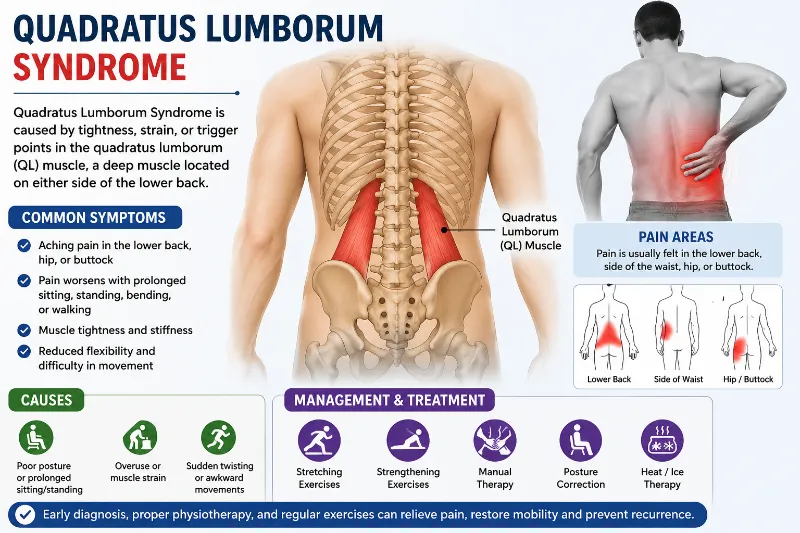
Quadratus Lumborum Syndrome is a musculoskeletal condition caused by tightness, strain, or trigger points in the quadratus lumborum (QL) muscle, a deep muscle located on either side of the lower back.
It frequently results in lower back, hip, or buttock pain, which can get worse when you sit, stand, bend, or walk for extended periods of time. Pain relief, mobility restoration, and the avoidance of recurrent symptoms can be achieved by physical therapy, posture correction, targeted stretching, strengthening exercises, and manual treatment.
What is the Quadratus Lumborum?
The quadratus lumborum is a large, square-shaped muscle located deep within the lower back on both sides of the spine. It attaches your pelvis to your lower ribs and aids in vital daily movements like:
- Keeping you upright when standing or sitting.
- Bending sideways.
- Stabilizing your spine while walking or lifting items.
Because the QL muscle operates constantly—often without your awareness—it is prone to overuse and strain.
Symptoms Of Quadratus Lumborum Syndrome
Symptoms of quadratus lumborum pain include lower back stiffness and soreness. The kind and level of pain might vary.
Lower back pain is commonly described as a deep aching pain, but it can also feel severe and acute, depending on the reason.
Although the pain usually starts at rest, it might worsen with activity. Walking, standing, and turning over in bed may make the discomfort worse.
Sneezing or coughing may cause sharp discomfort. Pain in the quadratus lumborum might even make it difficult to walk and sit.
Causes of Quadratus Lumborum Syndrome
Quadratus Lumborum Syndrome occurs when the QL muscle tightens, strains, or develops “trigger points”. Common triggers include:
- Poor posture, particularly persistent slouching or slumping to one side.
- Sitting for extended hours without breaks.
- Unequal leg length or pelvic tilt
- Lifting large items without proper form
- Overtraining specific movements without enough stretching or recovery time.
- Sudden and difficult motions, such as twisting when carrying groceries
Diagnosis
A full examination by a medical practitioner is usually required to diagnose QL syndrome. :
Health History:
The practitioner will inquire about how your pain started, what kind it is, and how bad it is. Additionally, they will ask about any recent injuries or activities that could have caused the discomfort.
Physical Assessment:
This entails palpating the QL muscle, examining your posture, and checking your range of motion.
Without including Additional Conditions:
Testing for illnesses like sciatica, herniated discs, or renal problems may be done to make sure the pain is not caused by other disorders.
Additional tests:
Additional tests such as MRIs, CT scans, or X-rays may be performed in certain situations.
The physical presentation of your symptoms, your medical history, and the ruling out of other possible reasons all play a role in the diagnosis.
Treatment Of Quadratus Lumborum Syndrome
Several therapies may assist in relieving quadratus lumborum pain. In some cases, home therapy might be helpful. In other situations, home care and medical therapies may be required to help ease the pain.
Medical Treatment
A trigger point injection involves injecting medicine directly into the trigger point to relieve pain and discomfort.
The injection might be an anesthetic, which numbs the region. In some circumstances, a steroid is administered to reduce inflammation. Drugs like muscle relaxants and pain relievers may help alleviate quadratus lumborum pain.
Some pain drugs can have adverse effects such as sleepiness, dry mouth, and fatigue and should only be used as directed.
Trigger Point Injections
Trigger point injections may help alleviate muscular spasms and quadratus lumborum pain
Exercise For Quadratus Lumborum Syndrome
Cat Cow Stretch
Cat Cow Stretch steps:
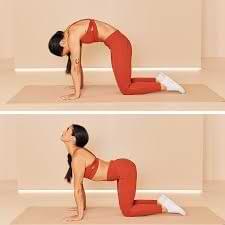
Breathe gradually as you perform this basic spinal mobility exercise.
- Start on your hands and knees
- Tuck your chin and pelvis as you slowly round your spine upward into a cat
- Then reverse the motion by arching your back and raising your chest and tailbone into a cow.
Deadlift
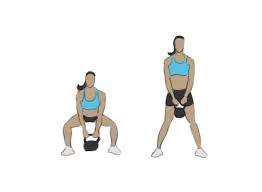
To make sure your QL isn’t overcompensating for surrounding inadequacies, strengthen your hips and glutes.
- Place a heavy dumbbell or kettlebell vertically between your feet while standing with your feet hip-width apart.
- While maintaining a neutral spine, push your hips back and gently bend your knees to grasp the dumbbell’s head or kettlebell handle with both hands.
- To stand tall and straighten your legs, exhale and push through your heels.
- To carefully reduce the weight to the floor, reverse the motion.
Quadratus Lumborum Foam Rolling
Another great method for recovering flexibility and mobility in tense muscles is foam rolling. Use this maneuver to get the blood flowing.
- Start by resting sideways on your elbow for support.
- Place a foam roller right behind the side of your body, between your pelvis and rib cage.
- For up to two minutes on each side, gently rock forth and back or side to side while taking deep breaths to relieve stress.
Child’s pose
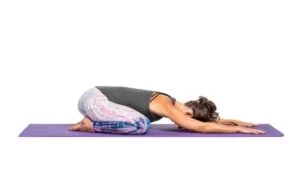
- Start on your hands and knees, with your knees slightly wider than your hips and your big toes touching.
- Stretch the patient’s arms straight out in front of you while lowering your buttocks to your heels.
- Focus on relaxing the patient’s lower back by bringing it into your awareness.
- Hold this posture for a maximum of five minutes.
Side stretch
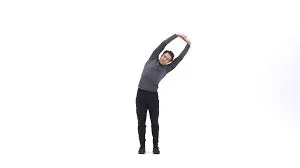
- Lift your arms over your head and interlace your fingers while standing.
- Tilt to the right while applying pressure to your legs and feet. From your hips to the tips of your fingers, you will experience a stretch.
- Look down at the floor while tucking your chin in.
- For up to 10 to 15 seconds, maintain this posture.
- On the left side, repeat.
- On each side, repeat two to four times.
Knee-to-Chest Stretch
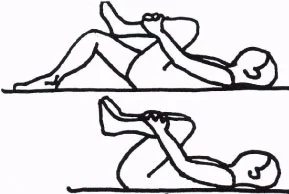
- Lie on your back.
- Keep both feet flat on the ground,
- Bring both knees gently up to your chest.
- Put your arms around your legs.
- Using your hands, grasp your opposing wrists or elbows. Use a strap or clasp the backs of your thighs if you are unable to reach.
- To extend the back of your neck, tuck in your chin a little.
- Maintain this posture for 1 to 3 minutes.
- Take a few deep breaths to relax.
- Do this two or three times.
Triangle pose
Triangle pose steps:
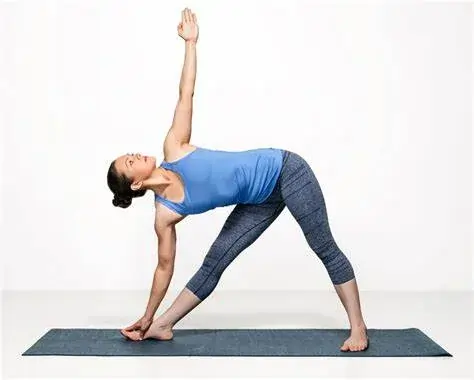
- With your left toes out at a little angle and your right toes facing forward, stand with your feet wider than your hips.
- With your palms facing down, raise your arms so they are parallel to the ground.
- As you stretch your right fingers forward, hinge at your right hip.
- After pausing for a moment, lower your right hand to a block or your right leg.
- With your palm facing away from your body, place your left hand on your hip or raise it toward the ceiling.
- You can see in the opposite direction by turning the patient’s head.
- Squeeze your lower back and core muscles to lengthen your spine.
- Maintain this posture for 1 to 3 minutes.
- On the opposite side, repeat.
Prevention
- Using a lumbar support cushion when sitting position, lifting heavy items, and bending at the knees rather than the waist.
- Keeping a healthy weight, taking regular breaks when sitting to prevent stiffness, and
- avoiding sleeping on one side are all examples of excellent posture.
How long does Quadratus Lumborum Syndrome last?
Depending on the severity of the condition and how it is treated, Quadratus Lumborum (QL) Pain Syndrome can have different durations. Overuse or sudden strain are the causes of acute cases. In this case, the pain often lasts a few days to a few weeks.
Most people heal completely in this amount of time with the right response to pain and treatment, which includes rest, ice, heat therapy, and mild stretching. Repetitive strain, bad posture, and persistent muscular imbalances are the main causes of chronic QL pain. In such a situation, if the discomfort is not appropriately treated, it may last for months or even longer.
A more thorough treatment strategy that includes physical therapy, strengthening exercises, and lifestyle modifications is also necessary for chronic pain. Most patients see relief in a matter of weeks if they receive regular treatment and proper management. Complete recovery may take longer, particularly if the underlying problems are not resolved.
Conclusion
Although common, quadratus lumborum syndrome is rarely considered. Although QL syndrome is curable and frequently avoidable, it can be uncomfortable and irritating. Preventing chronic pain can be greatly helped by knowing how this deep back muscle functions and how to take care of it. Don’t just put up with discomfort if you think your QL muscle may be the problem; a focused treatment strategy can help you restart comfortable movement.
Don’t ignore persistent hip, leg, or back pain symptoms. With the correct care, a straightforward examination may reveal something that could significantly improve your quality of life.
FAQs
What is overuse of the quadratus lumborum?
The deepest muscle in the lumbar area is the quadratus lumborum. reaches the last rib from the pelvis area. It contracts when standing, walking, and sitting, making it extremely prone to developing pain. Although overuse is typically the source of pain, weakness and tension can sometimes be considered the reason.
How is QL Syndrome diagnosed?
Your posture, mobility, and muscular tension will usually be assessed by a medical specialist, usually a physiotherapist or sports medicine physician. To determine if it matches your symptoms, they could apply pressure on the QL muscle. Typically, imaging (such as an MRI) is only performed to rule out other disorders.
What weak muscles cause tight QL?
From a biomechanical standpoint, the QL may tighten to make up for the decreased stability in the lumbar area if the iliolumbar ligament becomes loose. The lumbosacral junction is stabilized by the iliolumbar ligament, which joins the iliac crest to the transverse processes of the L4 and L5 vertebrae.
What type of muscle is the Quadratus Lumborum?
Core muscles are crucial for correct load balancing within the spine, pelvis, and kinetic chain. They spare the spine from excessive strain and are crucial for transferring weight between the upper and lower bodies. The quadratus lumborum muscle is a continuation of the transverse abdominal muscle.
Can stretching help QL pain?
QL-related pain and discomfort can be reduced by regular position changes when sitting and standing, gentle stretching, and strengthening activities. Long stretches of time spent in one posture or situations where your core needs more support might overwork this muscle.
What to avoid with QL pain?
Consider it similar to treating a minor ankle sprain: stay away from aggravating motions but continue to move gently. Relative Rest, Not Bed Rest: Avoid activities like heavy lifting and prolonged sitting that exacerbate symptoms.
References
Quadratus lumborum syndrome: an overlooked cause of back and hip pain. (n.d.). https://blog.elitemedicalsupply.com/quadratus-lumborum-syndrome-an-overlooked-cause-of-back-and-hip-pain
Sparacino, A. (1970b, January 1). Cranky QL? These 9 stretches and exercises can help release (and reinforce) your lower back. https://www.onepeloton.com/blog/quadratus-lumborum-stretches-exercises
Cronkleton, E. (2023, April 24). 10 QL stretches to relax your spine. Healthline. https://www.healthline.com/health/quadratus-lumborum-stretch#childs-pose
Gill, J. (2026, January 30). Quadratus lumborum (QL) pain syndrome: deep lower back pain causes and clinical treatment. Bodytonic Clinic. https://bodytonicclinic.co.uk/blog/quadratus-lumborum-pain-syndrome/