Volkmann’s Ischemic Contracture
What is Volkmann’s Contracture?
Volkmann’s Ischemic Contracture (VIC) is a serious condition that occurs when blood flow to the forearm muscles is severely reduced, usually after a fracture, tight bandage, or untreated compartment syndrome.
Following this injury, the forearm’s arteriovenous circulation is compromised, resulting in reduced blood flow and hypoxia, which can harm muscles, neurons, and the vascular endothelium. As a result, the forearm muscles shorten (contract).
Signs and Symptoms
Just before real contracture, the most significant symptoms and indicators of compartment syndrome are visible. The five Ps of compartment syndrome are as follows: pulselessness, pallor, paralysis, paraesthesias, and pain, which is typically the first symptom.
As one of the first indications of compartment syndrome, pain will probably worsen when the affected hands and fingers are extended. This should be promptly followed by an examination to check for the possible development of Volkmann contracture itself. The degree of compartment syndrome may also be determined by palpating the forearm’s tissue hardness, the radial artery’s pulse volume, and its characteristics.
There are many degrees of severity for the malformation seen in this condition:
- Mild: Two or three fingers with flexion contracture and little to no loss of feeling
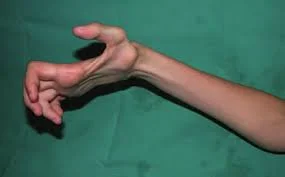
- Moderate: The thumb is positioned palmarly, and all fingers are flexed. In this situation, the hand generally loses feeling, and the fist may stay permanently flexed.
- Serious: Every forearm muscle, including the flexors and extensors, is affected. This is an extremely restrictive condition.
Causes
Volkmann’s ischemic contracture can result from any upper arm or elbow fracture, although it is particularly associated with supracondylar humeral fractures. It can also occur due to fractures of the forearm bones if they result in bleeding from the forearm’s main blood vessels.
The illness might be caused by blockage of the brachial artery close to the elbow, which could result from compartment syndrome, incorrect use of a plaster cast, or poor use of a tourniquet.
This contracture may be classified into three severity levels:
Mild
- Muscles: just a portion of the flexor digitorum profundus muscle was affected by that localized contracture.
- Clinical Presentation: flexion contracture in two or three fingers, usually including the ring and long fingers.
- Sensory Impact: minimal to none
- PROM stretching, progressive splinting, and AROM exercises are therapeutic methods for managing Volkmann’s contractures.
- It often manifests as bending of two or three fingers, usually the middle and ring fingers.
Moderate
- Muscles: flexor digitorum profundus, flexor pollicis longus, and possibly a few superficial muscles, including flexor carpi radialis, flexor carpi ulnaris, and flexor digitorum superficialis.
- Clinical Presentation: appears as a claw hand with palmar flexion of the wrist and flexion of all digits.
- Sensory Effects: mild sensory impairments in the ulnar and median nerves. (More in median n.)
- Surgery is not necessary for therapy; all fingers are bent (flexed). When the thumb is trapped in the palm, the wrist may be trapped in a flexed posture, and the hand often loses some sensation. It may also affect superficial muscles such as the flexor digitorum superficialis, flexor carpi ulnaris, and flexor carpi radialis. The typical claw hand picture, which manifests as bending of all five digits and the wrist, is caused by fibrosis of the above-mentioned muscles. Additionally, common is sensory impairment in regions of the ulnar and median nerves.
Severe
- Muscles: contractures in all of the forearm’s flexor and extensor muscles
- The clinical sign includes intrinsic muscular dysfunction and severe contracture abnormalities.
- Significant sensor impairments from the median and ulnar nerves are the sensory effects.
- Surgery is not necessary for therapy; all forearm muscles, including the flexion and extension of the wrist and finger joints, are affected; the disease is almost severe. The wrist and fingers move very little.
- In extreme circumstances, this kind of contracture occurs. and manifests as both flexor and extensor involvement. Distorted contractures with severe sensory deficiencies are the result. Long-term mild contractures of this kind have the potential to progress to severe VIC.
Pathophysiology
When muscles survive prolonged ischemia injury, Volkmann contracture occurs. Acute arterial emboli or elevated compartmental pressures may be the cause of reduced blood flow to the forearm, leading to ischemia.
Compartment syndrome is indicated by intracompartmental pressures of more than 30 mmHg (normal: less than 10 mmHg), which severely restricts arterial circulation. Long-term myonecrosis causes fibroblastic growth, cicatrix shortening, and myotendinous adhesions, which eventually lead to contractures and a fibrotic pull on the fingers and wrists.
What are Diagnostic Procedures?
Monitoring pressure. There are several ways to quantify intracompartmental pressure (ICP), such as:
- Wick catheter
- Basic needle manometry
- Techniques for infusion
- Transducers of pressure
- Needles with side chambers
- Uncertainty surrounds the critical pressure needed to diagnose compartment syndrome. Several writers think about surgery if:
- More than 30 mmHg of absolute intracompartmental pressure
- A difference of more than 30 mmHg between the intracompartmental and diastolic pressures
- More than 40 mmHg is the difference between mean arterial pressure and ICP.
Tests and Exams
Focusing on the affected arm, the medical professional would do a physical examination. In-depth inquiries concerning prior injuries or conditions affecting the arm would be made if a physician suspected Volkmann contracture. Among the tests that might be performed are:
- An X-ray of the arm
- Tests to evaluate the function of the muscles and nerves
Medical Treatment
The best treatment for this illness is prevention. However, there are instances in which surgery might be necessary. A supracondylar fracture is the primary cause of VC (Volkmann’s contractures), and every effort must be made to promote fracture healing. An immediate fasciotomy is advised to prevent future problems when the intra-compartment pressure (ICP) is greater than 30 mmHg.
Raised ICP endangers the limb’s survival, and compartment syndrome (CS) is a serious medical emergency. Therefore, decompression—removing all dressings down to the skin—and fasciotomy—surgically opening the fascia surrounding the muscles to create more room for the internal structures—are necessary.
In order to prevent Volkmann’s contractures from developing, this is done. Tendon sliding and neurolysis operations (median and ulnar) should be performed in addition to extensor transfer procedures in cases with significant Volkmann’s contracture.
Lastly, debridement of damaged muscle with scar tissue releases and rehabilitation techniques may be used in serious cases of Volkmann’s contracture. Physical therapy and occupational therapy increase the range of motion and function following an accident.
Physical Therapy Treatment
Physiotherapy aims to re-educate muscle movement in all four surgical techniques. Before surgery, muscle strength, joint mobility, and sensory health are evaluated.
Postoperative care after surgery:
- Provide immobilization together with a corrected splint.
- This helps with movements and keeps the contractures in their proper posture.
- Measures like hand elevation and diapulse
- To reduce pain and inflammation, active resistance motions of the associated joints are performed.
The basic therapeutic principles during mobilization are
- Taking care of the anesthetic regions
- Muscle action reeducation
- Reeducation through the senses
- To increase the effectiveness of operations
- Splint modification to improve a function.
- It’s crucial to make sure that movement returns following surgery by:
Techniques for passive stretching
To increase soft tissue elasticity, perform range-of-motion exercises.
In order to maintain balance in agonist and antagonist pull during joint movement, another component of the treatment plan involves activating and strengthening the weak agonist. Progressive. In mild to severe instances of Volkmann’s contracture, massage, splinting, passive stretching, and tendon gliding may be used.
The patient might train affected muscles cooperatively by using the electromyographic equipment. Both the patient and the therapist communicate more, and the patient is more receptive.
Prevention
Increasing blood flow following an injury and lowering compartmental pressure on the muscles are necessary for the condition. It is necessary to remove any bandages, splints, or other objects that might be preventing blood flow.
To relieve pressure inside the muscle compartment, a fasciotomy can be necessary.
Complications
Treatment-related complications for Volkmann contracture vary depending on the method. Changes in feelings (77%), dry and scaly skin (40%), pruritus (33%), and discolored wounds (30%) are common side effects of fasciotomy wounds. Patients are often greatly distressed by the ugly look of their wounds; 23% of patients change their behavior to conceal their scars.
A possible side effect of tendon transfer surgery is over- or undertensioning. Even the most competent hands may experience these since the knot may slide or loosen. Following flexor origin slide surgery, concerns about hematoma development and wound dehiscence may arise. Complications are additionally connected to functional free muscle transfer surgery. The most frequent ones include tendon adhesion forms, flap loss, infection, and scarring.
Conclusion
Following a distal radial fracture with secondary Volkmann’s ischemic contracture, Grade II Seddon Classification demonstrated an improvement in hand function as assessed by the Patient-Rated Wrist Evaluation questionnaire through stretching and strengthening of the hand’s muscles and soft tissues.
FAQs
What fracture causes Volkmann’s contracture?
A supracondylar humeral fracture is usually related to Volkmann ischemic contracture. However, this deformity might arise from any elbow or arm injury. Acute compartment syndrome-related forearm ischemia is the primary cause of supracondylar humeral fractures.
Why does a supracondylar fracture of the humerus cause Volkmann’s ischemic contracture?
Volkmann’s contracture frequently involves the humerus of the upper arm. An arteria brachialis circulation deficit results from a fracture of the supracondylar region. It comes on due to circulation obstruction and a lack of blood flow to the muscles and nerves.
Why is Volkmann’s contracture such a serious condition?
Due to an extensive loss of blood supply to tissues, Volkmann ischemic contracture causes nerve injury and irreversible shortening of the forearm muscles. It is a consequence of hidden compartment syndrome. The disorder is characterized by fingers, hands, and wrists that simulate claws.
References
- Wikipedia contributors. (2025b, July 18). Volkmann’s contracture. Wikipedia. https://en.wikipedia.org/wiki/Volkmann%27s_contracture
- Mirza, T. M., & Taqi, M. (2023, May 8). Volkmann Contracture. StatPearls – NCBI Bookshelf. https://www.ncbi.nlm.nih.gov/books/NBK557754/