Thoracic Mobility Exercise
Introduction
Thoracic mobility exercises improve movement and flexibility in the mid and upper back, known as the thoracic spine. This region plays an important role in maintaining good posture and allowing comfortable rotation, bending, reaching, and overhead movements. When the thoracic spine stiffens, other areas, such as the neck, shoulders, and lower back, may compensate during everyday activities.
Prolonged sitting, desk work, poor posture, limited physical activity, and repetitive movements can contribute to thoracic stiffness. Mobility exercises use gentle rotation, extension, and side-bending movements to maintain or improve the normal range of motion of the upper back. They can also help reduce feelings of stiffness and make movements such as turning, reaching, and lifting feel easier.
Regular thoracic mobility work can be particularly useful for office workers, older adults, athletes, and people who spend long periods sitting. Exercises should be done comfortably and gently. If a movement causes sharp or increasing pain, stop the exercise and seek advice from a physiotherapist or healthcare professional.
Thoracic mobility, flexibility, and strength can be improved by targeted stretches, yoga postures, and dynamic exercises. Exercises may be modified in a variety of ways according to your requirements.
The top and middle part of your back is referred to as the thoracic spine, which is the longest segment of the spine. It has twelve vertebrae, including T1 to T12, which are located above the lumbar (lower back) spine and below those in the cervical (neck) spine.
The thoracic spine may move in several planes; however, its main functions are stability and force absorption. It has the ability to stretch, rotate, flex or round forward, and flex laterally (side bend).
Maintaining a straight posture, taking deep breaths, and carrying out daily tasks like twisting, reaching into a cupboard, getting out of a car, and bending down to tie your shoes all depend on thoracic mobility. Reduced range of motion, breathing problems, stiffness, neck or lower back pain, and a significant impact on the forces affecting the rest of the body can all result from limited thoracic mobility.
Working at a work surface for extended periods of time and other repeated postures and movements that result in rounding forward are common causes of stiffness and pain in this area. Exercises that force you to bend forward often, like cycling, or maintain an upright posture with minimal movement, like ballet, can also help. Your thoracic spine may become more flexible and less painful if you perform specific stretches and exercises.
Exercises
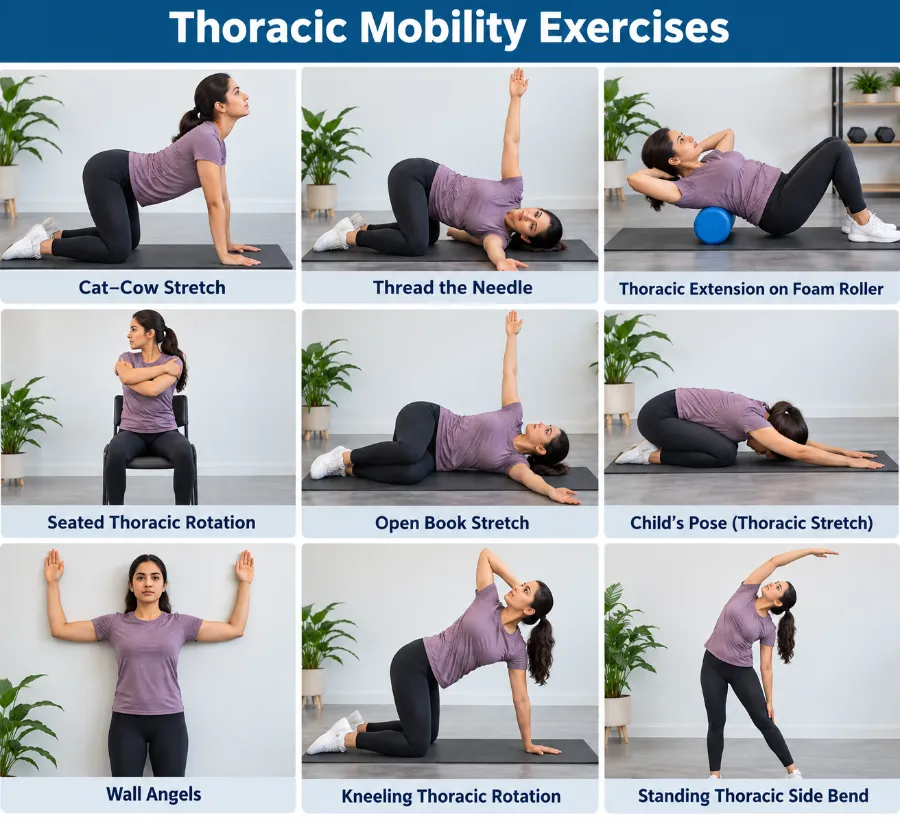
Cat-Cow
Originating in yoga, the Cat-Cow Pose is a popular and powerful fundamental pose utilized in many other therapies.
How to do
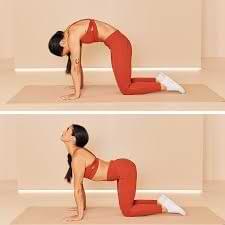
- Beginning on all fours, align your knees with your hips and your hands with your shoulders.
- Put your spine in a neutral posture to begin.
- Breathe out such that your head falls while your hands are pressed into the ground and your mid-back is curved toward the ceiling.
- Take a breath to bring your spine back to neutral, then keep extending so that your chin rises and you can look up. Keep your core muscles strong and raise your chest and spine to high levels.
- Aim to keep your movements effortless.
- Hold for 5 to 10 seconds at the conclusion of each movement; repeat 8 to 12 times.
You may perform the same exercise while standing with your hands on a work surface or counter if kneeling is not an option. The surface needs to be at or below hip level. The exercise can also be done with your hands on your knees while seated in a chair.
Advice: Breathe deeply and fully throughout. Be careful not to overarch your lower back when you go into extension.
Thread The Needle
An excellent exercise for thoracic rotation with a small amount of extension is threading the needle. It is highly effective and less likely to result in lower back rotation because of the additional difficulty of fighting against gravity and being on all fours.
How to do
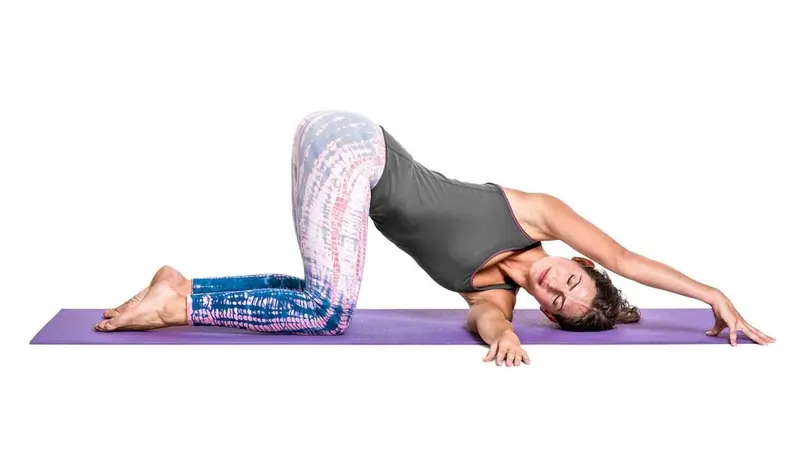
- Start on all fours, align your knees with your hips and your hands with your shoulders.
- Put your spine in a neutral posture to begin.
- Take a breath and raise your right hand, palm facing away from your body, toward the ceiling.
- Breathe out, then lower your right arm across your body and place it on the ground under your left arm.
- Let your eyes follow your right arm until your right cheek and shoulder touch the floor.
- Lift your left arm into the air to expand your shoulder and chest once you’ve threaded the needle; inhale deeply.
- Return to the beginning position by bringing your left arm back down.
- Repeat the stretch on the opposite side.
- Hold the stretch for five to ten seconds after completing the exercise six to eight times on each side.
Advice: Keep breathing completely into your ribs and move at a slow speed.
Downward Facing Dog
A great mobility exercise for thoracic extension and opening up the front of the shoulders is downward-facing dog.
How to do
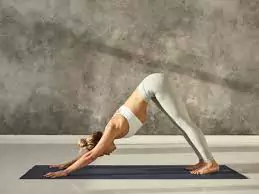
- Start on your hands and knees.
- Breathe in, then push your hips up and away from the floor as you exhale.
- Bend at the hips.
- To push your chest through your arms and toward your legs, take a breath.
- Breathe out to move your weight forward, then go back to where you were before.
- For three sets, repeat eight to twelve times.
Advice: Go slowly to moderately, resting at the top of the pose to take a deep breath and feel your spine extend. If the stretch is too hard, keep your knees slightly bent. Alternatively, you may make this stretch easier by resting your arms on a table, chair, or counter.
Supine Spinal Twist
The lower back may be stretched in a circular movement using this exercise.
How to do
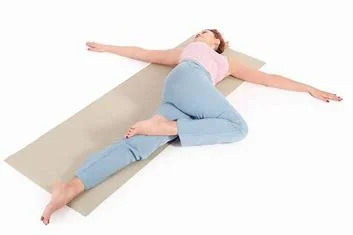
- With your arms out at your sides and your legs straight, lie on your back. Your body should resemble a T.
- Raise your right knee to your chest.
- Take a breath, then turn your body to the left as you exhale, trying to lower the inside of your right knee to the floor. Next, turn your head to the right.
- After three seconds of holding this stretch, turn back to the beginning position.
- After eight to twelve repetitions of this left-hand movement, switch sides.
- Hold the stretch for 5 to 10 seconds after completing 8 to 12 repetitions on each side.
Advice: For extra support, think about putting a soft pillow or rolled-up towel under your head.
Thoracic Extension On Foam Roller
You may strengthen your trunk muscles, extend your thoracic spine, and improve your upper body’s range of motion by using a foam roller.
How to do
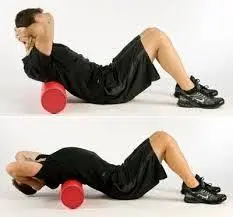
- Sitting with your back to the roller, place it horizontally on the floor.
- The sides of your shoulder blades should rest on it when you lean on it.
- To support your neck, ground your feet, bend your knees, and put your hands behind your head.
- Raise your hips a little with your breath. Make a curve in your upper back by opening your chest and bending back over the roller.
- Pay attention to sensitive regions as you roll your upper back up and down.
- Allow your body to soften toward the floor by taking deep breaths into your rib cage.
- In each posture, take a few breaths.
- Release your hands and extend your arms back and up if your neck feels supported.
- Moving up and down your mid-back, repeat five times for three sets.
Advice: Keep breathing deeply into the rib cage. Put your hands, a block, or a hard cushion below your head if the arched position is causing any neck pain.
Child’s Pose
Child’s Pose can assist in extending your spine and stretching your shoulders, lower back, and chest muscles.
How to do
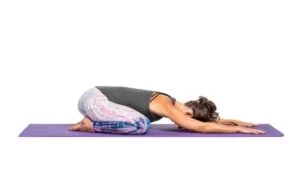
- Get on all fours to begin.
- Take a breath, then sit back on your heels as you release it. Put your hands forward and lower your forehead to the floor.
- Feel the stretch from your lower back to your fingers as you gently inhale and exhale.
- For three sets, hold this stance for 30 to 60 seconds.
Advice: Use a blanket or bolster under your forehead, stomach, or thighs for additional support.
Seated Spinal Twist
The main function of the thoracic spine, rotation, is the main objective of this exercise.
How to do
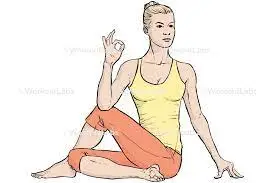
- Lengthen your spine while sitting on a chair with your buttocks at the front edge.
- Put your hands on your knees.
- Breathe in, then exhale and turn to the left, placing your right hand on your left knee and your left arm behind you. Keep your spine neutral while you rotate, and see yourself growing taller.
- To go back to the center, take a breath. Repeat oppositely.
- Hold the stretch for five to ten seconds at the conclusion of each of the eight to twelve repetitions of the whole sequence.
Advice: To avoid your pelvis from moving, keep your legs tight. Feel the rotation of your spine originating from above your waist. With each repeat, try to get taller while maintaining your breathing.
Seated Side Stretch
This sitting exercise can bend the thoracic spine in a lateral plane and offer deep stretches for the arms, lateral stretches, and lower back.
How to do
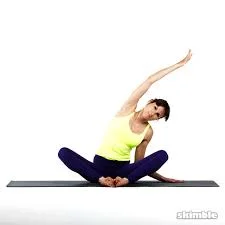
- With your knees slightly apart and your feet together, take a seat on the mat.
- Put your arms by your sides.
- With your palm facing front, raise your left arm to your side and bend it at a 90-degree angle.
- Hold the seat’s edge at your side with your right hand.
- Raise your left hand over your head and stretch it to the right toward the ceiling while maintaining a straight spine, creating the appearance of an arch.
- Concentrate on making the left side of your body longer.
- Repeat on the opposite side after exhaling to go back to the beginning position.
- Hold each stretch for five to ten seconds after completing eight to twelve stretches on each side.
Advice: Try to maintain a long spine and hold your breath in the rib cage.
Lower Back Rotation Stretch
This exercise may stretch your obliques and outside hip muscles in addition to the pec muscles and the front of your chest. “Those with shoulder pain or restricted shoulder mobility typically find it to be a good option.”
How to do
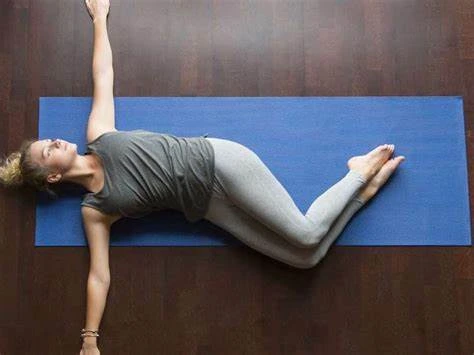
- Lie comfortably on your back
- Keep your knees bent
- Keep your feet flat on the ground.
- Pull one leg across your body and toward the floor with your hand while twisting your back.
- Stretch your other arm to your side while keeping your upper back on the floor as you straighten your other leg.
- Go back to where you were.
Scapular Squeeze
This is a great exercise in general, but it’s especially beneficial for strengthening the thoracic cavity. By strengthening the muscles between your shoulder blades and spine and extending the front of your chest, it can improve your posture. Those who spend a lot of time sitting may occasionally experience a little weakening of these muscles.
How to do
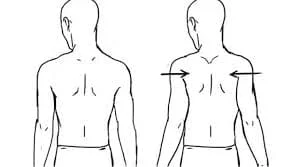
- With your elbows resting at your sides and bent to a 90-degree angle, stand.
- Move your elbows and shoulders back while squeezing your shoulder blades together.
Benefits Of Thoracic Mobility Exercise
Exercises for thoracic mobility assist in strengthening your back and enhance the physical health of your spine. Here are several other ways they improve overall wellness, body, and back.
Improved alignment. Perfect posture does not exist. However, prolonged use of any position might be harmful to your back. These exercises help maintain the health of your spine and reduce the negative effects of prolonged sitting. Enhanced diaphragmatic function, strength, and flexibility. That’s a formal way of explaining that these activities can improve breathing and lung function.
Stability of the core. Your whole trunk, including your diaphragm, pelvic floor, lower back, and abdominals, makes up your core. Core activation is supported by adequate thoracic mobility. Consequently, this is essential for general strength and balance.
Less pain in the shoulders and neck. Changes in the spine are a normal part of ageing. These alterations frequently result in no symptoms at all. However, they can occasionally lead to alterations in adjacent joints, raising your chance of experiencing pain in those regions, like your shoulders and neck. Tension headaches and shoulder and neck pain can be avoided or reduced by maintaining good thoracic mobility.
Conclusion
Thoracic mobility exercises are an effective way to maintain flexibility and healthy movement in the middle and upper back. Regular practice can help reduce stiffness, improve posture, support better shoulder and neck movement, and make everyday activities more comfortable. These exercises are particularly useful for people who spend long hours sitting, working at a computer, or maintaining the same posture for extended periods.
For the best results, perform thoracic mobility exercises slowly and with proper technique, staying within a comfortable range of motion. Consistency is more important than forcing a deeper stretch. If an exercise causes sharp pain, numbness, tingling, dizziness, or worsening symptoms, stop and consult a physiotherapist or healthcare professional. With regular practice and appropriate guidance, thoracic mobility exercises can contribute to a more flexible, mobile, and functional spine.
FAQs
What is poor thoracic mobility?
The 12 vertebrae that run from the base of your neck to your lower rib cage make up your mid-back. If you have poor thoracic mobility, your mid-back will be rigid, tight, and unable to extend, rotate, or bend sideways.
What are the symptoms of poor thoracic mobility?
Stiffness or a dull pain in the mid-to-upper back is the main sign of inadequate thoracic mobility, and it is frequently accompanied by a limited capacity to twist or arch the upper torso.
Which exercise is best for mobility?
Because it actively targets several main joints and muscle groups at once, the World’s Greatest Stretch is often regarded as the best overall exercise for mobility.
What are the top 5 mobility exercises?
The World’s Greatest Stretch, Cat-Cow, 90/90 Hip Stretch, Deep Squat Hold, and Thoracic Spine Rotation are the top 5 mobility exercises.
How to self-mobilize the thoracic spine?
Thoracic self-mobilization releases tight mid-back joints and enhances posture using soft movements and equipment like foam rollers or massage balls.
References:
- Menzies, R. (2026, March 30). 8 Thoracic mobility exercises for a strong, Pain-Free back. Healthline. https://www.healthline.com/health/fitness/thoracic-mobility-exercises
- Seated PEC stretch. (n.d.). [Video]. Hingehealth. https://www.hingehealth.com/gb/en/resources/articles/thoracic-mobility-exercises/
- Ryan-Admin. (2024, February 22). 5 Exercises for thoracic mobility [UPDATED]. Movement Enhanced. https://movementenhanced.com.au/5-exercises-for-thoracic-mobility-updated/