How to Straighten Your Spine with Exercise?
Introduction:
Good posture, less pain, and total bodily balance all depend on maintaining a proper alignment of the spine. Targeted exercises can be quite effective in restoring alignment when the spine becomes rounded as a result of bad habits, weak muscles, or prolonged sitting.
Increasing flexibility, retraining your posture, strengthening your core, and enhancing the endurance of your back muscles are all natural ways to straighten your spine.
With regular practice, these exercises maintain the natural curvature of the spine, enabling you to move more easily, stand taller, and avoid chronic pain.
Benefits of Straightening Your Spine with Exercise:
There are several advantages to straightening your spine through focused exercise, which enhances posture and general health. These exercises support the spine’s natural curves by strengthening the back, core, and stabilizing muscles, which lessens joint stress and relieves persistent neck or back pain.
Better alignment improves breathing, circulation, and balance, while increased flexibility and mobility make daily tasks more comfortable. By helping you stand taller and move more effectively, regular spine-correcting exercises not only help you avoid future posture issues but also boost your confidence and energy levels.
How to Straighten Your Spine with Exercise Video:
Exercises to Straighten Your Spine:
Child’s Pose:
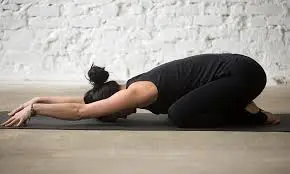
By allowing the back muscles to relax, extend, and release stored tension, Child’s Pose is a mild yet incredibly powerful exercise for straightening your spine. The position naturally extends the entire spine from the lower back to the neck as you fold your body forward and extend your arms, encouraging decompression and better alignment.
This position encourages your back to revert to its natural, extended shape, which helps mitigate the impacts of prolonged sitting, slouching, and bad posture. Additionally, it expands the hips and releases tension in the lumbar area and glutes, which frequently cause spinal instability. You can increase flexibility, lessen stiffness, and gently support a straighter, healthier spine by doing Child’s Pose regularly.
Cat-Cow Stretch:
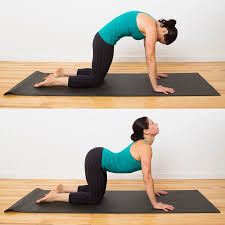
By raising awareness of your spinal alignment, releasing stiffness, and enhancing mobility, the Cat-Cow Stretch is a dynamic exercise that helps straighten your spine. Each segment of your spine—cervical, thoracic, and lumbar—moves through its full range of motion as you alternate between arching your back upward (Cat) and dipping it downward (Cow), which helps to release tense muscles and ease postural stress.
This soft flow strengthens the deep core muscles that promote healthy spinal alignment while improving flexibility in the neck, shoulders, and back. The exercise also promotes relaxation and improved body control by syncing your breath with each movement, which makes it simpler to maintain an upright, aligned posture throughout the day.
Regular Cat-Cow practice can greatly enhance spine health, reduce pain from extended sitting, and encourage more balanced, fluid movement.
Cobra Pose:
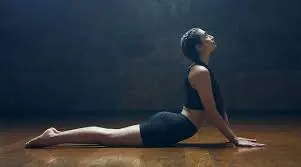
By opening the chest and gently extending the spine, Cobra Pose is a potent spine-strengthening exercise that helps combat forward head position and slouching. The posture helps restore the normal curvature of your spine by using the muscles in your upper back, lower back, and core as you raise your chest off the ground and pull your shoulders back.
The spine, chest, and hip flexors become more flexible as a result of this controlled extension, which also lessens the tightness caused by prolonged sitting. Regular Cobra Pose practice can improve your posture, strengthen your spine, and treat mild back tightness.
By enlarging the rib cage, the stretch also facilitates better breathing and makes it simpler for your body to keep an upright, aligned posture all day.
Superman Pose:
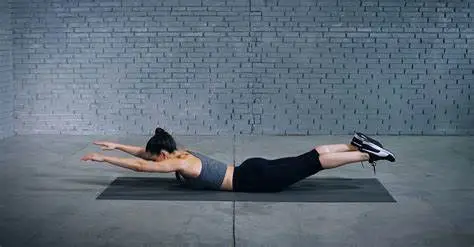
The muscles that sustain a straight and stable spine can be strengthened with the Superman Pose. The entire posterior chain, including the lower back, upper back, glutes, and hamstrings—muscles crucial for preserving correct spinal alignment—is worked as you simultaneously raise your arms, chest, and legs off the ground.
By strengthening the spine’s natural extension and enhancing general back endurance, this exercise helps mitigate the negative effects of bad posture and extended sitting.
Elevating the limbs also promotes spinal lengthening, which lessens stiffness and aids in the body’s relearning of an upright posture. Superman Pose improves balance, strengthens the back, and offers the structural support required to maintain a straight spine during daily activities with regular practice.
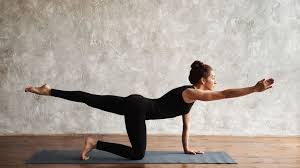
Bird Dog Exercise:
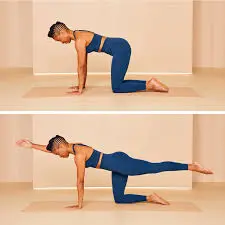
Because it strengthens the deep core and back muscles that are in charge of stability and alignment, the Bird Dog exercise is among the finest ways to straighten your spine. Your body is taught to maintain a neutral spine while you stretch one arm forward and the opposing leg backward, training the muscles to support good posture in daily tasks.
A solid foundation for spinal alignment is created by this deliberate action, which engages the lower back, glutes, abdominals, and shoulder stabilizers. Additionally, it enhances coordination and balance, making your body move more effectively and lowering the likelihood of dangerous bending or twisting.
Bird Dog helps you sit, stand, and walk more confidently by strengthening your spine’s natural upright position, improving core endurance, and reducing back pain with consistent practice.
Seated Spinal Twist:
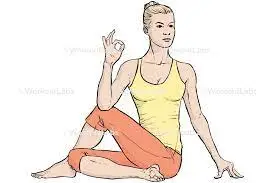
By increasing rotational flexibility and releasing tension throughout the entire back, the Seated Spinal Twist is a great exercise for straightening your spine. The exercise helps to address stiffness that contributes to bad posture by stretching the muscles surrounding the spine, such as the shoulders, mid-back, and lower back, while you gently twist your torso to one side.
By decompressing the vertebrae and improving mobility in the thoracic spine—which is frequently stiff from extended sitting—this twist also promotes appropriate alignment. The exercise also encourages healthier movement patterns, improves circulation to the spinal tissues, and raises awareness of how your spine should feel when it is properly aligned.
Regularly performing Seated Spinal Twists keeps your spine flexible and upright, eases tension, and helps you regain equilibrium in your posture.
Plank:
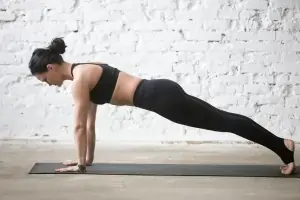
By creating stability and support throughout the entire midsection, the plank is a potent core-strengthening exercise that is essential for straightening your spine. Your deep core muscles, especially the transverse abdominis, obliques, and spinal stabilizers, are completely engaged while you hold your body in a straight, aligned position.
This helps to maintain good posture during the workout and during everyday activities. The muscles that keep your lower back from drooping or overarching—two frequent causes of spinal misalignment—are strengthened by this prolonged stimulation. Additionally, the Plank teaches you how to maintain a neutral and supported spine while also improving shoulder stability and general body awareness.
It strengthens the solid base required for a naturally straight and upright spine, improves balance, and lessens back pain with regular practice.
Side Plank:
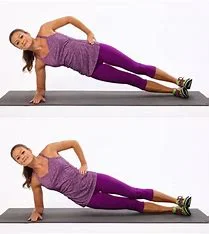
Because it works the deep core and oblique muscles that provide lateral stability and good alignment, the side plank is a great exercise to straighten your spine. The exercise develops the muscles along the sides of your torso, which are crucial for preventing the spine from bowing or collapsing to one side, by raising your hips and keeping a straight line from head to feet.
In addition to engaging the lower back, hips, and shoulder girdle, this stabilization helps balance the spinal muscles, which frequently become unequal as a result of bad posture or daily routines. The Side Plank increases your ability to keep an upright, aligned posture while moving, lessens the strain on your lower back, and increases your total core endurance.
It promotes a straight, secure, and balanced spinal alignment by strengthening and symmetrizing the muscles that support the spine with regular exercise.
Bridge Pose:
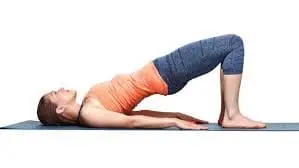
Because it develops the muscles that support appropriate alignment, especially the glutes, hamstrings, and lower back, the Bridge Pose is a very powerful exercise for straightening your spine. The position releases pressure on the lower back from weak or tense muscles by lifting your hips off the ground and forming a straight line from your shoulders to your knees.
Additionally, this upward pull helps stretch the hip flexors and open the chest, two areas that are frequently responsible for poor posture and a rounded spine. Bridge Pose reduces stiffness and increases overall mobility while encouraging the spine to preserve its natural curvature by activating the core and stabilizing muscles.
Bridge Pose reduces stiffness and increases overall mobility while encouraging the spine to preserve its natural curvature by activating the core and stabilizing muscles. Regularly performing this exercise improves spinal support, lessens the discomfort associated with extended sitting, and encourages a better, more aligned posture during daily tasks.
Conclusion:
One of the best and most natural ways to improve posture, lessen discomfort, and improve overall body alignment is to straighten your spine through exercise. You may assist your body in returning to its natural, upright position by regularly performing exercises that strengthen the core, release tense muscles, and increase spinal mobility.
By fostering long-term stability and balance in the muscles that support your spine, these exercises not only address current posture difficulties but also guard against future ones. You may develop a stronger, healthier, and more self-assured posture that improves your everyday life with commitment and good technique.
FAQs
Can walking too much cause back pain?
A disc loaded with jelly acts as a cushion between each vertebra. Standing for extended periods of time might cause inflammation in these discs. As they age, they may also undergo wear and tear. Walking or standing for long periods of time might worsen this irritation and cause pain.
What time of day is ideal for back exercises?
Your back may be stiff after spending the entire night in bed; the exercises will help you relax and activate the muscles that support your spine.
When you have lower back discomfort, how can you walk?
Walking tall with a straight spine, shoulders back, and head up will help you manage your posture if you have lower back pain. Swing your arms from your shoulders while keeping your legs slightly bent. To reduce tension, shorten your stride and land on your middle or forefoot. It’s crucial to wear supportive shoes, warm up your muscles with light exercises before beginning, and take pauses as needed.
Is it risky to sleep without a pillow?
While sleeping without a pillow is generally not advised for side or back sleepers, it can be advantageous for stomach sleepers. Lack of pillow support can cause neck pain, stiffness, and headaches in side and back sleepers by misaligning the neck and spine. A pillow can cause the neck to curve at an awkward angle for stomach sleepers; therefore, avoiding it can help them stay in a more neutral position.
Is your spine stretched while you walk?
Boosts adaptability
Walking is seen as a dynamic or active stretch. It enhances blood flow to your muscles and makes your back, trunk, and legs more flexible. This enhances movement and helps avoid stiffness. Additionally, it avoids muscular imbalances and knots, which can result in low back pain.
How can I straighten my back organically?
Perform postural exercises: The core muscles required to sustain your spine’s natural alignment are strengthened by specific workouts such as pelvic tilts, exercise ball core strengthening, and wall slides.
Which sleeping posture is the least healthy?
Because it might impede breathing and result in an uneven curvature of the spine, sleeping on your front is seen as unhealthy. Another reason for this curvature is the head tilting to one side while sleeping in this position. In addition to back pain, all of this can cause inflammation and pain in the neck muscles.
Can your spine be harmed by excessive walking?
Your lower back is stressed when you stand or walk for extended periods of time. If you’re standing in a high-demand profession, your back muscles may also strain, worsening the pain in addition to the physical pressure on your lumbar vertebrae.
Why am I unable to straighten my back?
Back sprains or strains, sciatica, and a herniated disc are the three most common causes of lower back discomfort that make it difficult to stand up straight; however, there are many more reasons why back issues might arise.
Why does my spine have such a curvature?
Poor posture, traumas, and underlying medical disorders like osteoporosis, arthritis, or developmental anomalies can all result in a bent spine. The etiology and the damaged area of the spine determine the particular form of curvature, such as a lateral curve (scoliosis) or a forward curve (kyphosis or lordosis).
Which sleeping posture is ideal for those with scoliosis?
Sleeping flat on your back is the ideal sleeping posture for people with scoliosis. By distributing your weight evenly along your spine, back sleeping reduces pressure spots and maintains the spine’s neutrality.
Does one’s posture change when they sleep?
Standing or sitting positions are likely to spring to mind when you consider how bad posture might cause orthopedic problems like neck or lower back pain. However, you might be overlooking a third form of posture that has an equal impact on your health as standing and sitting.
Does your spine become straighter while you walk?
The muscles in the feet, legs, hips, and torso that support the back are all actively used when walking. These muscles are essential for preserving good posture and spinal alignment, which can lower the chance of stiffness and back pain.
When is it too late to treat scoliosis?
Although there is no age at which it is “too late” to cure scoliosis, once a person reaches skeletal maturity, treatment choices become increasingly constrained. However, the highest likelihood of successful therapy during growth spurts is provided by early discovery and action.
How can a bent spine be straightened?
Treatment options for bent spines range from non-surgical techniques like bracing and specialized exercises to surgical procedures like spinal fusion for severe cases, depending on the severity and reason. Surgery is the only treatment that can really lessen the curvature; non-surgical alternatives mostly concentrate on controlling discomfort and halting advancement. The best course of action can be decided by a medical expert.
References:
- Cronkleton, E. (2025b, April 14). 12 exercises to improve your posture. Healthline. https://www.healthline.com/health/posture-exercises
- Back exercises in 15 minutes a day. (n.d.-c). Mayo Clinic. https://www.mayoclinic.org/healthy-lifestyle/adult-health/in-depth/back-pain/art-20546859
- Saurabh, & Saurabh. (2023, March 22). Top 5 scoliosis exercises to straighten spine – Dr. Akhil Tawari. Dr Akhil Tawari. https://drakhiltawari.com/top-5-scoliosis-exercises-to-straighten-spine/uncategorized/
- Nagesh. (2024, December 10). 10 Spine straightening exercises for lower back treatment. Centre for Brain and Spine. https://centreforbrainandspine.com/10-spine-straightening-exercises-for-lower-back-treatment/
- Thomas L. Jones II, MD. (n.d.). 5 great stretching exercises for your spine: The Spine Institute of Southeast Texas: Orthopedic surgeons. https://www.southeasttexasspine.com/blog/5-great-stretching-exercises-for-your-spine