Half Moon Pose (Ardha Chandrasana)
Introduction:
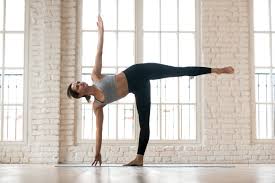
Half Moon Pose, or Ardha Chandrasana, is an intermediate pose that comes from Hatha Yoga, the traditional style of yoga. The Sanskrit terms ardha, which means half, chandra, which means moon, and asana, which means position, are the source of the name. Half Moon Pose (Ardha Chandrasana) gets its name from the graceful standing balancing Pose that reflects the picture of the half moon.
This pose balances the body with the lateral extension of the leg and the torso, much as the half-moon displays a perfect balance between the moon and the sun. An excellent Hatha yoga pose that enhances the body’s lunar energy is the Ardha Chandrasana. The movement of the torso toward the floor in a forward bend involves a solid balance with a cool mind, which depicts the features of the moon, thanks to the lunar energies channelled in this pose.
The characteristics of the Sun (male) and Moon (female) are matched to those of the human body. Moon salutations chill the system, whereas Sun salutations produce heat. These two characteristics of both “male” and “female” make up our bodies.
This imbalance leads to diseases. To put it simply, energy is the combination of heat and cold. Therefore, the only pose in Hatha Yoga that activates both energies is Ardha Chandrasana. Half Moon indicates that the other is regarded as Half Sun. This results in a lovely Pose that balances the hot and cold energy.
A proper warm-up is essential for Ardha Chandrasana, an intermediate-level pose that requires nice and powerful engagement of the quadriceps, adequate hamstring flexibility, and strength of the arms and legs. works wonders for women as well, particularly when it comes to gynecological issues. Half Moon Pose, which is a part of therapeutic yoga sequences, can aid with sciatic, arthritic, and rheumatic pain when done with the assistance of a chair, wall, or block.
Stretching and strengthening the affected muscles and joints is possible with Half Moon Pose, which opens the hips and heart. It can therefore be incorporated into yoga for athletes. Over time, this exercise also enhances balance and coordination, and when combined with Vinyasa Yoga, the flow can be safe and seamless.
Since half moon position variations can be generated from half moon pose, half moon pose is regarded as a base pose. Half Moon Pose can be used in flow yoga poses since it increases the body’s energy.
How to Do Half Moon Pose?
The detailed guidelines for practicing Half Moon Pose are provided below:
- Start the exercise by standing in the middle of the mat, facing the sides, in Tadasana (Mountain Pose).
- Now, while you’re inhaling, hop or step your feet three to four feet apart, or as wide apart as one leg. In Upavistha Tadasana, turn your toes in and take a moment to stand tall.
- Turn the left toes out to the left, beginning with the right. Take a breath, extend your fingertips, and extend your arms sideways, parallel to the mat and at shoulder level.
- Inhale deeply to raise your heart, extend your neck, relax your shoulders, and stretch your tailbone.
- Reach forward into the Triangle Pose and send your hips back as you exhale.
- You can just soften your left knee while looking down from this position. Bend your left leg at the knee, then bend your right leg at the knee and bring it slightly in toward the left leg while you send your left fingertips in front, about two palms from your pinky toe (slightly left to the left foot).
- Inhale now and place your left fingertips on the ground and your right upper arm on your waist. Breathe out, lift your back leg (right) off the ground until your thigh is parallel to the floor, and press onto the four corners of your front foot (left) while keeping your knee slightly bent.
- To bring the body into equilibrium, straighten the right leg at hip level and press the right heel back. Try to gently straighten your left leg till it is perpendicular to the floor once you are comfortable.
- It’s okay to have your standing leg slightly bent as you regain your balance; there’s no urgency to straighten it. As we release the shoulders, the right hand remains on the waist.
- After you feel balanced with your legs in this posture, take a breath and raise your right arm straight up, aligning it with your shoulders, with your fingertips pointed toward the ceiling. Lastly, carefully swivel your head to face the person with the upper hand.
- Stay in Ardha Chandrasana for approximately six breaths while keeping both legs straight at the knees and looking up at the upper hand’s roof or fingertips.
- You can balance your body and increase your awareness of both your body and your breath by taking deep, steady breaths. Additionally, ensure that the toes are pointed right and the foot of the leg extended at the back is flexed.
- To release, exhale, return the head to the center, bend the left front leg, lower the right leg to the floor, and return to the standard standing position (Upavistha Tadasana).
- Use the preceding guidelines to counteract the stretch on the opposite side (left).
- Take a breath from Upavistha Tadasana, extend your right foot, raise your arms to shoulder level, and then exhale to reach forward in Trikonasana. Exhale while firmly pressing the right foot and lifting the left foot off the ground. Inhale while bending the front leg (right) and bringing the back leg (left) closer to the right leg. Next, raise the left arm straight, and lastly, raise the head.
- For roughly six breaths, surrender in Ardha Chandrasana while paying attention to all the subtleties (as previously said).
- Return to Utthita Tadasana after releasing the pose. Walk back, hop on, or inhale in Tadasana. In Child Pose, let go and relax.
Benefits of Half Moon Pose:
The following are some advantages of practicing Half Moon Pose:
- Stretches, Strengthens, and Lengthens: Because the Half Moon posture is a balancing posture with a lateral stretch, the muscles of the quadriceps, glutes, hamstrings, and calves, as well as the joints of the knees, hips, and ankles of the grounded foot, are under excessive pressure, strengthening the leg muscles. Additionally, the muscles of the back, arms, neck, and shoulders are strengthened by using the core muscles to maintain balance with the lateral stretch in the upper body. As a result, a lovely Pose strengthens and expands the entire body.
- Flexibility and Range of Motion: Strengthening the legs and ensuring that the ankles, knees, hips, rib cage, shoulders, elbows, and wrists are active is achieved by lifting one leg at the back and balancing the entire body on one leg and hand while in a lateral stretch. Additionally, the supporting muscles that stretch further ensure that these joints gain flexibility over time. Over time, this strength and flexibility equip you for further balancing postures like Sugarcane Pose and Revolved Half Moon Pose.
- Chest, Diaphragm, and Breath: Stretching the arm overhead at shoulder level during Half Moon Pose helps to open the upper back, rib cage, and chest, allowing for deeper breathing. The breathing muscles are further calmed by the deeper breaths, which prepare them to function more effectively. Improved intercostal muscle function appears to supply energy for mental concentration, making balancing easier.
- Awareness and Focus: Ardha Chandrasana practice promotes concentration to maintain the body’s stillness and balance throughout the pose. The power of concentration and the body-to-mind link are both enhanced by improved body equilibrium. Disciplined training is necessary to focus on a certain topic. Additionally, the body, mind, and breath all cooperate in this balancing Pose, Ardha Chandrasana. The focus needs to be drawn in closer, with awareness and alertness, in order to achieve balance. Therefore, maintaining a loose, light body while concentrating at one location fosters concentration.
- Alignment and Posture: Because the Half Moon posture is a standing balancing yoga posture, its integration of all body parts will give you a sense of strength as well as mental and emotional stability. Additionally, most learner may not be conscious of their bodies and place less emphasis on alignment, which is one of the reasons this pose is difficult for them. As a result, keeping the upper and lower bodies in alignment makes it easier to maintain the posture for longer.
- Energizing, de-stressing, and relaxing: Because the majority of the joints and muscles are used in this difficult pose, the mind is under control, and the flow of energy (prana) is enhanced. Hence helps calm the nervous system and flush the unwanted energy (apana vayu), there is room for the inflow of prana, bringing balance in the body-breath-mind and a sense of calmness deep within. Thus, by soothing the mind and releasing happy chemicals, it helps lessen problems like stress and anxiety.
- Organs and Stimulation: In order to achieve a steady sensation of balance and stability through the legs, Half Moon Pose works the core. The internal organs are affected and stimulated by this. It also affects the reproductive system as a hip opener with pelvic engagement, which is especially helpful for infertile women by restoring hormonal balance.
- Balance and Emotions: Your mental state is significantly more crucial than your physical prowess when it comes to learning to balance. If you’re anxious or your thoughts stray, your body will probably be confused. Half Moon Pose helps strengthen the link between the body and the mind, providing equilibrium to both the physical and mental states. Additionally, by balancing the Root and Sacral Chakras, trainees are able to develop clear communication skills and an expanding attitude of compassion and love.
- Circulation and Systems: This strenuous balancing position improves the musculoskeletal system while toning and stretching the body’s major muscles and joints. The chest opening improves blood flow to the entire body, strengthening the body’s circulatory system. Spinal toning soothes the nervous system and relieves tension in the spine.
- Others: For athletes, runners, or teenagers participating in active activities, a full-body stretch pose can be a lovely addition to yoga. With this exercise, excessive strain on the neck, shoulders, hips, or back—whether from long desk work or something else—can be eliminated and eased.
- Preparatory Pose: Half Moon Pose serves as a prelude to more difficult postures such as Airplane Pose (Dekasana), Dancer Pose II (Natarajasana II), Warrior Pose III (Virabhadrasana III), or Patridge Pose (Kapinjalasana).
Contraindications of Half Moon Pose:
Yoga instructors should be aware of the limits of the Half Moon Pose for specific physical problems.
- Injury and Surgery: This posture should be avoided by learners who have injuries to their arms, shoulders, rib cage, spine, hamstrings, ankle, foot, or hip joint. learners who have recently had hip, knee, ankle, or abdominal replacement surgery should also avoid this exercise. learners with neck injuries should keep gazing straight ahead rather than turning their heads to face the upper hand.
- Physical Strength and Weak Body: learners should avoid this posture if they have low blood pressure, vertigo, nausea, a history of cardiac problems, weak muscles, or weak bones and joints. Pupils who have pain in their tailbone, lower back, hips, knees, or ankles should take their time and bring it to the yoga instructor’s attention.
- Lack of Body-Breath Awareness: Half Moon Pose is a balancing pose that requires focus and awareness to keep the body balanced. Additionally, looking up disturbs your breathing. Additionally, the exercise may cause pain and disruption in energy levels if the body-breath link is not properly understood. Therefore, yoga instructors ought to motivate their pupils to return their focus to breathing. Otherwise, the exercise should not be introduced to the kids until they are fully prepared. On the other hand, the assistance of a chair or block should be appreciated.
- Others: Pregnant ladies should avoid the Half Moon Pose. Additionally, this Pose should be avoided by learners who are currently suffering from migraines, sleeplessness, or diarrhea. Seniors can practice against the wall or with the assistance of a chair or block to go more slowly and effectively. During menstruation, women with menorrhagia and dysmenorrhea can perform this pose while leaning against the wall.
Half Moon Pose Breath Awareness:
Ardha Chandrasana, or Half Moon practice, is a standing-balancing yoga practice. To get the most out of this technique, follow the breathing guidelines listed below:
- Breathe in and out while aligning in Tadasana, or mountain pose.
- Exhale: In Standing Wide-Legged Pose Hands On Hips (Upavistha Tadasana Hands On Hips), walk or hop to extend the feet three to four feet wide.
- Inhale: Spread your arms horizontally at shoulder level and extend your left toes to the left.
- Exhale: Reach forward into the Triangle Pose (Trikonasana) by extending your trunk to the left. Just keep your eyes down.
- Inhale: Place the left hand on the front fingertips, about two palms from the left pinky toe, and soften the left front knee.
- Breathe out by bending your back leg (right) and bringing it closer to your front leg (left).
- Inhale: Extend the trunk closer to the head while resting the upper arm (right) on the waist.
- Exhale: Raise the right back leg straight off the ground until the thigh is parallel to the floor. The leg is at hip level. [Acquire the skill of shifting the body’s weight to the left hand and front leg.]
- Inhale: Make the front leg (left) perpendicular to the ground by straightening the knee.
- Exhale: Lastly, raise your right arm and raise your head to look up.
- Inhale-Exhale: Enter the Ardha Chandrasana and remain there, focusing on your breath. Feel the torso expand as you take a deep breath, then release any tension or tightness by fully exhaling. Throughout the pose, keep your breathing steady and rhythmic. This will help you stay focused and in the moment.
- Exhale: Return the head to the center. Upavistha Tadasana Hands on Hips: Lower the back leg (right) to return to a standing position.
- Inhale: To align in Tadasana, either walk or jump back. Take a moment to relax.
- Inhale-Exhale: Using the breath awareness mentioned above, repeat the process on the opposite side once you’re comfortable. This time, raise the left leg while grounding the right leg and right hand.
- Inhale-Exhale: Lastly, relax in Mountain Pose with the Three Part Breath.
Conclusion:
A strong standing balance pose, Half Moon Pose, strengthens the legs, increases stability, and boosts overall body coordination. It increases focus and concentration, opens the chest, and stretches the hamstrings.
Regular practice enhances mental clarity and confidence in addition to improving physical balance. Including Ardha Chandrasana in your practice can significantly improve your strength, flexibility, and awareness of your body.
FAQs:
What is strengthened by a half-moon pose?
One leg must be balanced while the other is held parallel to the floor as part of the Pose. All of your leg muscles are used in this pose, including your hamstrings, quadriceps, and glutes. Your leg muscles are thus strengthened by the half-moon posture.
What are the Half Moon Pose’s spiritual advantages?
Half moon pose yoga is a representation of elegance, strength, and balance in the yoga path. Ardha Chandrasana practitioners can discover a deeper connection between mind, body, and spirit by investigating alignment, stability, and flexibility.
Does Half Moon Pose have a heart-opening effect?
Stretching and strengthening the affected muscles and joints, Half Moon Pose opens the heart and hips. Thus, it can be incorporated into yoga for athletes. Incorporated into Vinyasa Yoga, this practice helps enhance balance and coordination over time, resulting in a smooth and secure flow.
What is Ardha Chandrasana’s other name?
The half-moon posture
A two-legged standing side bend known as Indudalasana is referred to as “half moon pose” in Bikram Yoga.
What makes Ardha Chandrasana significant?
Half Moon Pose, also known as Ardha Chandrasana, is a potent yoga pose that enhances body balance and strengthens the core muscles. By using your abdominal muscles, this pose improves your coordination and stability. Your core works hard to keep you balanced while you balance on one leg while lifting the other.
Which diseases does Ardha Chakrasana treat?
Respiratory conditions can be treated with this yoga position. The pancreas and other abdominal organs are stimulated by this pose. An excellent asana to improve heart health is Ardha Chakrasana. Menstrual pain and problems can be lessened and relieved by Ardha Chakrasana yoga.
What conditions make the Half Moon posture inappropriate?
If you have low blood pressure, a back or shoulder injury, knee pain or stability concerns, a severe headache, or a foot injury, consult your doctor before practicing Half Moon.
What are the advantages of the Half Moon Pose?
Foundations of Yoga: Ardha Chandrasana or Half Moon Pose! This yoga pose can aid with balance and coordination while strengthening and stretching the entire body. Let your hips and chest open! Practice this difficult pose to relieve fatigue and lower stress hormones.
What is the Half Moon Pose’s substitute?
The hip position used in the Sumo Squat is comparable to that of the half moon (hip horizontal abduction + external rotation). However, this Pose is far more stable than the half moon pose because both feet are on the ground.
After doing Ardha Chandrasana, how do you feel?
Ardha Chandrasana (Half Moon Pose): When you perform Ardha Chandrasana (Half Moon Pose), you usually feel energized, balanced, and open, which makes you feel both light and firmly grounded. Strengthening the legs, core, and glutes, the position frequently improves focus, mental clarity, and emotional stability. It also successfully calms the mind and lowers tension.
What does the Half Moon Pose symbolize spiritually?
The “half moon” pose itself serves as a reminder that, despite external events, our fundamental selves remain strong and constant. Therefore, your inner self is always continuous and steadfast, regardless of the phase of the moon you may feel like you are in.
Does Half Moon Pose have a heart-opening effect?
Stretching and strengthening the affected muscles and joints, Half Moon Pose opens the heart and hips. Thus, it can be incorporated into yoga for athletes. Incorporated into Vinyasa Yoga, this practice helps enhance balance and coordination over time, resulting in a smooth and secure flow.
Half Moon Pose is which chakra?
Sacral Chakra
It is connected to the sacral chakra, which is represented by a crescent moon and has to do with how the moon affects water tides. We can experience the lovely symbology of the moon’s energy in our bodies by adopting the Half-Moon Pose.
What are the benefits of the Half Moon Pose?
Benefits of Half-Moon Pose include better digestion, reduced stress, better balance, relief from menstrual symptoms, and relief from hip and back pain.
References:
- Half Moon Pose Yoga(Ardha Chandrasana)| Yoga sequences, benefits, variations, and Sanskrit Pronunciation | Tummee.com. (n.d.). Tummee.com. https://www.tummee.com/yoga-poses/half-moon-pose
- Yoga Journal. (2025b, February 25). Half moon pose. https://www.yogajournal.com/poses/half-moon-pose-3/
- Wikipedia contributors. (2025b, May 23). Ardha chandrasana. Wikipedia. https://en.wikipedia.org/wiki/Ardha_chandrasana
- Yoga India Foundation. (2024, January 30). Ardha Chandrasana (Half-Moon pose) – Alignment, benefits, and cautions. Yoga India Foundation. https://yogaindiafoundation.com/ardha-chandrasana-half-moon-pose/
- Half Moon Pose — Blog — Yoga With Olivia. (2022, June 7). Yoga With Olivia. https://www.yogawitholivia.co.uk/blog/tag/half+moon+pose