7 Effective Exercises for a Disc Bulge
Introduction:
Chronic pain, decreased mobility, and trouble carrying out daily duties can all result from a disc bulge. However, the correct workouts may improve muscle support, ease pressure on the spine, and aid in healing. You can improve flexibility, strengthen the surrounding muscles, and lessen pain without making the situation worse by concentrating on slow, deliberate movements.
We’ll go over seven safe and efficient workouts in this tutorial that are intended to promote spinal health and give you the confidence to deal with a disc bulge.
Benefits of Effective Exercises for a Disc Bulge:
The pain caused by a disc bulge can be greatly reduced, and general spinal function can be enhanced by regularly engaging in the appropriate exercises. By strengthening the back and core’s supporting muscles, these exercises improve stability and lessen strain on the affected disc.
Additionally, they increase flexibility, which lessens stiffness and permits the spine to move more freely. Regular exercise can help you return to regular activities with less pain and greater confidence over time by improving circulation to the injured area, promoting improved posture, and accelerating the natural healing process.
7 Safe and Effective Exercises for a Disc Bulge Video:
Safe and Effective Exercises for a Disc Bulge:
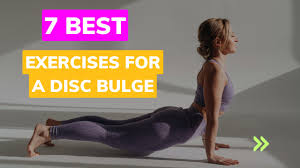
Cobra Pose:
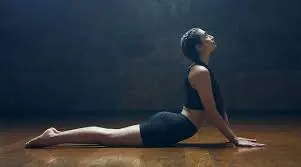
A mild yet effective back extension exercise, the cobra pose helps prevent the forward bending and spinal compression that are frequently linked to a disc bulge. This position promotes the lumbar spine to lengthen by raising your chest off the ground while keeping your hips fixed. This can help relieve nerve irritation and lessen strain on the affected disc.
The upward stretch improves general posture and spinal stability by strengthening the lower back, opening the chest, and lengthening the abdominal muscles. Cobra Pose is a useful exercise for controlling pain and accelerating healing from a disc bulge because it can improve circulation to the spine, decrease stiffness, and increase flexibility.
Superman Exercises:
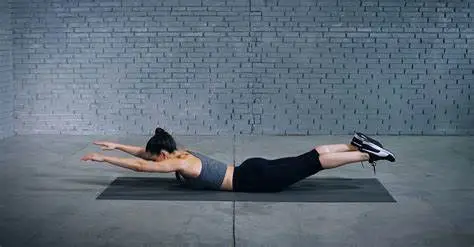
The muscles that support your spine, particularly the lower back, glutes, and core—areas that are vital to controlling a disc bulge—can be strengthened with Superman exercises. The complete posterior chain is activated when you simultaneously raise your arms, chest, and legs off the ground. This helps to improve stability and lessen undue pressure on your spinal discs.
The controlled extension helps alleviate pain caused by weak or overworked back muscles by improving posture, spinal alignment, and muscular balance. Superman exercises are a great addition to a disc-bulge-friendly regimen because, when done carefully and correctly, they enhance endurance, lessen stiffness, and promote long-term spine health.
Knee to Chest Stretch:
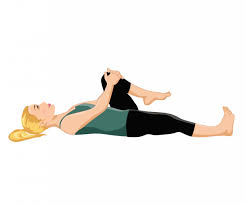
Particularly helpful for people with a disc bulge, the Knee to Chest Stretch is a calming exercise that helps relieve tension from the lower back and gently decompress the spine. You can ease pain and lessen pressure on the affected disc by pulling one leg toward your chest, which lengthens the muscles in your glutes and lower back.
Additionally, this stretch improves circulation, increases lumbar flexibility, and encourages the relaxation of tense muscles that frequently cause lower back pain. Frequent use of the Knee to Chest Stretch helps enhance range of motion, lessen stiffness, and promote a more pleasant and healthy spine.
Straight Leg Raises:
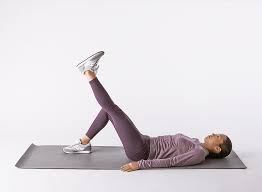
Straight Leg Raises are a mild strengthening exercise that helps improve lower back support by focusing on the hip flexors and lower abdominal muscles. This exercise stabilizes the spine without putting undue strain on the protruding disc by elevating one leg at a time while maintaining an active core. In addition to improving posture and overall spinal alignment, strengthening these muscles can lessen the load on the lumbar region.
Additionally, this exercise enhances hip mobility and encourages healthy muscle growth, both of which are critical for easing pain and halting the progression of a disc bulge. A stronger, more resilient core and a healthier lower back can result from regular practice of straight leg raises.
Bridging:
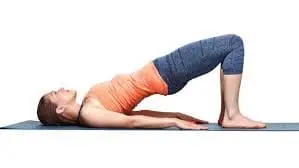
Bridging is a great way to strengthen the lower back, hamstrings, and glutes—muscles that are vital for supporting the spine and relieving pressure on a protruding disc. This exercise helps to enhance spine stability and alignment by activating the posterior chain by raising your hips off the ground while keeping your shoulders and feet planted.
Additionally, it promotes mild lumbar extension, which can reduce strain on the damaged disc and lessen pain. Frequent bridging exercises improve hip mobility, strengthen the core, and encourage better posture—all of which help ease lower back stress and facilitate long-term recovery from a disc bulge.
Bird Dog Exercises:
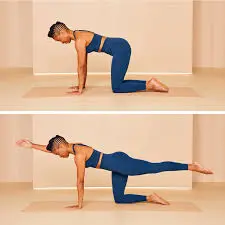
Bird Dog movements are perfect for controlling a disc bulge since they are very helpful at correcting spinal alignment and strengthening the core. This exercise encourages the deep core muscles, lower back, and glutes to cooperate by extending the opposing arm and leg while keeping the spine neutral. This lessens needless strain on the lumbar discs.
Without creating strain or bending that could worsen problems, the regulated motion improves muscle endurance, balance, and coordination. Regular Bird Dog exercises support long-term back health by strengthening the entire midsection, stabilizing the spine, and improving posture.
Cat Cow Stretch:
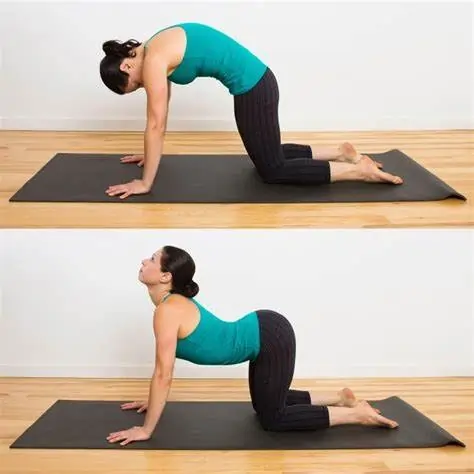
The Cat Cow Stretch is particularly helpful for people with a disc bulge since it is a gentle and rhythmic activity that helps mobilize the spine. This exercise increases flexibility and promotes healthy spinal motion by switching between arching the back upward (Cat) and sinking the belly while rising the chest (Cow). It facilitates circulation around the spinal discs, which can aid in healing, and eases lower back strain and stiffness.
By training the spine to move smoothly across its normal range, the stretch also strengthens the core muscles and promotes better posture. Regular use of the Cat Cow Stretch can reduce pain, increase range of motion, and have a calming, healing impact on the entire back.
Conclusion:
Incorporating safe, focused activities that strengthen the core, support the spine, and increase flexibility makes managing a disc bulge much easier. The exercises mentioned above minimize pain, improve general mobility, and lessen pressure on the affected disc without adding to the tension.
You can progressively regain your back’s strength, stability, and comfort by regularly performing these exercises and paying attention to your body. Always keep in mind to take your time, keep good form, and seek medical advice if your pain doesn’t go away. These exercises can be quite helpful in promoting long-term spine health and recuperation when done correctly.
FAQs:
Which workout is ideal for a protruding disc?
Hanging, lumbar extension exercises (like the press-up or cobra pose), and core-strengthening activities (like the bird-dog, pelvic tilts, and seated forward tilts) are all beneficial workouts for a bulging disc. Avoiding high-impact activities is essential, as is paying attention to your body and ceasing any exercise that makes you feel worse.
How can L4 and L5 back pain be resolved?
Flexibility is restored, posture is improved, and the muscles supporting the spine are strengthened through targeted physical therapy. Guided therapy helps many patients maintain long-term spine health, lessen pain, and relieve pressure on the L4-L5 disc.
How can a protruding disc be prevented from getting worse?
Incorporating specialized workouts that target the support system of the spine is essential for managing a bulging disc. The pressure on the spine can be greatly reduced by strengthening the core muscles, such as the back and abdominal muscles, which may lessen the disc bulge.
For a herniated disc, what kind of mattress is ideal?
Medium-firm memory foam or latex mattresses are ideal for herniated discs because they relieve pressure and straighten the spine. Hybrid mattresses provide a nice mix of contouring and support by combining springs with foam or latex.
What differentiates a ruptured disc from a bulging disc?
A herniated (or ruptured) disc involves a tear in the outer layer that allows the inner, jelly-like core to leak out and frequently press on nerves, causing more severe pain, numbness, or weakness, though both can be asymptomatic. In contrast, a bulging disc is a general protrusion where the disc swells outward without rupturing, like a tire with low pressure. The integrity of the disc wall—intact in bulging, torn in herniated—is the primary distinction.
How may a bulging disc be treated by a neurosurgeon?
Removing the bulge from the herniated section of the disc and relieving pressure on the affected nerve are the objectives of a minimally invasive microdiscectomy. After making a half-inch incision, the surgeon inserts a circular retractor tube using CT or X-ray guidance.
Does cobra pose help with a disk bulge?
By encouraging spinal extension, counteracting forward-bending postures, and strengthening back muscles, Cobra Pose (Bhujangasana) can help relieve some disc bulge issues. However, it should be used with caution as it can worsen pain for others, particularly those with severe herniations or facet joint issues. Therefore, modified versions (like half cobra) or alternative stretches (like the towel stretch) are often safer starting points, always under professional guidance.
Is it possible for the L4-L5 disc bulge to return to normal?
Indeed, with conservative treatment like physical therapy, posture correction, and activity modification, an L4-L5 disc bulge can often return to normal or significantly improve. Many people experience relief in weeks to months as the disc reabsorbs or heals, though severe cases may require longer or medical intervention. It may take three to six months to fully recover, but regular treatment and lifestyle modifications—particularly better posture—are essential for healing and preventing recurrence.
Which sleeping posture is best for L4-L5?
Because it allows you to achieve appropriate, natural alignment, sleeping on your side is best for your spine. There is no undue strain on the lumbar area, in contrast to other positions. This is not how muscles and nerves flex or curve.
How quickly can a bulging disc be healed?
Slipped discs, another name for herniated discs, frequently heal on their own in a matter of weeks to months. In these situations, resting, avoiding painful activities, and using over-the-counter pain relievers like ibuprofen or acetaminophen are the best ways to promote healing.
How should a neck disc bulge be treated?
Your physician may suggest: Drugs: Your doctor might recommend a muscle relaxant or an anti-inflammatory painkiller. Physical therapy: To assist in reducing stress on your nerves, a physical therapist offers you a fitness regimen. Exercise enhances circulation and releases tense muscles.
Can a cat cow help with a disc bulge?
However, adaptability isn’t the only factor. Your core muscles are strengthened by this stance as well. Your core muscles are strengthened with each Cat Cow repetition, supporting your spine and lessening the pain associated with a herniated disc.
What is the greatest exercise for a bulging disc?
Hanging, lumbar extension exercises (like the press-up or cobra pose), and core-strengthening activities (like the bird-dog, pelvic tilts, and seated forward tilts) are all beneficial workouts for a bulging disc. Avoiding high-impact activities is essential, as is paying attention to your body and ceasing any exercise that makes you feel worse.
References:
- Fensome, H. (2023, June 13). Lower Back Disc Bulges – The 8 Best Exercises to help you with your low back pain. Health First. https://www.healthfirstosteopathy.co.uk/post/2019/06/06/lower-back-disc-bulges-the-8-best-exercises
- Dhruvi. (2025, September 8). Strengthening and Mobilizing: 7 Essential exercises for cervical disc bulge relief. Alleviate Pain Clinic. https://alleviatepainclinic.com/blog/strengthening-and-mobilizing-7-essential-exercises-for-cervical-disc-bulge-relief/
- Chauhan, L. (2025, July 19). 7 Best exercises for lower back pain and disc bulges. Resolve360 No.1 Online Physiotherapy Clinic. https://resolve360.app/best-exercises-for-lower-back-pain-and-disc-bulges/
- Best exercises for a herniated disc: 9 safe moves to strengthen and heal your spine. (n.d.). https://www.bswhealth.com/blog/best-exercises-for-herniated-disc
- Vichare, P. (2025, February 3). Exercises to Safely Manage Pain from a Disc Bulge. ANSSI Wellness. https://www.anssiwellness.com/exercises-to-safely-manage-pain-from-a-disc-bulge/
- Barrell, A. (2024, October 1). Safe exercises for a herniated disk. https://www.medicalnewstoday.com/articles/324311