Crow Pose (Bakasana)
Introduction:
Crow Pose (Bakasana) is a popular arm-balancing yoga pose that builds strength, balance, and body awareness.
Bakasana, where Baka = Crane, is frequently used interchangeably with Kakasana, where Kaka = Crow and Asana = Pose. These are two arm-balancing positions. In Crane Pose (Bakasana), the arms are straight like a crane bird, whereas in Crow Pose (Kakasana), the arms are bowed like a crow.
The crow pose is regarded as an advanced pose in Hatha Yoga and falls under the arm balancing category of poses. It may also be regarded as an intermediate yoga pose for a very flexible person. The practitioner’s level of mental, emotional, and physical strength is tested in this arm balance position. As a result, this is regarded as a crucial yoga pose that must be mastered to practice Hatha yoga.
Since crow position variations can be created from it, the crow pose is regarded as a base pose. Crow Pose can be used in flow yoga sequences since it increases the body’s energy.
How to Do Crow Pose:
- With your back straight, extend your legs in front of you while sitting on the mat.
- To link the breath to the body, start breathing while closing your eyes.
- To open your ankle and calves, begin turning your feet both clockwise and anticlockwise.
- In Malasana (Garland Pose), take a breath, bring your feet close to you, bend your knees, and elevate your body while balancing on your feet with the help of your palms on the floor.
- Bring the trunk forward and widen the knees. Take a breath and bend your elbows while placing your palms in front of you.
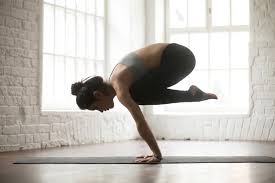
- Place the knees outside the elbows (or on the upper arm above the elbows) and use the backs of your arms to hold them.
- Breathe out and bend forward until your body is on your toes.
- Make sure your face is parallel to the mat, your body is appropriately balanced on your toes, and your knees are positioned at the back of your elbows by looking down at the ground first.
- Take a breath, lift one foot off the ground, tilt the hip slightly, extend it from the knee, and raise the toes.
- Breathe out completely, then take another breath, lift the other foot away, and bring your entire body to balance on your arms and elbows.
- Here, using the core muscles can help you balance your body and go deeper into the posture.
- Here, you raise yourself into the pose by squeezing your elbows in line with your shoulders. As you become more comfortable with your balance, carefully lift your head and face up, being careful to keep your spine almost parallel to the floor so as not to put additional strain on your arms and wrists.
- To gain confidence in the pose, breathe, become aware of your body, and employ slow breathing.
- Deepen the pose and make the most of your core power with each exhalation.
- The face is slightly elevated, the spine is nearly parallel to the floor, the feet are near to one another, the fingers are all spread out on the floor, the elbows are bent to support the knees, the toes and soles glance upward, and the shoulder blades open up and spread.
- After a few breaths, release yourself from the Crow Pose by lowering your face, lowering your back without applying pressure to your wrists or hips, lowering your feet to the floor, and then sitting in Malasana (Garland Pose) once more. Then, raise your hands in Namaste to release your body from the pose, straighten your spine, and relax.
- When the breathing is in perfect harmony with the body and the mind, Crow Pose (Kakasana) becomes magical. The process is the same for Crane Pose (Bakasana), but to raise the body, fully extend the arms so that the wrists align with the shoulders. To raise the body higher in Crane Pose (Bakasana), greater shoulder and core strength is needed.
Benefits of Crow Pose:
The advantages of practicing Crow Pose (Kakasana) are as follows:
- Stretches, Strengthens, Lengthens: By balancing the body’s weight on both arms, the upper back is stretched while the wrists, forearms, and abdomen are strengthened. It strengthens the core, chest, hip flexors, hamstrings, biceps-triceps, shoulders, and back of the wrists while stretching the gluteus, quadriceps, and wrist flexors. Here, your muscles and bones fight gravity to maintain your balance, which enhances your general strength and stability.
- Range of motion and flexibility: As you practice Crow Pose, your hips, quadriceps, and wrists become more flexible, which helps you reach more advanced postures like Crane Pose. Additionally, it helps ease the tightness and stiffness in certain body parts caused by prolonged sitting.
- Chest, Diaphragm, Breath: In Kakasana, the breath is affected by the activation of the core and abdominal muscles. learners might be directed toward their breath when they are told to expand their rib cage and chest. Eventually, maintaining balance in the pose will be made easier with this breath awareness. Additionally, it strengthens the diaphragm, the main breathing muscle. The breath consequently becomes more efficient and under control.
- Awareness and focus: In order to balance the body’s weight on the arms at the wrists and elbows, the Crow posture, an arm balancing posture in nature, requires a strong feeling of attention and conscious awareness. The fundamental idea of yoga is that a practitioner can maintain an elevated body and channel the mind to focus on the present moment through this focused attention. Your capacity to handle a challenging circumstance in life likewise improves when you are present. Additionally, mindfulness can lessen the fear of falling by improving stability and balance in such balancing poses. Beginners might, however, place a cushion, bolster, or folded blanket beneath the head. Achieving such balanced yoga poses, which are part of yoga for kids and teens, increases self-confidence and makes one feel empowered and more aware both on and off the mat.
- Alignment and Posture: By balancing the body weight equally on both arms, Crow Pose maintains a strong and healthy spine. Spread your thumbs and fingers as wide as you can for that. Push the upper arms on the shins and pull the inner groin into the pelvis to help raise the feet off the ground. Pressing the arms into the knee and the knees into the arms while maintaining the pose will make you feel stronger and steadier. Keep your elbows close to your body. On the outside of the arms are the knees. The elbows have a slight bend. To make the pose more approachable, novices might give themselves a deep bend. The center must be dynamic and involved, and the gaze must be gentle and forward-looking. The prana flow will be limited otherwise. Holding gets easier, and overall posture is enhanced if the pose is executed with all of the alignment-related advice mentioned above in mind.
- Energizing, Relaxing, and De-stressing: Crow Pose is a little difficult. Therefore, it takes considerable patience and practice to hold this pose. However, as time goes on, it will become simpler to coordinate the body, breath, and mind and stabilize the body’s prana (energy) flow. The body and mind can then be calmed and relaxed by breathing deeply and continuously while in this arm-balancing forward bend.
- Stimulation and Organs/Balance and Emotion: By massaging the internal organs and enhancing circulation, Crow Pose tones the pelvic floor muscles and stimulates the body’s reproductive and digestive systems. Additionally, it aids in the activation of the Manipura Chakra (Solar Plexus Chakra), which promotes emotions of empowerment, inner strength, and self-assurance.
- Level-up Poses: This pose is an excellent way to get ready for more arm-balancing poses like One-Legged Crane Pose, Side Crow Pose, and Tripod Headstand.
Contraindications of Crow Pose:
The contraindications for performing Crow Pose (Kakasana) are as follows:
- Injury and Surgery: This practice should be avoided by learners who have injuries to their wrists, elbows, shoulders, neck, knees, lower back, rib cage, or hips. This exercise works the pelvic and abdominal muscles. Therefore, it is advised to avoid this technique if learners have already had surgery or an accident relating to these areas. learners who have recently had surgery on their wrists, arms, shoulders, necks, hips, or backs should also stay away from it.
- Physical Strength and Weak Body: The wrist joints are compressed in this position. This pose should therefore be avoided by learners who have weak wrists or pain, arthritis, carpal tunnel syndrome, or general body weakness (particularly non-practicing senior adults). learners who suffer from high blood pressure, vertigo, dizziness, migraines, or heart-related conditions should avoid this practice because it involves balancing. It is not recommended for people with certain diseases, such as trauma, anxiety, severe IBD (Inflammatory Bowel Syndrome), cerebral thrombosis, recovering from a viral infection, or autoimmune disorders (with a full understanding of the same). Therefore, these youngsters ought to stay away from it completely.
- Lack of Body-Breath Connections: Crow Pose requires that the body and breath be connected. It fosters a deeper sense of presence and relaxation, calms the mind, and increases body awareness. The breath gives the body a sense of steadiness and anchoring, which is crucial for preserving equilibrium. Without the connection, the body is more likely to retain stress, which raises the chance of damage even more. Therefore, fostering the relationship is crucial. It will facilitate a deeper and more comfortable stretch by releasing any tension or pain in the body.
- Others: Women who are pregnant, postpartum, or menstruating should avoid this arm-balancing pose since it compresses the tummy. Senior citizens should also avoid this activity since it might be taxing on their joints. Seniors who are already practitioners, however, ought to go slowly. To lessen their fear of falling, beginners can place a cushion, bolster, or folded blanket under their heads.
Modifications of Crow Pose:
Here are some simple modifications to make Crow Pose (Kakasana) more wonderful:
- Blanket: To prevent injuries, place a blanket beneath your face or forehead.
- Blocks: To support yourself and progressively build the confidence to enter a deeper pose, place blocks beneath your feet.
- Blocks or a blanket beneath your palms: To prevent direct strain on the wrist muscles and to project strength and power, place a blanket or blocks beneath your palms.
- Lift just one leg: To gradually build confidence in arm strength and body balance, lift and practice with one leg up for a few tries before releasing and raising and practicing with the other leg.
Crow Pose Breath Awareness:
In yoga practice, breathing and body movement must be done step-by-step. Breathing becomes crucial to maintaining Crow Pose (Kakasana) or Crane Pose (Bakasana) since it requires a lot of concentration to raise the body and balance without causing harm. Below is an explanation of this.
- Inhale, bring your body into Garland Pose (Malasana), and then exhale, bringing your arms in Namaste and your knees closer to your chest.
- Breathe in, placing your palms on the floor near your feet, and then exhale while bending your trunk forward.
- Breathe in once more, placing your knees on your elbows, and then release the breath with your whole body on your toes.
- As you elevate your entire body and bring it to balance on your elbows, take a breath, bend your head down, and then release the breath.
- Inhale again to loosen the body. Then, as you exhale, move the body farther into the posture, start breathing normally, and align the breath with your mind and center.
- Until you are at ease with calm breathing, hold this yoga pose for some time.
- Next, take another breath, and as you release it, slowly lower your feet, straighten your back, and lift your palms and elbows off the ground.
- Return to a squat position
- Gradually sit down and extend your legs to relax your body.
- Once the muscles and breath have relaxed, repeat this exercise.
Conclusion:
Crow Pose is a powerful arm-balancing pose that increases confidence, strength, and attention. It promotes the development of both physical stability and mental focus by strengthening the arms and wrists, strengthening the core, and enhancing balance.
Crow Pose may help you overcome fear and have faith in your body’s potential, and it can become a gratifying milestone in your yoga journey with consistent practice and patience.
FAQs:
How much time should you spend in the Crow Pose?
For two to five breaths, maintain this posture. Return to Garland Pose after lowering your feet to the mat and gradually shifting your weight back from Crow Pose.
Which trauma does the Crown Chakra store?
The crown chakra can be significantly impacted by traumas that occur during critical growth phases. One’s feeling of spiritual connection and understanding of the bigger picture can be significantly impacted by experiences of abandonment and major loss.
Which muscles are strengthened by Crow Pose?
It strengthens the core, chest, hip flexors, hamstrings, biceps-triceps, shoulders, and back of the wrists while stretching the gluteus, quadriceps, and wrist flexors. Here, your muscles and bones fight gravity to maintain your balance, which enhances your general strength and stability.
How can you win a crow’s trust?
By paying them frequent visits, talking to them, allowing them space, and offering sweets, you can gain their trust. Show consideration. And get to know a crow in the same way that you would a person. Making friends with a crow takes time.
What does the Crow Pose symbolize spiritually?
One important animal in symbolism is the crow. She urges us to put the past behind us and move on, but in real life, this is frequently easier said than done. Bakasana, the Crow, is one asana that can help us stay on our path, let go of the past, and find balance (both physically and mentally).
Which pose resembles the Crow pose?
Though your arms are much straighter, Crane Pose resembles Crow. Compared to the bent-arm form, it requires greater shoulder and core strength. Place your feet hip-width apart and begin in a low squat. Move forward until your knees are tucked up close to your upper arms or armpits.
What disadvantages do crows have?
Attracting crows to your yard may not be the best idea, even if they can be fascinating animals. Crows prefer to eat the eggs and chicks in nests and are frequent nest predators. After a lengthy migration, they occasionally even pursue weary songbirds.
After Crow Pose, what comes next?
Working on Side Crow is a logical next step after you’re at ease in Crow. This yoga arm balance comes in two variations. The position is typically learned with the knees on one arm and the hips on the other. Compared to the standard crow, this is a fairly secure pose that could even feel easier.
Does the term “Crow” refer to Indians?
Native Americans who live mostly in southern Montana are known as the Crow, and their autonym is Apsáalooke. Today, the Crow people have an Indian reservation called the Crow Indian Reservation, which is situated in the south-central region of the state, and a federally recognized tribe called the Crow Tribe of Montana.
Is Crow a challenging yoga pose?
Although the crow pose (Kakasana) is regarded as a beginner-friendly arm balance, it is mentally and physically taxing, needing the ability to overcome fear, activate the core, and have strong shoulders. Inadequate weight distribution makes it difficult for novices, but with regular practice, good form, and the use of equipment like yoga blocks or cushions, it becomes doable.
Which muscles are strengthened by Crow Pose?
It strengthens the core, chest, hip flexors, hamstrings, biceps-triceps, shoulders, and back of the wrists while stretching the gluteus, quadriceps, and wrist flexors. Here, your muscles and bones fight gravity to maintain your balance, which enhances your general strength and stability.
The Crow Pose belongs to which chakra?
Located at the base of our spine, this is the first of seven major chakras in our energetic body.
Additionally, Crow Pose activates the third chakra, or solar plexus (Manipura). This chakra is linked to our ego, self-esteem, power, and relationship with ourselves.
After a Crow Pose, what comes next?
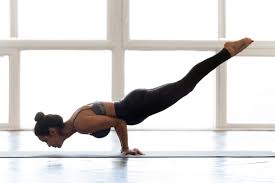
The “next level” crow, in my opinion, is a crane—basically, a crow with straight arms and raised knees in the armpits. Some believe that this is the last variation of the crow, while others give it a different name. The “lightning bolt”—a crow with one leg protruding straight out—is another entertaining one.
What is Crow Pose called in Indian culture?
One of the fundamental yoga poses for arm balancing is Kakasana, also known as Crow Pose. The Sanskrit terms “kaka,” which means crow, and “asana,” which means pose, are the source of the name “Kakasana.”
How much time should be spent in Crow Pose?
For two to five breaths, maintain this posture. Return to Garland Pose after lowering your feet to the mat and gradually shifting your weight back from Crow Pose.
Is the Crow Pose impressive?
Kakasana, often known as “crow pose,” is an arm balance that calls for extreme upper body strength in addition to balance and core stability. It is inspiring and empowering to see other yoga practitioners drift into the crow without fear.
The Crow Pose is associated with which chakra?
The Root Chakra (Muladhara), Sacral Chakra (Svadhisthana), and Solar Plexus Chakra (Manipura) are all stimulated by the Crow Pose. The practitioner feels grounded, strong, connected, and powerful when they adopt this pose.
References:
- Yoga Journal. (2025a, February 25). Crow Pose | Crane Pose. https://www.yogajournal.com/poses/crane-pose/
- Crow Pose Yoga(Kakasana)| Yoga sequences, benefits, variations, and Sanskrit pronunciation | Tummee.com. (n.d.). Tummee.com. https://www.tummee.com/yoga-poses/crow-pose
- Yoga With Adriene, LLC. (2018, July 11). Crow Pose, Bakasana – Foundations of yoga. Yoga With Adriene. https://yogawithadriene.com/crow-pose/
- Wikipedia contributors. (2026a, March 4). Bakasana. Wikipedia. https://en.wikipedia.org/wiki/Bakasana