Carrying Angle of The Elbow
What is a Carrying Angle of The Elbow?
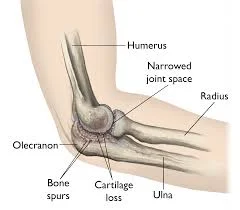
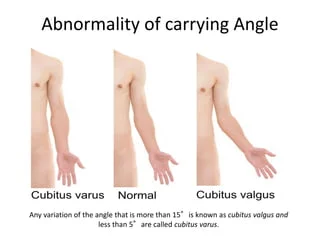
The carrying angle is the angle formed between the long axis of the humerus and the forearm when the arm is extended and the palms face forward. According to anatomy, an adult human’s carrying angle is generally 10° for men and 13° for women.
In addition to decreasing elbow flexion function and increasing the risk of elbow dislocation, raising the carrying angle can also induce elbow instability and pain during sports or exercise, increase the risk of elbow fractures when falling on an outstretched hand, and fracture the distal humeral epiphysis. When your arms are out to your sides, palms facing front, your forearms and hands should normally point 5 to 15 degrees away from your torso. It is also essential for carrying items.
It could affect our gait, the movement of the elbow joint, and our ability to diagnose and diagnose particular diseases or injuries. According to one article, cubitus varus deformity could increase the incidence of ulnar neuropathy by increasing the angulation of the ulnar nerve pathway at the elbow. To verify that theory, we investigated the possibility that a higher carrying angle is a separate risk factor for ulnar neuropathy related to trauma.
FAQs
What factors affect the carrying angle?
The anthropometric characteristics, such as the distance between the trochanters and height, as well as gender, age, and elbow joint overextension can all have an impact on the pathophysiology of the carrying angle.
How is the carrying angle measured?
The midpoint of the lateral and medial epicondyles of the humerus, as well as the lateral boundary of the cranial surface of the acromion, define the arm’s axis.
Why does the carrying angle increase?
The arm points towards the direction of the body when the angle is reduced.
Which physical activities lower the carrying angle?
The carrying angle can be slightly improved with physical therapy exercises if there is no history of falls.
Can one cure carrying angle?
The elbow structures are under additional pressure when there is an excessive carrying angle, which makes them more susceptible to traction issues. It also makes carrying a load and strolling challenging. In addition to physical treatment and yoga poses, surgery is still a possibility for reducing the carrying angle.
What does the term “carrying angle” mean?
This angle allows your forearms to clear your hips as you swing your arms during walking or other movements. It is also essential for carrying items.
What is a woman’s carrying angle?
An angle of 5° to 10° is average for males, whereas an angle of 10° to 15° is common for females. Reconstructing elbows, treating exhibiting elbows, and maintaining elbow abnormalities all need an understanding of carrying angle.
A carrying angle: what is it?
The acute angle created when the arm and forearm’s median axes are fully extended and supinated is known as the carrying angle.
References
- Physiotherapist, N. P.-. (2023, December 13). Carrying Angle of The Elbow – Normal Value, Cubitus valgus/Varus. Mobile Physiotherapy Clinic. https://mobilephysiotherapyclinic.in/carrying-angle-of-the-elbow/
- Carrying angle of the elbow – excessive. (n.d.). Mount Sinai Health System. https://www.mountsinai.org/health-library/special-topic/carrying-angle-of-the-elbow-excessive