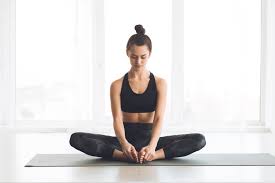
Bound Angle Pose (Baddha Konasana)
Introduction:
Baddha Konasana, sometimes referred to as the Cobbler’s Pose or the Bound Angle Pose, is a meditative pose for beginners that comes from the classical Hatha style of yoga. Its moniker, Cobbler’s Pose, is thought to have originated from the seated position that Indian Cobblers take. Because the leg movements in this pose mimic a butterfly fanning its wings, it is sometimes called Butterfly Pose.
Bound Angle Pose is known by the more modern Sanskrit term Baddha Konasana. The Sanskrit terms baddha (bound), kona (angle), and asana (posture or seat) are the origin of the name. Thus, bound refers to a seated position that is trapped, attached, or combined. Even so, the Hatha Yoga Pradipika refers to this pose as Bhadrasana (“Bhadra” meaning “throne”) to indicate that it is the throne of meditation.
One can extend and decompress the spine as the hip flexor muscles relax. Furthermore, the Bound Angle Pose facilitates access to the thoracolumbar fascia, which is linked to piriformis syndrome, a condition that produces severe pain in the lower back, buttocks, hips, hamstrings, and feet.
Teenagers, children, gymnasts, ice skaters, and wrestlers can all benefit from practicing Baddha Konasana (Bound Angle Pose), which opens up the inner thighs. learners with mild anxiety and sadness can also benefit from this exercise, according to yoga instructors.
This position helps release stress and bad energies that tend to build up in the hips and lower back. It also awakens the Root Chakra (Muladhara), Sacral Chakra (Swadhisthana), and Solar Plexus Chakra (Manipura). During the second and third trimesters of pregnancy, as well as for postpartum mothers, the yoga instructor may introduce this position.
Since bound angle posture variations can be formed from it, the bound angle pose is regarded as a base pose.
How to Do Bound Angle Pose:
The detailed guidelines for practicing Baddha Konasana (Bound Angle Pose) are provided below:
- Sit in Dandasana to begin. Your sit bones should be firmly planted on the mat.
- Now use your palms to grasp your ankles or feet. Try to bring your heels as close to your groin as you can.
- Breathe out and slowly lower your knees to the floor. The movement must be natural and not forced, and it must be sustained.
- Be mindful not to crunch your shoulders and keep your arms loose. However, move the shoulders back from the ears. In order to lengthen your spine, deliberately extend your torso. Tuck the chin into the neck to maintain the stability of the head’s crown.
- Think of your legs as a butterfly’s wings. Bring your knees up and down to begin flapping them.
- Now, maintain the posture while gradually stopping the movement. As the knees and thighs descend to the mat, feel them. Continue inhaling while attempting to lower the knee a bit farther with each exhale.
- After you’ve reached the position, take a slow breath and replace your grip on your feet with your hands at the inner arches. Put four fingers around the foot and your thumb on the inner arch. Go ahead and open your foot soles like a book. As your knees go closer to the floor, this will assist you in opening your hips even more. Additionally, it helps prevent excessive strain on the knee joints.
- To learn more about this foot position, see Bound Angle Pose Legs Close Up.
- Let go of your feet gradually when you’re ready to exit the position. Straighten each leg individually. To relieve the numbness in your feet, you can select to perform specific ankle and toe motions, such as seated ankle rotations and toe bending.
- Now return to Dandasana after straightening your legs.
Benefits of Bound Angle Pose:
The benefits of Baddha Konasana (Bound Angle Pose) are as follows:
- Stretches, Strengthens, Lengthens: Bound Angle Pose stretches the groin, adductors (inner thighs), and knees. It strengthens the hip flexors, psoas, and pelvic floor muscles. The spine can be lengthened and decompressed as the hip flexor muscles relax.
- Flexibility and Range of Motion: The pelvic floor muscles can be accessed and strengthened by practicing Baddha Konasana. Frequent practice of this pose aids in hip opening and relieves all stiffness and tension in the hips and pelvic floor. As a result, the pelvic joints become more flexible, which enables learners to perform powerful hip-opening exercises like the Goddess Pose or Seated Straddle Pose.
- Chest, Diaphragm, and Breath: There is a moderate chest opening because of the extended spine and the palms supporting the feet. The torso lengthens as a result of the stretched spine, opening up the chest. Lung capacity is effectively increased by this. Additionally, the practitioner concentrates on the breath while maintaining this pose, and the groin stretch gets longer with each exhale. Because of this, the adept yogi may spread his fingers like lotus petals and release the baddha support with consistent practice.
- Awareness and Focus (Concentration): Baddha Konasana, also known as Bound Angle Pose, is a meditation pose that emphasizes awareness and focus. In this pose, the yoga instructor should lead the pupils in breath awareness. In addition to the physical alignment, the practitioner can feel the groin expanding somewhat and the hip opening a little with each exhale as they attentively focus on the breath. These positions improve one’s ability to concentrate and focus.
- Alignment and Posture: Baddha Konasana, also known as Bound Angle Pose, is a good way to strengthen a person’s general flexibility and agility by lengthening their spine and expanding their hips. Therefore, this alignment and conditioning of the spine improves posture.
- Baddha Konasana is relaxing, energizing, and de-stressing because it improves pelvic floor blood circulation. Because the sacrum contains three parasympathetic nerves, this triggers the parasympathetic nervous system, often known as the “Rest and Digest” system. When this occurs, the heart rate decreases, which aids in energy conservation and, thus, gives the body more energy. It relaxes the sphincter muscles and improves intestinal efficiency. Both the body and the psyche experience a calming and stabilizing impact as a result.
- Stimulation and Organs/Circulation and Systems: Baddha Konasana (Bound Angle Pose) targets the kidney meridian, which influences the glands on the kidneys. In Chinese medicine, meridians are energy channels. These aid in the release of hormones that control immunity, excretion, metabolism, and other processes. Today’s fast-paced lifestyle causes overactive adrenal glands, which primarily impact the kidneys. Baddha Konasana aids with both relaxation and the restoration of these glands’ regular function. Increased blood circulation aids in improved efficiency and stimulation of the organs located in the pelvic floor since Baddha Konasana works closely with it. It strengthens the uterus and aids in hormone activation and balance, which lessens menstrual issues. It stimulates the bladder, prostate gland, and ovaries. This technique can treat conditions associated with sexual arousal and infertility.
- Therapeutic, Healing, and Diseases: Yoga instructors can use this in hormonal imbalance therapy. Regular practice of this asana can relieve lower back pain because hip tightness is linked to lower back stiffness and pain. The thoracolumbar fascia, which is linked to piriformis syndrome and sciatica, which causes excruciating pain in the lower back region of the buttocks, hips, hamstrings, and feet, can also be accessed with Baddha Konasana (Bound Angle Pose).
- Balance and Emotions: Baddha Konasana, also known as Bound Angle Pose, aids in a person’s emotional equilibrium. The Muladhara, Swadisthana, and Manipura chakras, which are linked to the harmony of a person’s fundamental qualities of stability, creativity, and emotional connection, are activated by this position, which targets the base of the spine.
- Others: Teens and children who may have hormonal imbalances might perform Baddha Konasana (Bound Angle Pose) to help correct them. Additionally, Baddha Konasana is a great asana for pregnant women in their second and third trimesters because of its many advantages of relaxation, hip-opening, pelvic floor strengthening, and hormone balance. Participating in the prenatal yoga program will facilitate a natural birth in addition to making pregnancy easier. After the first 40 days of healing, this pose is beneficial for new mothers.
Contraindications of Bound Angle Pose:
The Baddha Konasana (Bound Angle Pose) contraindications are as follows:
- Injury and Surgery/Ailment and Physical Strength: It is highly forbidden to perform Baddha Konasana if you have a groin injury. It might make the injury worse. Baddha Konasana should be avoided if you have any kind of knee injury, such as a torn ligament, worn-down joints (where the lubricant between the joints has worn out), or rheumatoid arthritis. Yoga instructors should start with this position gradually for those with stiff hips and pelvises. Yoga instructors should regularly perform the Shakti Bandha Asana Yoga Sequence for any of the aforementioned reasons. Stabilizers can be positioned beneath the knees, or a blanket or cushion can be placed beneath the hips and ankles to relieve this pain.
- Others: Because senior persons have weak knees and ankles and even have trouble sitting on the floor, yoga instructors should practice slowly with them. This should be avoided by expectant mothers until the second trimester of pregnancy. The rationale is that it is not recommended to open the hips till then. Miscarriages may result from this type of opening since the womb is strengthened throughout the first trimester.
- Lack of Breath-Body Connections: Bound Angle Pose, or Baddha Konasana, is a meditative pose. In this pose, breath awareness is essential. With a relaxed breath, the practitioner concentrates on the hip opening and the groin stretch. They practice increasing the opening gradually with each breath. As a result, pupils who are not conscious of their breathing may jerk their stretch and be unable to determine the sustainable stretch. Hip and groin injuries may result from this. For such individuals, yoga instructors shouldn’t promote this practice.
- Trauma and Anxiety/Therapeutic and Restorative: Because this posture calms the nervous system, yoga instructors can use it to treat minor depression and anxiety. However, they must proceed cautiously when dealing with individuals who have experienced trauma. The hip opening may cause a rush of negative energy that they find challenging to deal with. Yoga instructors must rule out any serious kidney issues, osteoporosis, weak knee joints, deteriorated spines, and rheumatoid arthritis, even though this posture can be utilized to treat kidney, knee, and reproductive disorders.
Bound Angle Pose Breath Awareness:
The specific breath awareness exercises for Baddha Konasana (Bound Angle Pose) are as follows:
- Breathe in and out while aligning with Dandasana.
- Inhale: Use your palms to grasp your ankles or feet. As far as you can, bring your heels to your crotch.
- Exhale: Slowly bring your knees down to the floor.
- Take a breath and move your ankles closer to your groin.
- Exhale: Carefully lower the hips and bring the knees closer to the floor.
- Inhaling and Exhaling: For roughly six to eight breaths, maintain this stretch of the inner things while coordinating with the breath.
- Take a breath, loosen your hips, and take your hands off your feet.
- Exhale: Extend your legs and sit back in Dandasana.
Conclusion:
Baddha Konasana, also known as Bound Angle Pose, is a mild yet powerful yoga pose that increases flexibility, opens the hips, and stretches the inner thighs. Frequent practice is especially helpful for lowering tension and exhaustion since it can improve pelvic blood circulation and encourage relaxation.
This pose is a great complement to any yoga practice since it promotes both physical comfort and mental peace by emphasizing correct posture and steady breathing.
FAQs:
What would happen if you performed butterfly stretches every day?
Daily practice of the butterfly exercise (Baddha Konasana) improves pelvic mobility, eases lower back tension, and develops hip, groin, and inner thigh flexibility. Frequent practice relieves stress, exhaustion, and menstrual pain by stimulating stomach organs, enhancing blood circulation, and fostering calm.
Does the butterfly pose cause your pelvis to open?
The more conventional pelvic floor exercises used for birth preparation are mobility exercises that can assist in generating room at the top of the pelvis. Consider any position involving wider knees, including a straddle stretch, butterfly pose, deep squat, or wide-knee poses.
Which body area is worked out by the butterfly pose?
To improve flexibility and release tension, the butterfly stretch mainly works the lower back, hips, groin, and inner thighs (adductors). This yoga-based practice, which may be done while sitting or lying, is great for releasing tense muscles from extended periods of sitting because it also helps to expand the pelvic area.
Should you strike a butterfly pose with your knees touching the floor?
As you bend your knees apart, bring the soles of your feet together. Depending on how flexible your hips are, place your knees either on the floor or just above it.
How much time should I spend in the butterfly pose?
For overall stretching and flexibility, the butterfly pose (Baddha Konasana) is usually held for 30 to 2 minutes. It can be held for three to five minutes, or even up to twenty minutes for skilled practitioners, for deeper, Yin-style, or restorative practice, enabling gravity to relieve hip and groin strain.
When is the ideal time to perform butterfly exercises?
In order to develop hip and groin flexibility, the butterfly exercise (or stretch) is best done every day, especially in the morning to loosen up or as part of a warm-up/cool-down for workouts. Pregnant women might benefit greatly from preparing for childbirth, which is usually advised starting in the second trimester.
Butterfly pose should be avoided by whom?
Baddha Konasana should be avoided if you have any kind of knee injury, such as a torn ligament, worn-down joints (where the lubricant between the joints has worn out), or rheumatoid arthritis.
Is it possible to perform the butterfly posture in bed?
Butterfly, also known as “baddha konasana,” is a beautiful hip opening that helps lower heart rate and get you ready for bed. You can perform it while lying down or sitting up on your bed.
Who shouldn’t perform Baddha Konasana?
Baddha Konasana, also known as Bound Angle Pose or Butterfly Pose, should be avoided or modified if you have had hip, knee, or groin issues recently or in the past, or if you have had surgery in these areas. Keep your spine straight and avoid deep forward bending if you have sciatica, herniated discs, or lower back problems.
What is the recommended duration for Baddha Konasana?
Shut your eyes and take long breaths, letting your body soften with each release. After one to five minutes (or more in restorative practice), softly bring the knees together to let go.
Which diseases can Konasana treat?
Another yoga practice that might help control and treat varicose veins is Baddha Konasana, sometimes referred to as Bound Angle practice or Butterfly Pose. This pose improves digestion and stimulates the abdominal organs while stretching the inner thighs, groin, and knees.
Does the butterfly posture improve fertility?
Because fertility yoga helps the pelvic muscles relax and blood flow increases, this kind of pose is often recommended. The knees are moved like a butterfly to widen the gap between the hips, while the feet and their soles are clasped together.
What area of the body is most impacted by konasana?
Baddha Konasana, also known as Bound Angle Pose, stretches, strengthens, and lengthens the knees, adductors (inner thighs), and groin. It strengthens the hip flexors, psoas, and pelvic floor muscles. The spine can be lengthened and decompressed as the hip flexor muscles relax.
Who ought to stay away from Baddha Konasana?
Yoga instructors should start with this position gradually for those with stiff hips and pelvises. Yoga instructors should regularly perform the Shakti Bandha Asana Yoga Sequence for any of the aforementioned reasons.
What are the advantages of the butterfly pose in Baddha Konasana?
Baddha Konasana, also known as Butterfly Pose, promotes general physical and mental well-being by strengthening pelvic floor muscles, improving circulation, increasing flexibility, aiding digestion, reducing fatigue, and reducing stress and anxiety.
References;
- Rakshak, & Rakshak. (2024b, August 22). Baddha konasana | Butterfly Pose | How to do | Benefits – The Art Of Living. The Art of Living – Making Life A Celebration. https://www.artofliving.org/in-en/yoga/yoga-poses/badhakonasana-butterfly-pose
- Baddha Konasana Yoga(Bound Angle Pose)| Yoga sequences, benefits, variations, and Sanskrit Pronunciation | Tummee.com. (n.d.). Tummee.com. https://www.tummee.com/yoga-poses/bound-angle-pose
- Wikipedia contributors. (2026, March 8). Baddha Konasana. Wikipedia. https://en.wikipedia.org/wiki/Baddha_Konasana