Boat Pose (Navasana)
Introduction:
Boat Pose (Navasana) is a popular yoga posture that focuses on strengthening the core muscles, improving balance, and enhancing overall stability.
The Sanskrit terms paripurna (entire or full/complete) and nava (boat) are the sources of the name Paripurna Navasana (Complete Boat Pose). Seated or supine, Paripurna Navasana (Complete Boat Pose) is an intermediate-level pose. This pose is a classic Hatha yoga pose that is frequently performed near the conclusion of a yoga sequence.
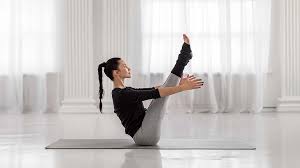
In this pose, the body is completely balanced on either the buttocks or the sit bones, which form the letter “V.” To achieve the proper balance and stability in this posture, it is essential to engage the core muscles.
The core strength is used to balance the arms and legs in the air. This yoga pose may seem easy, but to really benefit from it, you need to have strong abdominal muscles and pay close attention to your balance. This exercise, which is part of Vinyasa Flows, strengthens the pelvic floor, abdominal, and core muscles.
The core, abdominal muscles, hip flexors, gluteus, pelvis, and back muscles may all be toned and strengthened with practice once learners are at ease. Additionally, the digestive system (Agni) and other organs perform better when the core and abdominal muscles are used to stimulate the abdominal organs.
Mentally, maintaining a balanced and solid body while engaging the core enhances self-assurance and willpower. Children or athletes might benefit from the mental toughness developed by this activity because confidence is the first step toward success, followed by other factors.
Because it may be used to create variations of the boat pose, the boat pose is regarded as a base pose. The Boat Pose can be used in flow yoga sequences since it increases the body’s vitality.
How to Do Boat Pose:
- After a few rounds of Surya Namaskar, start practicing Paripurna Navasana. This will facilitate blood circulation throughout the body.
- Start by sitting on your mat fully extended in Dandasana after performing a couple of rounds of Sun Salutations. To expand the calves and knees, rotate the ankles clockwise and counterclockwise around six times while maintaining a straight spine and extended legs.
- Breathe in, pull in your stomach, raise your spine, and place your hands on your thighs in front of you while extending your legs fully without bending your knees.
- Take another slow breath, lift both feet off the ground to a 20-degree angle, and move the weight of the body on the sitting bones by putting the upper torso behind and the chest out in front.
- Stay in this position for two breaths while keeping your balance and stretching and firming your quadriceps, hamstrings, abdominal, and shoulder muscles.
- Raising the legs higher, tightening the inner legs to activate the adductors, lifting the arms from the thighs, and bringing them parallel to the floor should all be done gradually.
- Here, keep your equilibrium such that your chest is flung out in front of you and your torso is stretched upward rather than curved outward.
- To help the chest move forward and achieve a full stretch, draw the shoulder blades back and down.
- Focus on your core and pay attention to your breathing since rapid breathing will throw your body off balance.
- The chin remains parallel to the floor while the neck remains in alignment with the chest. Without bending the elbows, the arms were fully extended.
- Here, the body is shaped like the letter “V” in English. With the legs together, one can ascend while maintaining the strength and firmness of the body.
- Maintain the body weight in the center rather than the hips while breathing slowly and rhythmically. Hold this position for eight breaths or as long as your body feels comfortable.
- Bend your knees and lower your feet back to the floor to slowly release yourself from this position. Then, relax in Dandasana with your hands on the floor behind you, your lower back curved in, your shoulders back, and your chest out to soothe your spine.
- One could return to the practice of this pose after taking a few deep, steady breaths.
An alternative method for striking this pose is as follows:
- Start the exercise by lying down in Supta Utthita Tadasana, also known as Full Body Stretch Pose.
- Stretch your body, inhale deeply, and raise your upper and lower bodies simultaneously as you exhale. Raise it till your body is firmly planted on your sit bones.
- Pull your navel in the direction of your spine to engage your core.
- Observe how the spine advances to sustain the front of the trunk. Open the chest by moving the shoulder blades back and down. Here, lengthen your arms and legs by stretching them outward.
- Continue inhaling and exhaling deeply while paying close attention to your core. Encourage pupils to return their attention to their body and breath whenever their thoughts stray to prevent imbalance.
- Stretch your arms parallel to the floor or mat and your legs away from your hips to form a V shape. Additionally, avoid tucking the chin too far since this will interfere with breathing. Instead, keep the chin in line with the chest.
- Avoid pushing yourself too hard and losing alignment. To release, lower your legs, lower your upper body, and then fully relax to reach Full Body Stretch Pose (Supta Utthita Tadasana).
- Relax and surrender in Corpse Pose (Savasana) after a few more practice sessions.
Benefits of Boat Pose:
The advantages of Paripurna Navasana (Complete Boat Pose) are as follows:
- Stretches, Strengthens, and Lengthens: Paripurna Navasana, also known as Complete Boat Pose, is a pose that strengthens the quadriceps, pelvic floor muscles, gluteus, hip flexors (including the psoas and iliacus), and chest. While maintaining the position, the hamstring muscles partially extend while the quadriceps are contracted. By doing this, the leg muscles that support the hips are strengthened and kept stable. Furthermore, the pelvis (which is in a posterior tilt in this instance), the flexed hip joints, the internal rotation of the thighs, the lifting of the knee caps, the lifting of the sacrum, the broad chest (which causes the scapula to come together), and the stable neck (cervical spine) all work together to bring stability to the posture and maintain the body in a state of Sthiram Sukham. In order to help lengthen the front upper torso, the arms should not cause the shoulders to collapse, and the chest should be strong and broad with deliberate effort. The hamstrings, calves, and arms are the only parts of the body that are extending, even though all of the body’s muscles and joints are involved.
- Flexibility, Range of Motion, Alignment, and Posture: The lower body is stretched from the hips to the tips of the toes in Paripurna Navasana. The inner legs are kept pushed together by the adductor muscles. The legs are fully stretched by the ankles and toes. The lower body becomes more flexible as a result. To maintain the torso’s strength and stability, the spine’s muscles are used (the spine is in its natural shape). As the muscles involved support the hips, they become more flexible and stable. The challenge can be shifted to Boat Pose Arms Overhead (Urdhva Hasta Paripurna Navasana), Raised Legs Pose Knees Bent Variation Boat Pose Flow (Uttana Padasana Nata Janu Navasana Vinyasa), or other poses that require greater hip, pelvic, and shoulder flexibility and strength once learners become comfortable with Complete Boat Pose.
- Chest, Diaphragm, and Breath: When the core and abdominal muscles are used in Paripurna Navasana (Complete Boat Pose), breathing is affected, which can occasionally make it difficult to breathe deeply. On the other hand, children can be guided toward their breath when they are told to expand their chest and rib cage. In order to effectively use the chest, rib cage, and intercostal muscles (breathing muscles), which support the diaphragm’s operation, learners will eventually be able to engage their upper body, including their shoulders, thanks to breath awareness. Eventually, this will enable the lungs to absorb more oxygen and distribute it throughout the body. learners can go to more difficult poses like Revolved Boat Pose (Parivrtta Navasana), Boat Pose Variation Scissors Flow, or any other variation that requires lung capacity after they have better breathing (efficient use of the lungs).
- Awareness and Focus (Concentration): In yoga, the term “core” refers to more than just the muscles or abdominal. From the outside of your body to the center of your existence, the practice takes you on an interior trip. This pose increases awareness of the center of the body and is more than just an ab crunch, which is only for toning the abdominal and core muscles. You will feel strong, emotionally and intellectually stable as a result of this pose’s integration of all body parts. Furthermore, an impacted body-mind relationship results from the mind straying from the body, breath, and alignment. Therefore, it becomes essential to increase awareness and concentrate on a deliberate attempt to preserve the equilibrium. Therefore, the practice is enhanced and a state of inner bliss is brought about by maintaining the gaze (drishti) at one point, keeping the balance by placing equal weight on both sit bones (buttocks), drawing the shoulders behind, lifting the spine upwards, and pushing the sit bones down, and consciously keeping the body light and loose (while engaging the muscles).
- Energizing, De-stressing, Relaxing: Paripurna Navasana, or Complete Boat Pose, is a pose that is relaxing, de-stressing, and revitalizing. The body is supported in maintaining the position for a longer period of time by the cognitive knowledge of deep breathing and the activation of the relevant muscles. The relaxation of the position calms the nervous system by supplying new oxygenated blood to the heart and internal organs. Conversely, enhanced outward air flow (Apana Vayu) makes room for new prana input, which revitalizes and energizes the body. Stress levels are down, and the neurological system is relaxed when the body and mind are invigorated. learners may be able to do more difficult postures with this extra energy, which will improve their prana even more.
- Organs, Circulation, and Systems: This position stimulates the internal organs as well as the associated bodily systems and processes since the abdominal muscles are used. Engaging the pelvic and abdominal muscles improves gland function, particularly in the digestive system. It also stimulates the reproductive system, which makes it beneficial for those who experience menstrual problems or infertility. The release of the posture causes a new flow of blood throughout the body, which affects the metabolism and other functions.
- Therapeutic, Healing, and Diseases: Included in Therapy Yoga (not for senior citizens), the Complete Boat Pose can help with diabetes, less serious IBD (Inflammatory Bowel Disease) conditions, infertility in women, diastasis recti in women, urinary incontinence in men and women, and any other problems related to internal organ function. After evaluating the learner’s physical condition, a modified practice, such as Boat Pose Variation on Chair or Boat Pose Block Between Knees, may be added if learners find the practice of Complete Boat Pose difficult but still wish to address the aforementioned related physical conditions.
- Paripurna Navasana, also known as Complete Boat Pose, is a pose that promotes balance and emotions. Both the sacrum and Manipura chakras are activated. A person’s emotions are balanced, and their creativity is enhanced by this stimulation. Aligning the physical body in this pose requires intentional effort. The body, mind, and emotions may all be centered when you connect to the steadiness of your core, even if it takes some work. It’s like finding calm in the middle of a storm when you connect with your inner self. Even though this position requires a lot of movements, the outcome of those movements might help you become closer to your own source of stillness.
Contraindications of Boat Pose:
The following are safety measures to consider when performing Paripurna Navasana (Complete Boat Pose). Below is an explanation of these:
- Injury and Surgery: Paripurna Navasana (Complete Boat Pose) is difficult because it necessitates equal engagement of all body muscles and joints. When entering and exiting the pose, the hips, knees, ankles, toes, rib cage, shoulders, and neck are all engaged. But only the hips and shoulders are used when maintaining the position. As a result, any damage to the body’s joints or muscles may be a contraindication, so caution should be used when practicing. Surgery on any portion of the body, including joints and organs, is likewise contraindicated and should be avoided.
- Ailment and Physical Strength/Lack of Body-Breath Connections: learners with weak shoulders, ankles, and knee joints should avoid Paripurna Navasana (Complete Boat Pose), even though it is a core building exercise. This pose should be avoided by those who struggle with balance or vertigo. This pose should be avoided by learners who have significant back pain or who are not conscious of their body’s breath. The rationale is that this combination is the only way to achieve alignment and balance. However, yoga instructors can begin with the Easy Boat Pose (Sahaja Navasana) for novices. Additionally, to strengthen the core first, perform Raised Legs Pose Variation Hands On Floor (Uttana Padasana Variation Hands On Floor) at 30 and 60 degrees.
- Others: Children, elderly people, and expectant mothers should avoid doing this. Children and elderly people lack the core strength to perform this pose. Additionally, since both learners’ spines are weak or immature, balancing on the sit bones may be more detrimental than beneficial. Due to the pressure on the abdomen and the inability to balance on the sit bone with the weight, pregnant women should avoid this pose.
Modifications of Boat Pose:
One can practice this pose in many ways or with a few adjustments to make it easy and enjoyable. The following highlights a few of them:
- One can bend the knees and gradually work toward achieving the main posture with practice if the legs still need improvement. Additionally, keeping the knees bent will aid in the gradual strengthening of the quadriceps and hamstrings.
- Place your hands on the floor or the tips of your fingers on the floor next to you if you find it difficult to balance your body. Another excellent way to keep your balance would be to place your palms on yoga blocks that are placed next to you.
- Gaining confidence in this Boat Pose can also be achieved by pulling your torso back to lean and using yoga straps around your feet.
- The sit bones would be sufficiently supported by placing blankets beneath your hips to allow you to go deeper into the pose, which would help you gradually become proficient in the actual posture without assistance.
- The proper body alignment for the pose can be achieved by bringing support for the upper back with the wall, and practicing this support can still yield advantages. However, keep in mind that the wall is merely a support and that you shouldn’t rest your whole weight on it.
- The torso, not the lower body, is the most crucial component of Paripurna Navasana. Stretching the legs as far as possible is not as vital as expanding the torso upward. By placing the tips of the toes on a wall while facing the wall while performing this position, one can leverage the wall support for the feet to get the greatest stretch for the torso.
Boat Pose Breath Awareness:
- Inhale and Exhale: While sitting in Dandasana, raise your torso, stretch your body, and extend your legs in front of you.
- Inhale: Bring the thighs tightly together and raise the legs to a 20-degree angle while supporting the palms on the thighs.
- Exhale by releasing your hands from your thighs, extending your arms, and fully balancing your body with your feet at a 60-degree angle.
- Inhale and Exhale: Inhale, slowly raise the feet; exhale, fully extend the shoulders and chest; and extend the arms to the sides. With the body sat on the sit bones, shift the hip slightly behind and achieve balance.
- Inhale and Exhale: Begin with a calm, deep inhale. As you exhale, pull your stomach in, extend your chest, bring your shoulders behind you, and lift your torso. Use this breathing to keep your body in equilibrium.
- Inhale and Exhale: Hold this position for roughly six breaths while extending your legs without bending your knees.
- Inhale: Bend the knees and slowly release the legs.
- Exhale: Lower your feet, relax in Dandasana, and extend your lower back by pulling it within, putting your palms on the floor behind you, and tilting your head slightly back.
- Breathe in and out slowly to calm the body and relax the muscles.
- Lying down in Savasana is another way to practice Paripurna Navasana, which improves core strength. It can be difficult to raise the body slowly at both ends, yet this type of exercise can help one achieve the Complete Boat Pose. This maximally stretches the core muscles, which will undoubtedly aid in their strength and tightness.
Conclusion:
Navasana, or boat pose, is a powerful core-strengthening pose that enhances stability, balance, and focus. Frequent exercise improves total body control, supports the health of the spine, and tones the abdominal muscles.
This pose is a useful addition to any yoga exercise since it helps develop both physical strength and mental focus by maintaining good form and steady breathing.
FAQs:
How long should I maintain the boat pose?
If you are stable, stretch your legs to a 45-degree angle so that your body and legs create a “V.” Stretch your arms out in front of you, parallel to the floor, palms facing each other. Hold your breath for three to six breaths while breathing steadily. Breathe out and carefully return your feet and spine to the mat to depart.
Who shouldn’t strike the boat pose?
This pose should be avoided by those who struggle with balance or vertigo. This pose should be avoided by learners who have significant back pain or who are not conscious of their body’s breath. The rationale is that this combination is the only way to achieve alignment and balance.
For what purpose is the boat position useful?
How to perform Navasana (Boat practice): Omstars Navasana is a powerful yoga practice that strengthens the core, tones the abdominal muscles, strengthens the hip flexors, and enhances the stability of the spine. It increases metabolism, improves balance and mental clarity, and improves digestion by activating abdominal organs.
How can I increase the difficulty of Boat Pose?
Extend your arms high, lower your legs closer to the floor, or fully straighten them.
How can I simplify Boat Pose?
Practice close to a wall for support, keep your knees bent, or put your hands on the ground.
Who ought to stay away from Boat Pose?
Avoid it or seek professional advice if you have a hernia, recent abdominal surgery, or lower back pain.
Which Boat Pose errors are frequently made?
Common errors include compressing the chest, trapping the breath, and rounding the back.
Is it possible to lose abdominal fat with the Boat Pose?
When paired with a nutritious diet and regular exercise, it can help reduce belly fat by strengthening and toning the core.
Which muscles are targeted by the Boat Pose?
It primarily affects the lower back, hip flexors, and abdominal muscles.
How much time should I spend in Boat Pose?
As your strength increases, progressively increase the duration from 10 to 20 seconds.
What is Navasana, or Boat Pose?
Boat Pose is a yoga pose that strengthens the core. It involves elevating your torso and legs into a “V” shape while balancing on your sitting bones.
What are Boat Pose’s primary advantages?
It increases overall stability, strengthens the core muscles, aids digestion, and improves balance.
References:
- Navasana Yoga(Boat pose)| Yoga sequences, benefits, variations, and Sanskrit pronunciation | Tummee.com. (n.d.). Tummee.com. https://www.tummee.com/yoga-poses/boat-pose
- Yoga Journal. (2025a, March 21). Boat pose. https://www.yogajournal.com/poses/full-boat-pose-2/
- Allen, W. (2025, August 26). Navasana. https://myyogateacher.com/yoga-asana/navasana
- Wikipedia contributors. (2025, August 16). Navasana. Wikipedia. https://en.wikipedia.org/wiki/Navasana
- Smith, L. (2024, August 16). Yoga How-To: The Boat Pose. WebMD. https://www.webmd.com/fitness-exercise/yoga-how-to-the-boat-pose