Exercises and Stretches for Wrist Pain from Mouse Use
Introduction:
After spending several hours on a computer, have you ever rubbed your hands, stretched your fingers, or shaken your hands to ease wrist pain? Office jobs, remote employment, gaming, and extended computer use are the main causes of this for a lot of people. It might place additional strain on the wrist, particularly if you do the same motions every day.
It’s normal to have wrist aches and pains when using a mouse, but it shouldn’t be disregarded. Minor pain frequently develops into a more serious issue over time. For this reason, it’s critical to assess workplace practices and learn about mouse wrist pain relief.
This guide will teach you what causes mouse-related wrist pain, how to treat it, and how to keep it from happening again.
Common Causes of Mouse-Related Wrist Pain:
Muscle Fatigue:
Certain wrist and hand muscles have to operate constantly when using a mouse for extended periods of time. Fatigue, heaviness, or slight pain may result from this. Rest normally relieves symptoms, although it could be beneficial to periodically check how your desk is set up.
Tendon Irritation (Tendonitis):
Tendons are strong connective structures that attach muscles to bones and help transmit the force needed for movement. They may become irritated by repeated movements. Pain, discomfort to the touch, or tightness during specific movements are possible symptoms. You could require an assessment if the issue continues.
Repetitive Strain Injury (RSI):
RSI is a generic term for a number of issues caused by repetitive work rather than a specific illness. When using a mouse, you can feel pain, stiffness, or exhaustion in your arm, hand, or wrist. If the symptoms start to interfere with your capacity to work, take this seriously.
Carpal Tunnel Syndrome:
Carpal tunnel syndrome is connected to pressure buildup on a vital wrist nerve in certain individuals. Tingling, numbness, or weakness in the fingers are common symptoms. Seeking a professional evaluation could be helpful if these symptoms happen frequently.
Indications That Your Wrist Pain Could Be Getting Worse:
Keep an eye out for these indicators if wrist pain is progressively getting worse. Among the possible symptoms are:
- Numbness: Numbness in fingers or hands
- Tingling: Tingling or pins-and-needles sensation
- Weak grip: Decreased ability to grasp objects
- Pain when clicking: Pain when clicking the mouse
- Pain at night: Symptoms are worse at night
- Difficulty using the mouse: Difficulty using the mouse normally
You might want a more thorough assessment if these symptoms are chronic or get severe over time.
Why Mouse Users Need Hand Exercises:
It could seem harmless to use a computer mouse. However, repetitive small movements can damage small muscles and tendons in your hand and wrist. Over time, this strain affects:
- Flexor tendons in the fingers
- Extensor muscles in the forearm
- Median nerve in the wrist
- Wrist joint stability
As a result, common symptoms include:
- Tingling in fingers
- Wrist stiffness
- Weak grip strength
- Thumb pain
- Burning sensation in forearm
Long-term static posture also decreases blood flow. Tissue healing is slowed by reduced circulation. As a result, pain progressively increases.
This trend is reversed with hand stretches and strengthening exercises. They naturally lower inflammation, enhance mobility, and promote joint health.
Why exercises and stretches help wrist pain:
Your range of motion eventually becomes limited due to pain and inflammation caused by overuse of your wrist tendons. However, you can regain your complete range of motion by strengthening and lengthening your wrist muscles with specific exercises and stretches. Exercises for your wrists can also help reduce pain.
Do these exercises and stretches only if you can move your wrist without experiencing severe pain. If your pain level is higher than a 3 or 4 on a scale of 1 to 10, you should consult a doctor rather than trying to manage it on your own.
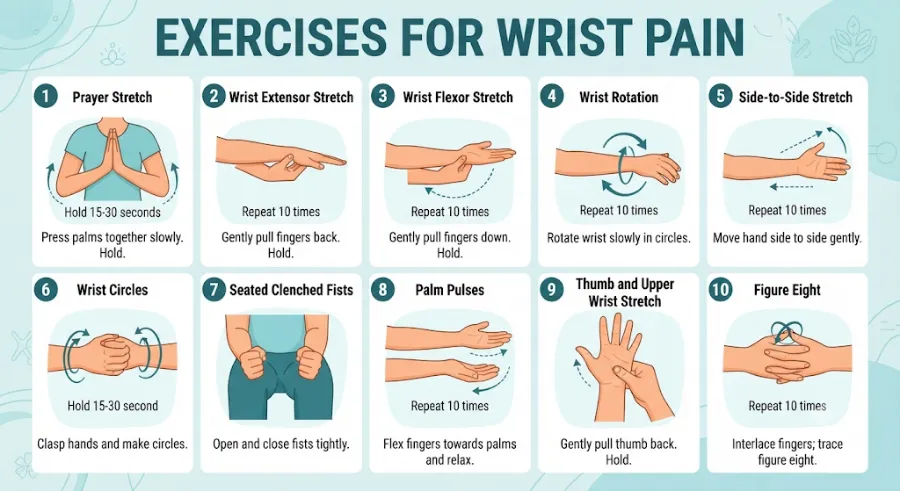
Exercises for Wrist Pain:
Wrist pain is likely to happen if you have arthritis or if your profession requires you to type frequently. You may improve your flexibility and strength by exercising your wrists. Try these exercises to prevent and relieve wrist pain.
Prayer Stretch:
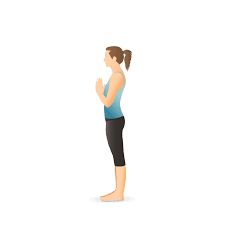
- Put your hands in a prayer stance to begin. They ought to be just below your chin.
- Move your hands slowly in the direction of your belly button. Your wrists and forearms should feel stretched.
- Repeat three to five times after holding for thirty seconds.
Wrist Extensor Stretch:
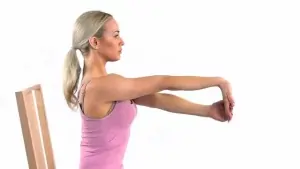
- Extend both of your arms in front of you to begin. Make two fists and punch the air with them.
- Keeping your arms straight, lower your fists.
- Repeat once after holding for ten seconds.
Wrist Flexor Stretch:
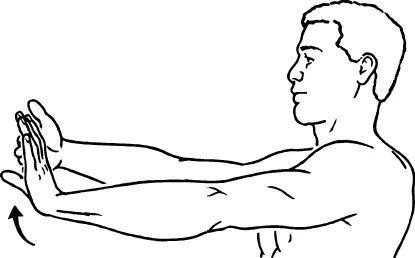
- Make a fist with your hands after extending your arms in front of you.
- As though you were pushing against a wall in front of you, open both of your hands.
- Pull your right hand’s fingers back onto your left, then hold the position for ten seconds.
- On your other hand, repeat.
- On each hand, repeat three times.
Wrist Rotation:
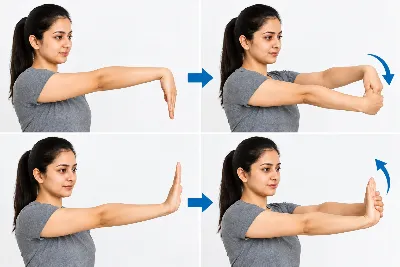
- With your forearm raised, extend one arm straight in front of you.
- As if giving an inverted high five, move your fingers downward.
- Pull your fingers down with your other hand.
- Repeat this stance with your other hand after holding it for five seconds.
- Do this three to five times.
Side-to-Side Stretch:
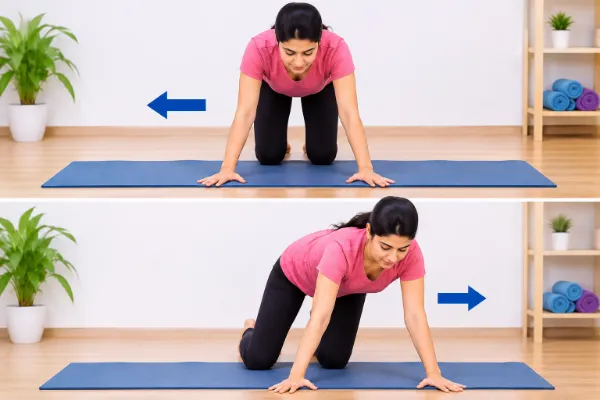
- Place your hands and knees on the floor and begin in a tabletop position.
- Extend your fingers. They need to be turned away from one another.
- Repeat 15 times while shifting from side to side.
Wrist Circles:
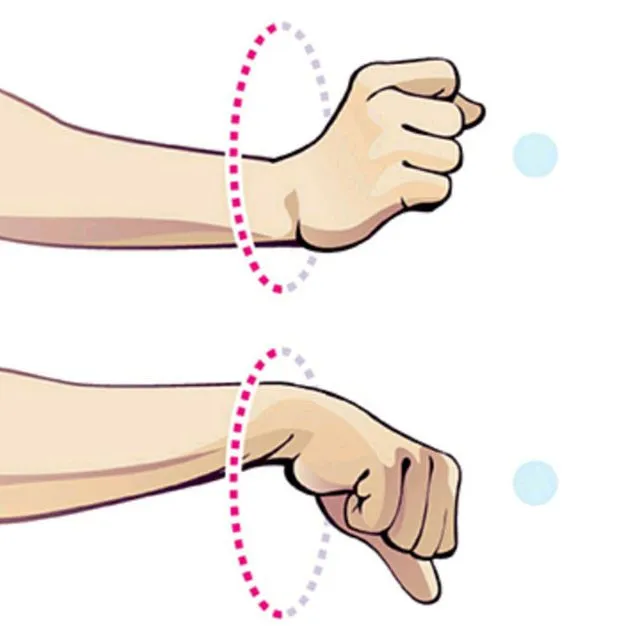
- Put your hands on a table to begin. Allow your wrists to fall.
- Using your wrist, make a clockwise circle.
- Next, form a clockwise circle.
- Do this ten times.
Seated Clenched Fists:
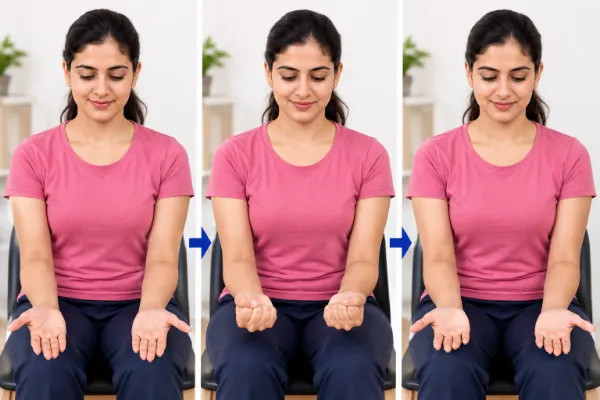
- First, take a seat and place your hands on your thighs. Keep your palms facing up.
- Slowly form a fist with both hands.
- Your wrist should be slightly bent so that it faces you. Keep your arms resting on your thighs.
- Hold for ten seconds.
- Open your fists gradually.
- Do this five times.
Palm Pulses:
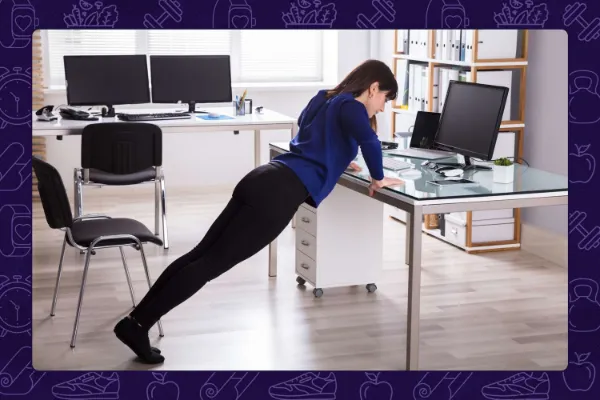
- Place your hands and knees on the floor and begin in a tabletop position.
- Extend your fingers widely.
- Maintain your palms off the ground and your fingertips on the ground.
- 15 times, move or pulse your palms up and down.
Thumb and Upper Wrist Stretch:
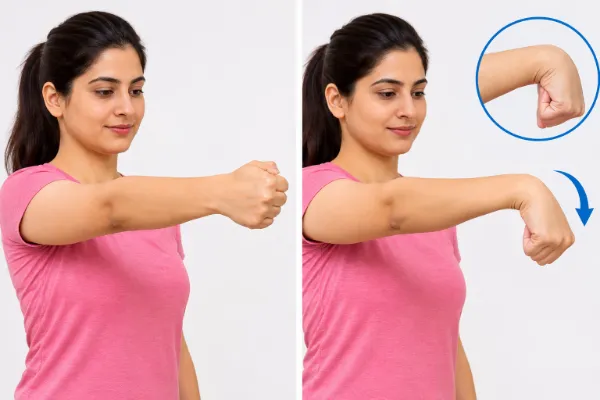
- Extend your right arm and clench your thumb into a fist.
- Bend your fist in the direction of the floor.
- Both your thumb and the top of your wrist will feel stretched.
- Repeat with the opposite hand after holding for ten seconds.
Figure Eight:
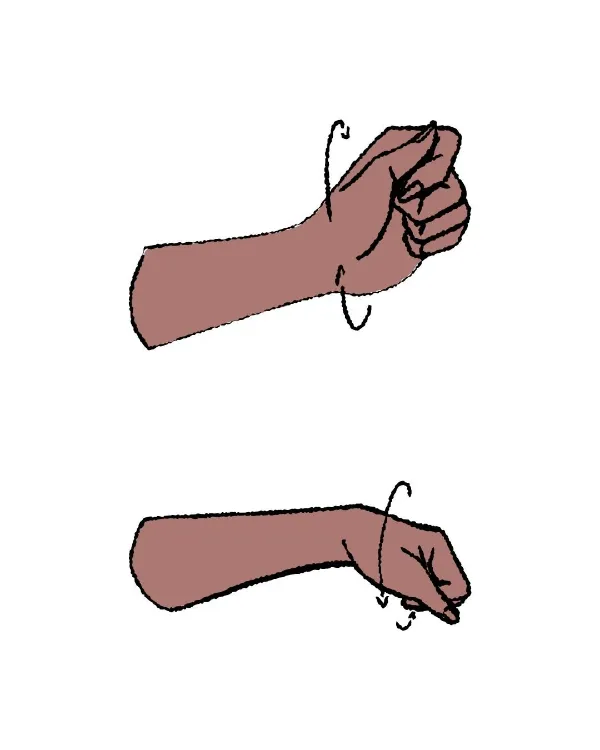
- With your elbows at your sides, connect your hands.
- For ten seconds, form figure eights with your hands.
- As needed, repeat.
Other Tips for Wrist Pain Relief:
To avoid and relieve wrist pain, in addition to performing the exercises mentioned above, you should:
- Modernize your workspace: Invest in ergonomic work equipment if using a computer causes wrist pain. Your wrist health can be greatly improved by using an ergonomic keyboard, mouse, mousepad, etc.
- Take a pause if you are experiencing wrist pain while performing a particular task, such as typing or playing a sport. You can stretch, rest, or apply ice to your wrist during this interval.
- Take over-the-counter medication: In the near term, over-the-counter pain relievers may reduce inflammation and pain.
- Wear a brace or wrap your wrist: Wearing a brace or wrapping your wrist serves as a reminder not to worsen your wrist pain if you are concerned about using it excessively.
How to Build a daily Desk Exercises Routine that actually Sticks:
Going hard for a week and then stopping is the most typical mistake made when performing desk workouts. Intensity is inferior to consistency. Make it easy to repeat and use a straightforward micro-break structure.
You can conform to the following routine structure:
- Morning (before work): doorway pec stretch + shoulder circles + wrist rotations, 3 minutes
- Mid-morning break: tendon gliding + wall forearm press, 2 minutes
- Lunch: external rotation or band rows, 5 minutes
- Afternoon break: “tip money” stretch + wrist flexion/extension, 2 minutes
- End of day: full sequence of your choice, 5 minutes
Take the following steps now: Create a recurring calendar alert for a specific break time. After a few days, add a second slot to the initial one.
FAQs:
How to fix wrist pain when using a mouse?
You must modify your ergonomics, alter the way you move your hand, and strengthen or stretch the surrounding muscles in order to treat wrist pain caused by using a computer mouse.
What are some exercises for wrist pain caused by using the computer?
Exercises specifically designed for the hands, wrists, and forearms help reduce stiffness, enhance circulation, and reduce repetitive strain caused by computer use.
Should I still work out if my wrist hurts?
Generally speaking, you shouldn’t exercise while experiencing wrist discomfort, particularly if it is severe, chronic, or increases with movement. Overcoming pain can cause a small problem, such as tendinitis, to develop into a chronic injury.
How do I stop my wrist from hurting when I use a mouse?
Reducing repeated strain, improving the ergonomics of your workspace, and altering your hand movements are all necessary to prevent wrist pain when using a mouse.
Why won’t my wrist pain go away?
Because the underlying structure—such as a tendon, ligament, or nerve—has not been correctly diagnosed or is still being re-injured by routine activities, chronic wrist pain frequently persists.
Which exercise is best for wrist pain?
Since the appropriate exercise depends on the source of your suffering, there isn’t a single “best” exercise for wrist pain. But a full program usually includes progressive strengthening, targeted stretches, and mild range-of-motion warm-ups.
What vitamins help with wrist pain?
When wrist pain is caused by joint inflammation (such as arthritis) or nerve compression (such as carpal tunnel syndrome), some vitamins and nutritional supplements may be able to help.
Why does my wrist hurt after using a mouse all day?
After using a mouse all day, wrist pain usually comes on from tendinitis, muscle fatigue, or compression of the median nerve, which can result in diseases like carpal tunnel syndrome.
Should I stretch my wrist if it hurts?
Depending on the type and origin of the pain, you should decide whether or not to stretch your wrist. If stretching results in acute or sharp pain, you should stop right away.
How to tell if wrist pain is serious?
When wrist pain is accompanied by severe symptoms, such as a visible deformity, an inability to move the wrist, or indications of bone or nerve injury, it is considered serious.
References:
- Clinic, C. (2023b, November 24). 11 Exercises and stretches for wrist pain. Cleveland Clinic. https://health.clevelandclinic.org/wrist-pain-exercises
- Dev, A. (2024, September 10). Exercises for wrist pain: Elite Sports Medicine + Orthopedics: Orthopedics. Elite Sports Medicine + Orthopedics. https://www.eliteorthopaedic.com/blog/wrist-pain-exercises/
- James, E., & James, E. (2026, August 15). Mouse wrist pain relief. MB Massage&PhysioTherapy. https://mbmassagetherapy.uk/mouse-wrist-pain-relief/
- Contour Design®. (2026, November 4). Mouse Arm Syndrome exercises: Relieve pain and get back to work feeling good. https://www.contourdesign.com/mouse-for-rsi/mouse-arm-syndrome-exercises