Rotator Cuff Injury: Physical Therapy Exercise and Recovery Tips
What Is a Rotator Cuff Injury
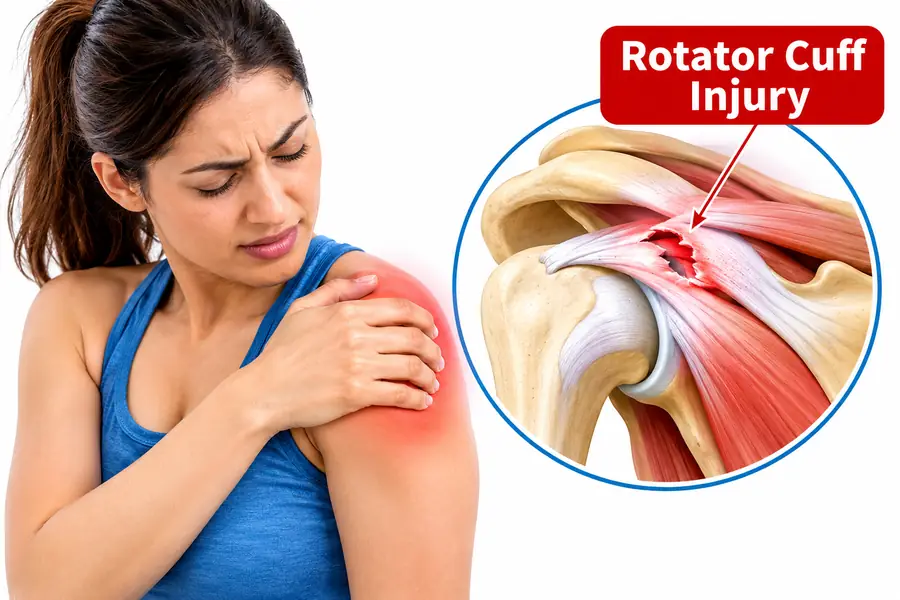
A rotator cuff injury can be one of the most common causes of shoulder pain, weakness, and loss of movement. The rotator cuff is made up of 4 muscles and their associated tendons, which are responsible for providing stability and control of arm movements during day-to-day activities.
Injuries can occur from excessive overhead activity, sports, heavy lifting, degenerative changes in older individuals, or traumatic injuries. Individuals can struggle to raise their arms, reach behind their back, carry items, and sleep comfortably on the affected side.
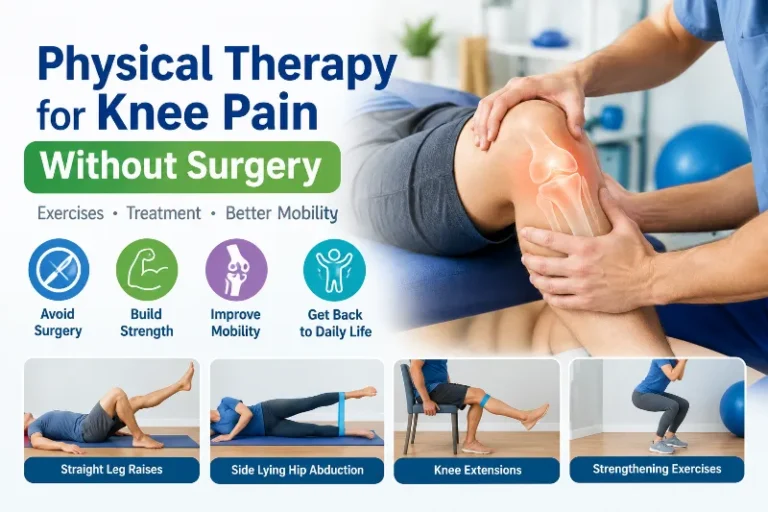
Physiotherapy can be a key part of conservatively managing many rotator cuff injuries. This includes managing pain and regaining full range of movement, increasing muscle strength, and retraining movement patterns.
A good rehab programme will include pain management, stretches, mobilisation, strengthening exercises, scapular stabilisation and functional exercises. Exercises should be selected based on the type and severity of injury.
Symptoms of Rotator Cuff Injury
- Pain when raising arm
- Weakness in shoulder and upper arm
- Difficulty raising arms above your head or reaching around your back
- Pain when lying on the shoulder
- Popping/clicking of joints
- Limited range of movement
Goals of Physiotherapy for Rotator Cuff Injuries
- To reduce pain and inflammation in the shoulder
- Improve movement and flexibility in the shoulder joint
- Restore full range of movement
- Strengthen the rotator cuff muscles
- Improve scapular stability
- Correct any abnormal movements
- Improve activities of daily living (lifting, reaching, and dressing)
Physiotherapy Treatment
Generally, physiotherapy will involve undertaking various stages of rehabilitation depending on the pain, healing of the tissue, severity of injury, and how well the patient can function.
Ice Pack
- An ice pack could help reduce pain.
- Place an ice pack in a thin towel
- Apply over the painful shoulder area
- Leave for approx. 10-15 mins
- Remove if skin is becoming too numb
- Do not apply directly to the skin.
Heat
- A moist heat could help reduce muscle stiffness.
- Apply a warm pack over the shoulder area
- Leave for approx. 10-15 mins
- Ensure skin is being monitored
- Gentle shoulder movements
- Do not apply over an acutely swollen/inflamed area.
TENS
- Place the electrodes around the painful area
- Set to a comfortable sensory level
- Apply TENS as per assessment and machine instructions.
- TENS will not help repair any damaged tendons, so it should not be used instead of strengthening exercises.
Exercise For Rotator Cuff Injury
Pendulum Exercise
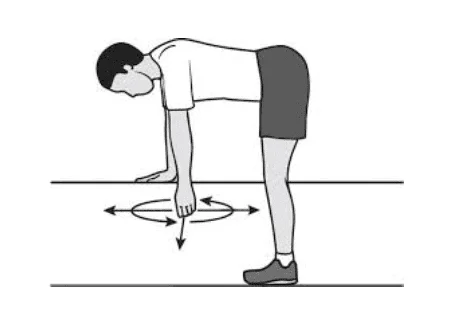
This will help to move the shoulder with minimal muscle involvement.
- Stand next to a table/chair
- Lean forward with your unaffected arm on the table
- Let your affected arm hang free
- Gently move your arm forwards and backwards
- Move your arm in small circles
- Avoid forcing your shoulder movement
- Repeat 10-15 times.
Shoulder Flexion with Wand
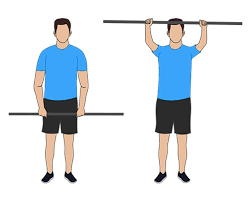
This will help improve shoulder flexion.
- Lie on your back
- Hold a light wand in both hands
- Keep elbows straight or slightly bent
- Slowly raise both arms overhead using your unaffected arm to help
- Stop before it causes significant pain
- Slowly bring back to start position
- Repeat 10-12 times.
Shoulder External Rotation with Wand
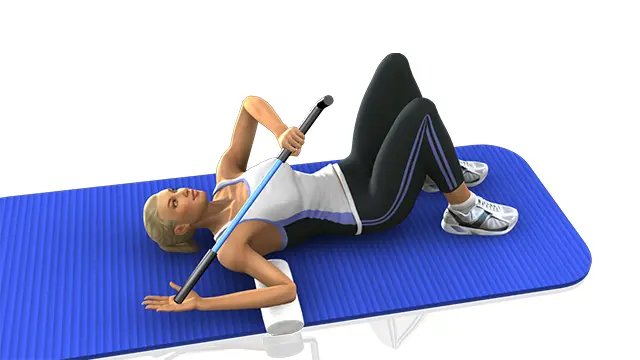
This will help improve external rotation.
- Sit/lie comfortably
- Hold a wand in both hands
- Keep elbows bent at approx. 90 degrees and by your side
- Using your unaffected arm, gently push your affected forearm outwards
- Keep elbows pressed into the body
- Slowly bring back to start position
- Repeat 10-12 times.
Wall Climbing
This will help improve shoulder elevation.
- Stand facing a wall
- Place fingers of affected hand on the wall
- Slowly move your fingers up
- Raise your arm as high as comfortably possible
- Hold for 3-5 seconds
- Move your fingers back down slowly
- Repeat 10 times.
Cross Body Shoulder Stretch
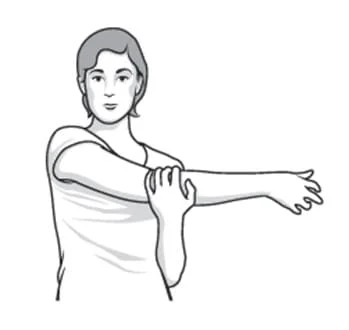
This will help stretch the posterior shoulder muscles and capsule.
- Stand or sit tall
- Bring your affected arm across your chest
- Gently pull your arm towards your body with your opposite hand
- Keep shoulders relaxed
- Hold in a comfortable position with no sharp pain
- Hold for 15-20 seconds.
- Repeat 3-5 times.
Isometric Shoulder External Rotation
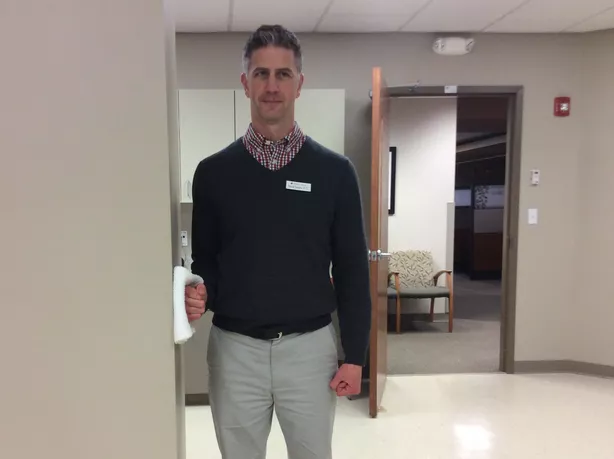
This will help activate the infraspinatus and teres minor muscles.
- Stand to the side of a wall
- Bend your affected elbow to 90 degrees
- Keep your elbow by your body
- Press the back of your hand against the wall
- Push gently against the wall without moving your arm
- Hold and release
- Hold for 5-10 seconds.
- Repeat 8-10 times.
Isometric Shoulder Internal Rotation
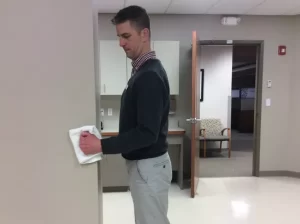
This will help activate the subscapularis and internal rotators.
- Stand to the side of a wall
- Bend your elbow to 90 degrees
- Keep your elbow by your body
- Press your palm against the wall
- Gently push your palm into the wall
- Hold without causing shoulder movement
- Hold for 5-10 seconds.
- Repeat 8-10 times.
Resistance Band External Rotation
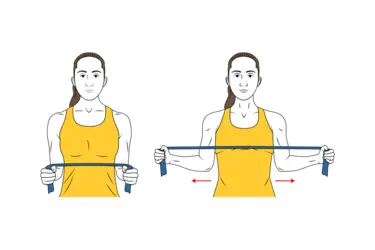
This will help strengthen external rotators.
- Attach the resistance band to a fixed object at elbow height
- Stand to the side of the wall with your affected arm away
- Hold the resistance band with your affected hand
- Bend your elbow to 90 degrees and keep it by your body
- Slowly externally rotate your forearm
- Return to start position
- Repeat 10-15 times.
- Repeat 2-3 times.
Resistance Band Internal Rotation
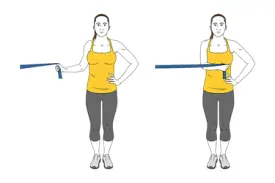
This will help strengthen internal rotators.
- Attach the resistance band to a fixed object
- Stand to the side of the wall with your affected arm closer
- Hold the resistance band
- Keep your elbow bent to 90 degrees
- Pull your forearm towards your abdomen
- Slowly return to the start position
- Repeat 10-15 times.
- Repeat 2-3 times.
Side-Lying External Rotation
This will mainly strengthen the infraspinatus and teres minor.
- Lie on your unaffected side
- Bend your affected elbow to 90 degrees
- Keep your elbow by your waist
- Hold a light dumbbell
- Slowly externally rotate your forearm
- Lower the dumbbell slowly
- Repeat 10-12 times.
- Repeat 2-3 times.
Full Can
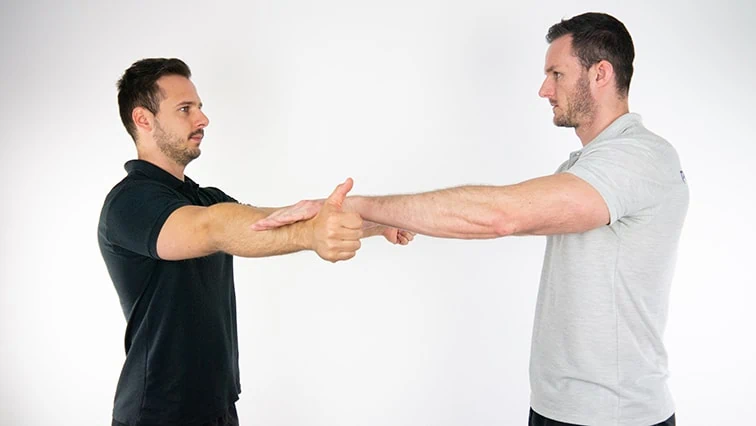
This will help strengthen the supraspinatus.
- Stand tall with arms by your side
- Raise your arms to approx. 30-45 degrees forward from the frontal plane
- Keep your thumbs up
- Slowly raise arms to a comfortable height
- Avoid shrugging your shoulders
- Lower arms slowly
- Repeat 10-12 times.
- Repeat 2 times.
Prone Y Raise
This will help strengthen the lower trapezius.
- Lie face down on a mat/exercise bench
- Raise your arms overhead to make a Y shape
- Keep thumbs up
- Gently raise your arms off the surface
- Avoid hyperextending your lower back
- Lower arms slowly
- Repeat 10-12 times.
- Repeat 2 times.
Shoulder Scapular Retraction
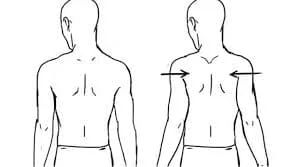
This will help improve scapular control and strengthen the middle trapezius and rhomboid muscles.
- Stand or sit tall
- Keep arms relaxed by your side
- Gently squeeze your scapulae together
- Avoid shrugging your shoulders
- Hold for a few seconds
- Release slowly
- Hold for 5 seconds.
- Repeat 10-15 times.
Wall Push Ups
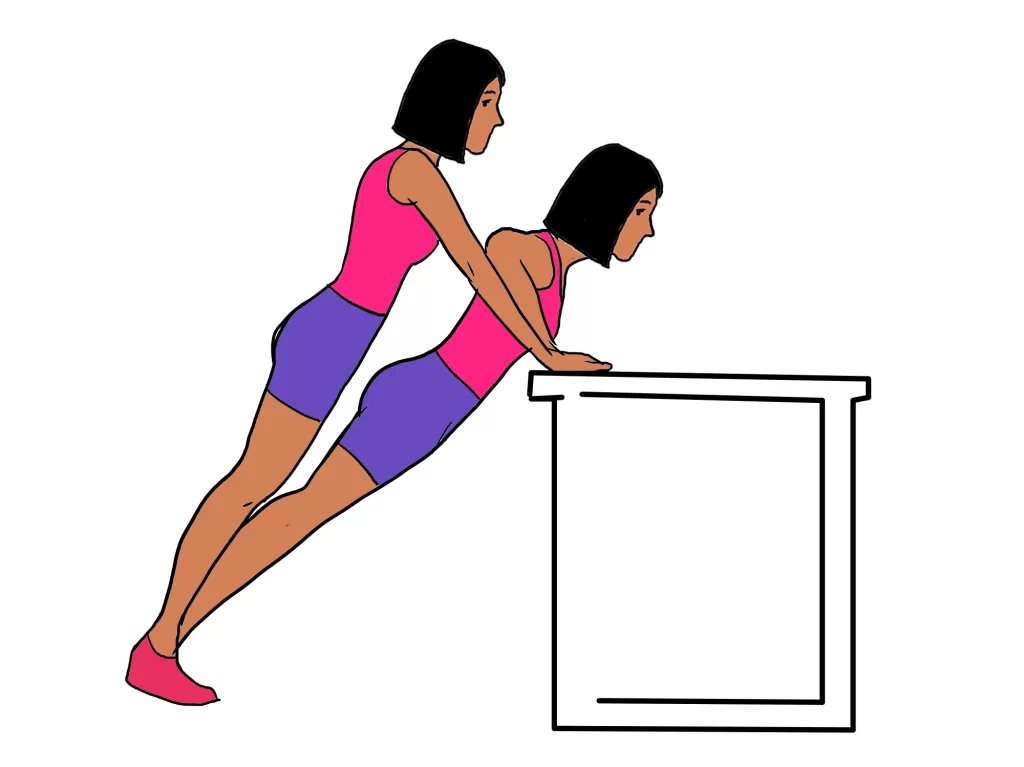
- Stand facing a wall
- Place both palms on the wall at shoulder height
- Keep your body straight
- Bend your elbows and move towards the wall
- Return to start position
- Ensure you keep your scapulae controlled
- Repeat 10-15 times.
Push Up Plus
This will help strengthen the serratus anterior.
- Stand facing a wall with hands at shoulder height
- Keep elbows straight
- Gently push your torso away from the wall by protracting your scapula
- Avoid rounding your lower back
- Return to start position slowly
- Repeat 10-15 times.
Resistance Band Rows
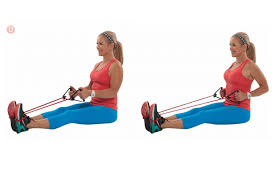
- Attach the resistance band at chest height
- Hold both ends of the resistance band
- Keep elbows slightly bent
- Pull the band towards you
- Squeeze your scapulae together
- Return to start position slowly
- Repeat 12-15 times.
- Repeat 2-3 times.
Doorway Chest Stretch
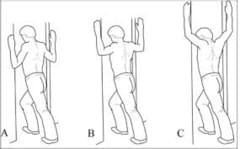
- Stand in a doorway
- Place forearms against the door frame
- Keep elbows at a comfortable height
- Move your body forward slowly
- You should feel a gentle stretch across your chest
- Hold and relax
- Hold for 20-30 seconds.
- Repeat 2-3 times.
Upper Trapezius Stretch
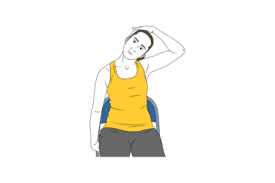
- Sit tall
- Gently tip your head to one side
- Keep opposite shoulder relaxed
- Use your hand to gently assist if needed
- Hold and return to start position
- Hold for 15-20 seconds.
- Repeat 3 times on each side.
Glenohumeral Joint Mobilisations
- Glenohumeral joint mobilisations involve gentle movements to the shoulder joint.
- May help improve joint movement, reduce pain/stiffness, and improve shoulder flexion/abduction and internal/external rotation. Depending on the patient’s clinical presentation, the direction and intensity of mobilisation will vary.
Soft Tissue Mobilisations
Soft tissue mobilisations may be carried out to the surrounding muscles, including:
- Upper Trapezius
- Posterior Deltoid
- Infraspinatus
- Teres Minor
- Pectoral Muscles
- May help reduce muscle tightness and improve comfort.
- Manual therapy should not be done aggressively over an acutely injured or severely painful tendon.
Wall Slides
- Stand facing a wall
- Place forearms against the wall
- Slowly slide arms upwards
- Apply gentle pressure against the wall
- Avoid shrugging shoulders
- Return to start position slowly
- Repeat 10-12 times.
Scaption with Dumbbells
- Stand tall with light dumbbells
- Keep thumbs up
- Raise arms diagonally forward
- Stop at a comfortable height
- Return to start position slowly
Quadruped Weight Shifts
- Start on hands and knees
- Hands should be under shoulders
- Keep spine neutral
- Shift your body forwards and back slowly
- Gradually shift your body from side to side
- Keep shoulder movement controlled
- Repeat 10-12 times.
Medicine Ball Wall Circles
- Stand facing a wall
- Place a light medicine ball against the wall
- Keep your affected arm slightly raised
- Make small circles with the ball
- Keep your shoulder controlled
- Change direction
- Hold for 20-30 seconds.
Rehabilitation Stages
Depending on the type and severity of injury, the rehab will be as follows.
Stage Goals Treatment
- Stage 1 – Pain: Reduce pain and irritation. Activity modifications, gentle movement, and isometrics
- Stage 2 – Movement: Improve shoulder movement. Wand exercises, pendulum, and wall climbing
- Stage 3 – Strengthening: Improve muscle strength. Resistance band exercises, side-lying external rotations, and scapular exercises
- Stage 4 – Strengthening: Improve shoulder stability. Scaption, wall slides, and weight-bearing exercises
- Stage 5 – Functional Return to daily and sporting activities: lifting, reaching and throwing progressions
- The duration of each stage will vary. Patients with significant tendon tears or surgical repair will have a different rehab protocol.
Advice to do at home
- Avoid repetitive overhead movements when in pain
- Avoid lifting heavy items with your affected arm when in pain
- Avoid sleeping on the painful shoulder
- Use a pillow to support your affected arm
- Sit upright
- Complete your shoulder exercises regularly
- Avoid jerky movements
- Take short breaks from repetitive activities
- Build up resistance gradually
- Avoid complete rest unless advised by a member of your clinical team.
- Sleeping Position
- Sleep on your back with a pillow to support your affected arm. If sleeping on your side, sleep on your unaffected side with a pillow to support your affected arm.
Precautions
- Avoid any exercises that cause sharp or increasing shoulder pain
- Do not begin heavy resistance exercises during the painful stage
- Avoid forcefully stretching your shoulder
- Perform exercises correctly
- Do not do any overhead repetitive exercises beyond your ability
- Build up resistance gradually
- If you have had rotator cuff surgery, follow specific post-op guidelines.
- You may expect some mild muscle effort when doing strengthening exercises. If your pain is getting worse and does not settle after exercising, you may need to alter your programme.
- If you have sudden weakness in your shoulder after injury, cannot lift your arm, have suffered significant trauma, or suspect a complete tendon tear, you should seek medical advice. If you have had surgery, you should follow your surgeon’s guidelines.
How long will it take to recover?
The time taken to recover will depend on the type of injury, severity of tendon damage, age, general health, and how well you complete your rehab.
- Type Approx. Time to Recover
- Mild muscle/tendon irritation 2-6 weeks
- Mild rotator cuff tendinopathy 6-12 weeks
- Moderate tendon injury 3-6 months
- Significant tendon tear: Several months+
- Rotator cuff repair surgery: Often 4-6 months+
- These are just estimates. Some people may take up to 6-12 months to recover from surgery.
Prevention
The following can help reduce your risk of future shoulder injuries:
- Regular shoulder strengthening exercises
- Warm up before sport/overhead activities
- Maintain good posture whilst working
- Don’t suddenly increase the intensity of your exercises
- Use correct lifting techniques
- Strengthen your rotator cuff and scapular muscles
- Keep your chest and shoulder muscles flexible
- Take regular breaks from repetitive overhead activities
- Don’t overtrain
- Seek early assessment if you experience shoulder pain/weakness.
Conclusion
Physiotherapy can play an important role in managing rotator cuff injuries. A comprehensive rehab programme will include pain relief, shoulder movements, rotator cuff strengthening, scapular stabilisation, manual therapy, posture correction and functional rehab.
Completing the correct exercises regularly will help improve your shoulder strength, movement, stability and function. Your rehab should be tailored to the severity of your injury and how it affects your function. With proper assessment, progressive exercises, and the right guidance, many patients can improve significantly and return to normal daily activities.
FAQ
What is a rotator cuff injury?
Damage to one or more of the muscles and tendons within the rotator cuff (shoulder) area. This can cause pain when raising/rotating/reaching with the arm. Possible injuries to the rotator cuff include tendonitis, muscle strain, and partial/complete tearing of the shoulder tendon.
What are the symptoms?
Pain when raising arm
Weakness in shoulder and upper arm
Difficulty raising arms above your head or reaching around your back
Pain when lying on the shoulder
Popping/clicking of joints
Limited range of movement
What causes a rotator cuff injury?
Activities involving repeated overhead arm movement
Lifting heavy weights and sudden movements with the shoulder
Swimming, tennis, and badminton
Degradation of tendons with age
Falling onto the shoulder
Poor shoulder mechanics and weak muscles
Will it heal on its own?
If the injury is mild (muscle strain and irritation), it may get better with rest, changing activity, and physiotherapy. If the injury is moderate or severe and has caused tearing in the tendon, it is best to seek medical advice and may require surgery.
How long a period of time will it take to heal?
The time taken to heal depends on the seriousness of the injury:
Mild: 2-6 weeks
Moderate: 6-12 weeks
Severe (tendon tear): Several months
References
- Orthopedics, W. L. M. C. (n.d.). Rotator cuff tears – shoulder & elbow – orthobullets. https://www.orthobullets.com/shoulder-and-elbow/3043/rotator-cuff-tears
- National Library of Medicine. (n.d.). Rotator cuff injuries. MedlinePlus. https://medlineplus.gov/rotatorcuffinjuries.html
- Rotator Cuff Injury Signs & Treatment | Advocate Health Care. (n.d.). https://www.advocatehealth.com/health-services/orthopedic-center/specialties/shoulder/rotator-cuff-injury