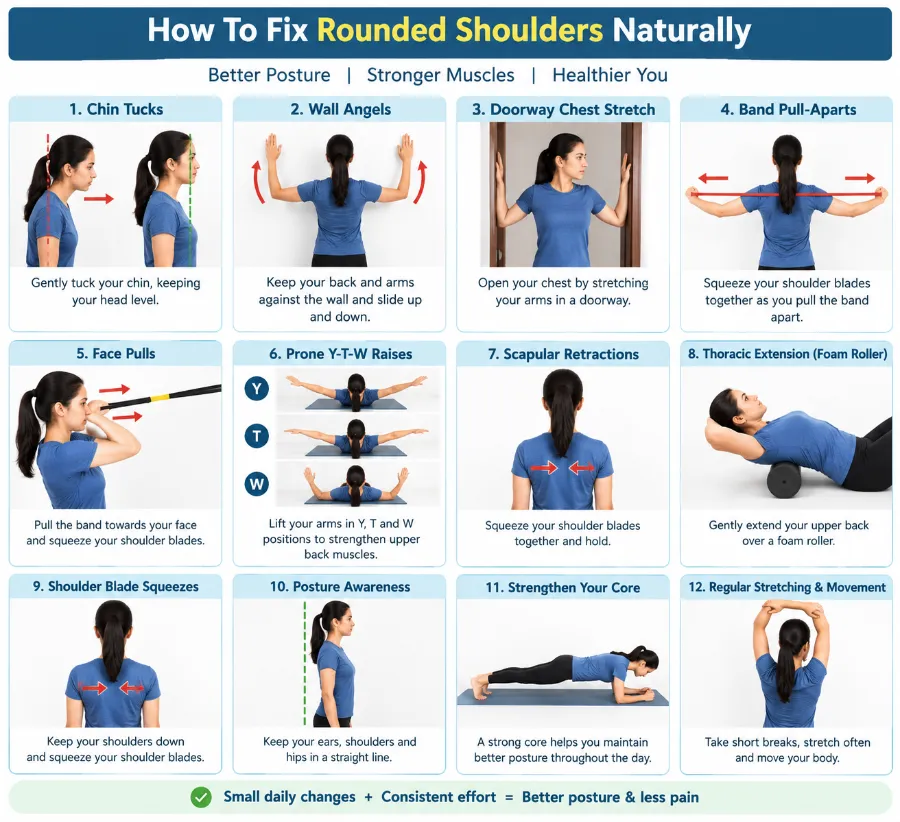
How To Fix Rounded Shoulders Naturally
Introduction
A common postural issue is rounded shoulders, when the shoulders move forward rather than remaining in line with the hips and ears. This condition often develops due to prolonged sitting, excessive mobile or computer use, poor posture, weak upper-back muscles, and tight chest muscles. Over time, rounded shoulders may contribute to neck pain, shoulder pain, upper-back stiffness, and reduced shoulder mobility.
The good news is that with regular exercise, stretching, and excellent posture, rounded shoulders may frequently be naturally corrected. Exercises that strengthen the upper back muscles, increase flexibility, and improve shoulder alignment include chin tucks, wall angels, doorway chest stretches, shoulder blade squeezes, and resistance band rows.
Exercise, maintaining an ergonomic workplace, taking regular breaks from sitting, and being mindful of your posture during the day can all help with long-term improvement. Since postural adjustments typically take time, consistency is crucial.
In this article, we will explore effective natural ways to improve rounded shoulders, including simple physiotherapy exercises, daily posture correction tips, and habits to avoid. If rounded shoulders are accompanied by persistent pain, numbness, weakness, or significant stiffness, consult a qualified healthcare professional for an appropriate assessment.
Why Should You Fix Your Posture?
When your head tilts forward and becomes misaligned, it puts your neck and back joints at risk. Actually, for every inch your head slides forward, your spine is subjected to an extra ten pounds of pressure.
By improving your posture, you can either lower your risk of getting back pain or improve chronic pain. By trying to strengthen the muscles that support your neck and back, you can slow down their natural degeneration as you become older. To improve your posture, try these three daily routines.
Exercises
Lateral Neck Flexion Stretch
How to do
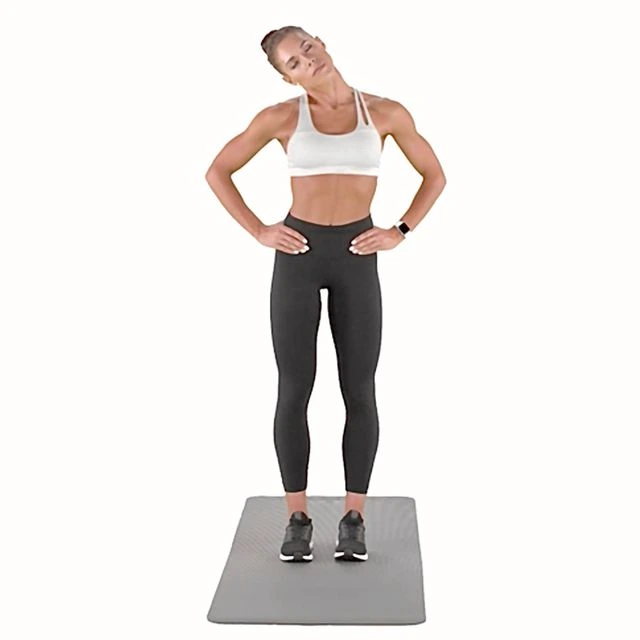
- Whether you’re standing or sitting upright on a chair, maintain a straight back and relaxed shoulders.
- Gently move your left ear in the direction of your shoulder to stretch the right side of your neck.
- On the opposite side, repeat.
- After one or two sets on each side, hold for fifteen to thirty seconds.
Chest Doorway Stretch
How to do
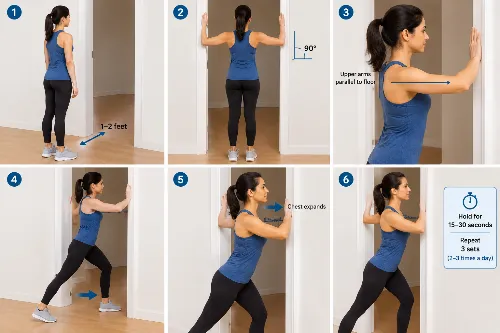
- Place yourself at a doorway one to two feet ahead of you.
- Bend both elbows to a 90-degree angle, then raise your arms until your upper arms are parallel to the floor.
- Place your forearms on the sides of the doorway.
- Step forward, placing one foot on the opposite side of the doorway.
- Your chest will start to expand as you gradually shift your weight to your front foot.
- Hold on.
- Two or three times a day, perform three sets of 15 to 30 seconds each.
Reverse Shoulder Stretch
How to do
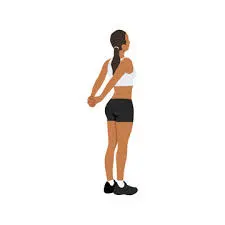
- With your arms by your sides and your feet shoulder-width apart, take a straightforward stance.
- Fold your hands behind your back, thumbs facing the floor.
- Take a tall posture, open your chest, and raise your hands to the ceiling. Stop when your biceps and shoulder muscles begin to stretch.
- For 20 to 30 seconds, maintain this posture.
- Return your hands to the starting position after releasing the stretch.
- Raise your hands to the ceiling, open your chest, and take a tall stance. When the muscles in your shoulders and biceps start to stretch, stop.
Prone I,Y,T
How to do
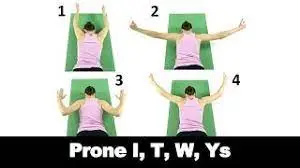
- Lie on your stomach with your hands in a thumbs-up position, your arms straight over your head, and your forehead on the ground.
- Raise your arms as high as you can for a minute, then gradually lower them again.
- Make a “Y” shape with your arms, raise them as high as you can, and then gradually lower them once more.
- Make a “T” shape with your arms, lift them as high as you can, and then gradually lower them once more.
- Return to the “I” position and repeat the process.
- Do two sets of ten repetitions once or twice a day.
Band Pull-Apart
How to do
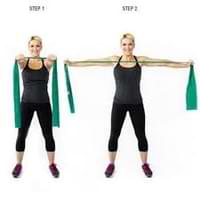
- Keep your back straight, space your feet shoulder-width apart, and gently bend your knees.
- Using an overhand grip, hold the band in front of you.
- Squeeze your shoulder blades together and slowly separate your hands.
- As you concentrate on the pressure, picture a little ball between your shoulder blades.
- Gradually return the band to its starting position.
- Once or twice a day, perform two sets of ten to twelve repetitions.
Scapular Wall Slide
How to do
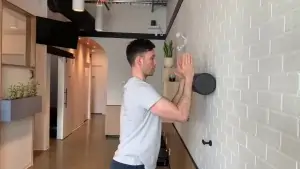
- Place your arms at your sides and lean back against a wall.
- Make sure your glutes, upper back, and head are touching the wall.
- Your feet will be close to the wall.
- With your hands out and your fingers contacting the wall, raise your arms over your head and press them against the wall.
- Keeping your arms against the wall, bend your elbows to a 90-degree angle.
- This is where you start.
- Keeping your back, shoulders, elbows, and wrists off the wall, gently glide your arms up the wall as high as you can.
- At the peak of the movement, pause.
- With your elbows bent at a 90-degree angle, slowly lower your arms by sliding them down the wall to the beginning position. The movement is deliberate and gradual.
- Do two sets of ten repetitions once or twice a day.
Handclaps
How to do
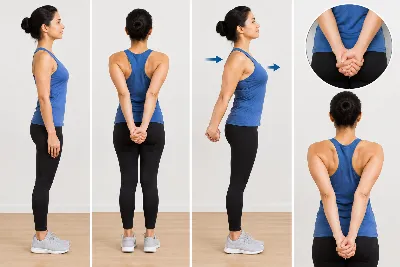
- The handclaps stretch is easy to perform on a daily basis.
- A person reaches behind them to clasp their hands together while standing upright with their hands by their sides.
- Then, being careful not to let the neck press forward, they gently bring the shoulders back.
- Pull back the shoulders until a deep stretch is felt and the chest expands.
- Hold the pose for thirty seconds.
Shoulder Blade Squeeze
How to do
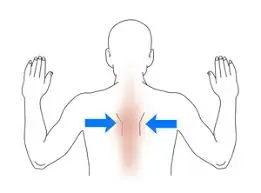
- This simple exercise helps the body develop strength throughout the day and serves as a reminder of what proper posture feels like.
- When sitting upright, one should strive to hold a tennis ball between their shoulder blades by moving them together.
- The shoulders should fall and move away from the ears as they flex.
- Repeat this posture ten times, holding it for ten seconds each time.
Wall Angels
How to do
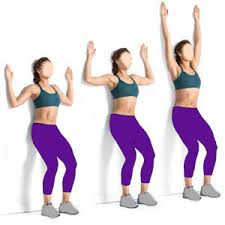
- In order to do a wall angel, one must stand with their back to the wall, place their feet slightly forward, and pull their arms back so they are always in contact with the wall.
- The arms begin in a “W” shape, which is similar to someone flexing both biceps.
- They have both arms up against the wall.
- Then, with the shoulders down and flexed, the hands are raised toward the ceiling.
- The arms are then put back in the initial “W” posture.
- There is just one repetition of this movement.
- Each training session should ideally consist of ten of these repetitions.
Thoracic Spine Foam Rolling
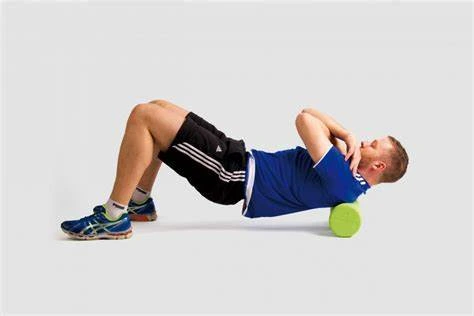
- This is a good method for relieving upper back strain.
- Lying on your back with your hands behind your head, place a foam roller below your upper back.
- Roll up and down slowly, starting from your mid-back and working your way up to the top of your shoulder.
- Keeping your core strong, roll with your legs.
- Roll gently and slowly; don’t panic.
Floor Angel
How to do
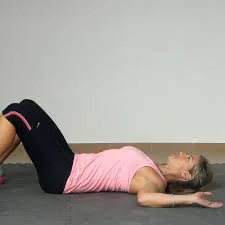
- With your arms extended in front of your head, lie flat on your stomach on a yoga mat.
- To raise your feet, shoulders, and arms off the ground, tighten your core.
- Look directly down at the floor while keeping your head and neck in alignment with your spine.
- Next, lower your arms until your elbows form 90-degree bends.
- Try to bring your shoulder blades together at the end of the exercise.
- Next, return your arms to their initial position by straightening them.
- Try to complete two to three sets of ten repetitions each.
- Floor angels improve your posture by strengthening your lateral stretches and traps.
- Try doing floor angels against the wall if you find it too challenging.
- With your back to the wall, stand with your arms exactly over your head.
- Lower your arms gradually until your elbows form a W shape while keeping the backs of your hands on the wall.
Chin Tuck
How to do
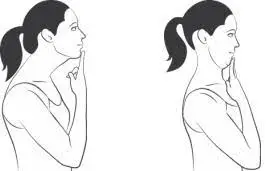
- Face forward while sitting in a tall chair with your back straight.
- Pull your chin in toward your neck while turning your head back.
- Return to your starting place after that. Perform this stretch two or three times a day for roughly five repetitions.
- By extending the muscles at the back of your neck, chin tucks help prevent slouched shoulders and enhance forward head posture.
Tennis Ball Massage
How to do
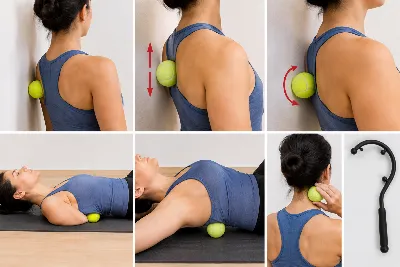
- Press a tennis ball against your back or pecs if you feel a tight knot there.
- You may either press the tennis ball up against the wall or lie on top of it until you start to feel a little stress.
- Roll the tennis ball over your muscle to relieve stress.
- It’s much simpler to deeply massage your muscles using a tennis ball to release stress in your back and chest.
- You can reach and target places on your neck and back using a massage hook if you don’t have a tennis ball.
Prevention
Preventing rounded shoulders involves maintaining proper posture, strengthening the upper-back muscles, stretching tight chest muscles, and developing healthy daily habits. The following tips can help reduce the risk of developing rounded shoulders and support better posture.
Maintain Proper Sitting Posture: Keep your back comfortably upright, shoulders relaxed, and feet flat on the floor while sitting at a desk.
Modify Your Computer: To prevent bending forward, place your computer screen at eye level and have your keyboard and mouse close at hand.
Take Regular Breaks: Avoid sitting in the same position for long periods. Stand up, walk around, and move your shoulders every 30–60 minutes.
Strengthen Your Upper-Back Muscles: Perform exercises such as resistance band rows, shoulder blade squeezes, and wall angels to support healthy shoulder alignment.
Stretch Your Chest Muscles: Include doorway chest stretches in your daily routine to help reduce tightness that may contribute to forward shoulder positioning.
Avoid Excessive Mobile Phone Use in a Bent Position: Hold your phone closer to eye level and avoid continuously bending your head and shoulders forward.
Practice Regular Physical Activity: Activities such as walking, swimming, and appropriate strength training can help maintain mobility, muscle strength, and postural control.
Be Aware of Your Posture: Throughout the day, pay attention to how your shoulders are positioned. Keep your shoulders relaxed rather than forcing them backward or holding them rigidly.
Use Proper Lifting Techniques: Keep objects close to your body when lifting and avoid repeatedly working with your shoulders hunched forward.
Maintain a Balanced Exercise Routine: Combine chest stretching, upper-back strengthening, shoulder mobility exercises, and core strengthening for better overall postural support.
Conclusion
Rounded shoulders can often be improved naturally through regular exercise, stretching, and better daily posture habits. Strengthening the upper-back muscles, stretching tight chest muscles, and performing exercises such as wall angels, shoulder blade squeezes, chin tucks, and resistance band rows can help improve shoulder mobility and postural control.
Along with regular physiotherapy exercises, maintaining an ergonomic workstation, taking frequent movement breaks, and avoiding prolonged slouching can support long-term improvement. Remember that correcting rounded shoulders takes time, and results vary depending on the underlying cause and severity of the condition.
Consistency is the key to better posture. Start with gentle exercises, progress gradually, and avoid forcing your shoulders backward if it causes discomfort. If you experience persistent pain, numbness, weakness, or limited movement, consult a qualified physiotherapist for an individualized treatment plan.
FAQs
How do you get rid of shoulder pain fast?
Daily chest stretches must be combined with upper-back and shoulder-blade strengthening exercises to quickly correct rounded shoulders by reversing muscular imbalances. Consistent daily labor produces significant gains within a few weeks, but there is no quick fix.
What is the main cause of rounded shoulders?
Prolonged bad posture, which is mostly caused by everyday routines like hunching over a computer, sitting at a desk, or staring down at a smartphone for lengthy periods of time, is the primary cause of rounded shoulders.
How do you correct rounded shoulders when you’re sleeping?
Sleep on your back on a firm mattress to correct rounded shoulders. Use a narrow, low cushion behind your head or place a vertical pillow along your upper/thoracic spine to keep your chest open and prevent your shoulders from rolling forward.
Are rounded shoulders too late to fix?
It is never too late to fix rounded shoulders at any age if there are no underlying structural bone disorders, such as severe spinal fractures or advanced hyperkyphosis.
Which muscles are weak if I have rounded shoulders?
A muscular imbalance between weak muscles in your upper back and shoulder blades and tight muscles on the front of your body causes rounded shoulders.
Are rounded shoulders reversible?
Yes, rounded shoulders are reversible in most cases through targeted stretching, strengthening, and better daily movement habits.
Reference
- Lindberg, S. (2026, October 14). 6 exercises for rounded shoulders. Healthline. https://www.healthline.com/health/rounded-shoulders-exercises
- Ultimate Nutrition. (2021, September 14). 3 Ways to fix rounded shoulders and poor posture. https://ultimatenutrition.com/en-in/blogs/training/3-ways-to-fix-rounded-shoulders-and-poor-posture?srsltid=AYCX9vLKv2C-tpPzI34VtMhfCS03BdDBnb407AwP25I0uJYbCHvdVa_-
- McQuilkie, S., DC, & McQuilkie, S., DC. (2024b, November 21). How to fix rounded shoulders posture – 5 Effective exercises. Back Intelligence (Creators of PostureFlow App). https://backintelligence.com/how-to-fix-rounded-shoulders-with-exercises/