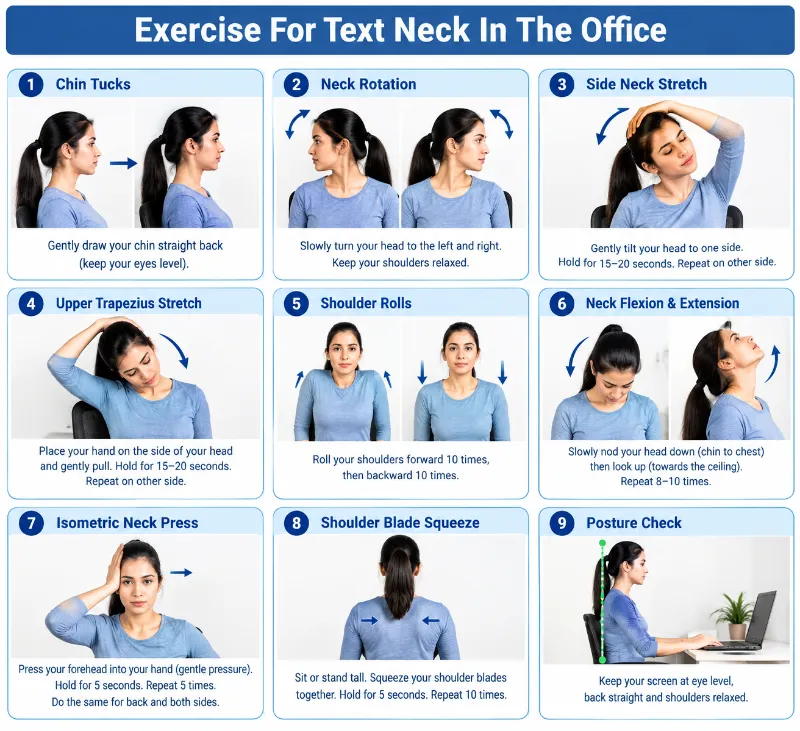
Exercise For Text Neck In The Office
Introduction
It arises from prolonged head bending, which strains the cervical spine, neck muscles, and surrounding tissues. Headaches, neck pain, stiffness, and shoulder stress can all be caused by poor sitting posture, extended screen usage, and inactivity.
Workplace text neck exercises can improve posture, release tension in muscles, promote neck mobility, and strengthen the muscles supporting the cervical spine. Placing your screen at eye level and taking frequent movement breaks can also help reduce unnecessary neck strain.
By including these exercises into your everyday work routine, you may enhance comfort, promote good posture, and lessen the negative consequences of extended sitting. Start slowly, perform each movement gently, and avoid forcing your neck into painful positions. If you continue to have arm pain, numbness, tingling, or weakness, see a medical professional for a full examination.
Exercises
Exaggerated Nod
By extending your shoulders down and back and improving neck mobility, the exaggerated nod balances the forward/downward head posture.
How to do it:
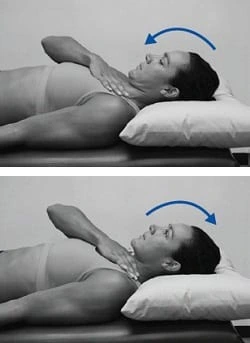
- Start by standing with your shoulders relaxed or settling into a comfortable chair at your desk.
- Here, relax your jaw and open your mouth. Now see if you can move your head back an additional inch or two (usually you can).
- Keeping your head upright, firmly close and close your mouth by bringing your upper and lower jaws together. The front of your neck should feel stretched.
Downward-Facing Dog
Downward-Facing Dog can help expand the shoulders and anterior chest wall, which are often relaxed and rounded from extensive tech use. This posture aims to strengthen the upper body; therefore, if your shoulders are weak, you may make up for it by raising them to your ears.
How to do it:
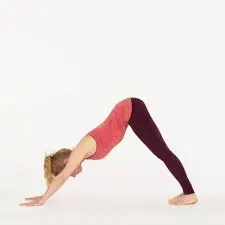
- Start on your hands and knees.
- Reach back toward the mat while keeping your heels off the ground.
- Make your neck long by lowering your head. While you’re here, make sure your wrist folds stay parallel to the front border of the mat.
- Apply pressure on the knuckles of your thumbs and forefingers to relax wrist stress.
- Next, let go.
Cat-Cow
Your pelvis and core should control the Cat-Cow flow. When you inhale, your pelvis tilts anteriorly with your tailbone facing the ceiling, and when you exhale, it tilts posteriorly with your tailbone facing the ground. This exercise sequence improves spinal awareness, which is a major contributing cause of bad posture.
How to do it:
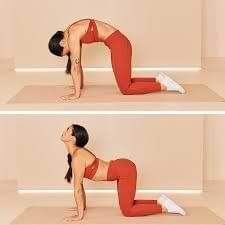
- A few inches in front of your fingers, extend the concentration from your head to your tailbone.
- To begin the cat phase, tuck in your tailbone to resemble a Halloween cat and bend your spine toward the sky with your abs.
- Your ears should be near your biceps as you extend your neck and allow your chin to reach down and in toward your chest.
- To begin the cow phase, drop your belly to the floor by sweeping and scooping your pelvis as you inhale.
- Raise your shoulders off your ears, extend your shoulder blades, and lift your chin and chest to look at the ceiling.
- To relieve tension and strain on the head and neck, perform Cat-Cow several times.
Padahastasana
By stretching the hamstrings and neck, padahastasana helps release tension in the hips and neck caused by prolonged sitting.
How to do it:
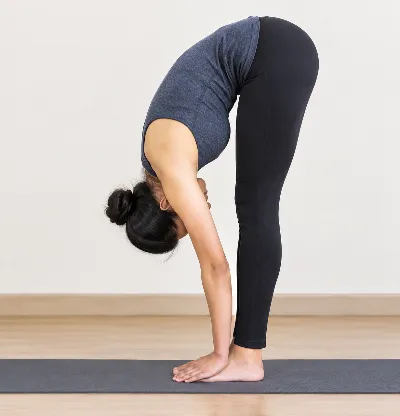
- Start with your feet hip-distance apart after removing your shoes.
- Then bend forward until your arms touch the floor.
- If it’s difficult, only extend your arms as far as you can without stretching.
- To place your hands, palms facing up, under your feet, bend your knees and raise the balls of your feet off the floor.
- Let your toes sink into the wrinkles in your wrists.
- Take a deep breath.
Bow Pose
By strengthening the shoulders from the rear and extending them from the front, bow posture helps prevent slouched shoulders.
How to do it:
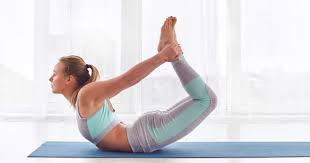
- Lie on your stomach with your hands at your sides and your chin on the ground.
- Reach back and grasp your outer ankles with both hands.
- As you inhale, raise your heels toward the ceiling, lifting your chest, thighs, and upper body off the mat.
- Try pushing your tailbone on the mat while raising your heels to intensify the stretch.
- Take ten breaths, maintaining this posture.
- Slowly lower your thighs to the floor as you exhale, then your entire body.
Chin Tuck
The chin tuck is a simple exercise that you can do at your desk, at a stoplight, or even in a business meeting.
How to do it:
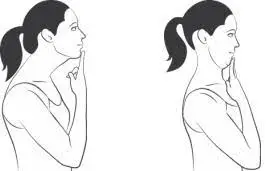
- Maintain your chin parallel to the floor when sitting upright on a chair.
- Take care not to push your head back.
- The back of your neck should feel stretched.
- As you actively stretch your neck, picture a thread dragging your head up like a puppet.
- Make a conscious effort to separate the base of your neck from the base of your head.
- Keep your jaw relaxed and hold this position for three long breaths.
- Let your chin drop forward.
- Do it again.
Upper Trapezius Stretch
How to do it:
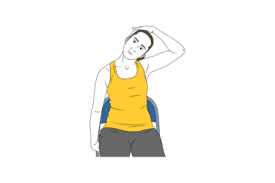
- Sit upright in your chair with both feet flat on the ground.
- Until you feel a stretch down the left side of your neck and into your upper shoulder, turn your right ear slightly toward your right shoulder.
- Put your right hand on top of your head and gently press down, without pushing, for a deeper stretch.
- Hold for thirty seconds while letting the muscle relax and breathing deeply.
- Repeat after switching sides.
Why it works: The upper trapezius is the muscle that people with text neck have the most persistent stiffness in. Long-term screen use, which sustains constant isometric strain, is the source of the common “hump” of stiffness between the neck and shoulders.
Neck Extension Stretch
How to do it:
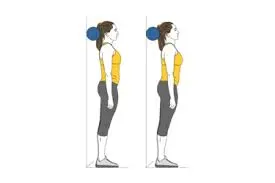
- Either stand with your shoulders back or take a high seat.
- Tilt your head slightly back and look up toward the ceiling.
- Don’t force yourself into pain; instead, move slowly and stop when you feel a comfortable stretch over the front of your neck and throat.
- After 15 seconds of holding this posture, carefully bring your head back to neutral.
- In between each repeat, take a breath.
Why it works: This stretch immediately counteracts the prolonged neck flexion posture linked to phone use. It gently mobilizes the posterior cervical joints, which get compressed under load, and stretches the anterior neck muscles and scalenes, which shorten with extended forward head position.
Thoracic Extension Over Chair
How to do it:
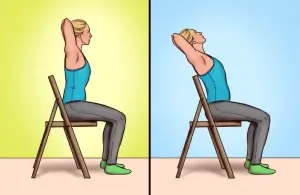
- Choose a chair with a sturdy back; an office or dining chair with a unique top edge is perfect.
- Behind your head, clasp your hands together.
- Allow your thoracic spine—the center part of your back—to stretch over the upper border of the chair back as you gently lean back, opening your chest to the ceiling.
- Consider the chair back as a soft pivot.
- After ten seconds of holding this posture, carefully stand back up.
- It’s common to hear a soft popping sound.
Why it functions: There is more to text neck than just a cervical problem. One of the main causes of forward head posture is thoracic kyphosis, which is the forward rounding of the mid-back caused by extended sitting. The head must expand forward to compensate for a stiff and rounded mid-back. The thoracic spine has to be mobilized for long-term postural correction.
Five slow repetitions should be done twice a day, preferably every two hours while working at a desk.
Change How You Hold Your Phone
Bring the screen to eye level to prevent slouching forward or raising your head too high. Instead, align your shoulders and ears by maintaining a neutral spine. You won’t be able to prepare for things for long periods of time as a result.
Take Phone Breaks
Taking regular breaks from the computer might be helpful, even if it’s just for two or three minutes per hour. Consequently, I counsel people to make an effort to deliberately take breaks from their phones. Set reminders on your phone or computer, or use a sticky note. These little indicators can have a significant impact.
Try The Text Neck App
An Android app called Text Neck shows your posture (shown by a green or red light). You may also have an optional alarm clock or vibration alert to let you know when you’ve reverted to unhealthy behaviors.
Do 10 Minutes of Yoga
Yoga is the greatest way to prevent and treat neck and back problems since it includes breath exercises, improves movement patterns, and raises body awareness. Neck pain is mostly caused by tight rhomboids and other muscular imbalances, which may be corrected with consistent yoga practice. Doing the following exercises or spending ten minutes a day doing yoga might be helpful.
Importance of Correct Posture
By keeping the spine in alignment, good posture eases the strain on the neck and back muscles. This position helps ensure that the weight of your head is distributed properly over your shoulders and neck.
Another prevalent issue associated with extended cellphone use is slouching. It strains the shoulders and upper back in addition to the neck. You can prevent the harmful effects of slouching by keeping your shoulders straight and relaxed.
By taking regular breaks from using your phone, you may prevent text neck. Long-term use of these devices may cause stiffness and strain in the muscles. You might start by setting a timer to remind you to take a break every 20 to 30 minutes.
Conclusion
Poor posture and prolonged screen time can lead to neck pain, shoulder stiffness, upper back pain, and decreased mobility. Incorporating simple text neck exercises into your daily office routine can help improve neck flexibility, strengthen supporting muscles, and promote better posture.
Exercises that encourage healthy neck mobility and ease muscular tension include chin tucks, shoulder rolls, neck stretches, and shoulder blade squeezes. Keep your screen at eye level, sit comfortably, and take quick movement breaks every 30 to 60 minutes in addition to regular exercise.
Maintaining the health of your neck and avoiding pain after long workdays requires perseverance. Each exercise should be done within a comfortable range, starting softly. If you experience persistent pain, numbness, tingling, or weakness in your arms, consult a qualified physiotherapist or healthcare professional for proper assessment and guidance.
FAQs
How to relieve text neck?
Immediate workplace changes, focused daily exercises, and temporary pain management are all part of text neck relief.
What is desk neck syndrome?
Workplace neck syndrome, also known as tech neck or text neck, is a musculoskeletal disorder and repetitive stress injury caused by prolonged forward head posture and staring down at digital devices such as tablets, cellphones, or misplaced office displays.
What causes text neck?
Prolonged screen time and forward head position, particularly while staring down at computers, tablets, and smartphones, are the main causes of tech neck.
How to stop neck pain from working at a desk?
To avoid neck pain when using a computer, you must optimize your ergonomic setup, make active posture adjustments, and move often.
Since extended sitting and staring down at screens greatly increase the strain on your cervical spine, you must consciously alter your work environment.
Which type of exercise is most effective for those who work in offices?
Thoracic spinal twists, chest openers, and calf raises are the best exercises for office workers because they immediately counteract the forward-slumped posture, tight hips, and slow leg circulation caused by prolonged sitting.
References
- Kassel, G. (2020, May 30). 6 Chiropractor-Approved exercises to fight text neck. Healthline. https://www.healthline.com/health/fitness-exercise/text-neck-treatment#TOC_TITLE_HDR_1
- Lambrou, D. (2022, September 23). 5-minute exercises to relieve text neck | Northeast Spine and Sports Medicine. Northeast Spine and Sports Medicine. https://www.northeastspineandsports.com/blog/the-effect-of-tech-on-your-neck-5-minute-exercises-to-relieve-text-neck/