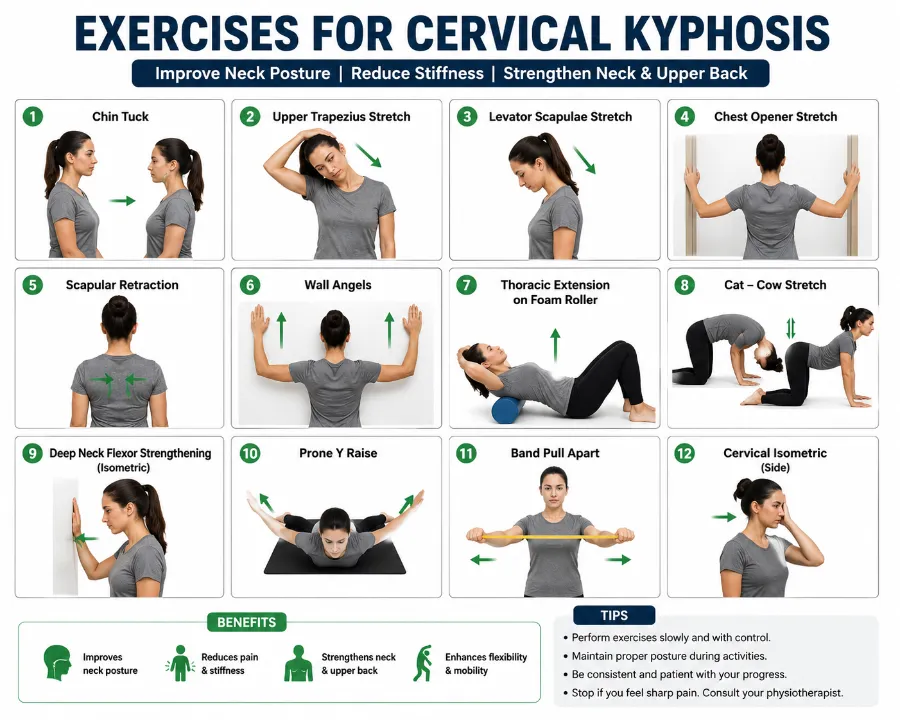
Exercises For Military Neck (Cervical Kyphosis)
Introduction
Military neck, also known as cervical kyphosis, is a condition in which the neck’s normal forward curve is reduced, straightened, or reversed. This change in spinal alignment may result from poor posture, prolonged screen use, muscle imbalance, spinal degeneration, previous injury, or other underlying conditions. Headaches, neck stiffness, soreness, reduced mobility, and stress in the shoulders and upper back could all be related to it.
Regular, gentle exercises can help improve neck mobility, posture, muscle strength, and upper-back flexibility. Exercises such as chin tucks, cervical isometrics, shoulder blade strengthening, chest stretches, and thoracic mobility drills may support better alignment and movement control.
The goal of these exercises is not to force the neck into a particular position, but to gradually improve muscular support and postural awareness.
Exercises should be performed slowly and comfortably, without provoking pain, numbness, tingling, dizziness, or weakness. People with significant symptoms or a diagnosed spinal condition should consult a physiotherapist or healthcare professional before starting an exercise program.
Benefits Of Cervical Kyphosis
Cervical kyphosis exercises are essential for enhancing neck posture and reducing pain. Targeted stretches and strengthening exercises can bring several health advantages to your spine and general well-being.
Improves posture and alignment.
Frequent exercise helps maintain the normal curvature of the neck and upper back by strengthening postural muscles. This reduces the forward head posture that is frequently related to cervical kyphosis.
Reduces pain and stiffness.
Stress and pain can be reduced by strengthening exercises and stretching tense neck and chest muscles. This can greatly improve comfort and movement over time.
Strengthens the neck and upper back muscles.
The deep neck flexors, rhomboids, and trapezius muscles are worked via chin tucks, wall angels, and scapular movements. Stronger muscles prevent further curvature changes by providing the cervical spine with greater stability.
Improves spinal flexibility and range of motion.
Thoracic spine mobilizations and cat-cow stretches are examples of mobility exercises that help release tight joints and increase range of motion in the upper back and neck.
Improves long-term spinal health.
Frequent exercise and proper postures reduce the chance of long-term issues and stop cervical kyphosis from getting worse. Additionally, it enhances confidence, balance, and posture while doing everyday tasks.
Incorporating these exercises into your regular routine produces visible effects in only a few weeks and complements additional interventions like ergonomic changes and posture correctors.
Cervical Kyphosis Exercises
Cervical kyphosis exercises help enhance posture, reduce neck pain, and strengthen the muscles that support your spine. Regularly performing these exercises helps prevent further cervical spine curvature, improve flexibility, and reduce stiffness.
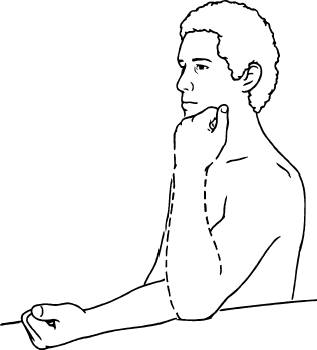
Chin Tuck
The deep neck flexor muscles, which are frequently weak in people with cervical kyphosis, are strengthened with chin tucks. By strengthening these muscles, forward head posture is lessened, and the head moves back into proper alignment. Frequent practice can also help prevent pain from excessive screen time or slouching, as well as reduce neck stiffness.
How To Do It:
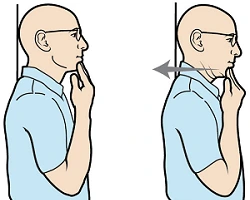
- Sit or stand straight, shoulders relaxed.
- To create a double chin without stretching your neck forward, gently slide your chin backward.
- Hold for 5–10 seconds.
- Relax and repeat 10–15 times.
- Use a mirror to ensure you have the right form.
Tips: Don’t tilt your head up or down; instead, keep your eyes forward. Consider steady, controlled movements rather than speed.
Wall Angels
How it helps: Wall angels are great for stretching chest muscles that stiffen as a result of poor posture and improving thoracic spine mobility. They assist in correcting the rounded shoulder posture typical of cervical kyphosis by strengthening the muscles in the upper back that pull the shoulders down and back.
How To Do It:
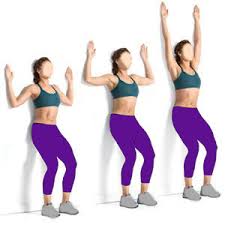
- Stand with your feet slightly apart and your back flat against a wall.
- Lightly press your head, shoulders, and lower back against the wall.
- Hold your arms in a T-position at 90 degrees.
- Slowly lift your arms over your head, then drop them back.
- Repeat ten to twelve times, moving gently.
Advice: Move slowly and focus on contracting your upper back muscles. Instead of bending your lower back, gently press it against the wall.
Prone Y-T-W Lifts
How it helps: These exercises target the trapezius and rhomboid muscles, which support the shoulders and upper back. By strengthening these postural muscles, kyphotic curvature is decreased, shoulder mobility is increased, and proper cervical and thoracic spine alignment is encouraged.
How To Do It:
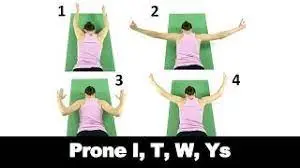
- On a mat or stability ball, lie face down.
- Raise your arms straight over your head at a 45-degree angle to form a Y.
- Raise your arms to shoulder level in a T position.
- Raise your arms into the W shape, with your elbows at your sides and your arms bent at a 90-degree angle.
- Hold each posture for 2-3 seconds, then relax.
- Repeat 8-10 times in each position.
Tips: Squeeze your shoulder blades together. Keep your neck neutral and avoid bending upward. If done regularly, this simple exercise can be quite beneficial.
Resistance Band Rows
The rhomboids, trapezius, and posterior deltoids are three upper back muscles that are developed with resistance band rows. By stabilizing the cervical spine and reducing strain, strengthening these muscles helps prevent forward shoulder posture.
How To Do It:
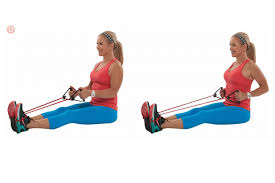
- Hold a resistance band at chest level.
- With the palms facing inward, hold the band with both hands.
- Tighten your shoulder blades and pull the band closer to your body.
- Slowly release and return to the beginning position.
- Repeat 12 to 15 times.
- Keep your back straight and avoid shrugging your shoulders.
Tips: Keep your spine neutral during the exercise. Instead of shrugging your shoulders upward, focus on the back muscles that are doing the work. Start with a light resistance band, and as your strength grows, increase the tension.
Neck Side Bends
How it works: Side bends stretch the lateral neck muscles, which include the scalenes and upper trapezius. Forward head position frequently causes these muscles to tighten, resulting in stiffness and pain. Improving lateral flexibility helps restore balance and relieves stress on the cervical vertebrae.
How To Do It:
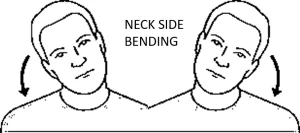
- Sit straight, shoulders relaxed.
- Tilt your head toward one shoulder while keeping the other shoulder down.
- Hold for 15–20 seconds.
- Repeat on the opposite side.
- Perform 3- 5 reps per side.
Tips: Move carefully and don’t force the stretch. You can use your hand to gradually deepen the stretch, but never pull too hard.
Shoulder Blade Squeeze
Squeezing the shoulder blades strengthens the mid-back muscles, which are frequently weak in people with cervical kyphosis. Strengthening these muscles promotes healthy posture by keeping the shoulders from curving forward and reducing neck pain.
How To Do It:
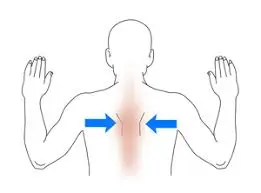
- Sit or stand tall, shoulders relaxed.
- Squeeze the shoulder blades together, as if compressing a little ball.
- Hold for 5-10 seconds.
- Release and repeat 10-15 times.
- Avoid shrugging shoulders toward the ears.
Tips: Avoid shrugging your shoulders toward your ears. To increase muscle activation, practice moderate, controlled movements.
Cat-Cow Stretch
How it works: The cat-cow stretch increases spinal flexibility, especially in the cervical and thoracic areas. It relieves stress, improves circulation, and promotes normal spinal curvature, making it useful for kyphosis prevention and treatment.
How To Do It:
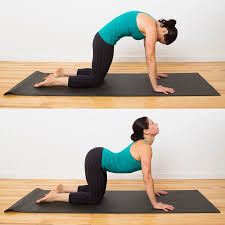
- Start on your hands and knees, placing your knees behind your hips and your wrists under your shoulders.
- Inhale: Take a breath and raise your head and pelvis while arching your back (Cow).
- Exhale: Tuck your pelvis and chin in and round your back (Cat).
- Repeat ten to twelve times in a controlled, moderate manner.
Tips: Match your movement to your breath. Maintain a comfortable range of movement for your neck rather than driving it into excessive positions.
Chest Opener Stretch
How it works: Cervical kyphosis is increased when tight chest muscles pull the shoulders forward. This stretch expands the chest, which allows the shoulders and upper back to spontaneously realign, which improves posture and reduces stress.
How To Do It:
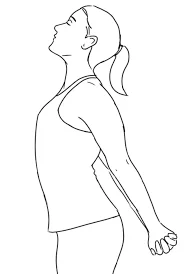
- Stand in a doorway, hands on the frame, at shoulder height.
- Take one step forward and bend lightly into the doorway.
- Hold for 20 to 30 seconds.
- Repeat 2–3 times.
- Do not twist your lower back and keep your shoulders relaxed.
Advice: Stop arching your lower back and relax your shoulders. Slow, deep breathing will help you stretch more effectively.
Neck Retractions
Neck retractions help by strengthening deep neck flexors and promoting appropriate cervical alignment. This lowers forward head posture and relieves stress, which contributes to cervical kyphosis.
How To Do It:
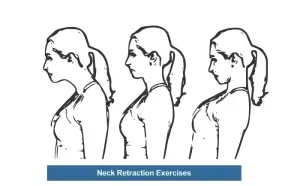
- Sit straight, shoulders relaxed.
- Gently lift your head straight back while maintaining focus forward.
- Hold for five seconds.
- Relax and repeat ten times.
- Keep movements modest and controlled; avoid tilting the head up or down.
Tips: Keep your movements modest and controlled. Avoid tilting your head upward or downward. By performing this exercise in front of a mirror, you might be able to achieve perfect alignment.
Upper Trapezius Stretch
How it works: The upper trapezius stretch targets the tight neck and shoulder muscles that pull the head forward. Stretching on a regular basis helps to release stress, increase neck mobility, and support good posture.
How To Do It:
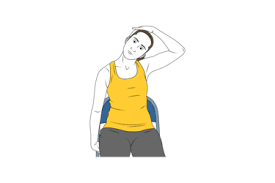
- Sit or stand tall.
- Bring your ear close to your shoulder while tilting your head to one side.
- Use your hand to gradually deepen the stretch.
- Hold for 15- 20 seconds per side.
- Repeat 2–3 times.
- Keep your shoulders relaxed and breathe deeply.
Tips: Avoid raising the opposing shoulder and maintain a relaxed posture.To get the most out of the way you perform, breathe deeply and gently.
Dumbbell Row(Unilateral or Bilateral)
A row is a simple approach to strengthen the upper back muscles after stretching the chest. In a gym or fitness facility, a row can be performed using dumbbells, barbells, cables, or machinery. This is a one-arm dumbbell row:
How to do
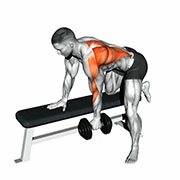
- One arm and knee on the same side rest on a bench.
- The opposing leg is repositioned behind the hip, dumbbell in hand, arm fully extended, and chest toward the floor.
- The core is engaged, and the shoulder will remain in the socket throughout its range of motion.
- Cue the client to pull their elbow toward the ceiling, squeezing through the rhomboid while keeping the back flat and the chest stiff, and finish with the dumbbell just below the chest.
- Returning the dumbbell to its starting position completes the exercise.
- Repeat 10 to 15 times before switching arms.
Things to Avoid With Military Neck (Cervical Kyphosis)
- Avoid prolonged forward-head posture, especially while using a phone, laptop, or computer.
- Avoid sudden or forceful neck movements, including aggressive twisting or bending.
- Avoid exercises that increase stiffness, numbness, tingling, dizziness, or neck pain.
- Avoid heavy overhead lifting if it causes neck or shoulder pain.
- Avoid excessive neck stretching or forcing the head into extreme positions.
- Avoid poor sleeping positions, such as sleeping with the neck excessively bent or using an unsuitable pillow.
- Avoid sitting still for extended periods of time; instead, shift positions and walk around often.
- Avoid self-manipulating or forcefully cracking the neck, particularly if symptoms are present.
- Avoid ignoring neurological symptoms, such as arm weakness, persistent numbness, loss of coordination, or worsening pain. Seek professional evaluation if these occur.
Conclusion
Exercises for military neck (cervical kyphosis) can help improve neck mobility, posture, muscle strength, and overall spinal movement when performed consistently and correctly. Gentle exercises such as chin tucks, cervical strengthening, shoulder blade exercises, chest stretches, and thoracic mobility drills can help support better alignment and reduce stiffness or muscular tension. Consistency is important, but exercises should always be performed with controlled movements and without forcing the neck into painful positions.
Maintaining good posture during daily activities, taking regular breaks from prolonged sitting or screen use, and keeping the shoulders and upper back active can further support healthy neck mechanics. If neck pain is persistent, worsening, or accompanied by numbness, tingling, weakness, dizziness, or other neurological symptoms, consult a physiotherapist or healthcare professional for an appropriate assessment and individualized treatment plan.
FAQs
What exercises help cervical kyphosis
The upper back and neck muscles must be gently extended and strengthened to correct cervical kyphosis, which is the reverse of the natural neck curve. Always stop if you experience severe pain, and before beginning a new regimen, speak with a physician or physical therapist.
Can military neck be corrected?
Indeed, depending on the severity of the problem and the underlying reason, military neck is frequently treated. Military neck, sometimes referred to as cervical kyphosis or straight neck syndrome, is a condition in which the normal inward curve of the neck decreases or reverses.
What exercises should be avoided with kyphosis?
Exercises that generate excessive spinal flexion (bending forward) or compress the thoracic spine should be avoided if you have kyphosis (excessive forward rounding of the upper back), since these movements may increase the risk of spinal compression fractures and worsen the forward curve.
How much time does it take to fix a military neck?
Specific structural changes in a military neck usually require 8 to 12 weeks of regular physical treatment and corrective exercise.
At what age is kyphosis is commom?
The most common causes of kyphosis are age-related bone deterioration in elderly persons over 50 and posture problems or structural development in teenagers (ages 13 to 16).
References
- Hero, B., USA. (2025, October 5). Top 10 cervical kyphosis exercises to reduce pain. Back Hero USA. https://backherousa.com/blogs/news/cervical-kyphosis-exercises?srsltid=AU7gw4X5JLDXBafy5bQq9YSI0FTc5fXsj5W5TIeBe2Pt0CiDtP9JE7Nx
- Cervical Kyphosis. (2025, December 4). Cleveland Clinic. https://my.clevelandclinic.org/health/diseases/22868-cervical-kyphosis