Home Exercises for Knee Pain When Going Downstairs
Introduction:
A common complaint regarding knee pain is that it hurts when going up and down stairs. Therefore, even if climbing stairs is definitely a great exercise for your general health, it does place a lot of strain on your knees, particularly when descending.
Therefore, even though climbing and descending stairs might be a good strengthening workout, it could be time to see your doctor if it causes knee pain.
Causes of Knee Pain When Going Down Stairs:
While climbing stairs might be difficult or uncomfortable, descending them puts a lot greater strain on the knees. The force applied on your kneecap when descending stairs is 3.5 times your body weight. This implies that your knees will endure a force of 280 kg if you weigh about 80 kg.
This is a lot to bear for such a little surface area, which explains why so many individuals have trouble going down stairs. In contrast, climbing stairs only requires a force equal to 2.5 times one’s body weight. In contrast, a person may exert up to eight times their body weight when squatting.
Knee Osteoarthritis
Your knee’s supporting cartilage could weaken over time, resulting in uneven and inadequately cushioned bone movement. Grinding or clicking in the knee when moving, inflammation, pain, and stiffness after extended periods of sitting or lying down are all signs of osteoarthritis in the knee.
Osteoarthritis in the knee can be treated with both invasive and non-invasive methods, but there is no cure.
Patellofemoral Pain Syndrome:
Patellofemoral pain syndrome, which describes anterior knee pain, is more commonly referred to as jumper’s or runner’s knee. This condition arises when your patella, or kneecap, moves irregularly, frequently as a result of impaired muscle control surrounding the knee joint.
Chondromalacia patella is a disorder that may be indicated by patellofemoral pain. This happens when the kneecap’s articular cartilage deteriorates, resulting in pain and swelling. The knee may grind or click when the joint is moved, or the kneecap may enlarge and hurt.
You may be suffering from patellofemoral pain when descending stairs for a number of reasons. It can happen at any age and may be caused by flat feet, muscular weakness, or anatomical anomalies.
Muscle Strain:
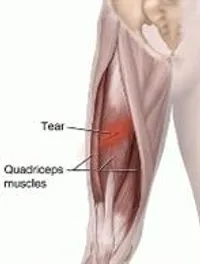
While minor muscle injuries are typically not significant and will recover over time, they might cause pain when descending stairs if they affect the muscles around the knee.
IT Band Syndrome:
Running, biking, and hiking are examples of repetitive knee-bending exercises that frequently result in this condition. A tendon that extends from the pelvis to the top of the shin and across the side of the knee is called the iliotibial, or IT band. You may have severe knee pain when ascending stairs if your IT band is inflamed due to its relationship to the knee.
Ligament Injury:
The knee is connected to ligaments such as the ACL and MCL. You will experience pain and loss of control when climbing stairs if you have an injury where these ligaments are damaged or even torn. Serious damage to the knee ligament may necessitate surgery.
Compensation Injury:
Ankle or foot injuries can alter your gait and posture. You change your body’s biomechanics to compensate for the injury, which causes you to place too much strain on your knee when descending steps. This may be painful, and correcting your gait may require biomechanical intervention.
Five Ways to Reduce Pain When Climbing and Descending Stairs:
- Make sure you use your entire foot, not just your toes, while stepping onto the steps. Stepping just on your toes may compress and injure your knee.
- When climbing, push off from your outer heel. This reduces knee strain and increases the performance of your gluteus muscles.
- Physiotherapists frequently discuss leading up the stairs with the normal leg and down the steps with the painful leg in order to decrease the strain on the affected limb.
- When climbing or descending stairs, try to avoid walking up stairs when your knee is not aligned over your foot. If your knee is angled inward, this can result in poor control, pain, and additional injury.
- Treat the underlying causes of knee pain because pain frequently indicates a misalignment, weakness, or injury that is causing knee pain.
What Makes Going Down the Stairs Different From Going Up?
Incredibly, ascending and descending stairs require quite different movements.
A straightened knee joint is directly stressed while you descend the stairs. On stairs, there is a gradual drop as you go down, in contrast to walking, where you may glide into each new step. Even if it’s soft, it’s still a drop.
It can be particularly painful if you have problems like osteoarthritis or chondromalacia. The strain of your weight when stepping down might create pain if your knee has less support.
A bent joint is indirectly stressed when you climb stairs. Therefore, there is more strain on the tendons and ligaments around the knee but less direct strain on the knee joint itself. To go on to the next phase, your knee’s tendons and ligaments must essentially stretch.
How to Deal with Knee Pain:
There are several non-invasive therapy alternatives that can probably reduce pain and inflammation if you have knee pain when climbing or descending stairs, or in general.
R.I.C.E.
RICE, which stands for Rest, Ice, Compression, and Elevation, is one of the most popular methods for treating knee pain. These four at-home therapies might be helpful if you have a knee injury or are suffering from knee pain.
- Put your knee to rest and cease any activity that could be hurting it.
- To reduce pain and swelling, apply ice to your knee. After an accident or an activity that produced pain, apply cold for 10 to 20 minutes three or more times a day. After the edema has subsided, administering heat might come after icing.
- In order to immobilize your knee and prevent swelling, compression entails wrapping or bandaging it. It’s crucial to avoid wrapping your knee too firmly. Additionally, see your doctor to rule out a more serious knee injury if the pain doesn’t go away after a few days.
- To reduce swelling, elevate your knee and foot on pillows whenever you are seated. Better still, lie down with your knee up above your heart.
OTC Medication:
Knee pain may be temporarily relieved with over-the-counter non-steroidal anti-inflammatory medicines (NSAIDs), but if the pain increases, an underlying cause may need to be investigated.
Weight Management:
Controlling your weight can assist in reducing knee strain, which may reduce pain. For general health and wellbeing, maintaining a balanced diet and a healthy weight are also crucial.
Exercise and Physiotherapy:
Exercise and physical therapy can help you improve your mobility and stability by strengthening the muscles surrounding your knee. Water treatment and light stretching are two examples of suitable workouts. Even if the pain is significant, physical therapy can help with strength and flexibility.
Support Aids:
Walkers, braces and splints, or therapeutic taping are examples of supportive devices that may assist in reducing knee pain, but it’s crucial to make sure you’re obtaining the correct equipment.
Biomechanical Devices:
Knee pain may be reduced by devices designed to enhance gait and reduce the weight on the knee. A biomechanical tool, for instance, has been demonstrated to reduce knee pain and enhance gait in individuals with osteoarthritis in the knee.
Prescription Medication:
Your doctor may recommend corticosteroid injections or painkillers and anti-inflammatories if your severe knee pain doesn’t go away with over-the-counter medications.
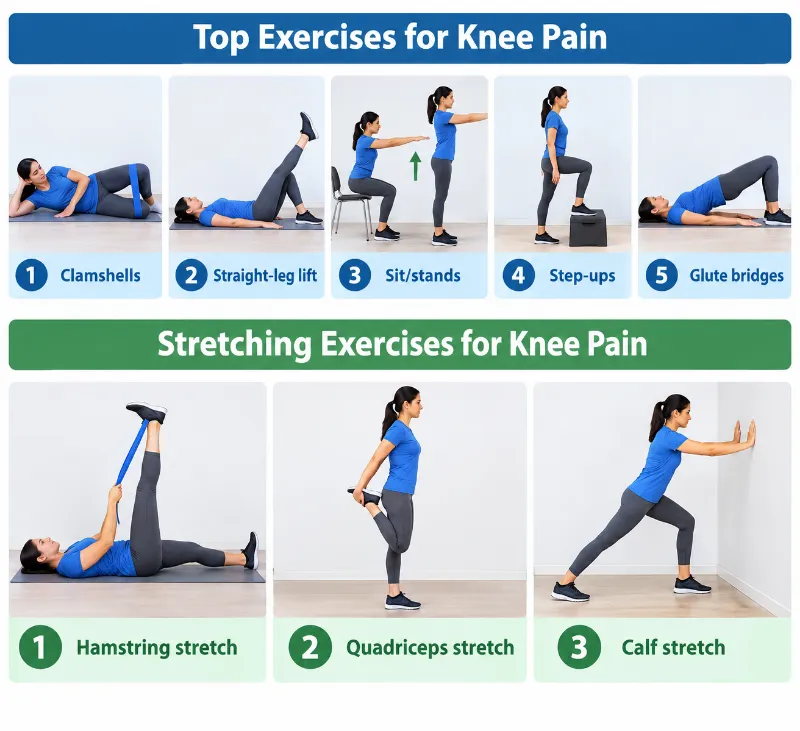
Top Exercises for Knee Pain:
Clamshells:
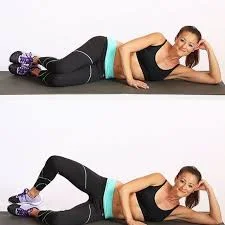
This is an easy workout that provides significant benefits. Use a resistance band slightly above the knees to increase this workout as you gain strength.
- With your knees gently bent and your hips stacked, lie on your side.
- Lift your upper knee while keeping your feet together, like the opening of a clamshell.
- After a few seconds of holding the position, gradually bring the knee back down.
- Do this 15–20 times on each side.
Straight-leg lift:
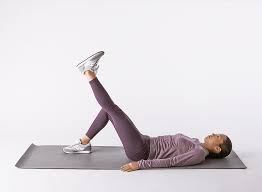
To avoid using a bed or other soft surface, do this exercise on the floor.
- Lie on your back with one leg straight and the other bent at a 90-degree angle.
- Raise the straight leg about a foot off the ground and hold it there while tightening your thigh muscles.
- Return the leg to the ground carefully after a little while.
- Use the same leg for a few repetitions before moving to the other side.
Sit/stands:
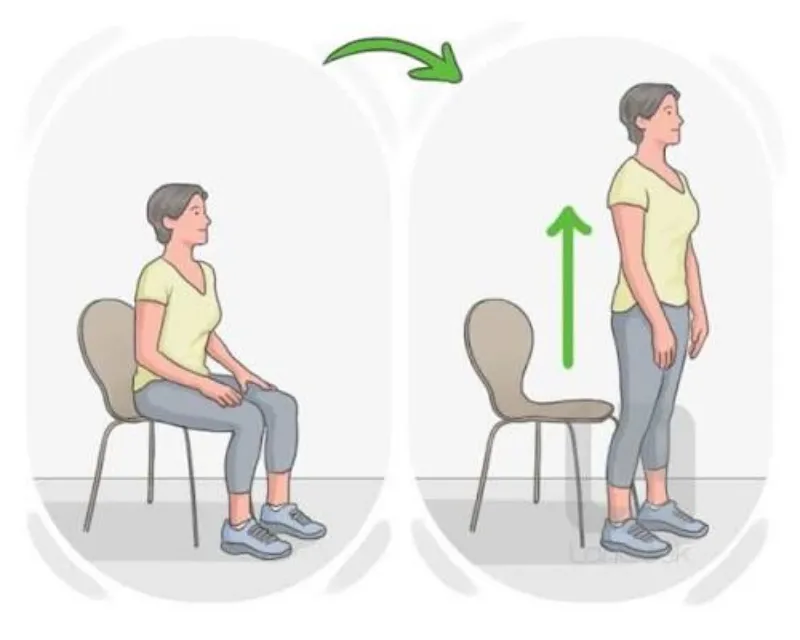
For this workout, make sure the chair is stable.
- Place your feet shoulder-width apart and sit slightly forward in a chair.
- Gently get to your feet without using your hands.
- Sit down after reversing the action.
- Do this as often as you can.
- Try performing this workout in three sets.
Step-ups:
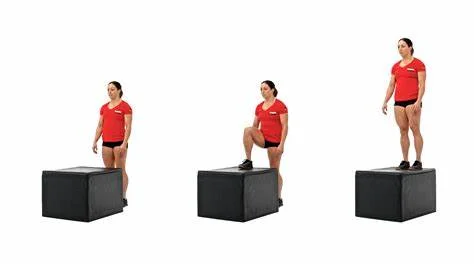
There must be something to step up on for this workout. A step of 6 to 8 inches should be your starting point. You can utilize a stair step if you don’t have a step platform.
- Place one foot fully on the platform while standing in front of it.
- Take a step onto the platform, then lift the other foot off the ground and let it hang loosely.
- Step down after lowering the dangling foot to the floor.
- Until you reach the required number of repetitions, repeat with the other foot and then change sides.
Once you can perform this exercise with ease, you may increase the difficulty by using little hand weights.
Glute bridges:
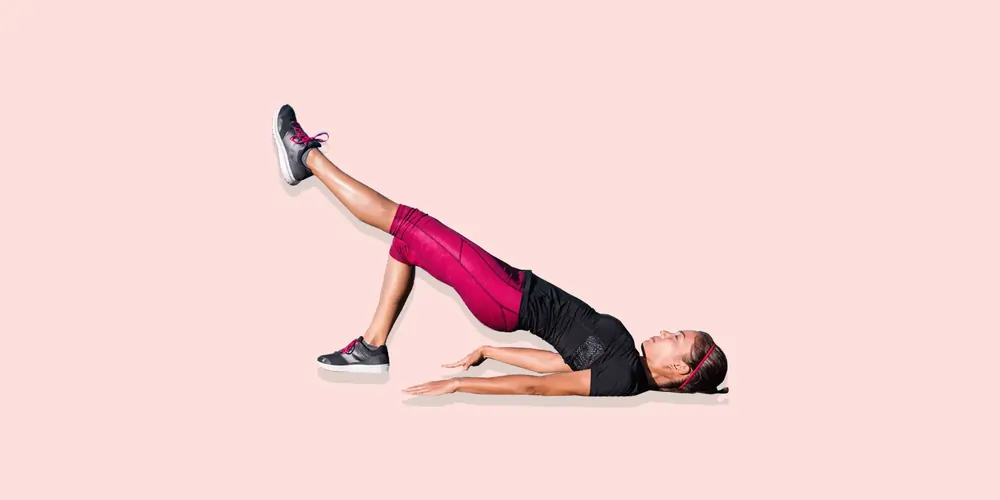
The glutes are a group of muscles in the buttocks that affect how the knee moves. A great workout that works your glutes and other leg muscles is the glute bridge.
- Lie on your back with your knees bent and your feet shoulder-width apart. With your hands facing up, relax your arms at your sides.
- Gently lift your hips off the ground and raise them until your body is in a straight line from your knees to your shoulders.
- Lower your hips to the floor gradually after holding the position for a little while.
- For this exercise, proper form is crucial. Avoid rounding or arching your back. Your feet, knees, and hips should all be in line.
Stretching Exercises for Knee Pain:
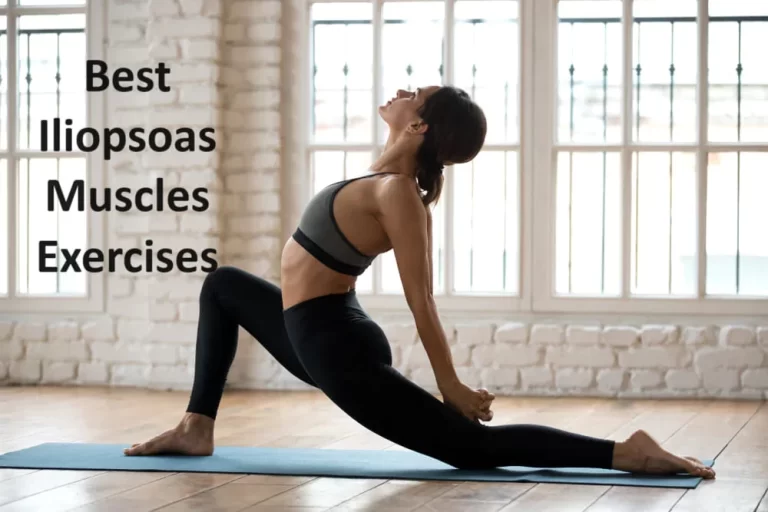
Knee pain may be relieved with certain stretches. Muscular imbalances that cause knee pain can be addressed by stretching. To feel better, you might need to stretch the regions surrounding your knee. To assist reduce your pain, try these:
Hamstring stretch:
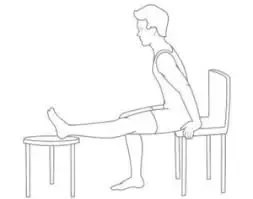
- Place your legs straight out in front of you while lying on your back. Place your arms by your sides.
- With your foot flexed, grasp one of the legs behind your thigh and lift it into the air.
- As much as you can, straighten your leg without locking your knee.
- Return to the beginning position and perform the stretch on your other leg after holding it.
Quadriceps stretch:
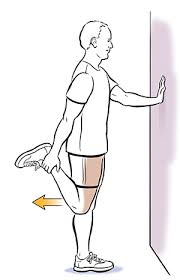
- Place your feet shoulder-width apart as you stand. Verify that your feet are level on the ground.
- Move your heel in the direction of your butt while bending one knee. Use your hand to grasp your foot.
- After maintaining this stretch, carefully drop your foot to the ground. Use your other leg in the same manner.
Calf stretch:
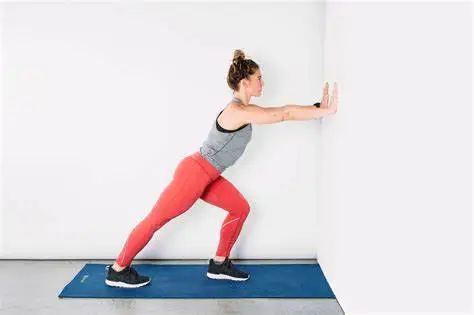
- Hold onto the back of a strong chair for support as you stand up straight.
- With your other leg’s knee bent, extend your leg straight back and place your heel on the ground.
- After holding the stretch, return to your regular posture. Do the same with your other leg.
Safety Issues with Knee Pain Exercises:
For the majority of people, these knee workouts are easy and safe. Other exercises, such as lunges and squats, can strengthen the knees, but they can also injure them if performed incorrectly.
Start with a few repetitions and work your way up when performing knee exercises. Stop moving if it hurts. You are overdoing it if your workout regimen leaves you too sore to move the following day. Your muscles will remain flexible if you stretch gently after working out.
Conclusion:
Knee pain frequently occurs when climbing or descending stairs and can be quite dangerous. There are a few simple things you may do to reduce pain and make stairs easier if you have knee pain when descending steps.
There is no reason why knee discomfort should interfere with your daily activities. If it does, speak with your doctor about more significant interventions, such as using biomechanical devices to reduce pain and improve gait.
FAQs:
How do you fix knee pain when going downstairs?
It is necessary to strengthen your quadriceps and alter the way you load your joints when descending stairs in order to reduce knee pain.
How to walk downstairs without knee pain?
Start with your weaker or sore leg and place your entire foot flat on each step rather than leaning on your toes to avoid knee pain when descending stairs.
How can knee pain be relieved the quickest?
The RICE method—Rest, Ice, Compression, and Elevation—is the quickest approach to treating severe knee pain.
Why do my knees hurt so much going downhill?
When you walk downhill, gravity increases the stress on your knee up to seven times your body weight, causing your thigh muscles to function as powerful brakes while extending, which is why your knee hurts.
What is a red flag for knee pain?
A red flag for knee pain is a major warning sign that indicates you require immediate medical attention, such as an inability to bear weight, a noticeable deformity, or a fever with a hot, red joint.
What is the best sleeping position for people with knee osteoarthritis?
Sleeping on your side with a firm support between your knees or on your back with a small pillow or folded towel under your knees are the ideal sleeping positions for those with osteoarthritis in their knees.
How to immediately relieve knee pain when climbing and descending steps?
By changing your body weight and foot placement to activate your hip and glute muscles rather than putting too much pressure on your knee joint, you may immediately alleviate knee pain while climbing stairs.
References:
- Hill, R. (2024, April 4). Knee pain while going downstairs? Harris & Ross. https://www.harrisandross.co.uk/knee-pain-while-going-downstairs/
- Benisek, A. (2025, March 24). Top exercises for knee pain. WebMD. https://www.webmd.com/fitness-exercise/top-exercises-knee-pain
- Kuslikis, T. (2026, February 3). 4 essential knee exercises to make climbing stairs easier and Pain-Free. Sixty and Me. https://sixtyandme.com/essential-knee-exercises-easier-pain-free-stair-climbing/