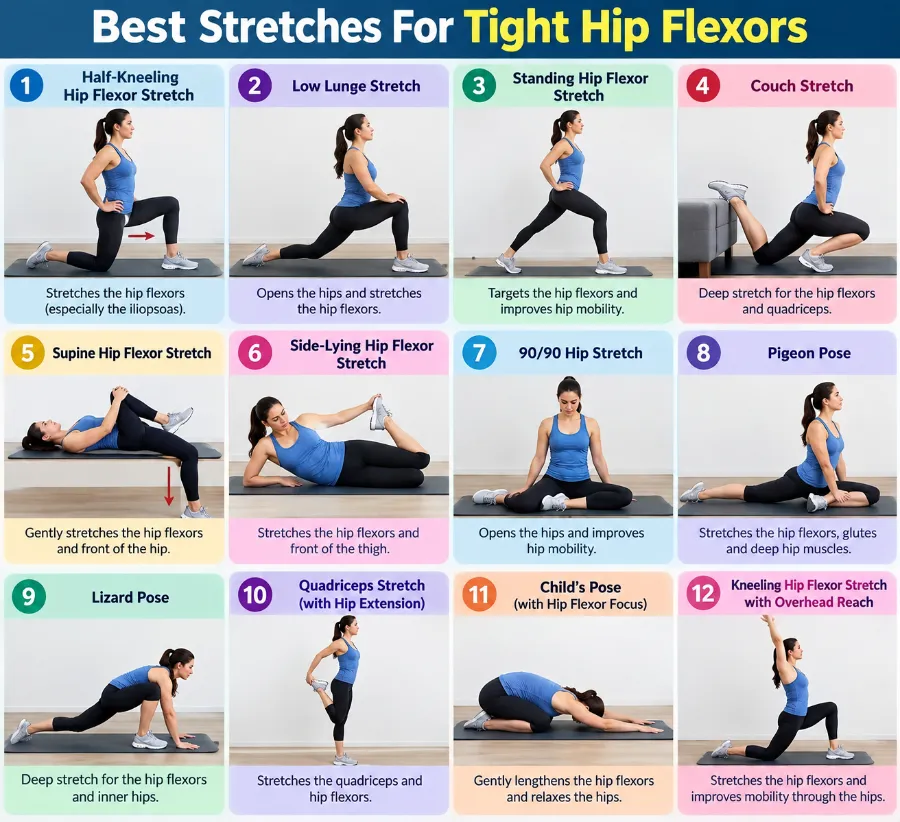
Best Stretches For Tight Hip Flexors
Introduction
Tight hip flexors are a common problem, especially for people who spend long hours sitting at a desk, driving, or working in the same position. The hip flexors are a group of muscles located at the front of the hip that help lift the thigh, bend the hip, and support normal movement during walking, running, and climbing stairs. When these muscles become tight, they may limit hip mobility and contribute to stiffness, poor posture, or pain around the hips and lower back.
Regular hip flexor stretching can help improve flexibility, restore comfortable movement, and reduce muscle tension. The best stretches for tight hip flexors gently lengthen the muscles at the front of the hips while encouraging good pelvic and spinal alignment. Adding these stretches to your daily mobility or exercise routine can be particularly helpful after prolonged sitting or physical activity.
Regular stretching is one of the simplest ways to maintain or improve hip flexor flexibility. Exercises such as the kneeling hip flexor stretch, low lunge, standing hip flexor stretch, and other mobility-based movements can gently lengthen the muscles at the front of the hips and reduce feelings of stiffness.
When performed with proper technique and without forcing the movement, these stretches can help improve hip range of motion and make everyday activities more comfortable. Including a few hip flexor stretches in your daily routine can be especially useful after prolonged sitting, before or after appropriate exercise, or whenever your hips begin to feel stiff and restricted.
Stretches For Tight Hip Flexors
- Exercises like glute bridges, planks, crunches, and clamshells will help maintain the strength of your piriformis, core, and glutes, which will improve hip strength and mobility.
- Make sure to get up and exercise more during the day to maintain the flexibility of your hip flexors.
- To prevent tightness, I recommend shifting positions every 30 to 45 minutes, or even sooner if necessary.
- You can include these four stretches in your daily routine to improve hip flexor mobility and flexibility.
- At least twice a day, perform three sets of each stretch, holding it for 30 seconds on each side.
Half Kneeling Hip Flexor Stretch
How to do
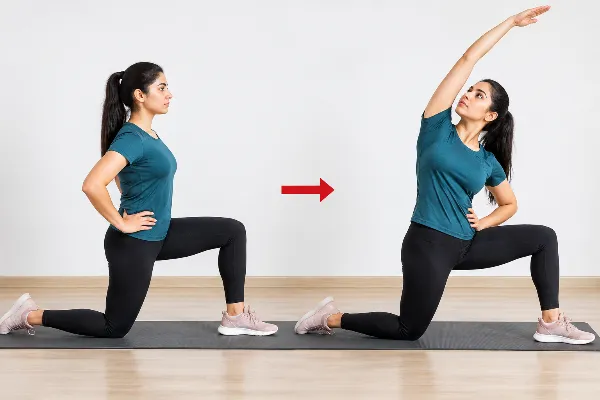
- Kneel on the ground to start.
- With your foot level on the ground, your knee bent at a 90-degree angle, and your right thigh parallel to the floor, bring your right leg in front of you.
- Make sure your thigh is facing straight back, not left or right, while keeping your left knee on the ground.
- Place your hands on your hips, then strengthen your glutes, tuck your pelvis under you, and bring your thumbs down.
- Stretch the front of your left leg and pelvis by shifting your weight forward while maintaining a straight back.
- Stretch your left arm slightly to the right and up above for an even deeper stretch.
- On the opposite side, repeat.
90/90 Stretch
How to do
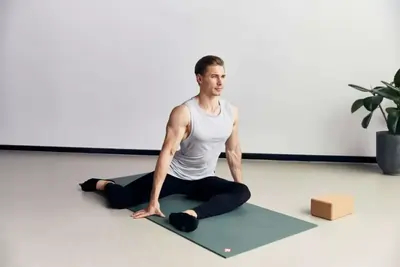
- With your right leg in front of you and your knee bent at a 90-degree angle so that the bottom of your foot faces the left wall, take a seat on the floor.
- With the bottom of your foot facing the back wall, extend your left leg out to the side and bend your knee at a 90-degree angle.
- To the front, square your shoulders.
- Stretch your arms straight out in front of you to make sure your back stays straight. The front wall should be in front of your fingertips.
- For balance, place your fingertips on each side of your right shin. Imagine lowering both hips to the ground.
- Pull your chest as far forward as you can without compressing your upper body or losing the connection between your hips and the floor for an even deeper stretch.
- On the opposite side, repeat.
Supine Hip Flexor Stretch
How to do
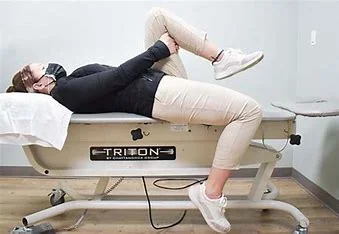
- With both legs extended out on the bed, lie on your back on the right edge of the bed.
- With your foot flat on the bed and your knee pointed toward the ceiling, bend your left leg. Check that your back is level with the bed.
- Maintaining a flat back, let your right leg drop off the edge of the bed.
- With your back flat and your right leg extending over the bed, bend your knee back as much as you can.
- Grab your left knee and bring it toward your chest for an even deeper stretch.
- On the opposite side, repeat.
Side Lying Hip Flexor Stretch
How to do
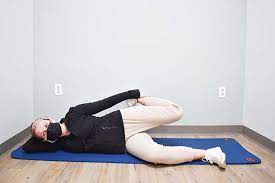
- With your knees bent to align with the line, lie on your left side on the floor.
- The angle formed by your shins and thighs should be 90 degrees.
- Put your right foot back and use your right hand to lightly grasp the top of your ankle.
- Keeping your pelvis tucked under and taking care not to arch your back, slowly and gently lift your foot with your right hand to bring your leg around behind you. Your right hip flexor and the front of your thighs should both feel stretched.
- On the other side, repeat.
Lunge Twist
The goal of this stretch is to extend your back, quadriceps, and hip flexors.
How to do it:
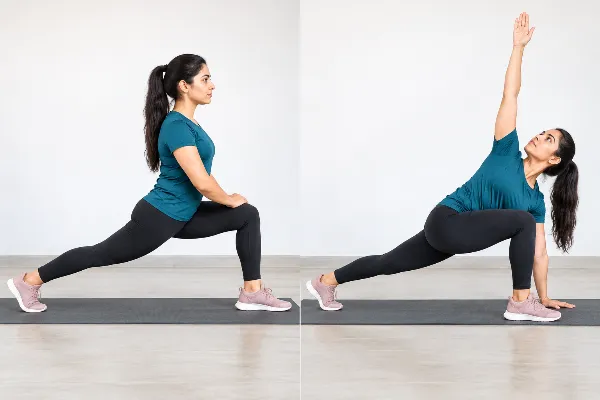
- Take a comfortable stance
- With one leg, take a large step forward.
- Lower yourself into a lunge by bending the knee of the leg you just stepped forward with. Make sure your rear leg is straight.
- With your arm resting on the leg you used to step forward, reach up to the sky. For support, place your opposing hand on the ground.
- On the opposite side, repeat.
- After 30 seconds of holding, go on to two minutes.
High Crescent Lunge
The purpose of this stretch is to extend your quadriceps and hip flexors.
How to do it:

- Take a comfortable stance
- With one leg, take a large step forward.
- Lower yourself into a lunge by bending the knee of the leg you just stepped forward with. Make sure your rear leg is straight.
- Make an effort to align your hips.
- Stretch up and raise your arms toward the roof.
- After five breaths of holding the stretch, switch legs.
Knee To Chest Stretch
The purpose of this stretch is to extend your hamstrings, hips, and lower back.
How to do
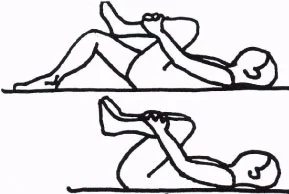
- Lie on your back.
- Gently bend one knee toward your chest with your arms while holding it in your hands.
- Maintain your back against the ground.
- After 30 seconds of holding, move on to two minutes and switch legs.
Figure Four Stretch
Your lower back, hips, glutes, and hamstrings will all be stretched by this exercise.
How to do
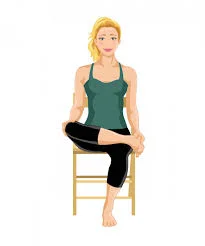
- For example, on your back, bend both of your knees.
- Your knee will bend laterally as you cross one foot over the quadriceps of the opposing leg.
- Hold your leg gently and draw it toward your chest while it’s still on the ground.
- Stretch your other leg after holding for 30 seconds, then go on to two minutes.
Reclining Bound Angle Pose
The goal of this stretch is to extend your groin, hips, and inner thigh.
How to do

- Lie on your back.
- Bring your shoes’ soles together by bending your legs outward.
- Stretch your knees as you reach the floor.
- After 30 seconds of holding, go on to two minutes.
Piriformis Stretch
The purpose of this stretch is to extend your glutes, hips, and back.
How to do
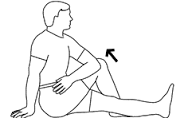
- With both legs outstretched, take a seat on the floor.
- Put your foot flat on the ground near your knee and cross one leg over the other.
- Using your elbow, move your bent knee to the opposing hip while using your other hand as a lever to maintain yourself on the ground.
- Stretch your other leg after holding for 30 seconds, then go on to two minutes.
Cow Face Pose
How to do
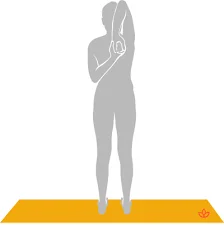
- Position yourself on your hands and knees
- To align your knees, cross one leg in front of the other.
- Sit backward slowly between your feet. If your hips aren’t in line, take a seat on a block or blanket.
- Repeat on the opposite side after holding for five breaths.
Three Legged Dog
The purpose of this stretch is to extend your hips, hamstrings, shoulders, and back.
How to do
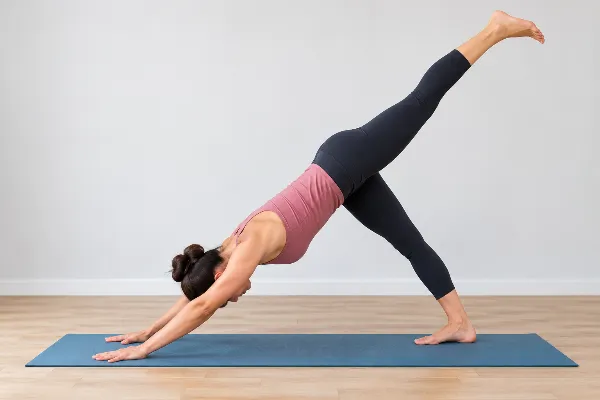
- Put yourself in the Downward-Facing Dog pose with your feet hip-width apart.
- Raise one leg off the ground and reach as far as you can.
- After 15 to 30 seconds of holding, switch legs.
Kneeling Side Bend Stretch
The purpose of this stretch is to extend your inner thigh, groin, hips, and obliques.
How to do
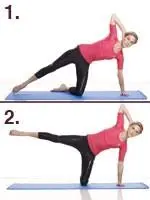
- Get down on your knees.
- Maintain a straight back and a firm core.
- One leg should be extended to the same side.
- Verify that your leg and body are in alignment.
- Bend your trunk slowly in the direction of the extended leg. Put one hand on your leg for support and the other over your head in the direction of your extended leg.
- Verify that your hips are square.
- Repeat on the opposite side after holding for 30 to 2 minutes.
Lunging Hip Flexors Stretch
Stretching your hips, quadriceps, and glutes is the goal of this exercise.
How to do
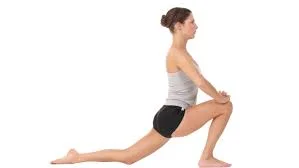
- Place your feet shoulder-width apart.
- Step back and put one knee on the ground.
- To feel your hips extend, softly bend forward.
- To make the stretch more intense, squeeze your buttocks.
- Repeat on the opposite side after holding for 30 to 2 minutes.
Lunging Hip Flexors Stretch With Rotation
How to do
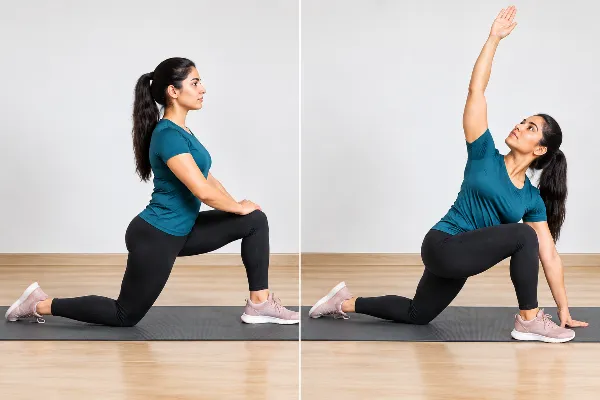
- Place your feet shoulder-width apart.
- Step back and position one knee behind your other leg on the ground.
- To feel your hips extend, gently bend forward.
- To make the stretch more intense, squeeze your buttocks.
- Place your hands in front of your legs and expand your torso by rotating your upper body.
- After 30 seconds to 2 minutes of holding, switch sides.
Pretzel Stretch
Stretching your back, obliques, hips, and glutes is the goal of this exercise.
How to do
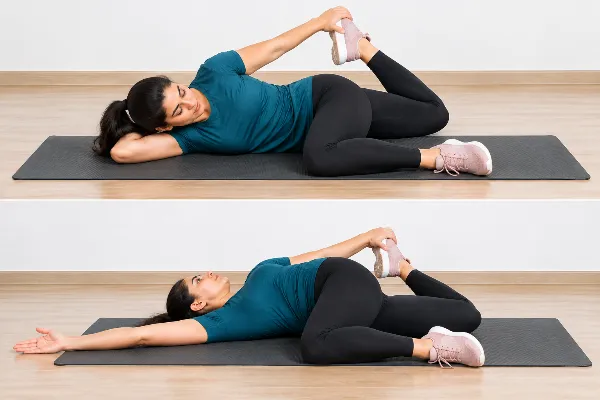
- Place your head on your arm while lying on your side.
- Bend the upper leg’s knee, bring it to your chest, and set it down on the ground.
- Maintaining your thigh in line with your upper body, bend your lower leg’s knee toward your buttocks.
- Open your body such that your upper shoulder blade touches the ground and moves forward.
- Stretch the opposite side after holding for 30 seconds to 2 minutes.
Twisted Reclined Pigeon
The purpose of this stretch is to extend your glutes, hips, and lower back.
How to do
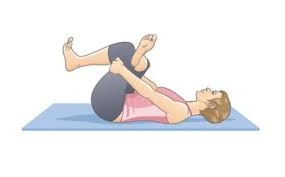
- With your arms extended to your sides in a cactus shape, lie on your back with your feet flat on the ground.
- Place the foot across the opposing leg by your knee after bending one knee.
- Place your foot near your opposing buttock or higher while bending your lower knee.
- After 30 seconds to 2 minutes of holding, switch sides and repeat.
Bridge Pose
The goal of this workout is to strengthen your glutes, which relieves the strain on your hip muscles.
How to do
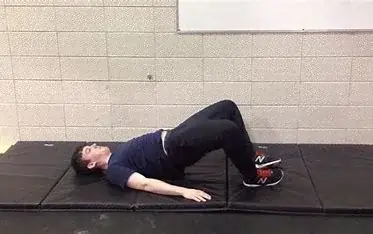
- Lie on your back.
- Make sure your feet are under your knees while bending your knees and placing them hip-width apart on the ground.
- Make a straight line from your knees to your shoulders by contracting your abdominal muscles and pushing your buttocks up toward the sky.
- Press your fingers into the mat by connecting them under your body.
Benefits
Regular hip flexor stretching can help improve flexibility and mobility around the hips, especially for people who spend long periods sitting. Key benefits include:
Improves hip flexibility: Helps lengthen tight hip flexor muscles and allows the hips to move more comfortably.
Increases range of motion: Better hip mobility can make walking, running, squatting, and climbing stairs easier.
Reduces stiffness: Stretching can relieve the feeling of tightness around the front of the hips and upper thighs.
Supports better posture: Tight hip flexors may contribute to altered pelvic positioning; improving flexibility can make it easier to maintain comfortable posture.
May reduce lower-back strain: Improving hip mobility can reduce compensatory movement through the lower back during everyday activities.
Improves exercise performance: Flexible hip flexors support movements such as lunges, squats, running, and cycling.
Supports glute function: Better hip extension can help the gluteal muscles work effectively during walking and exercise.
Improves everyday movement: Activities such as standing up from a chair, bending, and taking longer strides may feel easier.
Helps restore mobility after prolonged sitting: Gentle stretching can be particularly useful for desk workers or anyone who sits for extended periods.
Promotes comfortable movement: Regular stretching can help maintain balanced mobility around the hips and pelvis.
For best results, hip flexor stretches should feel like a gentle to moderate stretch, not sharp pain, and are often most useful when combined with hip and glute strengthening exercises.
Conclusion
Stretching tight hip flexors regularly can be an effective way to improve hip flexibility, reduce stiffness, and support better overall movement. Because prolonged sitting, limited activity, and repetitive movements can contribute to hip flexor tightness, incorporating gentle stretches into your daily routine may help restore comfortable hip mobility and improve movements such as walking, bending, squatting, and exercising.
Improved hip mobility reduces unnecessary stress on the lower back and pelvis and promotes more effective activation of the gluteal and core muscles. For the best results, perform each stretch slowly, maintain proper form, avoid bouncing, and never force the hip into a painful position. Combining hip flexor stretches with strengthening exercises for the glutes, core, and surrounding hip muscles can provide a more balanced approach to maintaining healthy, mobile hips.
By practicing appropriate hip flexor stretches regularly and maintaining an active lifestyle, you can keep your hips flexible, improve overall mobility, and make everyday movement more comfortable. If hip tightness is persistent, significantly limits movement, or occurs with severe pain, weakness, numbness, or other concerning symptoms, consider consulting a physiotherapist or healthcare professional for an appropriate assessment and individualized exercise program.
FAQs
What is the main cause of tight hip flexors?
Tight hip flexors are typically a protective response rather than simply a short muscle because the underlying reason is frequently compensation and a sedentary lifestyle.
How long does it take to untighten hip flexors?
Hip flexor tightness usually goes away after two to four weeks of regular daily stretching, but long-lasting structural changes require one to three months.
What are the signs of weak hip flexors?
Lower back pain, difficulty raising your leg or knee high, and changes in the way you walk and posture are all indicators of weak hip flexors.
How to manually release hip flexors?
While lying on your back or stomach, you may manually relax your hip flexors, particularly the psoas and iliacus, by performing breathing exercises and mild self-palpation.
Why do hip flexors get so tight?
Prolonged sitting is the main cause of tight hip flexors since it keeps the muscles shortened and inactive, which eventually results in adaptive shortening.
How long does it take to relieve tight hip flexors?
While severe structural or chronic stiffness may require two to three months or more, moderate hip flexor tightness can be significantly improved with two to four weeks of regular daily stretching.
References
- Helmer, J. (2026, May 14). The best stretches for tight hip flexors. WebMD. https://www.webmd.com/fitness-exercise/fitness-hip-flexor-stretches
- Sfma, K. B. P. D. O. (2022, February 22). Four Hip Flexor Stretches to Relieve Tightness, from a PT. Hospital for Special Surgery. https://www.hss.edu/health-library/move-better/hip-flexor-stretch
- 16 Vital hip flexor stretches for your body. (2024, June 11). Dr. Mahesh Bagwe. https://www.drmaheshbagwe.com/blog/16-vital-hip-flexor-stretches-for-your-body/?bp=41181