Core Muscles
Introduction:
The core muscles are a group of muscles located in the abdomen, lower back, pelvis, and hips that work together to stabilize and support the spine and body during movement.
For the spine, pelvis, and kinetic chain to properly balance loads, core muscles are crucial. They are necessary for load transmission between the upper and lower body and protect the spine from severe strain.
Almost all physical activities, including walking, bending, lifting, and exercising, depend heavily on the core muscles. Regular core strengthening exercises can improve stability, support daily activities, and improve physical performance and general fitness.
What are considered the Core Muscles?
The term “core” usually refers to the muscles in and around the trunk, particularly those in the belly, middle, and lower back, and pelvic floor, that aid in moving, supporting, and stabilizing the pelvis, spine, and trunk.
The collection of hip and trunk muscles that surround the hip, abdominal viscera, and spine is known as the core. For the spine, pelvis, and kinetic chain to appropriately balance stress, core muscles are essential. They are crucial for the transfer of load between the upper and lower body and protect the spine from undue strain.
The glenohumeral and scapulothoracic joints make up the upper quadrant, whereas the hip and trunk make up the lower quadrant. This page guides the lower quadrant core muscles. These are:
Core Trunk Muscles:
- Abdominal Muscles
- Thoracolumbar
- Lumbar
- Lateral thoracolumbar muscles
Core Hip Muscles:
- Hip flexors,
- Hip extensors,
- Hip abductors,
- Hip adductors and rotators
Muscular Box:
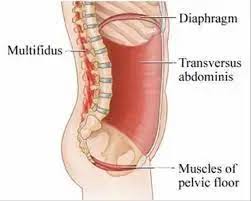
The abdominals in the front, the paraspinals and gluteals in the back, the diaphragm as the roof, and the pelvic floor and hip girdle musculature as the bottom make up the core, which can be thought of as a muscular box.
This box contains 29 pairs of muscles that support the kinetic chain, pelvis, and spine during functional motions. Compressive forces less than the weight of the upper body would cause the spine to become mechanically unstable in the absence of these muscles.
Types of Core Muscle:
Core muscles come in two varieties: global movers and stabilizers. For the best spinal stabilization, all stabilizers and global movers must contract in coordination:
The stabilizer muscles include:
- Pelvic floor
- Transversus abdominis
- Internal Obliques
- Multifidus
- Diaphragm
The global movers/muscles include:
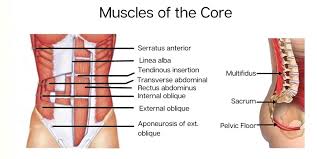
- Rectus abdominis
- External obliques
- Erector spinae
- Quadratus lumborum
Types of Muscle:
The global movers are fast-twitch, while the stabilizers have a significant postural component and are slow-twitch. Both slow-twitch and fast-twitch muscle fibers make up the core muscles:
Slow-twitch fibers: Slow-twitch fibers make up the majority of the local stabilizing muscular system in the deep muscle layer. These muscles are perfect for controlling the intersegmental motion necessary for postural and extrinsic loading responses because of their shorter length.
Fast-twitch fibers: These fibers make up the superficial muscle layer, also known as the global muscle system. These muscles have large lever arms, are lengthier, and produce a lot of torque and gross motions.
What Muscles Does the Core Include?
Deep Core Muscles:
The greater superficial core muscles are located over the deeper core muscles. The deeper core muscles serve to protect and stabilize the spine. The spine is protected by the constant activity of these core muscles throughout the day. In anticipation of activity, these muscles “turn on,” or engage.
By transferring the weight and load, they assist the body in getting ready for movement. In order to manage and avoid back pain, it is essential to understand how to appropriately engage these muscles. Additionally, these deep core muscles facilitate breathing and help move the rib cage. Additionally, these muscles aid in side bending, flexion, extension, and rotation of the trunk.
Strengthening the outer layer muscles without understanding how to activate the more deeply concentrated muscles is a common error. You can learn how to engage the deep core muscles from a physiotherapist.
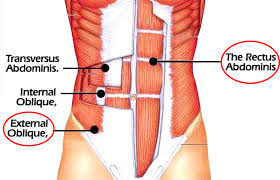
Deeper muscles, such as the:
- Internal obliques
- Transversus abdominis
- Transversospinalis (multifidus, rotatores, semispinalis)
- Quadratus lumborum
- Psoas major and minor
Superficial Core Muscles:
The rectus abdominis, sometimes known as “the six-pack muscle,” is the muscle most frequently linked to the “core” and is responsible for flexing the trunk.
Additional muscles that aid in trunk rotation are the latissimus dorsi, or “the lats,” and the oblique muscles. Lastly, the hamstrings, gluteus muscles, and erector spinae muscles aid in trunk extension.
These muscles are active during all full-body motions and aid in the control of your trunk muscles. All of these muscles can be strengthened to improve overall sports performance and balance.
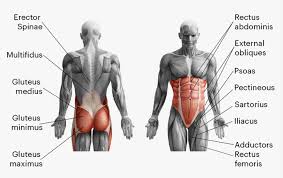
Superficial muscles, such as the:
- Rectus abdominis
- External obliques
- Erector spinae (iliocostalis, spinalis, longissimus)
- Latissimus dorsi
- Gluteus maximus and medius
- Hamstrings
- Rectus femoris.
The Major Muscles of the Core:
When someone imagines the core, their initial ideas can be “abs” or “six-pack.” These are not the only areas that make up the core. The main core muscles can be divided into two groups: local or deep muscles and global or surface muscles.
These muscles protect the organs in the abdominal cavity, maintain the integrity of the spine, and allow a person to flex, rotate, and bend their trunk.
Inner Core: Local or Deep Muscles:
The muscles that directly connect to the lumbar vertebrae in your spine are known as local or deep muscles (internal center), and they are responsible for providing stability and control during movement as well as a stable foundation for healthy growth. If any one of them is compromised, the entire basis is weak. Among these muscles are:
- Pelvic floor muscles: The muscles on the base of the pelvis are known as the pelvic floor muscles. The bladder, rectum, uterus and vagina (in women), and prostate (in men) are the pelvic organs’ supporting structures. Bladder and bowel control issues may arise from weak pelvic floor muscles. As people age, their pelvic floor muscles typically weaken. A person can strengthen themselves at any stage of life by engaging in certain workouts.
- Internal obliques: These are the muscles on the side of the trunk that have an upward diagonal slope. The internal abdominal oblique is essential for protecting and supporting the abdominal wall, enabling you to move your trunk in all directions (sideways, forward, and rotating), and carrying out physiological processes like expelling air and using the restroom.
- Diaphragm: The diaphragm is the main respiratory muscle. It is a dome-shaped muscle situated just behind the heart and lungs in the middle of your belly. When you breathe in, it contracts and flattens, drawing air into your lungs like a vacuum. When you exhale, it relaxes, forcing the air out. Additionally, applying pressure to the esophagus can reduce acid reflux and increase abdominal pressure to aid the body in eliminating vomit, pee, and feces.
The diaphragm serves as a cover over the deep muscles, the transverse abdominus, internal obliques, and multifidus are at the sides, and the pelvic floor is at the bottom. When combined, they offer a strong basis for effective movement. If any one of them is compromised, the entire basis is weak.
Outer Core: Global or Superficial Muscles:
The global or superficial muscles of the outer core are big muscles that move the spine and stabilize the trunk, although they are not directly attached to the spine. The superficial muscles are as follows:
- Rectus abdominis: The rectus abdominis muscles are often referred to as the “abs” or “six-pack” (and we don’t mean the beer cans!). These muscles aid in forward bending and are located in the front of the body. They also provide trunk mobility and core stability.
- External obliques: Slanted in opposition to the internal obliques, external obliques are found on the front and side of the abdomen. These muscles aid in the forward, side, and rotational flexion of the trunk. Similarly, the internal obliques support the abdominal wall and aid in physiological processes like forcing air out of the body and using the restroom.
- Erector spinae: You can bend and rotate side to side thanks to them. If you ever pull a muscle in your back, you might notice that turning or lifting your head hurts as well because the erector spinae also helps you turn your head from side to side.
Why Should a Person Strengthen the Core?
Because there is less support and stability when moving, the weak core increases the pressure on the spine’s passive structures, including the ligaments, bones, joints, discs, and capsules. Injury or dysfunctions, such as stiffness or poor movement patterns, may result in pain if the passive structures are not supported by the core for an extended period of time.
When exercising or playing sports, the passive system of the back and pelvis may sustain an injury if the athlete does not use their core in preparation for a movement or lifting large weights.
A center activity is any activity that involves using the back and abdominal muscles in a guided design. Any type of weight can be used to exercise and strengthen several muscles, including the core muscles, while maintaining the stability of the trunk.
To increase core stability, try exercises that work both your larger, surface core muscles and your smaller, deeper core muscles in a way that simultaneously contracts them with the proper timing and stress. Even though they are not core-specific, multi-joint free weight exercises have proven to be successful in trying to improve core strength.
Core-activating exercises are:
- Deadlifts
- Squats
- Glute Bridges
- Bird Dogs
- Deadbugs
- Crunches
Core Muscle Strengthening Exercises:
TVA activation/ Transverse Abdominis (TVA) activation:
Remember that the TVA’s fibers are primarily horizontal when engaging the deep core; there shouldn’t be much movement of the pelvis or ribs. Instead, a person should feel their tummy draw in toward their spine as they activate the TVA.
As you engage with TVA, try not to hold your breath. It could be helpful to let out a loud “shhh” sound. Before engaging in actions or exercises like replacing the lunchroom water cooler, think about practicing the enactment of this muscle.
How to activate the TVA:
- Place your hands on your lower abdomen and begin sitting in a chair with your feet flat and hip-distance apart.
- Feel the belly swell and fill the cradled hands as you inhale.
- To stimulate the transverse abdominal muscle, exhale and draw the belly forward and inward toward the spine (like a scooping motion) and away from the hands.
- Next, take a breath and let it out.
Goblet squats:
There are many benefits to lifting weights, including increased bone density to reduce the risk of osteoporosis and improved body composition to reduce the risk of type 2 diabetes. Lifting free weights is also a terrific technique to stimulate other deep core muscles and develop the TVA and multifidus, two of the deepest muscles in the back.
So grab a baby, some soup cans, or dumbbells and start lifting! Just remember to always start small and move gently, to maintain your back tall, and to look forward.
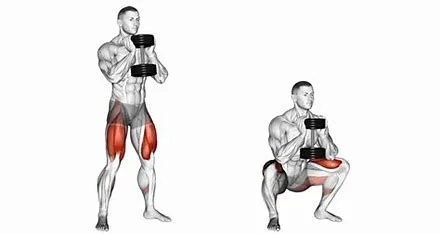
How to do a goblet squat:
- Hold a weight at your chest with both hands while standing with your feet slightly wider than hip width apart and your toes slightly out.
- To engage your core, pull your belly button in the direction of your spine.
- Push the hips back and bend the knees to descend into a deep squat while maintaining an engaged core.
- Advice: Throughout, try to maintain a straight back and a forward-facing chest.
- Squeeze your glutes to straighten your legs and get back to standing after holding this stance.
Bridge with marches:
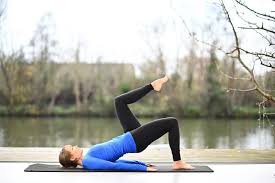
- Start by lying on your back with your knees bent and your legs’ hips far apart.
- Breathe out and raise your hips into a bridge position. From here, maintain hip level while raising one leg to a tabletop position. Continue with the opposite leg.
- Advice: Make sure the core is stimulated and drawn in toward the spine during the exercise. As if you were balancing a glass of water on your pubic bone, try to keep your hip bones level.
Bird Dog Exercises:
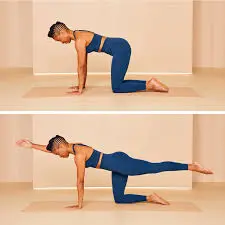
- Place your hands beneath your shoulders and your knees beneath your hips to begin on your hands and knees. Focus your eyes between your hands while keeping your knees hip-distance apart.
- When you exhale, draw the belly button inside into your spine while using your core to extend one arm forward and one leg back.
- Advice: Keep your hips level to prevent them from turning in to extend. Throughout, the core is still active.
- Return the arm and leg to the beginning position.
- Repeat using the other arm and leg.
- Note: Imagine a glass of water sitting between your shoulders and on top of your pelvis while you complete this exercise. Make sure you have enough control and move slowly enough to avoid spilling.
Side planks:
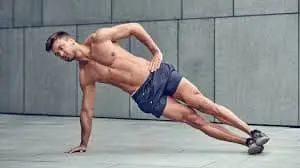
- Prop your body up onto your lower elbow while lying on your side with your legs straight and stacked on top of one another. The hand and forearm should be on the ground, with the elbow exactly beneath the shoulder.
- Advice: Make an effort to maintain a straight line for your feet, hips, and shoulders.
- In the direction of the spine, pull the belly button in. Squeeze your glutes to raise your hips off the ground while maintaining an engaged core.
- Return the hips to the floor gradually.
- Try placing the top foot on the floor in front of the bottom foot, touching heel to toe, if maintaining the feet stacked is too challenging.
Conclusion:
The foundation of the body’s strength, stability, and general movement is its core muscles. In addition to improving balance and posture, a strong core reduces the risk of injury and enhances performance in daily tasks and exercise.
Your body becomes more powerful, resilient, and efficient when you regularly train your core with correct form, creating a strong foundation that supports all of your movements.
FAQs:
How can I tell whether I have a strong core?
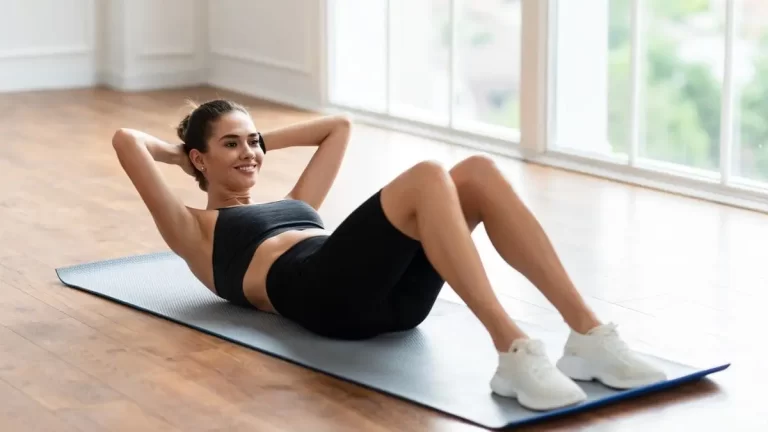
To level the shoulder blades, raise your upper torso off the ground and curl your upper trunk like you’re executing a crunch. The pelvis should tilt posteriorly, the lower back should flatten, and the upper trunk should round. Your core is weak if you can’t perform these exercises.
Which two core workouts are the most essential?
The plank, which works the deep, corset-like transverse abdominis, and the crunch, which tightens the more superficial abs—the rectus abdominis down the middle and the obliques along the sides—remain the gold standards of core strengthening.
Where is the center of a woman?
The basis of the muscular group known as your “core” is the pelvic floor. These muscles are found in your pelvis and extend side to side, like a hammock from the pubic bone at the front to the coccyx or tailbone at the back.
What is the number of muscles in the core?
Instead of a single muscle, the core is made up of about 29 to 35 muscle groups that work together to support the torso, pelvis, and spine. These muscles form a protective “column” or “box” around the trunk and are divided into deep stabilizers (inner core) and superficial movers (outer core).
What makes the muscles in the core weak?
Sedentary lifestyles, prolonged sitting, and poor posture are the main causes of a weak core because they lead the abdominal muscles to “sleep” or get disengaged. Pregnancy, injury, aging, or not directly strengthening the deep, stabilizing abdominal muscles instead of simply the superficial abs can all contribute to it.
Where on my body is my core?
The torso, which includes the pelvis, lower back, hips, and stomach, is the body’s center, axial portion. The rectus abdominis (abs), obliques, transverse abdominis, back muscles, pelvic floor, and diaphragm are important muscles that stabilize the entire body.
Which three core workouts are the most important?
The bird dog, side plank, and modified curl-up are the three exercises. Each exercise helps to increase stability and lessen pain by focusing on particular muscles in your back and core.
Which four deep core muscles are there?
An explanation of your deep core and abs. The rectus abdominis, external obliques, internal obliques, and transversus abdominis are the four-layered muscles that make up the front of your abdominal wall, as seen in the figure of abdominal muscles below.
What kinds of muscles make up the core?
The main core muscles include the rectus abdominis, transverse abdominis, erector spinae, internal and external obliques, diaphragm, pelvic floor muscles, and multifidus. The minor core muscles are the lats, traps, and—to many people’s surprise—the glutes.
Which core muscle is the most superficial?
The largest flat muscle in the abdominal wall and the most superficial is the external oblique. Its fibers produce aponeurosis in the midline, where they join the linea alba after running inferiorly to medially. This fibrous tissue extends from the pubic symphysis to the xiphoid process.
What are the core’s superficial and deep muscles?
The lumbo pelvic-hip complex, which includes superficial muscles like the Rectus Abdominis and deeper muscles like the internal obliques, transversus abdominis, transversospinalis (multifidus, rotatores, semispinalis), quadratus lumborum, and psoas major and minor, is referred to as the “core.”
References:
- Prajapati, N. (2023, May 21). 42 Best Exercises for Core Muscles to Build Strength & Stability. https://www.masterclass.com/articles/dumbbell-bench-presses. https://samarpanphysioclinic.com/exercises-for-core-muscles/
- Sankhla, D., & Sankhla, D. (2023, September 19). Deep Muscles of the Core – Deep Inner Core Stability Muscles. https://www.masterclass.com/articles/dumbbell-bench-presses. https://samarpanphysioclinic.com/deep-muscles-of-the-core/
- Wikipedia contributors. (2026, March 7). Core (anatomy). Wikipedia. https://en.wikipedia.org/wiki/Core_(anatomy)
- Core muscles: definition, function & more. (n.d.). Hingehealth. https://www.hingehealth.com/resources/glossary/core-muscles/


30 Comments