Squats Exercise
Introduction:
Squats are one of the most powerful and functional lower-body strengthening exercises. It primarily targets the quadriceps, hamstrings, glutes, and core muscles while also improving balance, mobility, and overall stability.
Exercises like squats are thought to be essential for building core strength and the size and strength of the lower body muscles. The gluteus maximus, adductor magnus, and quadriceps femoris are the main agonist muscles used in the squat. In addition, the squat isometrically works the abdominal muscles and the erector spinae.
Along with the deadlift and the bench press, the squat is one of the three lifts used in the strong sport of powerlifting. In many well-liked leisure exercise regimens, it is also regarded as a fundamental activity.
How to Do Exercises?
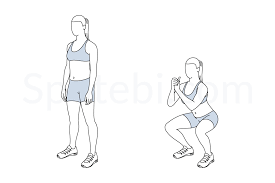
Starting from a standing position, the squat is performed. To lower the torso and associated weight, move the hips back and bend the knees and hips. Then, return to the upright position to begin the squatting movement.
Usually in the form of a weighted barbell, weight is added often. You can also use dumbbells and kettlebells. When a barbell is utilized, it can be held lower across the back and rear deltoids (a low bar squat) or braced across the upper trapezius muscle (a high bar squat). Everywhere the bar is positioned on the back, different torso bracing techniques are used to avoid direct contact with the spine, which can result in pain and injury. For novice squatters who squat high bar style, this can be problematic since they might not have enough muscle mass to cushion the bar and keep it from putting strain on their spine.
You can execute squats at different depths. The hip crease, or top surface of the leg at the hip joint, must dip below the top of the knee in order to meet the competition standard; this is referred to as “parallel” depth. There are numerous definitions of “parallel” depth, which may be confusing, but none of them correspond to the norm in organized powerlifting. These additional criteria, which range from shallowest to deepest, are: the top of the upper thigh (i.e., the top of the quadriceps) below the top of the knee; the bottom of the hamstring parallel to the ground; and the hip joint itself below the top of the knee, or femur parallel to the floor.
The ankle extends (dorsiflexes), the hips and knees flex, and the muscles surrounding the joint contract eccentrically as the body descends. The contraction reaches its maximum at the bottom of the movement, slowing and reversing descent. The power coming from the bottom is produced by the muscles surrounding the hips. Power on the ascent is hampered if the knees drop forward or give way, releasing tension from the hamstrings. The muscles contract concentrically upon returning to vertical, causing the ankle to plantarflex and the hips and knees to extend.
Flexing the torso too far forward and lowering too quickly are common mistakes in squat form. A quick decline could result in injuries or the inability to finish the lift. This happens when the brace relaxes during the descent, resulting in a loss of tension at the bottom. By significantly increasing the stresses applied to the lower back, over-flexing the torso raises the risk of spinal disc herniation. Another mistake that can put undue strain on the knee joint is when the knee is not in line with the direction of the toes, resulting in a valgus position. Raising heels off the ground is another frequent mistake that lessens the gluteus muscles’ role.
Muscles Worked:
Agonist muscles:
- Quadriceps femoris
- Vastus lateralis
- Vastus medialis oblique
- Gluteus maximus
- Adductor magnus
- Soleus
Stabilizing muscles:
- Erector spinae
- Rectus abdominis
- Internal and external obliques
- Hamstrings (Biceps femoris, semitendinosus, semimembranosus)
- Gluteus medius and minimus
- Gastrocnemius
Equipment:
You can do squats using a variety of equipment.
By using a power cage, you can lower your risk of damage and do away with the necessity for a spotting partner. By placing the bar on a track, the Smith machine mimics a leg press in that it lessens the hip movement involved in the squat. Athletes may squat without unracking and exiting the rack thanks to the monolift rack.
Additional equipment may be utilized, such as shoe inserts or heeled shoes (Shoes), which enable a deeper squat, and weight-lifting belts, which enable the athlete to attain more intra-abdominal pressure. Another item of equipment that is advised is wrist straps, which support and maintain the wrist’s straight position. In order to restrict joint movement, they should be wrapped around the wrist, both above and below the joint. Some people reject the use of heel wedges and related equipment because they believe that they will eventually deteriorate in form.
To change the resistance at different stages of the exercise, chains and thick elastic bands can be fastened to each end of the barbell. To make the difficulty more constant throughout the movement, this might be done to increased resistance in the movement’s stronger upper phase. By hanging from a power rack and supporting the barbell more and more as it is dropped, bands can also be used to lessen resistance in the lower, weaker phase. This can assist someone in getting past a “sticking” point. A variable resistance squat is a squat that is executed with these methods.
Variants:
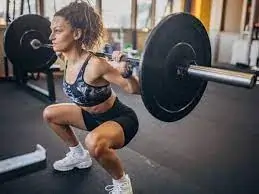
Back squat: The upper trapezius muscle, which is located close to the base of the neck, supports the bar on the back of the body. It can also be held lower across the rear deltoids and upper back. In weightlifting, the barbell is typically held higher, creating a posture more akin to the clean and jerk, whereas in powerlifting, it is frequently held lower to generate a lever advantage. The terms low bar (also known as the powerlifting squat) and high bar (also known as the Olympic squat) refer to these varieties, respectively.
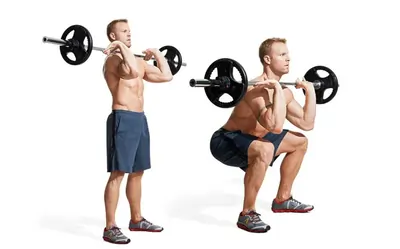
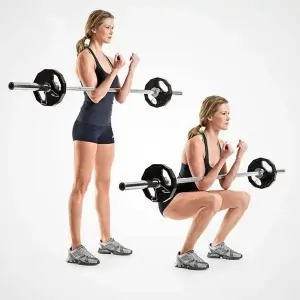
Front squat: Either the arms are crossed, and hands are put on top of the barbell, or the barbell is held in front of the body across the deltoids and clavicles in a clean grip, as in weightlifting. To support the bar, the front squat also uses upper back muscles like the trapezius in addition to the muscles used in the back squat.
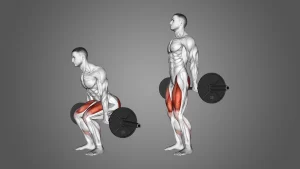
Hack squat: This exercise, originally called Hacke (heel) in Germany, involves holding the barbell in the hands right behind the legs. Emmanuel Legeard, a Germanist and expert in European strength sports, claims that the exercise’s earlier version, in which the heels were connected, is where the name originated. Thus, the hack squat was a squat executed in the manner of the heel click used by Prussian troops (“Hacken zusammen”). Early in the 20th century, wrestler George Hackenschmidt popularized the hack squat in English-speaking nations. Another name for it is a rear deadlift. It is not the same as the hack squat that is done using a squat machine.
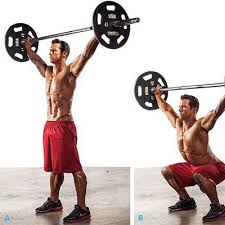
Overhead squat: The wide-arm snatch grip is used to hold the barbell aloft, although if balance permits, a closer grip may also be used.
Zercher squat: The barbell is grasped on the inside of the elbow, in the bends of the arms. This can be done, for example, by deadlifting the barbell, holding it against your thighs, squatting into the lower part of the squat, holding the bar on your thighs while placing the crook of your arm beneath the bar, and then standing up. After the required number of repetitions has been completed, this sequence is reversed.
Steinborn squat: The barbell starts on the floor and is performed without a rack, and it is named for the classic strongman Henry “Milo” Steinborn. The lifter bends to place it against their back, as if in a back squat, after picking up one end and lifting it until it is almost vertical. Then, with their torso in the bottom of a squat, they lower their hips, allowing the top of the bar to drop until it is straight across their back. From this position, you can perform standard back squats.
Deep knee bend on toes: Except for the lifter’s positioning on their forefeet and toes, with their heels lifted, the exercise is comparable to a standard back squat. In contrast to a heavy back squat performed with flat feet, the weight used is typically no more than moderate.
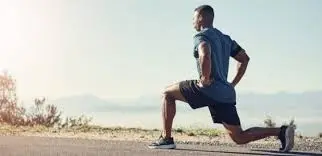
Single-leg squat: Usually, the leg that is held off the ground moves behind the person as they squat, but alternatively, the person may position it ahead of themselves. By making sure that the right and left legs execute the same amount of work when done alternately, they can also be utilized to correct muscular imbalances in the body. The barbell weight only needs to be half of what it would be, less the lifter’s weight, for the legs to do the same amount of work as in two-footed squats. For example, if an 80 kg lifter lifts 40 kg with just his left leg, his left leg is lifting 160 kg, which is the same amount of weight as in a two-footed squat. Accordingly, the single-leg squat can be used in rehabilitation programs where avoiding greater back loading is necessary.
Loaded squat jump: The position of the barbell is comparable to that of a back squat. The exerciser lowers themselves in a squat, then jumps higher and lands in a posture that is similar. One type of loaded plyometric exercise to improve explosive power is the loaded squat jump. Dumbbells or a trap bar may be used in variations of this exercise.
Variable resistance squat: According to the general principles of variable resistance training, a variable resistance squat entails adjusting the resistance during the exercise so that it more closely corresponds, in percentage terms, to the corresponding 1RM for each strength phase[a] the individual is going through. This means that the lower phase should have less resistance, such as 60 kg, while the higher phase should have 90 kg. Heavy chains that are fastened to either end of the barbell can be used to change the resistance in this way.
When the barbell is raised, the chains are progressively raised off the ground, and when it is lowered, the opposite occurs. It is also possible to utilize thick elastic bands that are less stretched in the lower phase and more stretched in the upper phase. The stronger and weaker stages of the exercise can be trained by alternating heavier partial repetitions with lighter full repetitions, which will result in a more comparable proportion of 1RM lifted for each phase. One method for improving speed and explosive power is to train with variable resistance squats.
Partial rep squats: In contrast to full squats, which cover the entire range of motion, partial rep squats only cover a portion of it. Full range for a squat can refer to simply squatting for the lower, weaker phase, but it usually refers to the higher, stronger phase of a squat’s strength phase sequence (strength curve). When using partial squats to strengthen the higher range of motion, the weight used is typically much higher than when performing a complete squat.
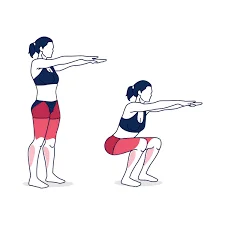
Body-weight or air squat: performed without a barbell or weight, frequently at higher repetitions than previous variations.
Hindu squat: also known as a deep knee bend on toes, or baithak. With the heels raised throughout, body weight is placed on the forefeet and toes, and the knees track well past the toes as the exercise is executed without the use of additional weight. One of the main exercises used by ancient Indian wrestlers was the baithak. Bruce Lee also used it as part of his training regimen. It can also be done with the hands on the back of a chair or on an upside-down club.
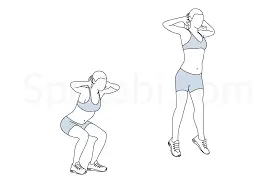
Jump squat: a plyometric exercise in which the squatter jumps forcefully off the floor at the maximum of their range of motion after doing a quick eccentric contraction.
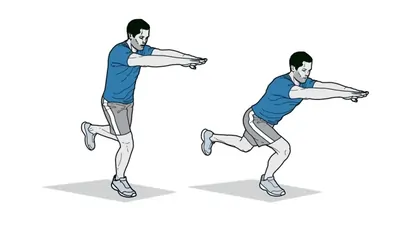
Basic single-leg squat: The individual is standing with one foot up and the other on the ground. They descend by bending their upright leg. The knee of their lifted leg approaches the heel of the grounded foot as it advances behind them. One-legged squats can also help to strengthen one’s sense of balance because they demand more effort to balance.
Because both legs are designed to perform the same amount of work—for example, in a two-legged squat, a person’s right leg may perform 55% of the work and their left leg 45%—they can also help prevent an excessively uneven level of strength development, similar to other types of one-legged exercises done alternately.
One can better assure that each leg is performing the same amount of work—that is, that the right or left leg performs 100% of the work for each individual one-legged squat—by alternating between utilizing the right and left leg.
Pistol squat: a full-depth bodyweight single-leg squat with the second leg extended off the ground and positioned in front. For resistance, dumbbells, kettlebells, or medicine balls are occasionally used. Pistol squats can be done with the heel up or the foot flat on the ground.
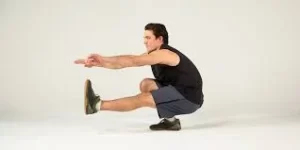
Shrimp squat: Also known as the flamingo squat, it is a variation of the pistol squat in which the non-working leg is bent and positioned behind the working leg while squatting, possibly held behind the working leg with a hand, rather than extended out in front. Shrimp squats can be done with the heel up or the foot flat on the ground.
Jockey squat: A half-squat, which is executed by keeping your feet balanced and touching your chest with your fingertips. You can complete this squat quickly and with many repetitions.
Sissy squat: The torso leans back as the knees cross the toes, stretching the quadriceps.
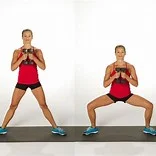
Sumo Squat: This version, which is also called the Plie Squat, has legs that are wider than shoulders.
Clinical significance:
One resistance exercise that works a lot of muscle mass is the squat. As a result, squats cause sudden spikes in growth hormone (particularly in women) and testosterone (particularly in men). Squat exercise does not cause an immediate increase in insulin-like growth factor 1, although resistance-trained men and women had greater resting levels of IGF-1. Resistance exercises like squats cause an immediate increase in catecholamines (dopamine, norepinephrine, and adrenaline).
After a joint-related injury, the squat has been used in clinical settings to improve the lower body muscles with minimal to no harm. Movement competency can guarantee independent living in the elderly, and young individuals may benefit from improved athletic performance and fewer injuries as they get older.
Injury considerations:
Despite being a fundamental component of weight training for a long time, the squat has generated debate regarding its safety.
According to some trainers, squats are linked to knee and lumbar spine conditions. However, some people still maintain that the squat is one of the greatest workouts for developing strength and muscle. According to some instructors, full squats—which end with the hips at or below knee level—are more likely to result in damage and are more effective than incomplete squats, which end above parallel.
According to a 2013 analysis, deep squats are an effective workout that does not raise the risk of degenerative knee ailments when done correctly. The same review also found that shallower squats may eventually cause knee and lumbar spine deterioration.
Squats used in physical therapy:
Because squats improve stability without placing undue strain on the anterior cruciate ligament and tibiofemoral joint, they can be used in some rehabilitation exercises.
Higher compressive loads on the patellofemoral joint are linked to deeper squats, and it’s probable that those who experience pain in this joint are unable to perform deeper squats. Because it applies less stress than greater depths, patients may feel more at ease with knee flexion between 0 and 50 degrees for certain knee rehabilitation exercises. According to a different study, decline squats performed at angles more than 16 degrees might not be good for the knee and may not reduce calf tension. According to other research, the ideal squat range for developing quadriceps without aggravating the patellofemoral joint is between 0 and 50 degrees.
Knee extensor rehabilitation has involved a combination of decline angles and single-limb squats. Squats performed at a declining angle permit the knee to flex in spite of potential ankle pain or lack of mobility. According to one study, single-limb squats performed at a 16-degree decline angle have the highest activation of the knee extensors without putting undue strain on the ankles, making them ideal for therapists who want to concentrate on the knee during squats. The same study also discovered that strengthening the ankle and knee extensors can be accomplished with a 24-degree drop angle.
Different Sets For Squats:
When training till failure, forced repetitions are used. They are finished by finishing an extra two to four assisted repetitions at the end of the set. In order to sustain a continuous period of tension and encourage hypertrophy, partial repetitions are also used. Last but not least, drop-sets are a high-intensity workout that is performed at the conclusion of a set and continues with a lower weight without rest until failure.
FAQs:
Can you alter the contour of your body with squats?
This is due to the fact that squats are an excellent method of building muscle, which is a wonderful technique to reduce body fat. Over time, the lower body will become more muscular, but the change in body composition (more muscle, less fat) will cause your metabolism to speed up and also change your shape.
What workout is superior to squats?
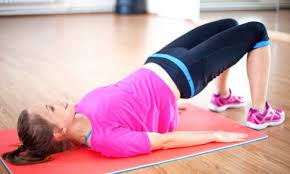
When it comes to strengthening your legs without placing a lot of strain on your knees, machine leg presses, step-ups (start low), floor bridges, RDLs, and leg curls are excellent substitutes.
Are elders safe to perform squats?
Squats are excellent for your body at any age, but they are particularly beneficial as you become older. They help you maintain bone density and improve your balance by engaging your core and leg muscles.
After squats, what should I eat?
Your muscles can use protein and carbs as fuel and aid in recovery in the 30 to 60 minutes following your workout. Consume more nutritious carbohydrate sources, including brown rice, whole-grain bread, and whole-grain pasta.
What dangers come with performing squats?
Always keep in mind that squats and other WT movements (like the deadlift) can cause repetitive strain on the knees and back over time, increasing the risk of overuse injuries. cause harm, so the weight plates must stay in position. To stop weight plates from moving or slipping off the bar during a lift, use clips or collars.
Do squats alter the contour of your body?
Overall body composition can be improved by squatting. An 8-week body mass-based squat exercise training program reduced participants’ body fat percentage by 4.2% while simultaneously increasing their muscle growth and strength, providing proof of the squat’s effect on body composition.
Is the squat a form of yoga?
The yoga squat is an excellent hip opener that strengthens and expands the ankles and feet while also stretching the groin and glutes.
Are squats preferable to walking?
According to the study, taking brief, frequent breaks from extended sitting will help regulate blood sugar levels in overweight and obese men more efficiently than taking a single, lengthy stroll. Squats worked better in this instance than a single, lengthy walk.
Are squats beneficial for osteoarthritis in the knee?
A key component of knee OA patients’ therapy is strengthening the knee extensor muscle group, which is achieved by squat exercises [6]. Squat exercises can be done with body weight and no equipment, but they can also be done with a gadget.
References:
- Lindberg, S. (2023, May 26). 7 Benefits of doing squats and variations to try. Healthline. https://www.healthline.com/health/exercise-fitness/squats-benefits
- Clinic, C. (2026, January 16). Squats: How to do them and why they rock. Cleveland Clinic. https://health.clevelandclinic.org/proper-squat-form
- Wikipedia contributors. (2026, January 15). Squat (exercise). Wikipedia. https://en.wikipedia.org/wiki/Squat_(exercise)
- WebMD Editorial Contributor. (2023, July 17). Health benefits of squats. WebMD. https://www.webmd.com/fitness-exercise/health-benefits-of-squats

3 Comments