10 Best Exercises to Increase Leg Strength
Introduction:
For increased mobility, greater balance, and general functional fitness, developing strong legs is crucial. Walking, climbing stairs, lifting, and maintaining stability are all made possible by strong leg muscles.
You may improve lower-body endurance, avoid injuries, and improve sports performance by including leg-strengthening exercises in your program. These focused workouts will help you safely and successfully build leg strength, regardless of your level of activity.
Benefits of Best Exercises to Increase Leg Strength:
Your everyday mobility and general fitness are enhanced by the various functional and physical advantages of strengthening your leg muscles. By strengthening your thighs, hips, calves, and glutes, these workouts help you carry out everyday duties with confidence and ease.
In addition to lowering the risk of falls and lower-body injuries, stronger legs help enhance posture, stability, and balance. Regular leg-strengthening exercises also improve athletic performance, increase metabolism, and promote healthier joints by reducing excessive strain on the knees and hips.
10 Best Exercises to Increase Leg Strength Video:
Best Exercises to Increase Leg Strength:
Squats:
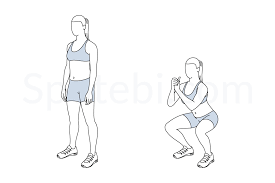
Because they work several main muscular groups at once, such as the quadriceps, hamstrings, glutes, and calves, squats are among the best exercises for building leg strength. This complex exercise enhances core engagement and general balance while strengthening the lower body’s power, stability, and endurance.
Regular squats improve functional strength, which makes daily tasks like sitting, lifting, and ascending stairs simpler and more effective. Additionally, squats promote improved hip and knee joint mobility, which lessens stiffness and helps avoid injuries. Squats are a flexible and crucial exercise for anyone trying to tone and build their legs, whether they are performed with body weight or additional resistance.
Bulgarian Split Squats:
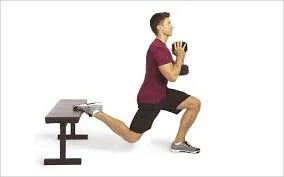
Bulgarian split squats are an effective unilateral exercise that works each leg separately to greatly increase leg strength, stability, and balance. In order to maintain good posture and control, this exercise mainly works the quadriceps, glutes, and hamstrings while also using the core. Improved hip flexibility and deeper muscle activation are made possible by raising the rear foot’s range of motion.
Bulgarian split squats improve athletic performance, address muscular imbalances, and develop functional strength that can be used for everyday tasks like lifting and climbing stairs. They are a great complement to any leg-strengthening regimen since they are particularly good at increasing lower-body strength and stability.
Walking Lunges:
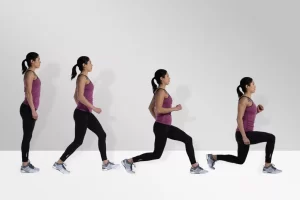
Walking lunges are a great dynamic exercise that enhances balance, coordination, core stability, and develops the quadriceps, hamstrings, glutes, and calves. A highly functional lower-body workout, each lunge requires your body to manage movement, maintain alignment, and push back up with force as you step forward into it.
Continuous forward motion improves hip mobility and muscular endurance, which lessens stiffness and boosts stride efficiency. By working each side separately, walking lunges also aid in correcting imbalances between the left and right legs.
This exercise is perfect for developing real-world strength, improving athletic performance, and promoting healthier, more stable joints since it replicates the natural movements utilized in everyday tasks.
Romanian Deadlifts:
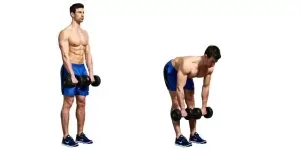
Romanian deadlifts are a great way to improve general posterior chain stability and strengthen the hamstrings, glutes, and lower back. This exercise focuses on a controlled hip hinge, which improves hip mobility and aids in the development of strong, flexible hamstrings. Romanian deadlifts teach appropriate lifting mechanics by keeping the weights close to your body and keeping your spine straight.
This lowers your risk of injury when performing daily tasks that require lifting or bending. By focusing on the muscles that frequently weaken from extended sitting, they also help to improve posture. Romanian deadlifts enhance athletic performance, increase lower-body strength, and provide a stronger, more balanced foundation for functional movement.
Step-Ups:
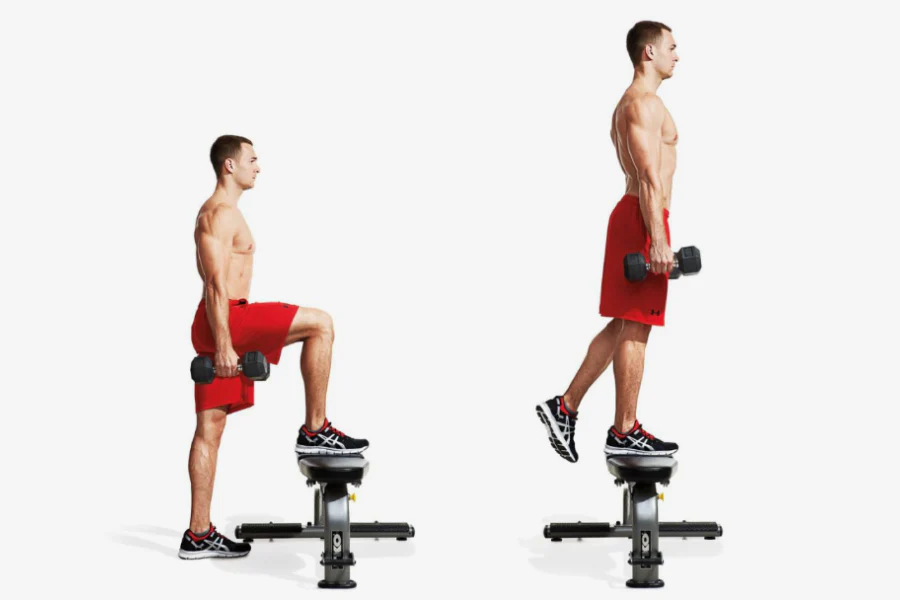
Step-ups are a straightforward yet potent exercise that works the quadriceps, glutes, and hamstrings to improve leg strength, stability, and balance. This functional activity is particularly helpful for enhancing lower-body endurance and real-life mobility since it simulates commonplace activities like ascending stairs.
Your legs function independently as you drive through your heel and step onto a raised platform, assisting in the correction of left and right side muscular imbalances. In addition to improving posture and lowering the chance of knee or hip injury, step-ups work the core to maintain control and good alignment. Step-ups are a flexible and joint-friendly workout that promotes stronger, more powerful legs, whether performed with bodyweight or additional resistance.
Goblet Squats:
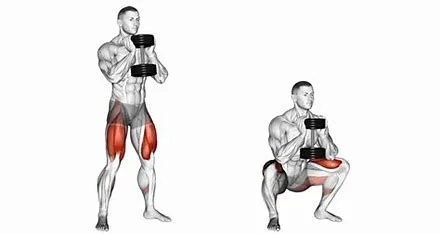
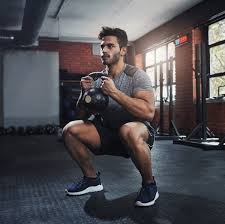
Goblet squats target the quadriceps, glutes, hamstrings, and core while encouraging correct squat form, making it a potent lower-body building exercise. Keeping your torso erect with a dumbbell or kettlebell near your chest facilitates proper posture and lessens lower back strain. Additionally, this stance promotes deeper squats, which enhance hip mobility and increase muscular activation.
Goblet squats are a safe and controlled approach to increase leg strength, improve stability, and improve total functional movement. They are suitable for beginners yet difficult enough for experienced lifters. They are a great option for building a more muscular lower body and strong, balanced legs.
Leg Press:
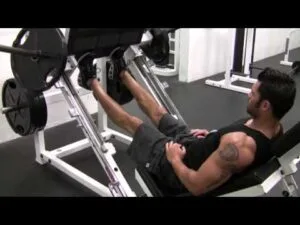
A common strength-training exercise that works the quadriceps, hamstrings, and glutes and offers great lower back support is the leg press. A leg press machine is perfect for increasing lower-body strength and muscle growth since it enables you to securely lift larger weights. By maintaining correct alignment, the guided action lowers the chance of injury and guarantees consistent form with each repetition.
You may highlight different muscle groups by varying the placement of your feet. For instance, placing your feet higher will target your hamstrings and glutes, while placing your feet lower will focus more on your quads. The leg press is a flexible and useful supplement to any leg-strengthening regimen, especially for those who wish to improve their legs without the balancing requirements of free-weight exercises.
Jump Squats:
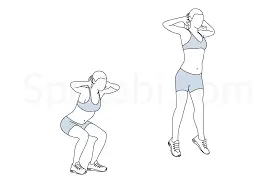
By focusing on the quadriceps, hamstrings, glutes, and calves, jump squats are a potent plyometric exercise that increases explosive leg strength. This high-intensity exercise enhances muscle power, quickness, and general athletic performance by combining strength and cardio. Your lower body muscles have to work harder to produce force when you squat down and then leap upward, which increases your strength and endurance.
In addition to improving stability, balance, and coordination, jump squats work the core for controlled landings. This workout gradually enhances lower-body conditioning, agility, and vertical leap height. It’s a great option for anyone who wants to increase their level of fitness and develop strong, muscular legs.
Box Jumps:
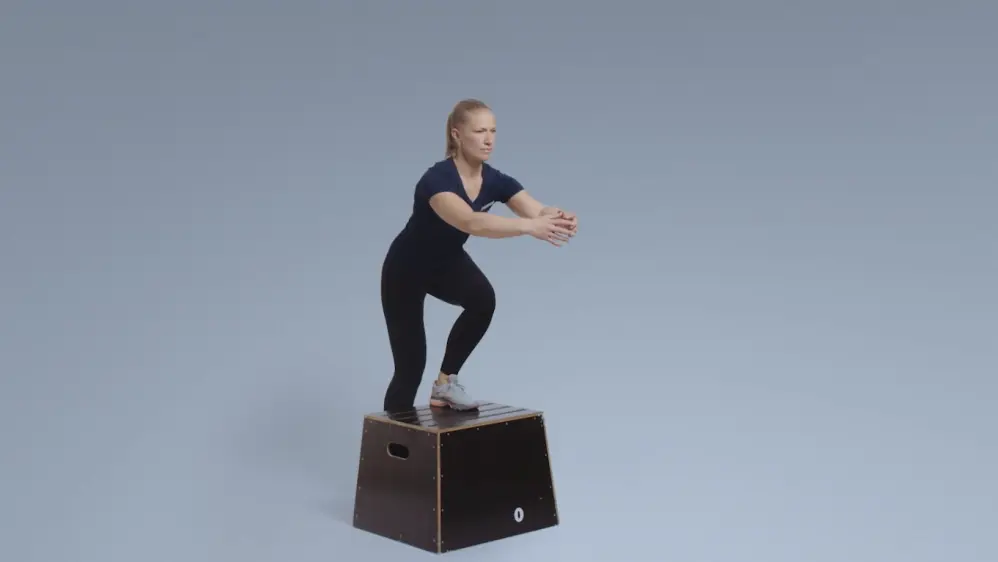
Box jumps are an explosive plyometric exercise that targets the quadriceps, hamstrings, glutes, and calves to greatly increase leg strength, power, and athletic performance. You must exert force rapidly throughout this dynamic exercise, which improves your speed, agility, and vertical leap. You can improve your coordination, balance, and general lower-body control while training your muscles to respond quickly by jumping onto a sturdy elevated platform.
Fast-twitch muscle fibers, which are necessary for swift, forceful actions in sports and daily activities, are activated during box jumps. Because they are high-intensity, they also improve cardiovascular endurance. Box jumps assist in building explosive strength, increasing general fitness, and producing a more powerful, responsive lower body with regular exercise.
Sled Pushes:
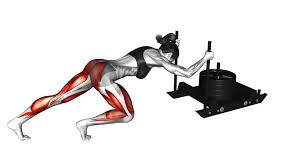
Sled pushes are a great full-leg strengthening exercise that works the quadriceps, hamstrings, glutes, and calves to increase power, endurance, and stability. This is one of the most practical strength-building exercises since it requires your lower body to work hard to create forward momentum as you push the sled ahead with deliberate, powerful steps.
Sled pushes are appropriate for a variety of fitness levels since they significantly strengthen the core and enhance general cardiovascular fitness without putting undue strain on the joints.
This workout helps build strong, powerful legs that can execute daily duties and sports activities more effectively while improving acceleration, speed, and athletic performance. Sled pushes are a great way to develop lower-body power and real-world strength, whether they are done for short bursts or longer distances.
Conclusion:
One of the best methods to increase power, balance, and general lower-body function is to incorporate a range of leg-strengthening exercises into your program. Every activity, from basic activities like lunges and squats to more difficult ones like box jumps and sled pushes, is essential for building strong, stable, and balanced legs.
In addition to increasing muscle strength, regular exercise lowers the chance of injury and enhances mobility, posture, and athletic performance. You can develop a stronger lower body that supports your daily activities and long-term fitness objectives by selecting the appropriate set of workouts and making moderate progress.
FAQs:
How can weak legs be treated naturally?
Stretching Exercises
Stretching your legs on a regular basis can help release tension and stop future pain, especially in the quadriceps, hamstrings, and calves. Adding gentle stretches to your regimen of at-home treatments for leg pain can be quite beneficial.
Which vitamin D supplements are beneficial for building muscle?
Indeed, because vitamin D plays a part in muscular function and helps prevent age-related decrease, it can support muscle strength, especially for those who are deficient. Weaker muscle contractions and atrophy of fast-twitch muscle fibers, which are essential for tasks like preventing falls, are associated with low vitamin D levels. Vitamin D3 and other supplements can aid by increasing the size and functionality of muscle fibers.
When should I consult a physician if I’m experiencing muscle weakness?
If you suffer from dizziness or difficulty breathing together with muscle pain, seek medical attention immediately or visit the emergency department. severe muscle weakness that makes it difficult to do daily tasks. a stiff neck and high temperature.
Which vitamin is best for muscle repair?
Vitamin C is one of the top three vitamin supplements for muscle repair and recovery. One excellent antioxidant that helps the body repair is vitamin C. It is an essential vitamin for tissue healing and aids in accelerating muscle fiber repair following a demanding workout.
How can leg muscle weakness be corrected?
Depending on the underlying cause, physical therapy and strength-building exercises like sit-to-stands and squats are common treatments for leg muscular weakness. Additional therapies may include medication or surgery to treat underlying disorders, dietary adjustments to address imbalances, and supporting techniques like massage, stretching, and rest. Before beginning any new treatment plan, it is essential to consult a healthcare practitioner for an accurate diagnosis.
What are the initial symptoms of a B12 deficiency?
Fatigue, weakness, pale or yellowish complexion, and a painful or red tongue are early indicators of a vitamin B12 deficiency. Neurological symptoms may also include tingling or numbness in the hands and feet, balance issues, and trouble walking. Changes in mood and cognition, such as irritation, disorientation, and memory issues, can also be early warning signs.
What is the most typical reason for weak legs?
There are several causes of leg weakness. DOMS, spinal issues, neuropathy, ALS, stroke, myasthenia gravis, and Guillain-Barré syndrome (GBS) are a few examples. One or both legs may be weak. Leg weakness may occasionally indicate an underlying medical issue that has to be treated.
Leg weakness is treated by what kind of physician?
Patients who report tingling, numbness, or weakness in their muscles are frequently referred to a neuromuscular specialist by a neurologist. After that, we put your muscles through a battery of tests to identify the issue and potential causes.
If my legs are weak, what should I eat?
Eat more foods heavy in protein, iron, and vitamins if your legs are weak. Beans, leafy greens, bananas, lean meats, and fortified cereals can all help maintain the health and vitality of muscles. Additionally, foods high in magnesium and potassium can improve strength and reduce cramping in the muscles.
Does vitamin D make you stronger?
Muscle strength and postural stability are favorably correlated with vitamin D levels in the majority of observational studies. However, the effects of vitamin D status on muscular health can only be accurately evaluated in RCTs because physical activity is linked to both vitamin D status and muscle strength.
What insufficiency results in legs that are weak?
Leg weakness may result from shortages in minerals, including magnesium and potassium, as well as vitamins B12 and D. Because iron is necessary for the transportation of oxygen, a lack of it can also result in weakness and exhaustion. Walking and maintaining balance might be challenging due to symptoms such as muscle weakness, cramping, and nerve-related problems caused by these impairments.
Which vitamin is beneficial for weak legs?
Leg weakness may be alleviated with vitamins such as vitamin B12 for nerve function, vitamin D for healthy muscles and bones, and B vitamins (such as B1, B6, and folate) for circulation and energy production. Magnesium, iron, and potassium are other essential minerals that are necessary for healthy muscle and neuron function, oxygen transfer, and contractions.
Is it possible to strengthen weak legs?
Physical therapy exercises may be the answer if you struggle with leg weakness or injury. According to statistics, 65% of people with leg problems report that targeted leg workouts aid in their recuperation.
How can one strengthen their legs?
One of the best resistance exercises you can perform is the squat. This workout is a terrific technique to strengthen your legs and utilizes practically all of your lower body muscles. If you want to start resistance training, this is an essential component of your routine.
References:
- Davis, N. (2025, June 16). 15 leg exercises and how to design a leg workout. Healthline. https://www.healthline.com/health/fitness/leg-workout
- Resources, H. (2023, March 16). Strengthen your legs. Human Resources. https://hr.duke.edu/wellness/runwalk/training-education/strengthen-your-legs/
- Cscs, J. C. M., & Cscs, J. C. M. (2025, March 28). Leg workouts. ATHLEAN-X. https://learn.athleanx.com/articles/legs-for-men/leg-workouts
- Peloton, T. (2023, November 10). 7 strength training exercises for your strongest lower body ever. https://www.onepeloton.com/blog/lower-body-strength
- Beck, C. (2025, October 23). The best leg exercises for your leg day workout. Gymshark. https://row.gymshark.com/blog/article/best-leg-exercises
- Segal, D. (2021, August 11). Best exercises for leg muscles. WebMD. https://www.webmd.com/fitness-exercise/features/strength-training-building-leg-muscles