Top 7 Exercises to Relieve Gluteal Pain and Strength
Introduction:
Prolonged sitting, strained muscles, hip and lower back abnormalities, and tightness in the muscles can all cause gluteal pain. In addition to reducing pain, strengthening and extending the gluteal muscles improves stability, posture, and movement efficiency.
In order to lessen pain and stop further injuries, the following exercises are intended to target the glutes, increase flexibility, and encourage improved muscle activation.
Benefits of Gluteal Pain Exercises:
Exercises for gluteal pain have several benefits for lower body function and pain management. These exercises aid in gluteal healing, blood circulation improvement, and muscular relaxation. In addition to supporting the lower back and improving hip stability, strengthening the glutes also lessens the load on other muscles and joints.
Regular practice also enhances mobility and strength while preventing future pain and injuries by improving posture, balance, and movement efficiency.
Top 7 Exercises to Relieve Gluteal Pain and Strength Video:
Gluteal Pain Exercises:
Piriformis Stretch:
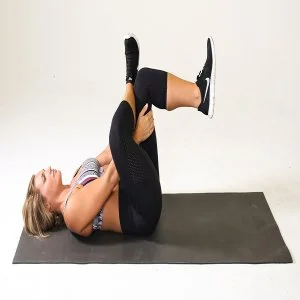
The piriformis stretch focuses on the little muscle deep in the buttock that frequently causes sciatic and gluteal pain. Bend both knees while lying on your back to complete this stretch. Make a figure-4 with one leg crossed over the other thigh, then slowly bring the lower knee up to your chest until your hip and glute muscles are stretched.
This stretch relieves strain on the sciatic nerve and lessens gluteal pain by releasing tension in the piriformis muscle.
Knee to Chest Stretch:
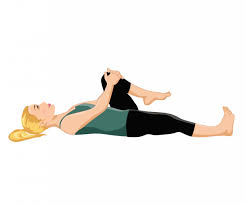
The knee-to-chest stretch increases flexibility and eases stress in the hips, lower back, and gluteal muscles. Lying on your back with your legs outstretched, perform this exercise. Grasping one knee with both hands, slowly raise it closer to your chest until your lower back and glutes are comfortably stretched.
After 20 to 30 seconds of holding the pose, move to the opposite leg. This stretch eases pain in the lumbar and gluteal areas, encourages relaxation, and lessens stiffness.
Glute Bridge:
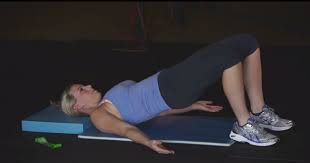
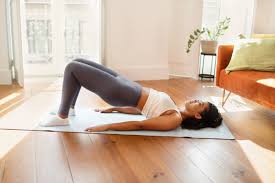
The glute bridge is a useful exercise that improves pelvic stability and strengthens the hamstrings, lower back, and gluteal muscles. This exercise involves lying on your back with your feet flat on the floor, hip-width apart, and your knees bent.
To raise your hips toward the sky and create a straight line from your shoulders to your knees, contract your core and push through your heels.
Slowly descend back down after holding for a few seconds at the top. This exercise improves hip stability overall, develops and engages the glutes, and lessens lower back pain.
Clamshells:
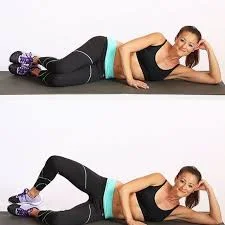
The gluteus medius, a crucial muscle that stabilizes the hips and pelvis, can be strengthened using clamshells. This exercise involves lying on your side with your legs stacked and knees bent, with your arm supporting your head.
Lift your upper knee as high as you can without turning your hips while keeping your feet together, then gradually bring it back down. Controllably repeat the motion. This exercise helps prevent muscular imbalances that might cause lower back or hip pain, improve hip alignment, and lessen gluteal pain.
Prone Hip Extension:
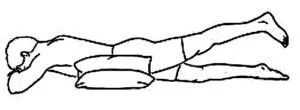
In order to strengthen and stabilize the hips and lower back, the prone hip extension works the hamstrings and gluteus maximus. To do this exercise, lie face down with your arms resting under your head or alongside you for support and your legs straight.
Using your glute muscles, carefully raise one leg upward while maintaining a straight leg; do not arch your lower back. After a brief moment of holding at the peak, carefully lower your leg back down. On the opposite side, repeat. This exercise helps release stress and soreness in the gluteal area, strengthens the hips, and increases glute activation.
Supine Hamstring Stretch:
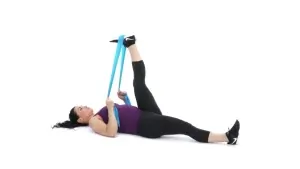
The supine hamstring stretch promotes flexibility and eases lower-body strain by releasing tension in the hamstrings and gluteal muscles. Lay on your back with your legs outstretched to do this stretch. Gently grasp the back of your thigh or calf with both hands while you raise one leg as straight as you can toward the sky.
Pull the leg in closer to your torso until your glutes and back of your thigh start to gently stretch. This stretch promotes healthy hip and lower back function, increases mobility, and lessens muscular stiffness.
Standing March:
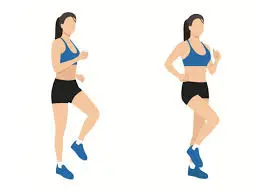
The standing march is a straightforward yet powerful exercise that strengthens the core, hip flexors, and gluteal muscles while enhancing balance and coordination. Stand tall, place your feet hip-width apart, and contract your core to complete this exercise.
Mimic a marching action by slowly raising one knee to hip level toward your chest, pausing briefly, then lowering it back down and repeating with the other leg. Maintain your controlled leg alternation. This exercise is perfect for treating and preventing gluteal pain since it improves hip mobility, strengthens the glutes, and encourages better posture and stability.
Conclusion:
Daily activities and general mobility can be greatly impacted by gluteal pain, but certain workouts can help reduce pain and regain strength. Stretching and strengthening exercises, such the piriformis stretch, glute bridge, and clamshells, enhance hip stability, muscle balance, and flexibility.
Regularly performing these exercises improves blood flow, eases tense muscles, and guards against further pain or injuries. You may enhance your posture, movement efficiency, and general lower-body function by spending a few minutes a day on these gluteal pain exercises.
FAQs:
Are bridges beneficial for the glutes?
But if we’re working within the right range of intensity, this exercise will strengthen and activate your posterior muscles. Glute bridges are frequently utilized in pelvic floor therapy and can even target the pelvic floor when adapted appropriately.
Which stretch is ideal for the gluteus medius?
Pull both knees toward your chest while lying on your back. As you stretch the opposing leg, keep one foot on the ground. The bent knee’s ankle should be crossed over the opposing thigh. Pull the uncrossed leg gently toward your chest until the crossed leg’s glute stretches.
Can glute pain be caused by tight hip flexors?
Both literally and figuratively, tight hip flexors can be a royal pain in the butt. They may be a factor in hip, knee, butt, back, and other pain. They affect how a significant portion of the body moves since they extend from the top portion of the lower back to below the knee.
What symptoms indicate piriformis syndrome?
Symptoms of piriformis syndrome typically include: A dull buttock pain. Sciatica, or pain down the back of the thigh, leg, and foot pain when climbing hills or stairs.
Which is better for relieving pain: heat or ice?
For acute injuries, such as sprains or strains that are less than two weeks old, use ice to reduce swelling and inflammation; for chronic pain, such as arthritis or stiff muscles, use heat to relax tissues and promote blood flow. Apply ice to acute injuries many times a day for 15 to 20 minutes at a time. Use heat prior to exercise to increase flexibility and warm up muscles if you have chronic pain.
How can someone with gluteal pain sit?
You can significantly lessen (and prevent) buttock pain by changing the way you sit. When you’re sitting, an office chair with an adjustable tilt option might assist ease the strain on your glutes.
Does walking too much result in buttock pain?
The piriformis muscle may become so inflamed from injuries or overuse that it presses against the sciatic nerve. Sciatica, a pain that travels from your buttocks down the back of your leg, can be caused by this pressure. Walking upstairs, running, or sitting may worsen the pain.
Which workout is best for the glutes?
When performing lower body workouts, using a resistance band can help target your hip and gluteal muscles and enhance your proprioception, or feeling of body position. Combine banded side steps with another lower body exercise, such as lunges or squats, for a deep burn in the glutes.
Which workouts should I stay away from if I have gluteal pain?
For the treatment of gluteal tendinopathy, the clam and side leg lift movements are frequently recommended. However, because they strain and compress the tendons, they frequently make your pain worse in the early stages.
Sciatica is caused by which vitamin deficiency?
Sciatic nerve pain may be worsen by certain dietary deficits, such as those in magnesium, vitamin B12, and vitamin D.
What time of day is ideal for working out?
The greatest strategy to burn stored fat is to work out in the morning, especially if you work out on an empty stomach. Exercise on an empty stomach may burn up to 20% more body fat, according to research. Additionally, you have higher levels of growth hormone and cortisol in the morning.
Can I perform glute workouts on a daily basis?
Your glutes require 24 to 48 hours to recuperate and rebuild, so you shouldn’t train them every day for muscle growth. For most people, the best way to build muscle is to train the glutes two to three times a week, emphasizing progressive overload with recovery days in between. If you do want to work out every day, stick to low-volume, low-intensity bodyweight or resistance band activities to increase blood flow and activation without harming your body. However, avoid of hard, strenuous workouts on consecutive days.
What symptoms indicate a weak glute?
Weak glutes can cause problems getting out of a chair, lower back, hip, or knee pain, an irregular gait (such as hip dropping to the side), and bad posture. Weakness can also show itself as a “numb bum” feeling, stiffness after extended sitting, and a lack of strength when performing tasks like climbing stairs.
Is walking beneficial for pain in the glutes?
Your hip might not be able to handle much walking in the early phases of your recuperation. However, as you heal, walking can help strengthen your gluteal tendons’ ability to support weight and get them ready to resume running. Walking can help your gluteal tendons get ready to resume running.
What pressure point causes soreness in the buttocks?
The only trigger sites that specifically refer pain to the gluteal area are the gluteus maximus. Both the gluteal and low back regions are affected by trigger points in the quadratus lumborum and gluteus medius muscles.
How may glute pain be swiftly relieved?
One of the best methods for easing gluteal muscle pain and tightness is stretching. The deep muscles of the buttocks are targeted by some stretches, such the piriformis stretch or pigeon stance. These stretches release pressure on the sciatic nerve, increase flexibility, and ease tense muscles.
References:
- O’Leary, K. (2025, July 3). 7 best glute strengthening exercises | Physio Pro Guide. Physio Pro. https://www.physioproperth.com.au/7-best-glute-strengthening-exercises/
- Nunez, K. (2025, April 9). 7 easy ways to stretch tight glutes. Healthline. https://www.healthline.com/health/exercise-fitness/how-to-stretch-glutes
- Clinic, C. (2022, July 1). 7 Best stretches and exercises for Piriformis Syndrome. Cleveland Clinic. https://health.clevelandclinic.org/piriformis-syndrome-stretches-exercises
- Dumain, T. (2023, June 2). How to relieve buttock pain: 7 exercises to try. CreakyJoints. https://creakyjoints.org/diet-exercise/buttock-pain-exercises/
- Lateral Step-Ups. (n.d.). [Video]. Hingehealth. https://www.hingehealth.com/resources/articles/glute-strengthening-exercises/
- CreakyStaff. (2020, October 26). How to relieve buttock pain: 7 Exercises to try – CreakyJoints Australia. CreakyJoints Australia. https://creakyjoints.org.au/living-with-arthritis/how-to-relieve-buttock-pain-7-exercises-to-try/