Morton’s Neuroma
What is a Morton’s Neuroma
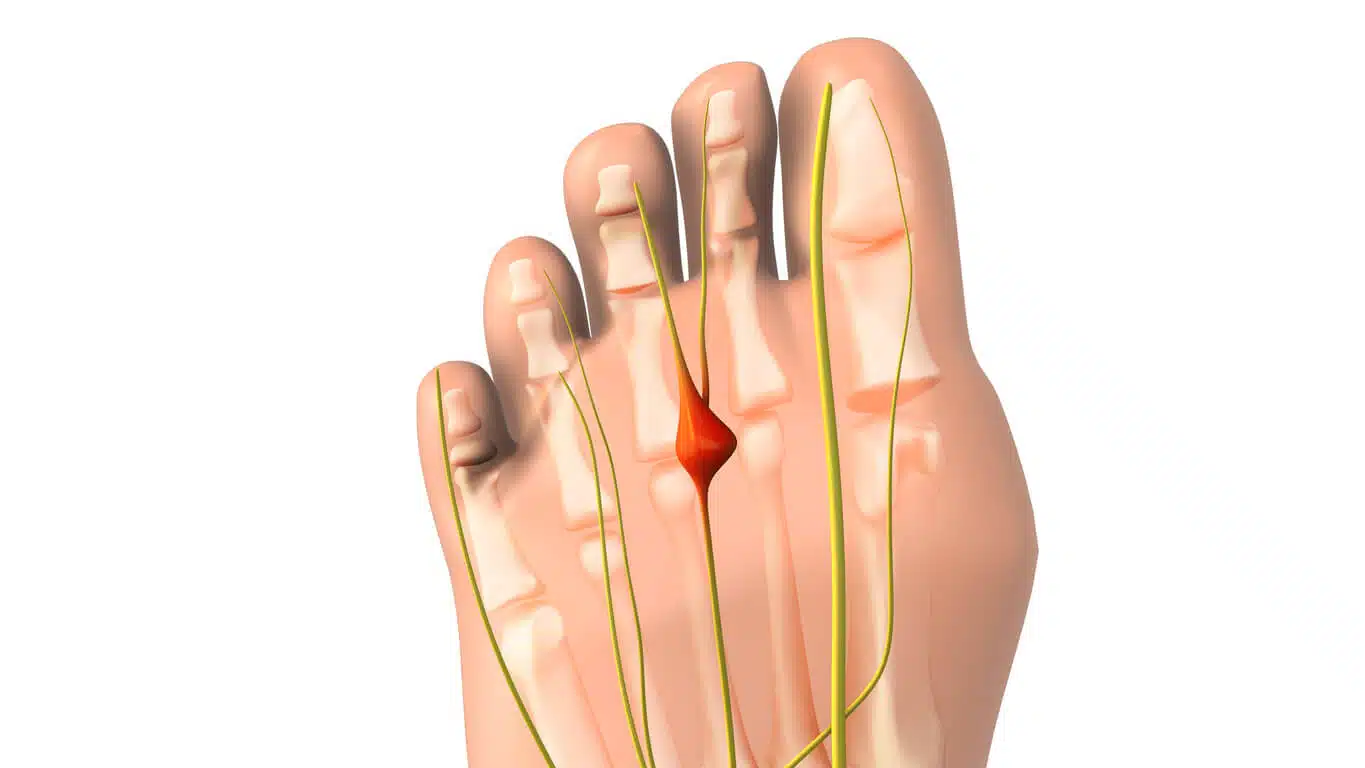
A Morton’s neuroma is inflammation of a nerve in the foot. More precisely, it is an expansion of the interdigital nerves that link the patient’s foot to their third and fourth toes (the middle toes closest to your pinky toe). Morton’s neuromas are also known as intermetatarsal neuromas or interdigital neuromas by some medical professionals.
Morton’s neuroma is characterized by swelling and swelling of the affected nerve. This might make it difficult or uncomfortable to walk. You will normally experience pain on the ball of your foot, between your toes. It may feel as if there is a stone in your shoe or you are walking on marble.
Seek medical attention as soon as you discover any new pain or swelling in your feet. Treatment for Morton’s neuroma is critical. If left untreated, the neuroma can grow and cause lasting nerve damage.
Is Morton’s neuroma a tumor?
The term “neuroma” in Morton’s neuroma is rather misleading. Neuromas are benign (non-cancerous) tumors that develop on nerves throughout the body. They develop more nerve tissue alongside your healthy normal nerve.
A Morton’s neuroma is not new tissue that develops on a nerve in your foot. It’s not actually a tumor. Instead, your current nerve tissue expands and thickens. Morton’s neuromas are not indicative of a tumor. They also do not cause cancer.
Symptoms of Morton’s Neuroma
Morton’s neuroma produces discomfort and pain in the ball of the foot. The ball is a cushioned region on the bottom of the foot between the toes and arch. The pain usually occurs behind and between the third and fourth toes.
The ache is commonly characterized as:
- Stabbing, shooting, or searing pain in the ball of the foot.
- Feeling as if I’m walking on marble or stone.
- Pain worsens with exercise.
- Pain, pins and needles sensation, tingling, or numbness in two neighboring toes.
- Pain when extending the toes.
- A clicking feeling in the forefoot.
Causes of Morton’s Neuroma
The etiology of Morton’s neuroma is unknown. Pressure on the affected nerve part may cause injury and expansion of the nerve.
The damaged nerve is located between two long bones in the forefoot known as the metatarsals. Typically, the injured and swollen nerve is located between the metatarsal bones, which connect to the bones of the third and fourth toe. Nerves that connect the other metatarsal bones may also be impacted.
Factors that typically exacerbate symptoms of Morton neuroma include:
- High-heeled or thin shoes. High-heeled shoes or shoes with limited toe boxes can increase pressure on the toes and ball of the foot.
- Activities. Walking, running, and other activities that apply pressure on the ball of the foot might worsen or cause pain.
Risk factors of Morton’s Neuroma
- High heels. Wearing high-heeled or tight shoes might increase strain on the patient’s toes and ball of the foot.
- Certain sports. High-impact sporting activities, such as jogging or running, can cause recurrent harm to the feet. Sports using tight shoes, such as snow skiing or rock climbing, can exert strain on your toes.
- Foot malformations. People with bunions, hammertoes, high arches, or flat feet are more likely to develop Morton neuroma.
How To Diagnose Morton’s Neuroma
- The diagnosis of Morton’s neuroma might be complicated. Diagnosing Morton’s Neuroma includes:
- A thorough physical exam conducted by a professional.
- Imaging studies, such as ultrasonography or MRI, can help rule out alternative illnesses.
- The gold standard for identifying Morton’s neuroma is an ultrasound-guided local anesthetic injection. Early diagnosis is critical for preventing the illness from getting worse.
Treatment of Morton’s Neuroma
Your healthcare professional will provide therapies to alleviate your symptoms and minimize inflammation in the affected nerve.
The most prevalent Morton’s neuroma therapies are:
- Footwear changes: Changing to shoes with broad, deep toe boxes helps relieve pressure on the affected nerve. You may be able to expand your patient’s existing shoes using stretching equipment.
- Shoe pads: Over-the-counter (OTC) shoe pads help to ease strain on your nerves.
- Orthotic devices are shoe inserts that support your feet and maintain your toes in proper posture. patient may require over-the-counter orthotics or custom-made inserts.
- Pain remedies include nonsteroidal anti-inflammatory medicines (NSAIDs), which lessen pain and swelling. Do not use NSAIDs for more than ten days in a row without consulting your doctor.
- Icing: Applying ice or cold packs to the injured foot might help alleviate pain and inflammation. Wrap a cold pack in a small towel to prevent it from being placed directly on your skin.
- Corticosteroids are prescription drugs used to decrease inflammation. You may require cortisone injections.
Morton’s neuroma surgery
Most people do not require surgery to treat Morton’s neuroma. If alternative therapies are ineffective or walking activity is excruciatingly painful, your doctor may propose surgery tratment. Your physician or surgeon will explain the sort of operation you will require and what you may expect.
The most popular surgical methods are:
A neurectomy is the most frequent procedure for Morton’s neuroma.
Cryogenic neuroablation: Your surgeon will use severe cold to eliminate a certain number of nerve cells. This will minimize nerve irritation and sensitivity.
Radiofrequency ablation is a technique that uses an electrical current to destroy a small portion of your damaged nerve tissue. This stops pain signals from being sent back to the brain.
Prevention of Morton’s Neuroma:
You may take actions to avoid a Morton’s neuroma:
- Avoid wearing tight or high-heeled shoes for extended periods of time.
- Wear shoes with a broad toe box to prevent your toes from becoming cramped or squeezed out of position.
- When you’re more active, wear sports shoes with plenty of cushioning to protect the balls of your feet.
- Try lower-impact workouts, or consult with a coach or trainer to modify activities that place less strain on the patient’s feet.
- Follow a healthy diet and workout routine.
FAQs
Does Morton’s neuroma ever go away?
No, Morton’s neuromas do not go away on their own, and they cannot be fixed. If you have Morton’s neuroma symptoms, consult a healthcare physician or a podiatrist. They will diagnose it and provide therapies to alleviate your pain.
Is walking useful for foot neuromas?
Certain high-impact sports, such as jogging, court sports like tennis, and even lengthy walks, can increase your neuroma symptoms, so mixing things up and partaking in softer activities that don’t stress your feet can be really beneficial.
What foods should the patient avoid with Morton’s neuroma?
Sugary diets are known to cause inflammation throughout the body, exacerbating illnesses such as Morton’s neuroma. Limiting sweets, sugary beverages, processed snacks, and added sugars is critical for reducing inflammation.
What will happen if a Morton’s neuroma goes untreated?
What happens if Morton’s neuroma remains untreated? Morton’s neuroma is very easy to cure and control, although it can cause long-term mild to moderate difficulties. These might include pain in the ball of the foot, numbness in the toes, and a persistent sensation that something is trapped in your shoe.
At what age do you develop Morton’s neuroma?
People between the ages of 35 and 60 are more likely to acquire this disorder, but it can occur at any age and affects more women than men. It occurs as a result of inflammation and thickening in the nerves that feed the patient’s toes, causing pain and numbness. Self-care is typically the first step in treating Morton’s neuroma.
References
- Morton’s Neuroma. (2026, April 24). Cleveland Clinic. https://my.clevelandclinic.org/health/diseases/15118-mortons-neuroma
- Mayo Clinic Staff. (2025). Morton neuroma – Symptoms and causes. Mayo Clinic. https://www.mayoclinic.org/diseases-conditions/mortons-neuroma/symptoms-causes/syc-20351935
- Mortons. (2026, May 20). About Morton’s Neuroma – The Center for Morton’s Neuroma. The Center for Morton’s Neuroma. https://www.mortonsneuroma.com/mortons-neuroma/