Lumbopelvic Stabilization Exercises
Introduction:
Strengthening the muscles that support the lower back, pelvis, and core is the main goal of lumbopelvic stabilization exercises. The goal of these exercises is to improve the lumbopelvic region’s stability, balance, and control—all of which are critical for good posture and effective movement.
These exercises assist lessen the risk of lower back pain, enhance functional performance, and encourage better alignment during daily activities and exercise by strengthening the deep stabilizing muscles, such as the transverse abdominis, multifidus, and pelvic floor.
Benefits of Lumbopelvic Stabilization Exercises:
Exercises for lumbopelvic stabilization have several advantages for both spinal health and general body function. They provide a strong base for all kinds of activity by strengthening and stabilizing the core.
These exercises lessen the chance of injury and lower back pain by improving coordination between the lower back, hips, and abdominal muscles. Additionally, they encourage improved body alignment, balance, and posture all of which are essential for daily activities and sports performance. Strong lumbopelvic muscles also enhance general functional mobility, lessen spinal strain, and support effective movement patterns.
Lumbopelvic Stabilization Exercises Video:
Lumbopelvic Stabilization Exercises:
Dead Bug Exercise:
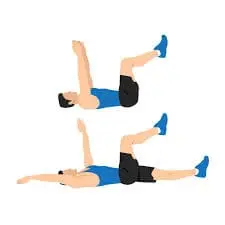
Targeting the deep abdominal muscles and reducing lower back tension, the dead bug exercise is a powerful core stabilization exercise. Keeping your lower back pressed into the ground, slowly lower one arm and the opposing leg toward the floor.
Then, return to the beginning position and repeat on the opposite side. This regulated action is a great way to build a strong and supporting core since it enhances balance, coordination, and lumbopelvic stability.
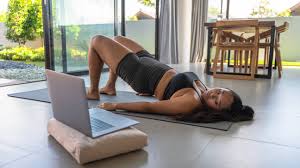
Glute Bridge:
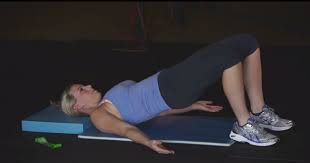
The glute bridge is a potent exercise that improves lumbopelvic stability and strengthens the lower back, hamstrings, and glutes. To raise your hips off the ground and create a straight line from your shoulders to your knees, contract your core and push through your heels.
After a few seconds of holding the pose, gradually bring your hips back down. This exercise supports appropriate spine alignment during movement, enhances hip mobility, and activates the posterior chain.
Bird Dog Exercise:
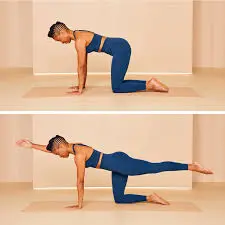
The bird dog exercise works the lower back, glutes, and abdominal muscles while developing and stabilizing the core. Start in a tabletop position on your hands and knees, maintaining a neutral spine. While keeping your balance and control, simultaneously extend your left leg backward and your right arm forward.
After a brief interval of holding, carefully return to the beginning position and switch sides. In addition to encouraging good posture and lessening lower back strain, this exercise improves coordination, balance, and lumbopelvic stability.
Side Plank:
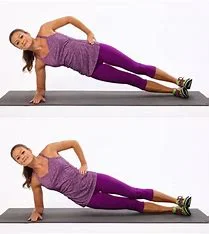
A great exercise for stabilizing the core, the side plank works the obliques, shoulders, hips, and lower back. To do this, lie on your side with your elbow right under your shoulder and your legs straight. Make a straight line from your head to your feet by using your core to raise your hips off the floor.
Maintain your body’s stability and prevent any hip sagging as you hold the position. The side plank promotes better posture and spinal alignment, strengthens the lateral core, and increases lumbopelvic stability.
Heel Slides:
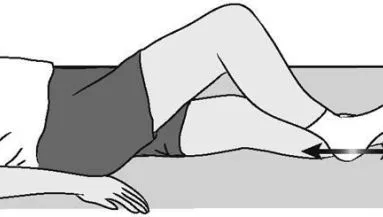
Heel slides are a mild yet powerful exercise that enhances lumbopelvic control and strengthens the core. This exercise involves lying on your back with your feet flat on the floor and your knees bent. Keeping your lower back in contact with the floor, gradually pull one heel away from your body until your leg is nearly straight by using your abdominal muscles to stabilize your spine.
Repeat on the opposite side after sliding the heel back to the beginning position. Heel slides maintain healthy spinal alignment, encourage pelvic stability, and improve core-lower body synergy.
Wall Sits:
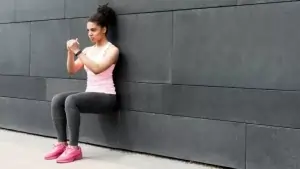
Wall sits are a great isometric exercise that improves lumbopelvic stability and develops the quadriceps, glutes, and core. They are performed by sliding down until your knees are bent at a 90-degree angle, as if you were sitting on a phantom chair, while standing with your back against a wall.
Throughout the hold, keep your core active and your back flat on the wall. After holding the pose for 20 to 60 seconds, gradually get back up on your feet. Wall sits provide greater alignment and stability in the spine and pelvis, enhance posture, and increase lower body endurance.
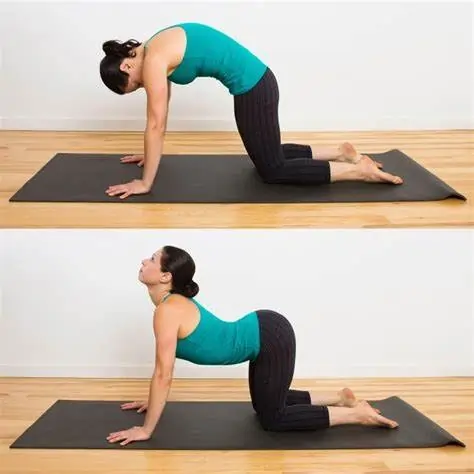
Cat-Cow Stretch:
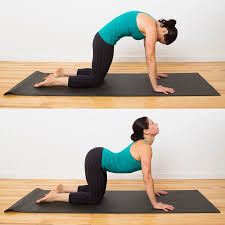
The cat-cow stretch is a soft, flowing exercise that enhances lumbopelvic stability and increases spinal flexibility and mobility. Start on your hands and knees on a tabletop to execute it. Take a breath as you lower your tummy, raise your head and tailbone, and arch your back into the “cow” position. Breathe out as you tuck your pelvis and chin into the “cat” position and turn your spine toward the ceiling. Keep switching between these two positions at a leisurely pace. This stretch promotes spinal alignment, eases back stress, and increases pelvic and spinal synergy.
Straight Leg Raises:
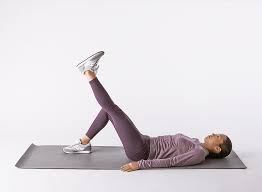
A quick and easy way to develop your quadriceps, hip flexors, and core muscles is to perform straight leg lifts. This exercise involves lying flat on your back with one leg bent and the other straight.
With your back flat against the floor and your core tight, slowly raise the straight leg to the height of the bent knee. After a few seconds of holding, carefully lower it back down. This exercise supports optimal posture when standing and walking, strengthens the lower body, and enhances hip stability.
Resistance Band Lateral Walks:

The hip abductors, glutes, and outer thighs—all of which are vital for stabilizing the pelvis and knees—can be strengthened with resistance band lateral walks. Put a tension band around your thighs or slightly above your ankles, bend your knees slightly, and maintain a straight back to complete this exercise.
Controllably step sideways while keeping the band’s tension constant. Before swapping sides, keep moving in the same direction for a few repetitions. In addition to increasing lower body strength and hip stability, this exercise lowers the incidence of hip and knee injuries.
Clamshells:
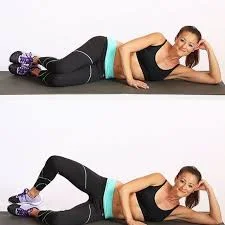
The gluteus medius and hip stabilizing muscles can be strengthened with clamshell exercises. This exercise involves lying on your side with your feet together and your knees bent at a 90-degree angle. Without turning your hips or pelvis, slowly raise your upper knee as high as you can while maintaining contact between your feet.
After a little pause at the peak, carefully lower your knee back down. Walking, running, and other lower-body exercises benefit from improved hip strength, pelvic stability, and improved movement mechanics.
Conclusion:
Exercises for lumbopelvic stability are essential for improving balance, core strength, and general body alignment. These exercises help lower the risk of back pain, enhance posture, and encourage effective movement patterns by strengthening the coordination between the lumbar spine, pelvis, and surrounding muscles.
Regularly performing stability exercises like the dead bug, glute bridge, bird dog, and side plank will greatly improve everyday functional strength and athletic performance while also strengthening and strengthening the spine.
FAQs:
If you have lumbar spinal stenosis, what activities should you avoid?
If cycling is a part of your exercise regimen and you have been diagnosed with lumbar stenosis, be aware that you should avoid riding on uneven or mountainous terrain. Running, jumping, and climbing are additional high-impact activities that you should stay away from.
Which exercises are examples of lumbar stabilization?
Basic exercises for lumbar stability include pelvic tilts, bridges, and bird-dogs; more complex exercises include side or forearm planks and opposite arm/leg lifts. In order to increase lower spine stability, these workouts concentrate on strengthening the back and abdominal core muscles.
Which workouts are beneficial for the lumbopelvic rhythm?
Modified side bridges and side planks. To manage excessive lumbar mobility, resisted band rotations are used. Flexibility & Myofascial Release Work Hip flexors, hamstrings, and lumbar muscles can be stretched and rolled using foam.
For whom should spinal decompression be avoided?
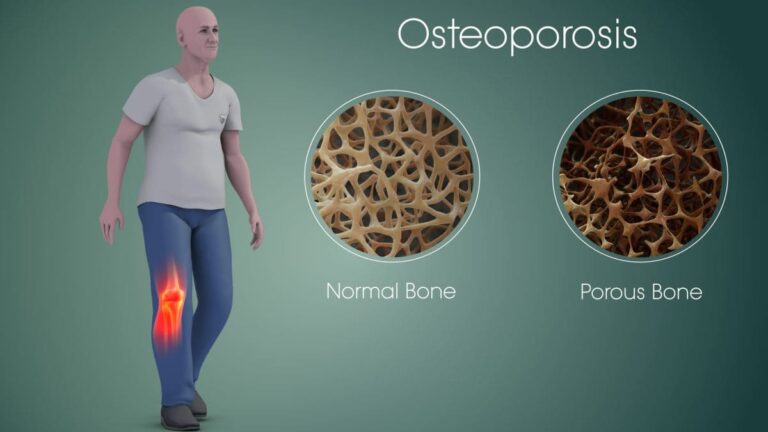
Not Fit for Everyone: Spinal decompression therapy may not be appropriate for people with osteoporosis, fractures, spinal implants, or blood clotting issues. On the other hand, if you are a good candidate, invasive procedures won’t be necessary to provide you with significant pain relief.
Which sleeping posture is ideal for decompression?
Proper Sleeping Positions
The flexed hip posture is the ideal sleeping position for decompressing your spine. Flex your hips at a 30-degree angle while lying on your side in bed to achieve this position. Next, make another 30-degree bend in your knees.
How can L4 and L5 be healed the quickest?
Speaking with a back pain specialist will cure the issue more quickly and efficiently than speculating. Physical therapy, medication-based pain management techniques, and heat and ice therapy are examples of possible treatments.
Can L4-L5 disc bulging be cured with exercise?
A low-back disc herniation is usually curable and doesn’t need surgery. Pain from a L4-L5 disc herniation can be reduced with core-strengthening workouts that target the hip, back, and abdominal muscles.
Lumbo pelvic exercise: what is it?
The capacity to independently manipulate the hip and low back joints is known as “lumbo-pelvic control.” These motions come easily and naturally to some people. Others find it difficult to distinguish between hip and back movements. They will therefore use their back in addition to their hip joints.
Which exercises help with lumbopelvic dissociation?
On a stability ball, sit up straight. With your knees and hips bent at a 90-degree angle, place your feet flat on the ground. Pull your shoulder blades back and down while gently contracting your stomach muscle. Tilt your pelvis in circles, forward and backward, and side to side.
Which three core stability exercises are the most important?
The bird dog, side plank, and modified curl-up are the three exercises. Each exercise helps to increase stability and lessen pain by focusing on particular muscles in your back and core. However, the McGill Big 3’s advantages go beyond relieving back pain.
What is lumbopelvic stabilization?
The ability to regulate the mobility of the pelvis and lumbar spine in relation to a neutral position, guaranteeing ideal alignment and load distribution, is known as lumbo pelvic stability (LPS). Coordinated muscle activation, passive structures (ligaments, joint capsules), and neuromuscular control are necessary for effective LPS.
Exercises for lumbar stabilization: what are they?
Basic exercises for lumbar stability include pelvic tilts, bridges, and bird-dogs; more complex exercises include side or forearm planks and opposite arm/leg lifts. In order to increase lower spine stability, these workouts concentrate on strengthening the back and abdominal core muscles.
References:
- Menzies, R. (2022, October 26). What Are Lumbar Stabilization Exercises? Healthline. https://www.healthline.com/health/lumbar-stabilization-exercises
- Medicine, A. (n.d.). Lumbar/Core strength and stability exercises. In Athletic Medicine. https://www.vertibono.com/pdfs/lumbar.pdf
- Paungmali, A., Joseph, L. H., Sitilertpisan, P., Pirunsan, U., & Uthaikhup, S. (2017). Lumbopelvic Core Stabilization Exercise and Pain Modulation Among Individuals with Chronic Nonspecific Low Back Pain. Pain Practice, 17(8), 1008–1014. https://doi.org/10.1111/papr.12552
- Lumbopelvic stabilization Exercises and McKenzie Method in low back pain due to disc protrusion: a blind Randomized Clinical Trial – MLTJ. (n.d.). https://www.mltj.online/lumbopelvic-stabilization-exercises-and-mckenzie-method-in-low-back-pain-due-to-disc-protrusion-a-blind-randomized-clinical-trial/
- Paungmali, A., Joseph, L. H., Sitilertpisan, P., Pirunsan, U., & Uthaikhup, S. (2017b). Lumbopelvic Core Stabilization Exercise and Pain Modulation Among Individuals with Chronic Nonspecific Low Back Pain. Pain Practice, 17(8), 1008–1014. https://doi.org/10.1111/papr.12552