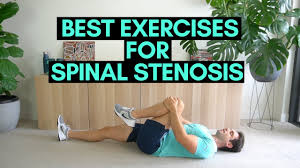
Best Exercises for Lower Back Spinal Stenosis
Introduction:
Lower back spinal stenosis happens when the gaps within your spine get narrower, putting pressure on the nerves and producing pain, stiffness, or numbness. Incorporating focused exercises can help relieve the pain, increase flexibility, and support the spine naturally.
These exercises are designed to improve mobility, strengthen supporting muscles, and relieve nerve constriction so you can move more confidently and easily.
Benefits of Exercises for Lower Back Spinal Stenosis:
Exercises for lower back spinal stenosis can help lessen pain, lower nerve pressure, and enhance general spinal function. These exercises strengthen the core and supporting muscles, improve posture to stop symptoms from getting worse, and increase flexibility in the hips and lower back.
Additionally, exercise improves blood flow to the spine, lessens stiffness, and promotes improved mobility and balance, enabling you to carry out daily tasks more comfortably and confidently.
Best Exercises for Lower Back Spinal Stenosis Video:
Best Exercises for Lower Back Spinal Stenosis:
Child’s Pose:
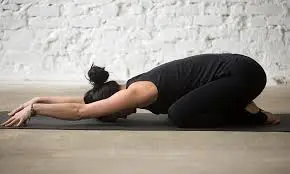
Child’s Pose is a mild stretching exercise that relieves pressure from spinal stenosis by opening up the lower back, hips, and spine. This pose eases stress in the lumbar area and encourages muscle relaxation by letting the spine naturally round.
It is a great workout for reducing lower back pain and stiffness because it also increases flexibility, soothes the nervous system, and promotes deep breathing.
Knee-to-Chest Stretch:
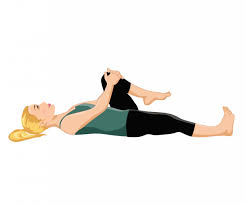
The knee-to-chest stretch might lessen nerve compression caused by spinal stenosis by gently lengthening the lower back muscles and making room in the lumbar spine. This exercise improves spinal mobility while releasing tension in the glutes, hips, and lower back.
It is a useful workout for reducing soreness and increasing general flexibility since it also improves circulation to the lumbar region and helps reduce stiffness.
Cat-Cow Stretch:
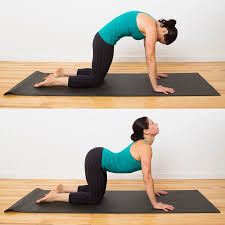
The Cat-Cow Stretch is a fluid, flowing exercise that helps loosen up the spine and ease lower back pain. This exercise enhances circulation in the lumbar area, increases flexibility, and gently decompresses the spinal joints by alternating between arching and rounding the back.
It is particularly beneficial for easing the pain caused by spinal stenosis because it also improves posture, eases tense muscles, and promotes improved control of spinal movement.
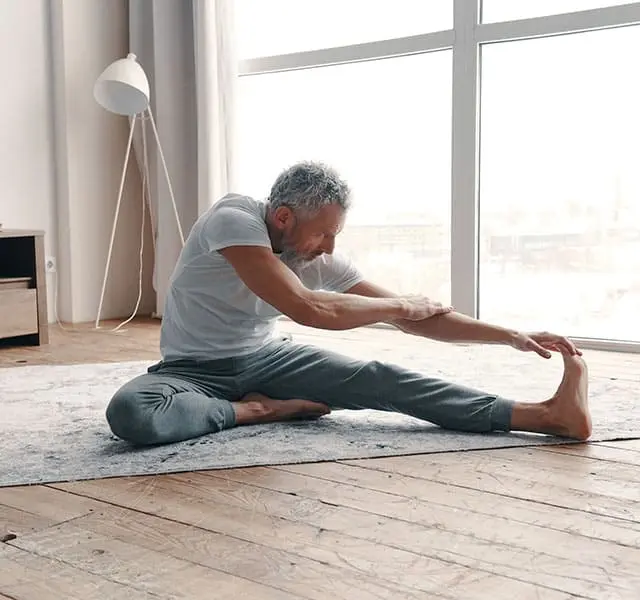
Seated Forward Bend:
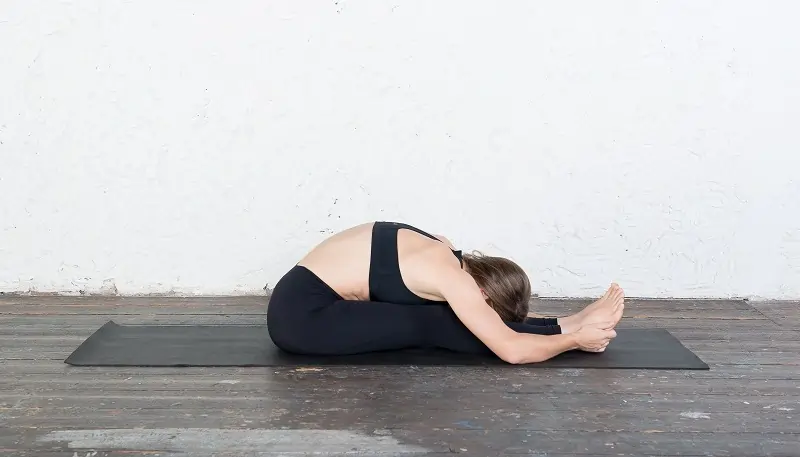
The Seated Forward Bend helps relieve strain on the lumbar spine by gently stretching the hips, hamstrings, and lower back. This exercise can lessen nerve compression and ease the stiffness frequently associated with spinal stenosis by allowing the spine to naturally extend and fold forward.
It is a useful exercise for reducing lower back pain since it also develops improved spinal alignment, increases posterior chain flexibility, and promotes relaxation.
Bird Dog Exercise:
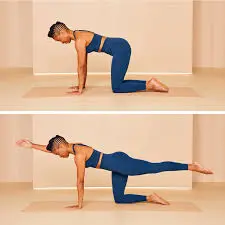
The Bird Dog exercise improves the strength of the hip, lower back, and core muscles—all of which are vital for supporting the spine and lowering pressure from spinal stenosis. This exercise improves balance, strengthens spinal stability, and encourages good posture by extending opposing arms and legs while keeping a neutral, stable spine.
It is a useful exercise for controlling the symptoms of spinal stenosis since it also promotes regulated movement, improves muscular endurance, and lessens lower back stiffness.
Bridge Pose:
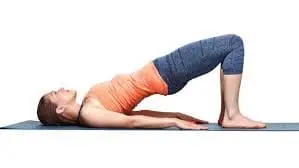
Strengthening the glutes, hamstrings, and lower back muscles—all of which support the lumbar spine and lessen pressure from spinal stenosis—is possible with Bridge Pose. This exercise produces a mild spinal extension by raising the hips, which can reduce nerve compression and increase range of motion.
It is a useful exercise for easing stiffness and soreness because it also improves core stability, encourages improved posture, and boosts circulation to the lower back.
Straight Leg Raises:
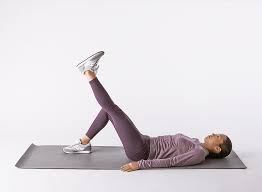
Without placing undue strain on the lower back, straight leg lifts develop the quadriceps, hip flexors, and core muscles. This exercise promotes improved lumbar alignment and lessens the pressure that worsens the symptoms of spinal stenosis by maintaining the spine stable while lifting the leg.
It is a helpful exercise for reducing lower back pain since it also increases stability, maintains mobility, and improves lower-body control.
Side Bends:
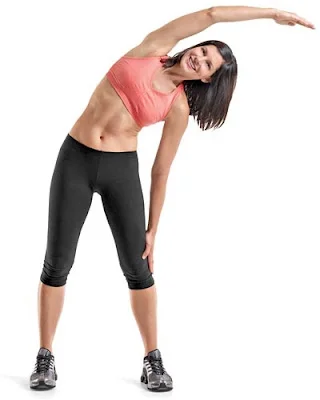
Side bends relieve tension that may be causing pain from spinal stenosis by stretching and lengthening the muscles along the sides of the lower back and torso. The vertebrae can move more freely as a result of this movement, which also enhances lateral mobility and spinal flexibility.
It is a mild yet efficient exercise for relieving lower back pain because it also improves posture, increases core activation, and lessens stiffness.
Conclusion:
By reducing nerve pressure, increasing flexibility, and strengthening the muscles that support your spine, incorporating these focused workouts into your regimen can greatly aid in the management of lower back spinal stenosis.
It’s important to be consistent because doing these exercises on a regular basis can increase your mobility, lessen pain, and boost your general quality of life. Always pay attention to your body, take your time, and see a doctor if your symptoms get worse or if you require specific advice.
FAQs:
What is the most recent spinal stenosis treatment?
Endoscopic spine surgery and the insertion of interspinous spacers, which decompress the nerves, are two less intrusive methods of treating spinal stenosis. Stem cell therapy and novel surgical equipment that can remove bone without making major incisions, such as ultrasonic instruments, are other potential possibilities that are being investigated.
What causes spinal stenosis to irritate?
When the area surrounding your spinal cord gets too small, you have spinal stenosis. Your spinal cord and/or the nerves that emerge from it are irritated by this. Symptoms of spinal stenosis include tingling in your arms or legs and pain in your neck or back.
How fast does stenosis develop?
In actuality, spinal stenosis usually advances gradually over time, frequently taking years to manifest noticeable symptoms. In many instances, the condition may either stay stable or very slightly deteriorate. However, a number of unique characteristics can affect how quickly things move.
How can stenosis be prevented from getting worse?
Early treatment of symptoms is the best defense against the advancement of spinal stenosis and is crucial to the prevention of spinal stenosis in general. Frequent exercise is essential, particularly low-impact activities like cycling, swimming, or walking, which increase flexibility and strengthen the muscles supporting the spine.
How can someone with spinal stenosis lose belly fat?
Regular water exercise can be a very successful strategy for managing weight and reducing belly fat in people with spinal stenosis.
Which exercises are recommended for people with spinal stenosis at home?
Bend your knees, place your feet on the ground, and keep your arms at your sides while lying on your back. Tighten the muscles in your stomach as you slowly press the small of your back onto the ground. After ten seconds of holding the pose, go back to where you were. As your lower back reaches the floor, tilt your pelvis naturally ten times.
Is magnesium beneficial for spinal stenosis?
Supplementing with magnesium may help reduce spinal stenosis-related muscle spasms, stress, and back pain.
What non-surgical treatments are available for spinal stenosis?
Heat, massage, acupuncture, and meditation are some of these. Another option is transcutaneous electrical nerve stimulation, or TENS, which stimulates the body’s natural painkillers, endorphins, by using a low-voltage electrical current.
Which sleeping posture is ideal for those with stenosis?
Fetal position
Because it creates room between vertebrae, this curled-up position can help people with spinal stenosis or herniated discs. How to perform it: Gently bring your knees to your chest while lying on your side. Use a cushion to support your neck.
If I have spinal stenosis, which workouts should I avoid?
Exercises that place additional strain on the spine should be avoided if you have been diagnosed with spinal stenosis. Running, jumping, contact sports, and back extensions fall within this category. These motions could worsen your pain and hasten the degenerative process.
How can lower back spinal stenosis be treated?
Lower back spinal stenosis can be treated conservatively or surgically, with the first line of treatment being non-surgical methods like physical therapy, painkillers, and steroid injections. Surgical procedures such laminectomy or spinal fusion may be taken into consideration if they are futile, particularly for severe symptoms like progressive weakening.
What should a person with spinal stenosis do in the morning?
Use a pillow: You can lessen morning pain and support your spine by using a pillow. Take your time getting up because doing so may make your muscles stiff and worsen your pain. Avoid abrupt movements and try to get out of bed slowly. Avoid coffee: Morning pain can be worsened by caffeine.
Can diarrhea be caused by spinal stenosis?
Constipation, diarrhea, bloating, gas, and bladder problems can be caused by problems in the sacrum and lower spine. Interference directly affects the digestive system since the lower spine contains sympathetic and parasympathetic nerves that are directly connected to the digestive system.
References:
- 5 easy spinal stenosis exercises | Hackensack Meridian Health. (2023, December 28). https://www.hackensackmeridianhealth.org/en/healthu/2023/12/28/5-easy-spinal-stenosis-exercises
- Back exercises in 15 minutes a day. (n.d.-b). Mayo Clinic. https://www.mayoclinic.org/healthy-lifestyle/adult-health/in-depth/back-pain/art-20546859
- Pt, B. S. (2025a, April 10). 10 Spinal stenosis exercises to reduce pain and improve flexibility. Verywell Health. https://www.verywellhealth.com/exercise-program-for-spinal-stenosis-2696100
- Rowden, A. (2025, October 22). What to know about exercises for spinal stenosis. https://www.medicalnewstoday.com/articles/spinal-stenosis-exercises
- Cooper, G., MD. (2025, February 18). Exercises for Lumbar Spinal Stenosis. Spine-health. https://www.spine-health.com/conditions/spinal-stenosis/exercises-lumbar-spinal-stenosis