Neck Mobility Exercises During Work Breaks
Introduction:
One of the most common health issues among office workers is neck pain. Excessive tension on the neck muscles and cervical spine can result from prolonged desk work, looking at computer screens, and bad posture. Stiffness, discomfort, headaches, decreased mobility, and even chronic pain can result from this over time.
Fortunately, easy neck pain management techniques can help ease tension, enhance posture, and avoid long-term issues. The top ten neck pain relief exercises for office workers will be discussed in this post, along with how they may keep you comfortable and productive all day.
What is neck mobility and why does it matter?
The capacity to move your head and neck comfortably over a full range of motion, such as turning side to side, tilting your ear toward your shoulder, and nodding up and down without experiencing pain or stiffness, is known as neck mobility. Your joints move smoothly, your muscles remain relaxed, and your posture generally gets better when your neck is mobile.
If you’re wondering how flexible your neck should be, it should be able to tilt about 45 degrees from ear to shoulder, rotate from 70 to 90 degrees to either side, and nod without exertion.
Staring at a laptop or phone for extended periods of time can stiffen the joints around your neck and upper back and tighten the muscles that support your head. Office workers, IT specialists, and anyone who spends a lot of time in front of a screen are particularly likely to experience this. Modern therapeutic guidelines for neck pain urge regular, gentle movement as a way to relax the muscles and support these joints.
Maintaining neck mobility is essential for both prevention and rehabilitation from neck pain, which is a relatively prevalent issue. You are less prone to suffering from pain, stiffness, or the heavy, achy sensations that frequently accompany desk jobs while your neck remains mobile. Clinical guidelines constantly urge doing gentle neck mobility exercises throughout the day rather than one strong stretch.
What causes neck stiffness?
Long hours of screen time:
Your chin gradually moves forward as your laptop and phone draw your focus downward. Your muscles are strained, and your joints are constricted in this tech neck posture, which also puts tension on the back of your neck and upper shoulders. Even small shifts in head posture build up over the course of a working day.
Poor posture and desk setup:
Your neck compensates by holding tension if your chair is too low, your screen is not at the proper height, or your work arrangement does not support your arms. After weeks or months of overexerting your muscles, you start to sense stiffness every time you turn your head.
Muscle weakness and imbalance:
Inappropriate use weakens the deep neck muscles that support and stabilize your head. In the meantime, being kept in a shorter position all day causes the muscles in the chest and front of the neck to tense. Over time, achieving a full range of motion becomes more difficult due to diminished neck mobility caused by tight neck muscles and this muscular imbalance.
Age and everyday wear:
As you get older, the structures within your cervical spine, including the joints and intervertebral discs, may gradually lose some of their flexibility and mobility. Frequent movement keeps your mobility intact, but without it, stiffness can develop more quickly than you realize. When movement is neglected, neck flexibility weakens more quickly with age, which is why regular daily routines become increasingly important.
Symptoms to watch for:
- Stiffness in your neck after sitting still for a time or when you first turn your head in the morning
- A slight ache or soreness in the upper shoulder or neck region
- Headaches caused by tension that originate at the base of the skull
- You might feel worn out or have a heavy neck by the end of the day.
- Decreased range of motion when looking behind your shoulder
- Tightness between the shoulder blades and throughout the upper back
Warning signs: see a doctor if you experience:
- A severe, shooting pain that travels down your arm or pins and needles in your fingertips
- Extreme lightheadedness when moving your neck
- Weakness in your hands or arms
- Numbness in your chest or shoulder
- Stiff neck along with fever or headache (get help right now)
- Pain that worsens or doesn’t go away with mild movement after two to three weeks
Why Do Office Workers Frequently Experience Neck Pain?
Office workers sometimes spend several hours in a fixed position using computers or laptops. This prolonged sitting position causes the head to slide forward, which increases the tension on the neck muscles.
The following are typical reasons why office workers have neck pain:
- Poor posture while sitting
- Incorrect monitor height
- Extended screen time
- Sedentary Lifestyle
- Stress-related muscle tension
- Inadequate ergonomic workstation setup
Muscle strain, stiffness, and a condition called “tech neck” can all be caused by these reasons.
What Advantages Do Office Workers Get from Neck Exercises?
Frequent neck workouts have several advantages, such as:
- Decreased tension in the muscles
- Enhanced flexibility of the neck
- Improved posture
- Enhanced blood flow
- Reduced chance of developing chronic pain
- Decreased shoulder pain and headaches
- Increased productivity at work
Even a short daily session of these exercises can greatly enhance neck health.
What Ergonomic Changes Can Help Prevent Neck Pain?
Think about these workplace modifications in addition to exercises:
- Position your monitor at eye level
- Keep your feet flat on the floor
- Use an ergonomic chair
- Avoid looking down at your phone for long periods
- Take regular breaks & perform the exercises described above
- Maintain proper sitting posture
These adjustments may significantly reduce upper back and neck tension.
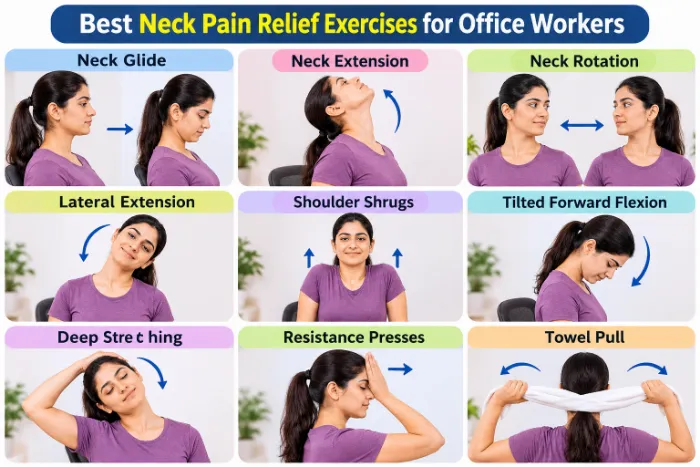
Best Neck Pain Relief Exercises for Office Workers :
Neck Glide:

- Have a straight neck at first.
- Slide your chin forward slowly.
- After five seconds of holding, go back to the beginning.
- Do ten times.
Neck Extension:

- Without arching your back, slowly move your head back so that you are looking up.
- For five seconds, hold.
- Go back to where you were.
- To avoid neck pain at work, this is a good workout.
Neck Rotation:
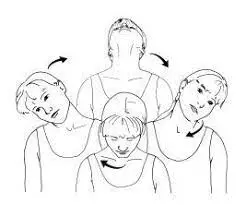
- To begin, gaze directly ahead.
- Turn your head slowly to the left.
- After ten seconds of holding, go back to where you were.
- Next, carefully turn your head to the opposite side.
- Hold for ten seconds.
- Go back to where you were. Perform ten repetitions.
- This is a beneficial exercise to perform while working, particularly if you must maintain a constant head position for prolonged periods of time, such as when using a computer.
- To avoid neck pain, perform this exercise every 30 minutes.
Lateral Extension:

- To begin, look directly ahead. Lean your head slowly to the left.
- Press on it with the muscles in your neck while using your left hand as resistance.
- After five seconds of holding, go back to your initial position.
- Lean your head carefully to the opposite side after that.
- Hold for five seconds.
- Go back to where you were.
- Perform ten repetitions.
- This is a beneficial exercise to perform while working, particularly if you must maintain a constant head position for prolonged periods of time, such as when using a computer. To avoid neck pain, perform this exercise every 30 minutes.
Shoulder Shrugs:

- To begin, look directly ahead. Raise both shoulders slowly.
- After five seconds of holding, go back to your initial position.
- Perform ten repetitions.
- This is a beneficial exercise to perform while working, particularly if you must maintain a constant head position for prolonged periods of time, such as when using a computer.
- To avoid neck pain, perform this exercise every 30 minutes.
Tilted Forward Flexion:

- To begin, look directly ahead.
- Lower your chin slowly in the direction of your chest.
- After five seconds of holding, go back to your initial position.
- Perform ten repetitions.
- This is a beneficial exercise to perform while working, particularly if you must maintain a constant head position for prolonged periods of time, such as when using a computer.
- To avoid neck pain, perform this exercise every 30 minutes.
Deep Stretching:
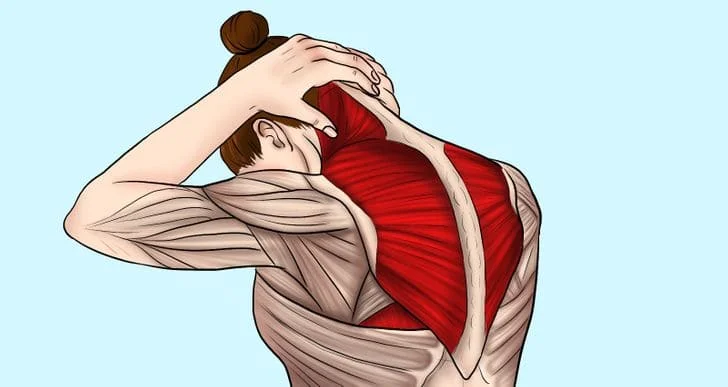
- Allow your head to drop toward your shoulder when sitting with proper posture.
- As demonstrated, you can use your hand to exert pressure.
- You can also use the other hand to grip your chair.
- Hold for 30 seconds, then do it three times.
Resistance Presses:
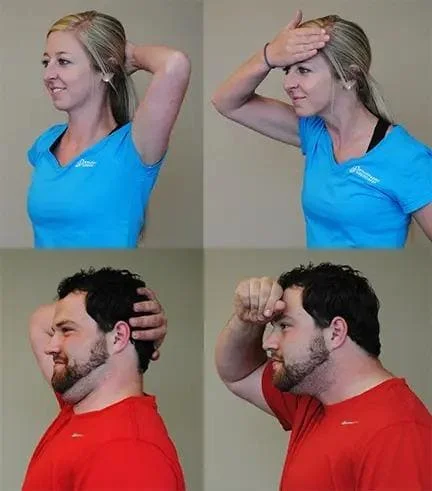
- Always keep your head in a neutral position.
- After five seconds of applying pressure to your head in the following postures, let go.
- Flexion: Put your hand on your forehead.
- Extension: Put your hand behind your head.
Towel Pull:
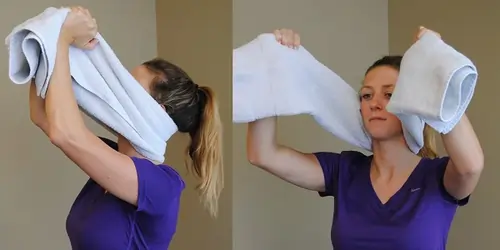
- Wrap the towel around your neck, holding the ends in your hands.
- Roll your head over the towel and slowly stare up as high as you can.
- As you stretch your head back, gently push the towel to support your cervical spine.
- Don’t hold the position. Instead, go back to where you were.
- Do this ten times.
How Often Should Office Workers Perform These Exercises?
Try these neck exercises for optimal results:
- Every 1–2 hours during work
- For 5–10 repetitions of every exercise
- At least twice a day
Intensity matters less than consistency. Regular exercise lowers the risk of chronic neck pain and helps prevent muscle stiffness.
Conclusion:
Office workers frequently have neck pain, but it doesn’t have to be a chronic issue. You may lessen stiffness, enhance posture, and promote general spinal health by including these ten neck pain management exercises in your regular practice. These exercises can keep your neck flexible, strong, and pain-free even throughout lengthy workdays when combined with appropriate ergonomics and frequent movement breaks.
See a licensed healthcare professional for a customized evaluation and treatment plan if neck pain continues despite regular stretching and posture corrections.
FAQs:
How do I increase my neck mobility?
You must combine deep neck flexor/extensor strengthening, active range-of-motion exercises, and gentle stretches to improve neck mobility. It is far more effective to move often throughout the day than to do a single, hard workout.
How to avoid neck hump at a desk job?
A desk-related neck hump, often known as “tech neck” or postural kyphosis, can be prevented or reduced by rearranging your workspace, improving your posture, and actively stretching and strengthening the surrounding muscles.
Which exercise is best for office workers?
The best overall exercise for office workers who spend a lot of time sitting down is brisk walking, often known as interval walking, combined with hip flexor stretches and thoracic spine extensions to balance out the physical toll of sitting.
How can I set up my desk to avoid neck pain?
An ergonomic workplace arrangement focuses on keeping your head straight over your spine without slouching or pushing forward in order to reduce and avoid neck pain.
Should I stay off work with neck pain?
For the most part, neck pain does not require you to miss work. Long-term relaxation is typically not as beneficial to your recovery as being active and going back to work, or continuing to work with small adjustments.
Which deficiency causes neck stiffness?
Low levels of iron or magnesium, as well as deficits in vitamin D and vitamin B12, can cause neck pain and stiffness.
Can weak neck muscles be strengthened?
Indeed, specific workouts can help strengthen and restore weak neck muscles. Gaining strength in these muscles enhances posture, reduces chronic strain or pain, and helps maintain the weight of your head, which weighs an average of 5 kg or 11 lbs.
What to eat to strengthen neck muscles?
You need a combination of high-quality protein for muscle repair, minerals for muscle contraction, and anti-inflammatory foods to reduce strain in order to develop and strengthen neck muscles and maintain the cervical spine.
How to sit at a desk without neck pain?
Optimize your screen height, move your devices closer, and shift positions often to avoid neck pain when sitting at a desk. Your neck muscles must constantly lift the equivalent of a fifty-pound weight when you slouch or tilt your head forward, which causes severe strain, muscle spasms, and migraines.
References:
- Admin, & Admin. (2026, June 2). 10 best neck pain relief exercises for office workers. RNH Hospital. https://rnhhospital.com/10-best-neck-pain-relief-exercises-for-office-workers/
- SABA Health Clinic. (2026, November 9). Neck mobility daily routine. SABA Health Clinic. https://sabahealth.co.uk/blog/neck-mobility-daily-routine
- SemiColonWeb. (n.d.). Neck Exercises | University Orthopedics. https://universityorthopedics.com/educational_resources/neck_exercises.html