Toe Strengthening Exercises for Balance
Introduction:
Structural foot malformations include bunions, claw toes, hammertoes, and mallet toes. Although they are not always unavoidable, these typical problems can make walking and standing painful and prevent you from engaging in the activities you like. Frequent toe exercises will help you maintain good toe alignment throughout your life and strengthen the muscles and ligaments in your feet.
The goal of toe raises is to raise your toes off the ground. They should not be confused with calf raises, which involve lifting and lowering your heel off the ground. This exercise can help strengthen and stabilize the ankle and doesn’t require any equipment.
What muscles do toe raises work?
The lower leg muscles used in toe raises are mostly the tibialis anterior, which is found on the outside of the tibia, or shin. This muscle is in charge of both extending the toes and flexing the foot upward.
Why toe health matters:
Many individuals don’t think much about their toes. What’s to worry about, as long as they allow you to move properly and aren’t unpleasant or swollen? However, when you walk or run, these fingers assist you in maintaining proper balance, support your body weight, and move ahead.
Considering their size, your toes are very strong and resilient. However, everyday wear and tear, poorly fitting shoes, and health conditions like arthritis can damage their soft tissues, raising the possibility of abnormalities. The good news is that regular, easy workouts may keep them healthy and make a big impact.
Why foot exercises matter:
Maintaining the strength and flexibility of your feet will help you stay active, enhance your overall foot health, lessen ankle and foot discomfort, and ease muscular tightness.
Your risk of injury may be decreased by exercises that increase range of motion and help limber up your feet. Your range of motion can be improved by slowly and gently stretching. Your muscles will be able to support and protect your foot more effectively if you perform strength workouts.
To improve your range of motion and strength for long-term foot health and vitality, you can perform these mild stretching and strengthening exercises three days a week or even daily.
Before doing any of these exercises, make sure to see your doctor or physical therapist if you have arthritis, diabetes, or severe foot or ankle pain. Your doctor may change some of the exercises on this list or add new ones based on your requirements.
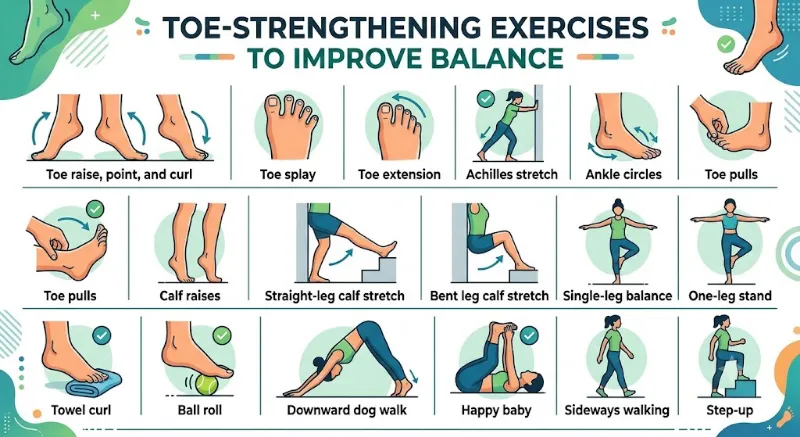
Try these toe strengthening exercises to improve balance:
Toe raise, point, and curl:

Your feet and toes will begin to move with this three-part workout.
- With your feet flat on the ground, take a seat on a chair with a straight back.
- Raise your heels until only the balls of your feet and toes make contact with the floor, keeping your toes level on the ground. For five seconds, hold.
- Make sure that just the tips of your big and second toes are in contact with the ground. For five seconds, hold.
- Roll your toes under so that the tops of them contact the floor while keeping your heel off the ground. For five seconds, hold.
- Repeat each position ten times.
Toe splay:
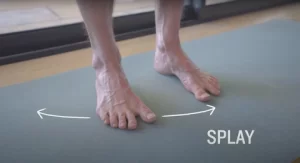
You’ll be able to manage your toe muscles with this exercise.
- Place your feet lightly on the floor while seated in a chair with a straight back.
- As much as is comfortable, spread all of your toes apart. Hold for five seconds.
- Ten times over, repeat.
- By wrapping a rubber band over each foot’s toe, you may increase the difficulty of this workout.
Toe extension:

Heel pain is caused by plantar fasciitis, which may be prevented or treated with this stretch.
- With your feet flat on the ground, take a seat on a chair with a straight back.
- Place one foot on your thigh’s opposing side.
- Using one hand, grab your toes and pull them up toward your ankle until you feel a stretch in your heel cord and down the bottom of your foot.
- During the stretch, touch your foot’s arch with your other hand. Hold for ten seconds.
- Repeat 10 times on each foot.
Achilles stretch:
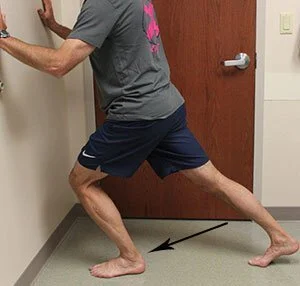
The Achilles tendon is the cord that extends from your heel and enters your calf muscles. Leg, ankle, and foot pain may be avoided by keeping it flexible.
- With your palms on the wall and your arms extended, face the wall.
- Bend the knee on your other leg and place one foot back behind you with the knee straight.
- Make sure both of your heels are flat on the ground by adjusting your posture.
- Stretch your calf muscle and Achilles tendon by bending forward from the hips.
- To feel the pull while keeping your heels on the ground, adjust your posture as needed.
- Push your hips forward and gently bend your back knee to experience the stretch in a different location.
- Repeat the stretches three times, holding each one for thirty seconds.
- Repeat after switching legs.
Ankle circles:
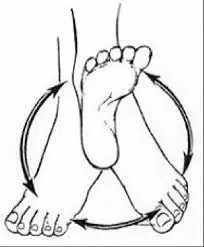
You may increase your ankle mobility by doing ankle circles. Here’s how to perform them:
- Step 1: Slowly and carefully rotate your ankles in a clockwise manner while seated.
- Step 2: Repeat the movement in a counterclockwise manner using the same feet.
- Step 3: Repeat this procedure five times in each direction.
Toe pulls:
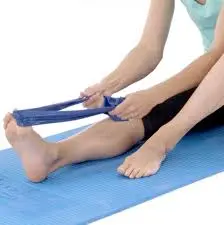
When walking, toe pulls are a great approach to improve foot control and pace stability. Here’s how to perform them:
- Step 1: Try elevating only your big toe off the ground while keeping your other four toes on the ground, whether you’re sitting or standing.
- Step 2: Try doing the same action with each of your other toes.
- Step 3: Try to raise each toe five times.
Calf raises:
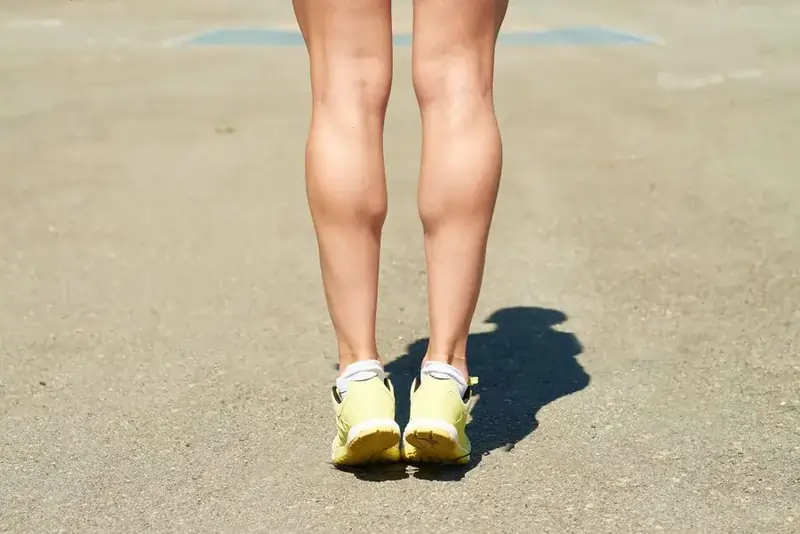
Your calf muscles, which support your weight and activities, are strengthened with calf raises. These muscles are located on the rear of your lower leg. Here’s how to perform them:
- Step 1: For support, stand close to a wall.
- Step 2: To activate your calf muscles, raise your heels off the ground and stand on your toes. Put both feet on the ground to begin. Try maintaining just one foot on the ground at a time as you gain strength.
- Step 3: Go back to where you were.
- Step 4: For each leg, aim for ten repetitions.
Straight-leg calf stretch:
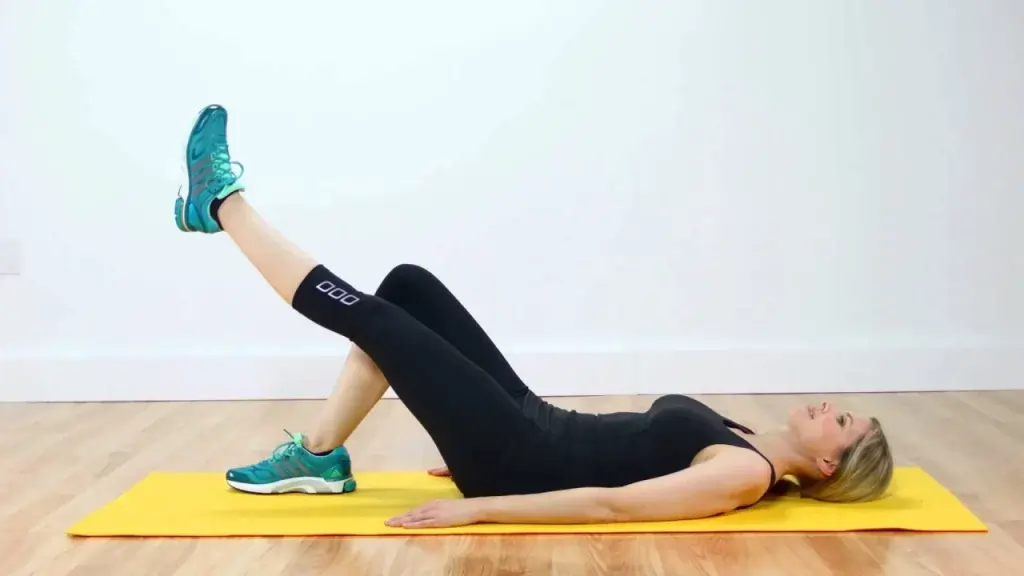
The major muscle in your calf, the gastrocnemius, is worked by this stretch.
- Step 1: Place your hands against a wall for support while facing the wall.
- Step 2: Step back with your right leg about 12 to 24 inches while maintaining a bend in your left knee.
- Step 3: Stretch your calf muscle by straightening your left knee.
- Step 4: Change sides after 30 seconds of holding.
Bent leg calf stretch:
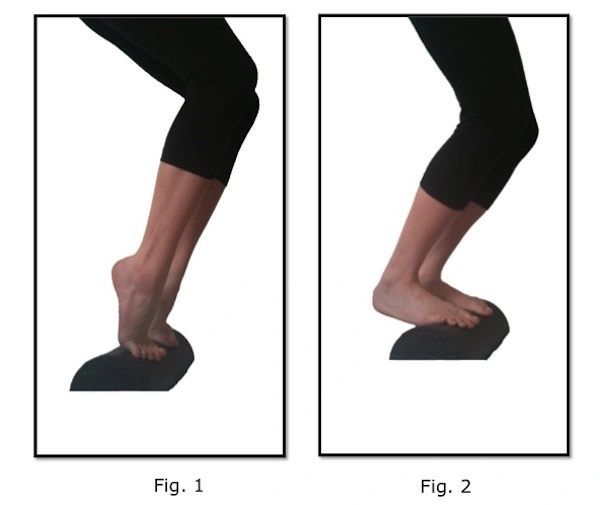
Your soleus muscle, which is situated in the rear of your lower thigh, is affected by this stretch. Here’s how to do it:
- Step 1: Face a wall and place your hands on it for support.
- Step 2: Step back with your right leg by around 12 to 24 inches while maintaining a bend in your left knee.
- Step 3: Stretch your lower calf muscle by bending your knee.
- Step 4: Switch sides after holding for 30 seconds.
Single-leg balance:
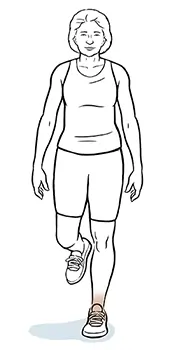
This activity improves proprioception, the sense that lets you monitor the movements of your body parts. Here’s how to do it:
- Step 1: To balance on your right leg, raise your left leg off the ground to hip height.
- Step 2: After holding for 30 seconds, switch sides.
Towel curl:
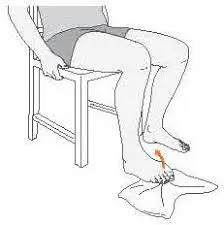
The plantar fascia muscles on the soles of your feet are strengthened and mobilized by towel curls. Here’s how to perform them:
- Step 1: Put a long towel below your right foot while seated on a chair.
- Step 2: Curl the towel toward you until it is bunched up with your toes while maintaining your heel on the floor.
- Step 3: Do each foot five times.
Ball roll:
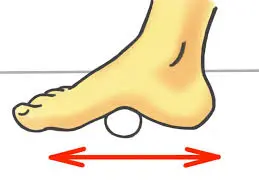
The muscles in your foot’s arch, or curved portion, may be loosened by ball rolls. This reduces stress in these muscles and improves your range of motion. Here’s how to perform them:
- Step 1: While sitting or standing, massage the plantar fascia on the bottom of your foot by rolling a golf or lacrosse ball under it.
- Step 2: Switch feet and roll for one minute.
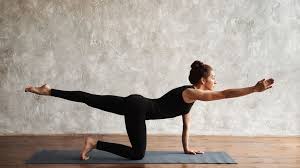
Downward dog walk:
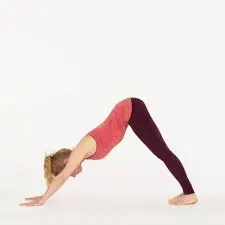
Your whole body, including your feet, calves, thighs, hips, abs, shoulders, arms, and neck, may be stretched and activated with the downward dog walk. Here’s how to do it:
- Step 1: Press yourself back into a downward-facing dog position with a large bend in your knees from the tabletop position (facing downward by resting on your knees and hands).
- Step 2: Now start to “walk out your dog,” alternating between left and right heels as you reach one back to the mat. Remember to breathe.
- Step 3: Try the wall variation if the floor version doesn’t work for you. Place your hands flat on the wall and move your legs back until your heel is off the ground. Although it might be more taxing on the ankles, it is gentler on the upper back.
- Step 4: Try to complete three sets of ten repetitions each.
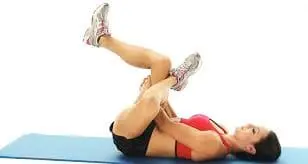
Happy baby:
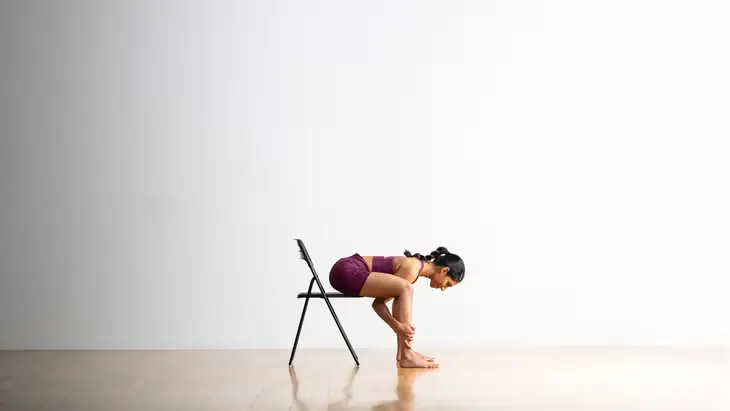
Happy Baby is a fantastic method to increase the flexibility of your hips and feet. Here’s how to do it:
- Step 1: On a carpet or workout mat, lie flat on your back. You can perform this workout in bed if you struggle to get up from the floor.
- Step 2: Bend your knees and place your hands on the outside borders of your feet.
- Step 3: Lower your knees to your ribs and start stacking your ankles over your knees.
- Step 4: Hold onto the backs of your thighs and try to raise your ankles over your knees if you are having problems holding onto your feet. To rest your head on the mat and ease your shoulders and neck, just grasp the backs of your thighs if your head lifts off the mat to hold onto your feet. Try to practice this stance with as little effort as you can.
- Step 5: Feel the activation in your feet and perhaps even your legs as you curl and stretch your toes.
- Step 6: If you are not very flexible, you can perform a half-baby stance with one foot flat on the mat and one leg straight or bent.
- Step 7: While maintaining this form, try to take at least ten deep breaths.
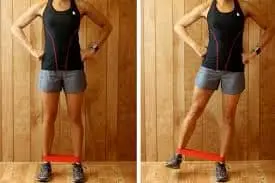
Sideways walking:
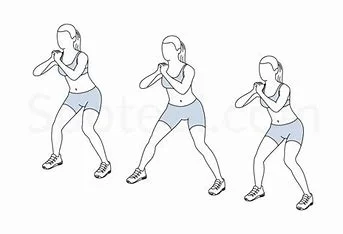
- Bend your knees slightly and place your feet together.
- Take a slow, careful step sideways, starting with one foot.
- To connect it, move the other.
- Stay careful of lowering your hips. Take ten steps in each direction or move from one side of the room to the other.
One-leg stand:
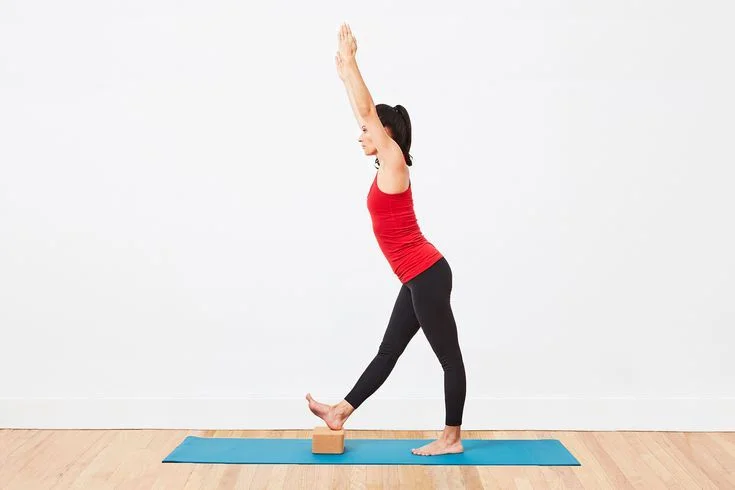
- To begin, stand with your arms extended and your fingers in contact with the wall while facing the wall.
- Raise your left leg while maintaining a modest bend in the opposing leg and keeping your hips level. Return your foot to the floor gently.
- Perform three on each side while holding the lift for five to ten seconds.
Step-up:
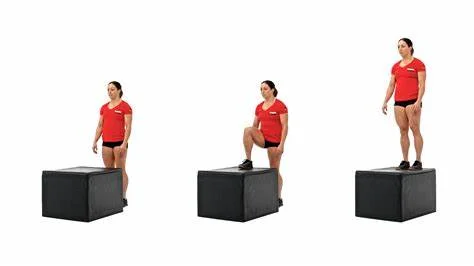
- Use a step for support, ideally next to a wall or with a railing.
- Use your right leg to advance.
- Join it by raising your left leg.
- Take another step back to the starting position.
- Stepping up and down gradually and carefully is the key to developing balance. Use each leg to take up to five steps.
What are the benefits of toe raises?
They strengthen the ankle:
- Long-term benefits come from maintaining the strength and condition of your ankles.
- The tendons, muscles, and ligaments that make up the leg and foot can tolerate the strain of daily activity.
- For instance, the Achilles tendon, which connects the calf muscle to the heel bone, is the biggest tendon in the body. Walking would be quite challenging without it.
- The flexor digitorum muscle, which links within the ankle to the other toes, and the flexor hallucis longus muscle, which connects inside the ankle to the big toe, are two more tendons in the ankle.
- You may increase range of motion and enhance the general health of your feet by performing toe raises using these tendons, surrounding muscles, and ligaments. You could even be able to relieve foot and ankle pain.
- This reduces the likelihood of problems like stress fractures and shin splints, which are significant concerns for runners.
They help with balance:
- You feel more stable when performing daily tasks like standing, walking, running, and jumping when you have strong ankles and shins.
- The benefits of toe raises in terms of balance and strengthening the flexor hallucis longus muscle. This muscle is often used by dancers to point and flex their feet. Dancers frequently suffer from tendinopathy of this muscle, which is also referred to as dancer’s tendinitis.
- The participants do a number of exercises, such as single-leg standing on the toes and modified heel lifts without the use of the toes. Ultimately, it was discovered that dancers rely more than non-dancers on their toe flexors for balance.
- Further research should be done on heel rises with toes off the edge of a block to strengthen the muscles that regulate plantar flexion as a nonsurgical therapy for dancers’ tendinitis.
They help with plantar fasciitis:
- When your plantar fascia ligament causes pain in your heel or midfoot, it’s known as plantar fasciitis. This is the thick ligament that joins the front of your foot to your heel.
- Plantar fasciitis can be treated with a variety of methods, such as icing the area that is affected, orthopedic shoes, and over-the-counter drugs. Additionally, toe raises are a great choice.
- One popular therapeutic activity for plantar fasciitis is heel lifts. The results of strength training for this condition might be enhanced by raising the toes. Additionally, toe lifts are low-impact and mild.
FAQs:
How to strengthen toes for balance?
Exercises for the feet and toes increase intrinsic muscle strength, strengthen the arch, and improve coordination to prevent falls.
What toe helps you balance the most?
Up to 40% of total foot stability is due to the big toe, or hallux, which has the most impact on balance.
Which toe is the least important for balance?
Although it still aids in stabilizing the foot’s outside border, the pinky toe, or fifth digit, is typically regarded as the least significant for balance and weight-bearing.
How important are toes for balance?
As active stabilizers and sensors that keep your body straight when standing, walking, and running, toes are crucial for balance.
How do I fix my balance while walking?
By retraining the balance of your body with supporting equipment, changing your routines, and engaging in specific stability workouts, you may improve your walking balance.
What are some good 10-minute balance exercises?
In only ten minutes a day, you may increase stability and lower your chance of falling by combining static grips with dynamic movements and keeping a solid chair or wall close by for safety.
References:
- Adefioye, R. (2023, September 25). 10 foot exercises for balance and stability. AARP. https://www.aarp.org/health/healthy-living/foot-balance-exercises/
- Website, N. (2024, February 15). Balance exercises. nhs.uk. https://www.nhs.uk/live-well/exercise/balance-exercises/
- Axtell, B. (2018, February 27). 9 foot exercises to try at home. Healthline. https://www.healthline.com/health/fitness-exercise/foot-exercises#takeaway
- Our favorite toe exercises to defend against deformities. (n.d.). Podiatrist Located in Shreveport and Natchitoches, LA | The Foot Institute. https://www.thefootinstitutela.com/post/our-favorite-toe-exercises-to-defend-against-deformities
- Toe raises for strength and balance. (2020, October 23). Healthline. https://www.healthline.com/health/toe-raises#benefits