10 Best Ankle Strengthening Exercises Without Equipment
Introduction:
People with pain, injuries, or mobility issues may benefit from ankle strengthening activities. The majority of these workouts may be performed at home.
The ankle is a weight-bearing joint consisting of many ligaments, tendons, and bones. When combined, these structures support the body’s weight while allowing movement.
The advantages of ankle strengthening exercises are covered in this article, along with a list of exercises that can help maintain strong, healthy ankles.
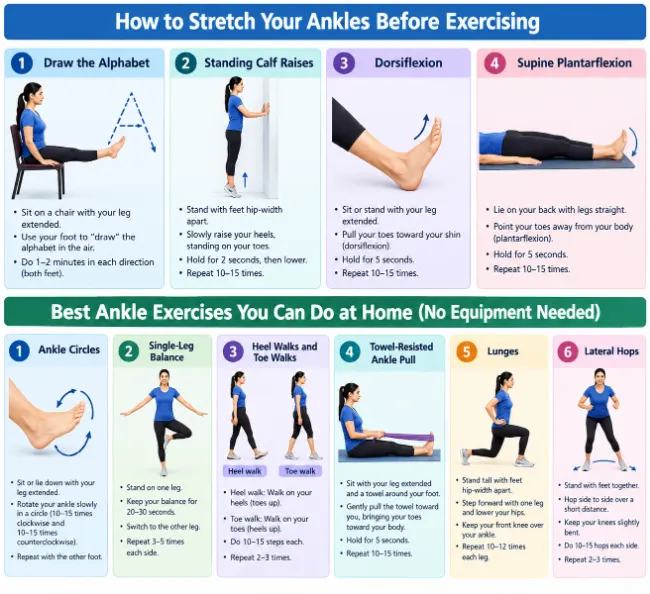
How to stretch your ankles before exercising:
You are undoubtedly aware that stretching is essential before working out, whether you do it or not. But did you realize that part of your exercise should include extending your ankles?
Stretching your ankles is essential, especially if you plan to engage in a high-impact exercise like jogging. You want to make sure that you’re not going straight from sitting to exercise. You want to ensure that there has been sufficient circulation to the joint muscles around your ankles, as well as suitable mobility.
Draw the alphabet:
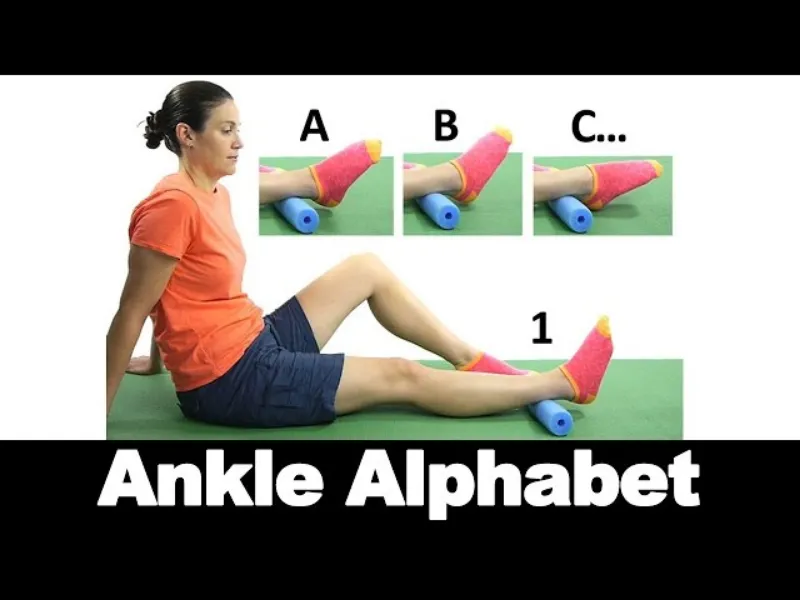
- It’s as simple as A-B-C.
- Start by either standing or lying on your back. Use a solid chair for support if you’re standing.
- Lift one leg and flex your foot while using your toes to draw the alphabet. Next, switch to the opposite leg. Perform the entire alphabet twice a day, once for each leg.
Standing calf raises:

- Get on your tiptoes now!
- Use a stairway or other support structure to maintain your balance when standing on the edge of a step or an exercise step platform. Make sure your feet are hip-width apart.
- Slowly drop your heels after raising yourself as high as you can onto your toes. Repeat the move ten times in a row. Once a day, perform this workout.
Dorsiflexion:
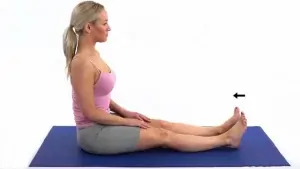
- With both legs straight, lie flat on your back.
- Keep your toes pointed up and your knees relaxed.
- For normal ankle dorsiflexion, slowly draw your foot and toes toward your head.
- Maintain the posture for three to five seconds.
- Go back to the beginning position slowly.
- For two to three sets, repeat ten to fifteen times.
- Make sure the movement is painless and under control.
- Do not rotate your ankle inward or outward or raise your heel.
- If you feel numbness, increased swelling, or acute pain, stop.
Supine plantarflexion
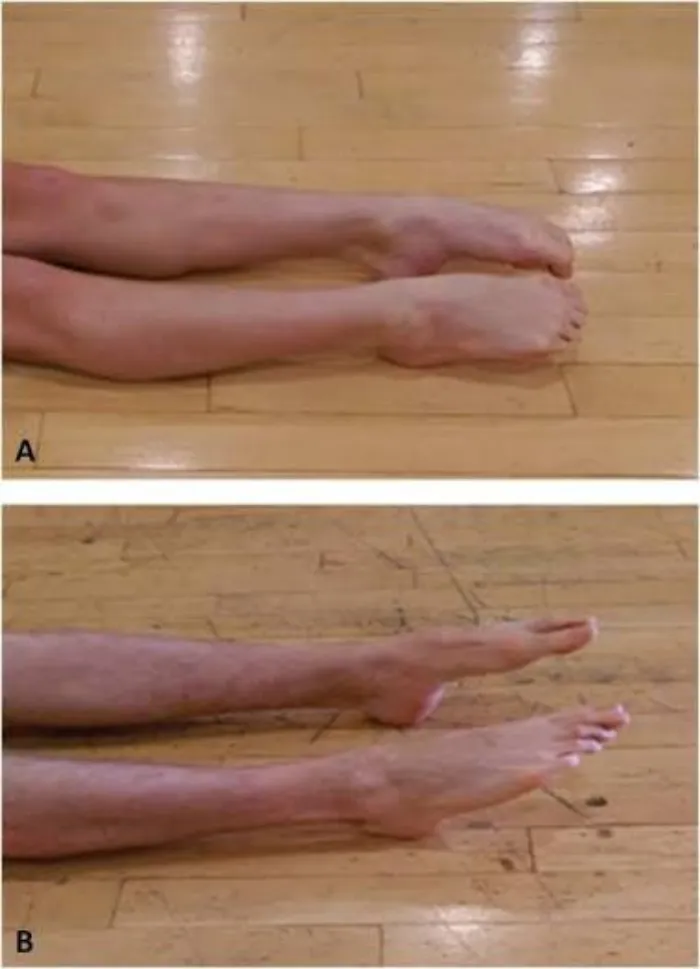
- With your legs relaxed and straight, lie on your back.
- Make sure your toes point up, and your heels are supported.
- To plantarflex your ankle, slowly move your toes away from your body.
- Avoid straining the ankle as you go through a comfortable range.
- Hold for three to five seconds.
- Go back to the beginning position slowly.
- Repeat ten to fifteen times for two or three approaches.
- Avoid turning the foot inward or outward and maintain control over the movement.
- Exercise should be done within a pain-free range.
- If you feel numbness, increased swelling, or acute pain, stop.
The top at-home ankle workouts that don’t require any special equipment are:
Ankle Circles:
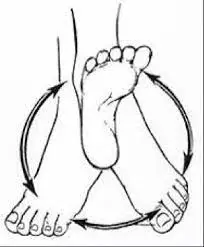
- Whether you’re sitting or standing, raise one foot slightly off the ground and use your toes to slowly draw a full circle 10 times in one direction and ten times in the other.
- This is a warm-up exercise that introduces synovial fluid into your joints before you need more for strength training. There is no tension other than allowing the joint to rotate through its natural range.
- On each side, draw ten circles in each direction.
Single-Leg Balance:
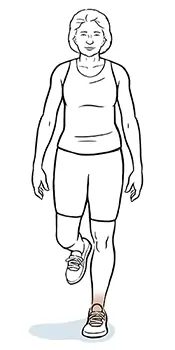
- Standing on one foot with your hands ready to take onto a wall if needed, hold for as long as you can with good form.
- Although it may not work like a squat, the little stabilizer muscles around your ankle are what keep you upright throughout.
- Your own weight and gravity are resistance; they are always trying to take you down.
- Do three 20–30 second holds on each side.
Heel Walks and Toe Walks:

- Take 15 to 20 steps across a room on your heels alone, with your toes elevated above the floor, and then return on the balls of your feet.
- Walking on your toes works the muscles in your calves and the muscles that push your foot down, while walking on your heels works the muscles that lift your foot. This is the same muscle that prevents you from tripping on your toes.
- The resistance in both directions is body weight.
- Perform two rounds in each direction.
Towel-Resisted Ankle Pull:
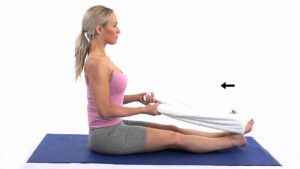
- Hold one end of a towel in each hand, wrap it over the ball of your foot, and sit on the floor with one leg straight out.
- Since a bare foot going through the air with nothing pulling back trains basically nothing, your hands are producing the resistance throughout the whole exercise.
- Move your feet away from you against the resistance of the towel, then gently pull on the towel and fold your feet toward you. Instead of yanking, maintain a constant pull.
- Perform two sets of 12 to 15 repetitions on each side.
Lunges:

You can strengthen your ankles and enhance your balance by performing lunges. Lunges come in a variety of forms. You might wish to start with simpler variants and work your way up to more difficult ones. Start by performing lunges in position, or static lunges.
- Put one foot ahead of the other and point your toes forward to begin.
- Maintain a straight back.
- Your knee should be bent so that it nearly touches the floor.
- Then raise yourself once again.
- Do two sets of ten repetitions.
Lateral Hops:
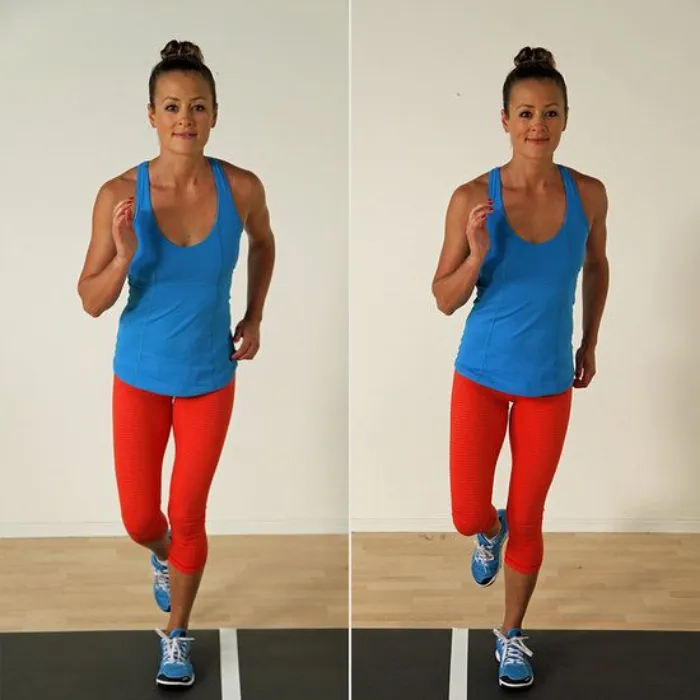
- Hop side to side across a virtual line, roughly a foot in each direction, while standing on one foot. Each time, land gently and carefully.
- This is the most difficult maneuver on the list; it involves using your body weight once more, but at a speed that requires your ankle to stabilize upon contact rather than merely remain still.
- This is the movement closest to these five movements that actually causes a rolled ankle.
- Perform two sets of ten hops on each side.
Ankle strengthening benefits:
Increased movement awareness:
Increasing your proprioception is one advantage of strengthening your ankles. This is the precise word for your body’s sense of place when you’re moving.
For example, your body will recognize when you’re going to trip or twist your ankle and stop you from doing so.
Proprioception is improved via balance-enhancing exercises. For proprioception training, the single-leg balancing with closed eyes exercise is very beneficial.
Leg strengthening:
Ankle strengthening exercises can assist you in developing a good gait by strengthening your larger leg muscles.
High-heel relief:
These exercises might help relieve the strain on your ankle joints if you wear high heels for a long period of time.
Common Mistakes to Avoid:
- Ignoring the warm-up. Ankle circles, which require 30 seconds to get the joint flowing before you ask it to balance or absorb impact, end up generating a roll since they skip directly to lateral hops on a cold ankle.
- Allow your knee to maintain balance. It’s tempting to lock your knee and allow your hip to swing in order to keep upright during single-leg balancing and lateral jumps. Maintain a little bend in the knee so that the ankle is performing the exercise’s stabilizing function.
- Rather than pulling slowly, grab the towel. A strong pull on the towel-resisted pull transforms a controlled strength action into a jerky one that can aggravate rather than improve an already irritable ankle.
- Overcoming severe pain or edema. Lower leg tiredness in general is typical; if you have sudden swelling, severe pain, or an ankle that gives way under you, you should stop and have it checked rather than completing the set.
FAQs:
Is walking good for ankle strengthening?
Regular flat-surface walking provides little direct strengthening for the particular stabilizing muscles of the ankles, but it does support and condition the lower legs.
Can ankle tendons be strengthened?
To increase joint stability and avoid injury, it is possible to strengthen the tendons in the ankle and the surrounding muscles. Even though tendons are connective tissue rather than muscle, progressive workouts can help them adapt, become more stress-resistant, and absorb more impact.
What are the benefits of strengthening your ankles?
Strong ankles help you stay balanced, avoid painful sprains, and help with daily activities like walking and climbing stairs.
Which exercise is best for ankle pain?
Ankle circles and heel lifts are two of the best exercises for reducing ankle pain since they increase lower-leg strength, blood flow, and joint mobility.
What is the fastest way to relieve ankle pain?
The RICE technique in conjunction with over-the-counter anti-inflammatory drugs is the quickest approach to reduce severe ankle pain and swelling.
Does walking on tiptoes strengthen ankles?
Indeed, walking on your tiptoes improves ankle control and strengthens the lower leg muscles, but it’s only one aspect of a whole ankle-strengthening regimen.
How long does it take to strengthen ankles?
Significant gains in ankle strength, stability, and balance usually require 6 to 8 weeks of regular, organized exercise.
How to strengthen a damaged ankle?
After an injury, begin with mild range-of-motion activities to strengthen your ankle. As pain allows, advance to resistance band exercises and balance training.
References:
- Kandola, A. (2026, March 26). What to know about exercises to strengthen the ankles. https://www.medicalnewstoday.com/articles/ankle-strengthening-exercises
- Staff, D. B. (2026, August 25). Best ankle exercises you can do at home (No equipment needed). Life by Daily Burn. https://dailyburn.com/life/health/best-ankle-exercises-you-can-do-at-home-no-equipment-needed/
- Hecht, M. (2019, May 28). 12 Stretch and strength moves for ankle mobility. Healthline. https://www.healthline.com/health/ankle-mobility