Top 12 VMO Strengthening Exercises:
Introduction:
One of the four quadriceps muscles is the vastus medialis oblique (VMO). The inside of your thigh, or medially, is where your VMO is positioned. Its main purpose is to extend the knee.
Structure: The anterior compartment of the thigh contains the VMO muscle. The vastus lateralis, vastus intermedius, and rectus femoris are the last three muscles that compose our quadriceps.
- Origin: The medial side of the femur is where the VMO originates.
- Insertion: Near the knee, the quadriceps tendon
- Blood Supply: Femoral artery
- Nerve Supply: Femoral nerve
- Function: Knee extension is one action.
The VMO enters the quadriceps tendon on the inside edge of the kneecap after starting from a continuous line of attachment along the thigh bone.
What Happens When The VMO Is Weak?
The patella at the knee may track abnormally if the VMO is weak or less active.
The patella is balanced in the center of the groove where it rests at the end of the femur at the knee when the quadriceps fire correctly and in the right order. This makes it possible for the kneecap to move smoothly up and down as the knee bends and straightens.
The other quadriceps muscles move the kneecap to the outside of the groove when the VMO is weak. The outer or lateral patellofemoral joint area may experience excessive wear and tear and stiffness as a result.
What Makes The VMO Weak?
The VMO weakens when it does not activate as frequently. This usually occurs when the knee is painful or swollen.
The brain may prevent the quadriceps from activating normally if there is swelling inside the knee joint capsule. This may have an impact on the order in which the quadriceps’ four muscles contract or fire. The VMO becomes weaker and weaker as a result.
How Do You Make The VMO Strong?
With some VMO strength workouts, the VMO can get stronger. Activating it usually requires mindful practice and isometric workouts.
Can You Isolate The VMO For Strength Training?
While there has been much discussion on this subject, isolating the VMO alone is not possible. Additionally, the brain instructs the remaining muscles to contract.
When tightening the quadriceps, there are methods to improve and increase the effectiveness of VMO activation. This includes:
- Manual Biofeedback: Put a finger on the VMO and check to see if it contracts firmly.
- Electrical Biofeedback: This device senses electrical activity in the muscle and lets the user tighten more to increase the signal it senses. Typically, the muscular activation is followed by lights or sounds.
- Electrical Stimulation: An electrical impulse is used in electrical stimulation to cause a muscle contraction. This gives the brain sensory information to make VMO contractions more conscious and effective, but it does not take the place of regular self-activated contractions.
Will VMO Strength Exercises Fix Knee Pain?
In many situations, knee pain can be treated by increasing the VMO’s activity. The VMO can assist in normalizing knee mobility and mechanics as well as balancing the location of the kneecap.
However, there are other causes of lateral patellofemoral pain besides the VMO. Other reasons include:
- Overuse of the Knock-kneed pose
- The Gluteus Medius’s weakness
- Tightness/IT Band Syndrome
- Both of these problems can cause knee pain and dysfunction by changing the patellofemoral joint’s normal movements.
Why is VMO important:
The Vastus Medialis muscle, which is one of the four parts of the quadriceps muscle in the front of the leg, includes the VMO, or Vastus Medialis Obliquus.
VMO stabilizes the kneecap (patella) in an active and dynamic manner. The VMO fibers are active throughout the range of motion in healthy, pain-free people. The fibers in people with patellar issues contract weakly, in stages, out of time, and quickly get fatigued.
The VMO’s role is to maintain the patella in its normal position and regulate the patella’s tracking during knee bending and straightening. Malformation of the patella, injury to surrounding tissues, and following pain can result from failure and weakening of the VMO. The solution to this issue lies in timing the VMO correctly and increasing its relative strength in relation to the rest of the quadriceps muscle group.
How can I strengthen the VMO?
Long-term injuries like patellofemoral knee pain are caused by VMO dysfunction; however, some acute injuries cause the inhibition of the VMO, making it even more difficult. First, you must become aware that it exists. This is the difficult part. It’s like learning to raise one eyebrow without the other; it’s very difficult to put into words, but with time and practice.
Sitting with your legs extended in front of you and a rolled-up towel under the injured knee, you may test the contraction of the VMO. As seen in the image below, place your fingers over the VMO region. Press your knee into the towel. The muscle beneath your grasp will tighten. Continue practicing while applying little pressure to the muscle and focusing on contracting the fibers between your fingertips if the muscle does not contract. Now place your other hand on the Vastus muscle on the outside. Vastus lateralis, and follow. This contraction will also affect you. Learning to contract the VMO independently of the vastus lateralis is the goal.
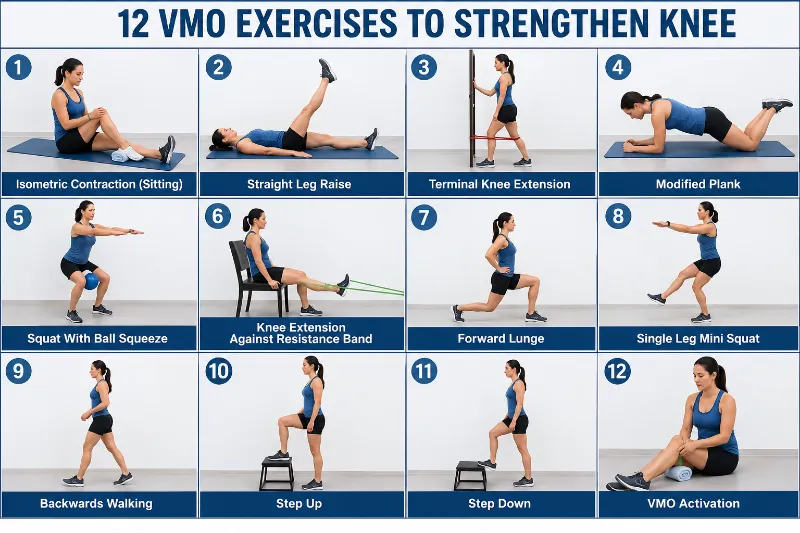
12 VMO Exercises To Strengthen Knee:
The following are VMO exercises to strengthen the knee:
Isometric Contraction (Sitting):
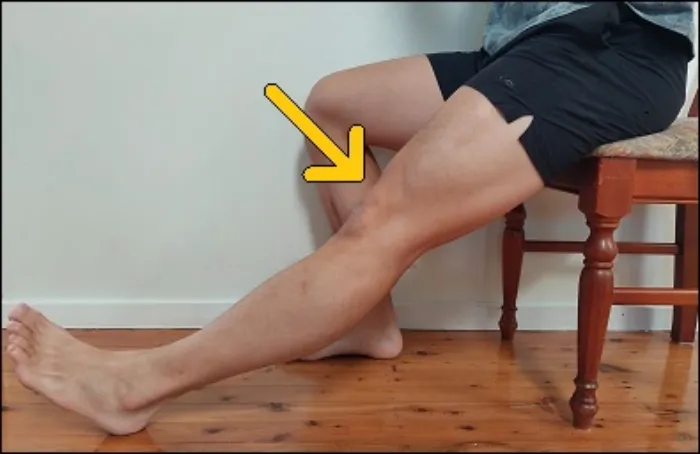
- Take a seat on a chair’s edge.
- In front of you, straighten your leg.
- Extend your foot and knee outward.
- Put your heel on the ground.
- As hard as it is comfortable for you, push your knee downward.
- Try to feel the VMO muscle flex firmly.
- Hold for five seconds.
- Twenty times.
Straight Leg Raise:
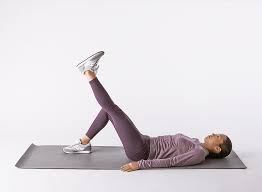
- Lie down on the ground.
- Lower your knee.
- During this exercise, keep your knee perfectly straight.
- Turn your leg slightly outward.
- Try to feel the VMO muscle flex firmly.
- Raise your leg a little.
- Do 20 repetitions.
Terminal Knee Extension:
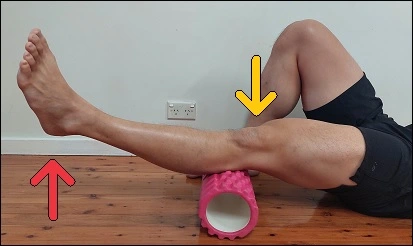
- Lie down on the ground.
- Put a soft foam roller under your knee.
- Turn your leg outward.
- Put your knee on the foam roller.
- Raise your foot off the ground while maintaining downward pressure on the foam roller.
- Try to feel the VMO muscle flex firmly.
- Hold for five seconds.
- Twenty times.
Modified Plank:
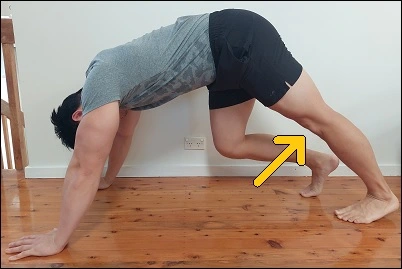
- Take the above-mentioned posture.
- Straighten your knee.
- Try to feel the VMO muscle flex firmly.
- Hold for five seconds.
- Twenty times.
Squat With Ball Squeeze:
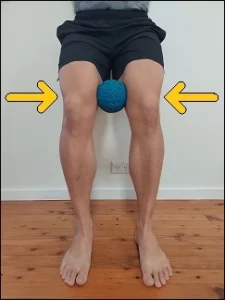
- Place your feet shoulder-width apart as you stand.
- Put a ball between your knees.
- During this exercise, use your inner knees to squeeze the ball.
- Do a squat.
- During the exercise, try to feel the VMO muscle flex firmly.
- Do 20 repetitions.
Knee Extension Against Resistance Band:
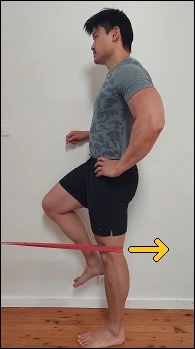
- Put a resistance band over your knee’s back.
- The other end of the resistance band should be fixed at knee height in front of you.
- Then apply a firm amount of strain on the band and take a step back.
- For balance, grasp something.
- Put your other leg up in the air.
- Stretch your leg against the resistance of the band.
- Try to feel the muscle in your thigh contract.
- Hold for five seconds.
- Twenty times.
Forward Lunge:
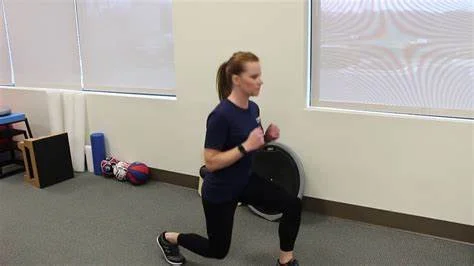
- Step onto a step.
- Support both of your hands on a wall in front of you.
- Throughout this exercise, maintain your knee in line with your toes for the leg on the step.
- Make a forward lunge.
- As much as you can, move your knee forward without letting it click.
- Use your hands to support yourself as much as necessary.
- Do 20 repetitions.
Single Leg Mini Squat:
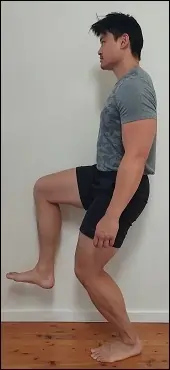
- Raise to your feet.
- For balance, hold on to something.
- Take a single stance.
- Do a mini-squat.
- Try to feel the VMO muscle move firmly.
- Do 20 repetitions.
Backwards Walking:
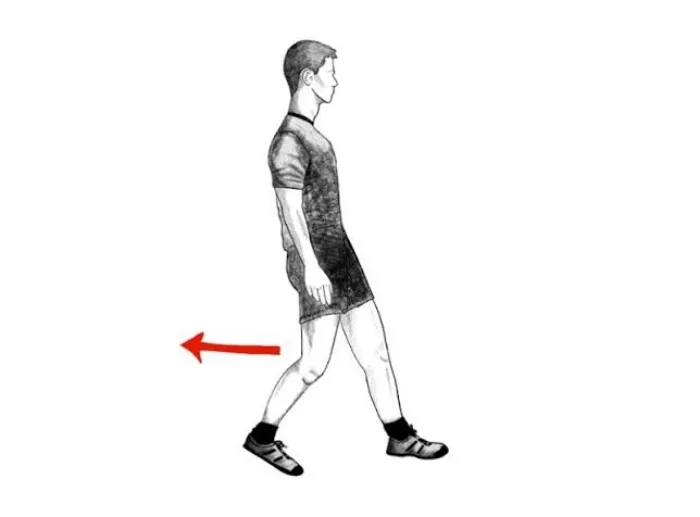
- Go up a slight hill backwards.
- Verify if the VMO’s contraction is palpable.
- For sixty seconds, keep going.
Step Up:
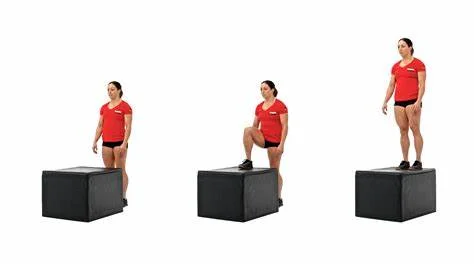
- Step onto a step.
- Transfer your weight to the foot.
- Step up onto the step without utilizing your speed.
- Make sure your leg is perfectly straight.
- Feel the muscles in your thighs contract.
- Twenty times.
Step Down:
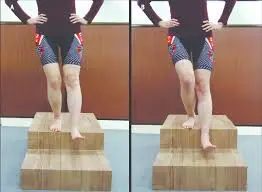
- Take a position atop a step.
- For support, attach to a stable object.
- Throughout this exercise, maintain your knee in line with your toes for the leg that is on the step.
- Reach your other foot to the floor slowly.
- Go back to where you were.
- Do 20 repetitions.
VMO Activation:
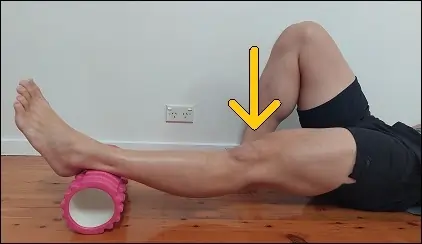
- On the ground, lie down.
- Put a soft foam roller under your ankle.
- To point your foot and knee slightly outward, let your leg slide outward.
- As hard as it is comfortable for you, push your knee downward.
- In the lower/inner thigh area, try to feel a strong contraction of the VMO muscle.
- To feel the contraction, place your palm on the VMO muscle.
- Hold for five seconds.
- Twenty times.
Benefits of VMO Strengthening Exercises:
- Increases the stability of the knee.
- Helps with patellar examination.
- Makes the quadriceps stronger.
- May enhance practical motions like sitting to standing and climbing stairs.
- aids in recovery when provided properly
How Often Should You Perform VMO Exercises?
Give a general guideline like:
- Beginners: two to three sessions every week
- Rehabilitation: Do as your physiotherapist advises.
- Strength training: Give yourself enough time to recover in between sessions.
- Progress progressively according to function and pain
Common Mistakes to Avoid:
- During workouts, allowing the knee to fall inward
- Making movements too fast
- Excessive resistance applied too soon
- Working out with severe knee pain
- Bad posture when performing step-ups and squats
Precautions during exercises for VMO strengthening:
- Before working out, warm up.
- If your knee pain becomes more severe, stop.
- Instead of using quick repetitions, use slow movements.
- Keep your knees properly positioned above your toes.
- Exercises should only be done under the supervision of a physician when healing occurs after knee surgery.
Who Can Benefit?
Mention typical population strengthening and rehabilitation initiatives:
- Knee pain in the patellofemoral joint
- Weakness in the knees following immobilization
- Athletes who need to strengthen their quadriceps
- Improvements in lower limb function in older persons
- People receiving recovery through physical therapy
FAQs
Is it possible to isolate VMO?
The vastus medialis obliquus (VMO) cannot be completely isolated. Every time you straighten your knee, the whole quadriceps muscle group activates at once because the VMO and the rest of the quadriceps share the same femoral nerve supply. According to research, certain workouts cannot activate the VMO preferentially or selectively.
Does cycling activate VMO?
The inner quadriceps muscle that stabilizes your kneecap, the vastus medialis oblique, is activated and strengthened by cycling. However, it typically isn’t sufficient on its own to completely improve or enhance a poor VMO.
How to make the VMO stronger?
The inner teardrop-shaped quad muscle above your knee is called the vastus medialis oblique (VMO). To strengthen it, concentrate on deep range-of-motion loading, terminal knee extension, and coupled inner-thigh squeezes. Although research indicates that it is impossible to completely isolate the VMO, several exercises specifically target the lower quadriceps to increase knee stability.
Are squats good for VMO?
The inner teardrop-shaped quad muscle that helps maintain your kneecap is called the vastus medialis obliquus, and squats are a wonderful way to work it. Deep knee bending, an erect torso, and forward knee travel are necessary to concentrate on the VMO.
Can too much cycling damage the knees?
Although cycling is often a low-impact activity, riding too frequently or with bad technique can strain the knee joints and result in overuse issues. Repetitive microtrauma caused by too-fast volume increases or incorrectly set up instruments typically results in damage.
What exercises should you not do with bad knees?
You should stay away from large isolated bending loads, deep joint flexion beyond 90 degrees, and high-impact activities if you have knee problems. Forward lunges, deep squats, leaping, jogging on hard concrete, and heavy leg extension machine sets should be avoided.
What exercises lubricate the knees?
The creation of synovial fluid, which lubricates and sustains the joint, is stimulated by gentle, low-load movements that allow the knee to move through its entire range of motion. Heel slides, sitting knee extensions, and supported short-arc quadriceps are good choices.
References:
- Makkuva, A., & Surve, P. (2024). Exploring physiotherapy strategies in arthrogenic muscle inhibition: A scoping review. International Journal of Science and Research Archive, 12(2), 2609–2620.
- Lee, C. R., Lee, D. Y., Jeong, H. S., & Lee, M. H. (2012). The Effects of Kinesio Taping on VMO and VL EMG Activities during Stair Ascent and Descent by Persons with Patellofemoral Pain: A Preliminary Study. Journal of Physical Therapy Science, 24(2), 153–156.
- Earl, J., Schmitz, R., & Arnold, B. (2001). Activation of the VMO and VL during dynamic mini-squat exercises with and without isometric hip adduction. Journal of Electromyography and Kinesiology, 11(6), 381–386.
- Ferber, R., Bolgla, L., Earl-Boehm, J. E., Emery, C., & Hamstra-Wright, K. (2014). Strengthening of the hip and core versus knee muscles for the treatment of patellofemoral pain: a multicenter randomized controlled trial. Journal of Athletic Training, 50(4), 366–377.