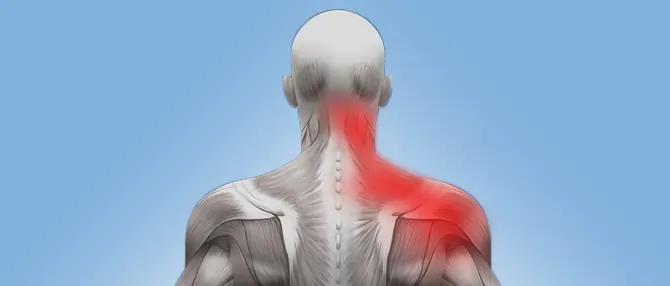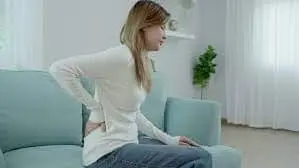
Exercises for SI Joint Pain During Pregnancy
Introduction:
Your body changes greatly throughout pregnancy, from your expanding abdomen to the unique ways you move every day. Lower back pain affects certain people, and it’s not always related to gaining weight or altering one’s posture. Sacroiliac (SI) joint pain is a little-known cause of discomfort during pregnancy.
The sacroiliac (SI) joints, which are found where your pelvis and spine connect, are essential for supporting your body and allowing painless mobility. Lower back pain and other symptoms may result from increased tension on the SI joints during pregnancy. Indeed, studies indicate that up to 80% of low back pain during pregnancy is caused by problems with the SI joint.
Even while SI joint pain is fairly prevalent during pregnancy, there are many things you can do to manage it and find relief, including simple adjustments to your daily routine and movements, as well as mild exercises and stretches.
What is SI joint pain?
Pain caused by sacroiliac joint irritation or inflammation is known as SI joint pain. This frequently causes severe aches and pains in the buttocks, pelvis, or lower back, usually on one side.
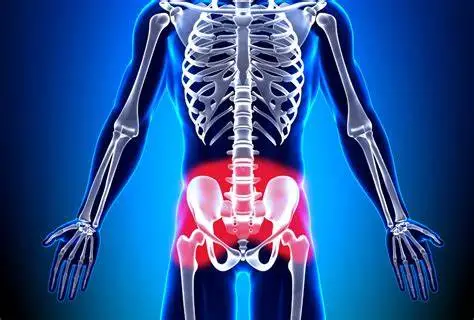
Your sacroiliac (SI) joints are two. They are called sacroiliac joints because they attach your sacrum to the iliac joints in your pelvis. Their primary function is to maintain your stability while shifting weight and forces from your upper body to your lower body. SI joint inflammation, which frequently manifests as one-sided low back and butt pain, might result from irritated or inflamed SI joints. Walking, climbing stairs, sleeping, getting dressed, and other everyday tasks might be painful due to SI joint pain.
Causes of SI joint pain in pregnancy:
Pregnancy-related SI joint pain can be caused by a variety of factors, such as elevated edema levels, altered posture, altered abdominal muscles, and increased pressure on your SI joints. Further information on the causes of SI joint pain during pregnancy may be found here:
The sacroiliac (SI) joints experience variations in pressure and movement. The SI joints can be somewhat movable, much like any other joint in your body. The increased weight and pressure from your expanding uterus during pregnancy might worsen these changes in mobility, resulting in SI joint irritation, inflammation, and pain.
An increase in relaxation. Your body produces more of the hormone relaxin when you are pregnant. In order to prepare your body for childbirth, it aids in the loosening of pelvic ligaments. Your pelvis may become less stable as a result, which may affect your SI joints and cause SI joint pain during pregnancy.
Posture shifts. Your center of gravity moves forward throughout pregnancy to accommodate your developing baby, which frequently causes your lower back’s arch to widen. The SI joints and surrounding muscles must work harder to support your body as a result of this alteration. Your lower back, hips, and pelvic floor muscles may contract as a result, while your buttocks and abdominal muscles may weaken. This combination may put more strain on the SI joints and increase the likelihood of pregnancy-related pain.
Weaker muscles in the abdomen. The core muscles along the front of your abdomen may split as a result of your enlarging uterus, leaving a gap down the middle. We refer to this as diastasis recti. This may result in less support for your spine and pelvis, which may cause back pain associated with the SI joint.
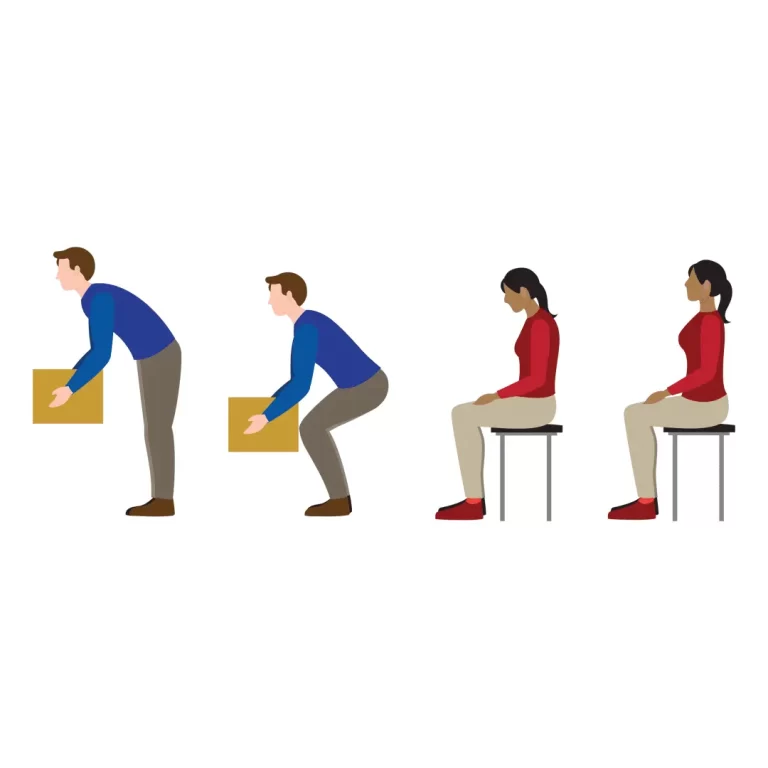
Lifting in a new way. Lifting and carrying objects may become more challenging as your baby develops. You might have to carry something on your side rather than in front of you, which can cause back strain and exacerbate SI joint pain.
Stress. Back muscles might become stiff due to everyday stress and pregnancy. Tension in the pelvic floor muscles may also be caused by increased stress.
SI joint pain in the past. Pregnancy-related SI joint problems may be more likely if you experienced SI joint pain before becoming pregnant.
Symptoms of SI joint pain in pregnancy:
Pregnancy-related SI joint pain usually results in lower back, buttocks, or hip pain. While SI joint inflammation is classified as back pain, it changes in a few important ways. It may consist of:
Certain movements, such as getting in and out of bed or a car, rolling over in bed, or bending to pick something up off the floor, might cause back or hip pain.
Lower back, upper buttocks, or back hip pain that might be painful and radiating, or dull and achy
Lower back, hip, buttock, groin, or upper thigh stiffness, tightness, or strain
Pain that gets worse when you do weight-bearing activities, such as walking or standing for extended periods of time, standing on one leg, or resting on your side.
Triggers Of SI Joint Pain During Pregnancy:
Baby weight: The weight you gain throughout pregnancy due to the developing baby, enlarged uterus, and pregnancy fluids can all put additional strain on your SI joint.
Hormones: Your hormones go into full force while you are pregnant. Pregnancy causes an increase in relaxin, a vital hormone. Although it’s necessary to help prepare your body for childbirth, loosened ligaments might cause pain.
Posture: When you’re attempting to find a comfortable position, a baby bump might cause your center of gravity to shift. While adopting poor posture may provide you with some short-term respite, it may severely injure your SI joint and increase your pain.
Extended periods of sitting or standing: During pregnancy, your body shifts to different positions. SI joint pain may result from failing to take rests when sitting or standing for extended periods of time. Additional pressure and muscle imbalances might make your SI joint painful.
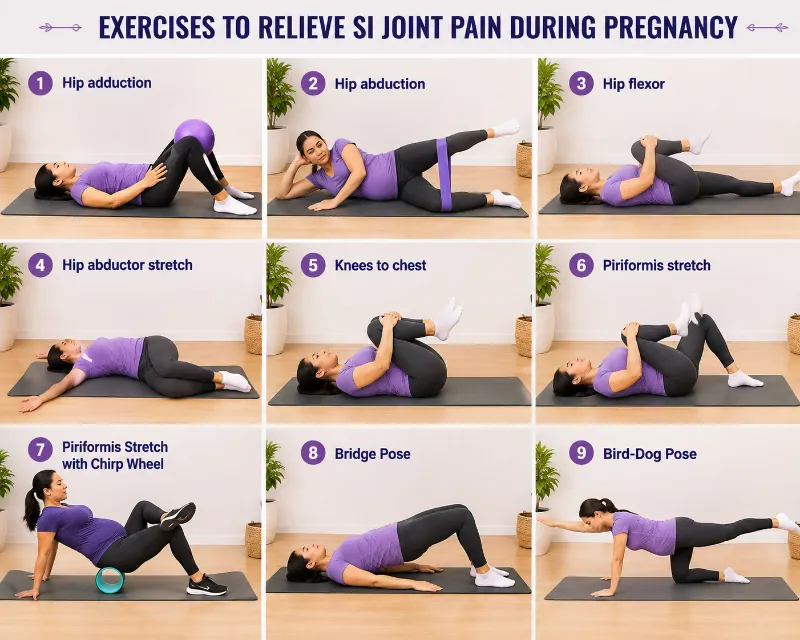
Exercises to Relieve SI Joint Pain During Pregnancy:
SI joint pain can be greatly reduced by stretching and strengthening the muscles in the legs and hips. You may safely perform these stretches and exercises while pregnant or whenever you need to relieve SI joint pain. Before beginning any new workout regimen, always consult your physician.
Hip adduction:
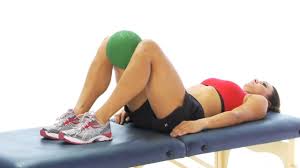
- Bend your knees while lying on your back.
- Place an item near your knees between your legs and squeeze them together using a ball or even your Chirp Wheel.
- Hold for 5 to 10 seconds
- Then relax.
- As required, repeat.
Hip abduction:
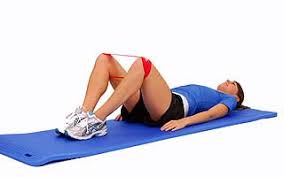
- Bend your knees and lie on your back.
- Put a resistance band around the thighs of your legs.
- Pull your legs apart after starting with them touching.
- Perform three sets of ten reps.
Hip flexor:
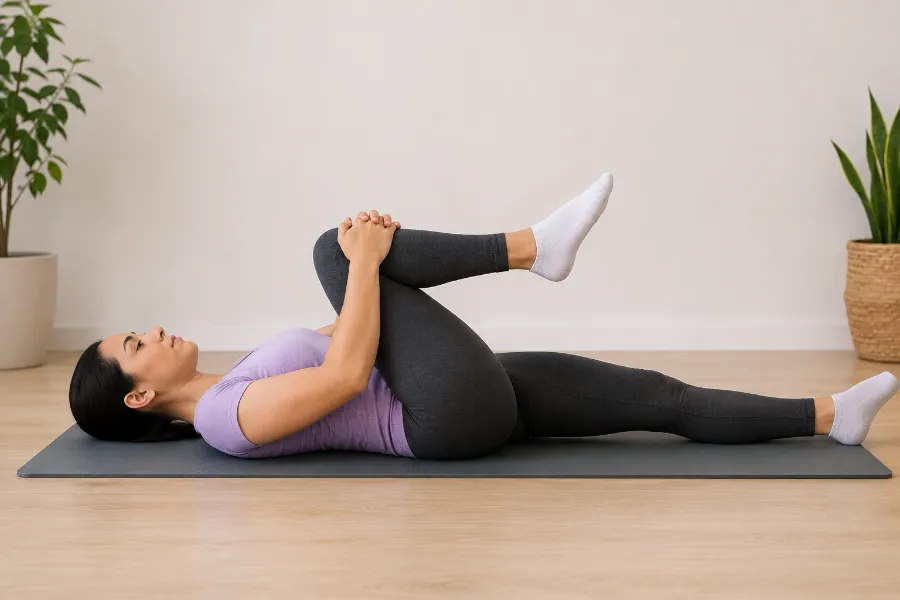
- With your legs straight, lie on your back.
- One leg should be crossed over the other.
- Squeeze firmly while holding onto your leg.
- Let go once again. Continue on both sides.
Hip abductor stretch:
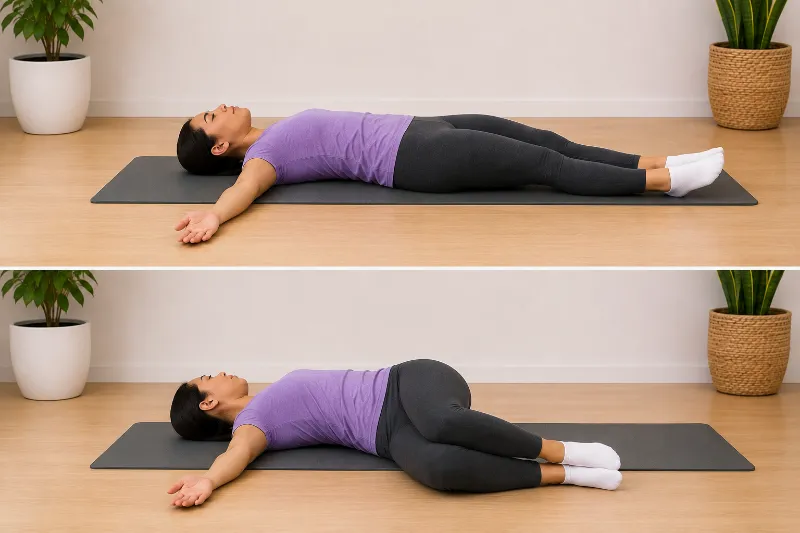
- To make your body resemble a T, lie on your back with your arms extended and your legs straight.
- Keep both shoulder blades on the floor, bend your left leg, and progressively shift it to the right side of your body.
- Straighten and relax your leg once it reaches the other side of your body.
- Continue on both sides.
Knees to chest:
One knee to chest (lying on the ground)
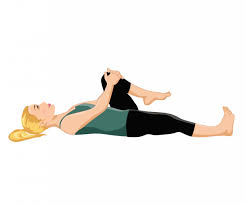
- With your legs straight, lie on your back.
- Grasp your thigh beneath your knee to raise your right leg.
- For as long as it is comfortable for you, raise your right leg toward your left shoulder. It should be a pleasant, painless stretch.
- Apply this on both sides.
Both knees to chest
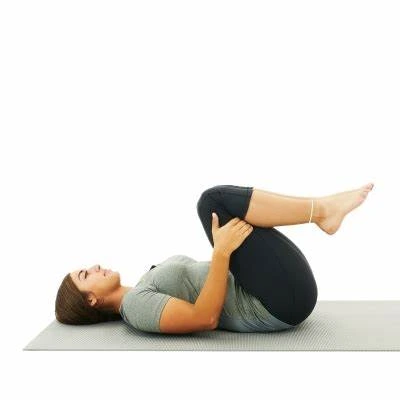
- With your legs straight, lie on your back.
- Grab your thigh below your knee and raise both legs.
- Bring your legs up to your chest. It should be a pleasant, painless stretch.
- Apply this to both sides. Try bringing both knees to your chest simultaneously once you feel comfortable enough.
Piriformis stretch:
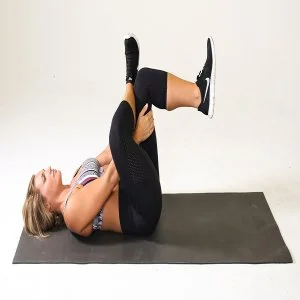
- Bend your legs and lie face up on the ground. Put your left knee over your right ankle.
- Raise both legs and, using your arms to draw your right leg as close to your body as is comfortable for you, hold the area beneath your knee at your right thigh. Pull your left leg in the direction of your body for a greater stretch.
- For as long as you find it comfortable, stay in this posture.
- On the opposite side, repeat.
Piriformis Stretch with Chirp Wheel:
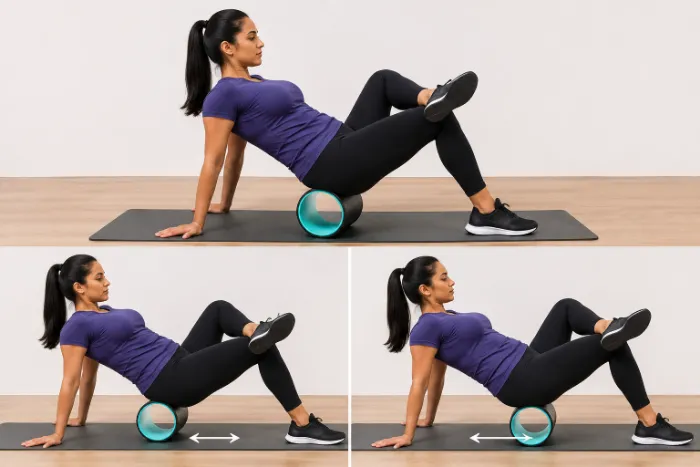
- Take a seat on the ground. Put the wheel behind you. Raise your buttocks so that the right side of them rests on the wheel. Put your right foot on your left thigh after raising it.
- Rock the whole muscle back and forth.
- To feel various regions that need to be released, try bending your leg up or down. Move back and forth.
- Apply this on both sides.
Bridge Pose:
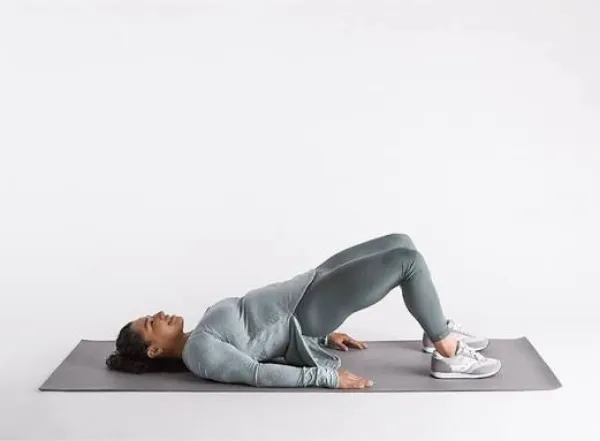
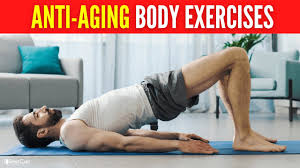
To start the bridge posture, lie on your back with both legs flat on the ground and straight.
- With your feet level on the floor and your toes pointing straight forward, slowly bend both knees.
- With the palms facing down, place the arms flat on the sides of the body.
- Take a breath, raise your hips gradually, and contract your buttocks and abdomen.
- Make a straight line from the shoulder to the knee by raising the hips as high as you can without experiencing any pain.
- Hold for five to ten breaths, then let go.
Bird-Dog Pose:
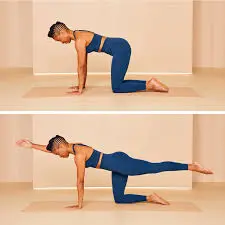
Get on all fours and place your arms and legs shoulder-width apart in the quadruped posture before beginning the bird-dog position.
- With a straight back and toes pointed away from the body, extend the right leg outward.
- Extend the left arm in front of the body at the same time.
- Stretch for five seconds at first, then gradually increase the duration to thirty seconds.
- On the other side, repeat with the arm and leg.
Avoid These Movements:
Lunges or step-ups: Single-leg lower body exercises that test your pelvic stability, such as lunges of any type or step-ups/downs, might be too taxing while you’re in discomfort. As a result, when performing exercises like floor bridges, deadlifts, and squats, you should maintain an equal weight distribution across both feet.
Impact: Given any hypermobility in the pelvis, running, leaping, and other ballistic workouts will probably make the discomfort worse. When these actions are inappropriate, the body will typically let you know.
Conventional cardio equipment: When experiencing symptoms, it is advisable to stay away from equipment that encourages single-leg exercises, such as the elliptical, Stairmaster, and treadmill.
Sitting with your legs crossed might cause your pelvis to become misaligned, which can exacerbate the SI joint. Instead, make an effort to sit upright with both feet flat on the ground.
Deep single-leg stretches: The SI joint may get irritated by deep single-leg stretches.
Any action that causes pain: Each person has different pain triggers. Keeping in mind that the pain may not manifest until the next day, pay attention to the activities that seem to cause or increase pain.
Effective Methods for Women with SI Pain During Pregnancy:
Tips for Lying Down:
- Avoid spending a lot of time on your back, especially after the 19th week of pregnancy.
- Try placing a cushion between your knees and another under your stomach while resting on your side, ideally on your left.
- Try putting a tiny rolled-up towel beneath your waist if it sags into the bed.
Tips for turning over in bed:
- Lying on your back, arch your lower back, contract your lower abdominal and pelvic floor muscles, and bend each leg individually to move to the right.
- Move your left arm to the right side of your body and turn your head to the right. If you can, cling to the edge of your bed.
- In order to roll to the right, pull with your left hand and move both knees to the right. In order to lock out your pelvis and reduce pain, bend your knees as high as they will go as quickly as you can.
- Turn to the left by reversing this.
Tips for Getting Out of Bed:
- Put your feet over the edge of the bed, roll onto your side with your knees bent, and use your arms to propel yourself sideways.
- When you lie down, the procedure is reversed.
Tips for standing from a sitting position:
- Take a seat on the chair’s edge.
- Maintaining a straight back, bend forward until your head is exactly above your knees while keeping your legs slightly apart.
- Push yourself upright with your arms while keeping your stomach tucked in and your back straight. This may greatly lessen your pain and keep your pelvic joints in their most secure posture.
Benefits of Strengthening Exercises for SI Joint Pain:
Strengthening activities have several advantages for those with SI joint pain:
- Enhanced Stability: Reducing excessive movement and increasing joint stability are two benefits of strengthening the muscles around the SI joint.
- Pain Reduction: By reducing tension on the SI joint, strong muscles can reduce pain.
- Increased Mobility: Frequent exercise improves the lower back’s and pelvis’s range of motion and flexibility.
- Injury Prevention: Future injuries are less likely when the musculoskeletal system is strong.
Aerobic exercise for SI joint dysfunction:
In order to improve circulation, lessen stiffness, and promote long-term recovery from sacroiliac joint pain, low-impact aerobic workouts are crucial. Exercises that assist in preserving joint mobility without putting undue strain on the lower back and pelvis include fast walking, stationary bike riding, and water aerobics. To increase endurance and promote general musculoskeletal health, frequent aerobic exercises lasting 20 to 30 minutes, three to five times a week, are advised.
Regular aerobic exercise also helps with weight control, which is crucial for lowering the mechanical strain on the SI joints. Additionally, it increases endorphin levels, which helps with natural pain relief and improves mental health.
Safety tips and modifications:
Exercise safety and technique are crucial while dealing with SI joint pain. The following are important safety measures and adjustments to make:
- Warm up and cool down: To avoid straining your muscles, start each workout with a mild warm-up and finish with some simple stretches.
- Be clear of asymmetrical exercises since they might cause the joint to load the pelvis improperly. Always maintain movements that are balanced and aligned.
- Use supporting surfaces: To lessen the pressure on the joints, perform floor exercises on a padded mat.
- Keep an eye on your level of pain: While mild discomfort during exercise is normal, severe or radiating pain is a warning sign to stop and see your doctor.
- Range of motion adjustment: Adjust workouts to your degree of flexibility and mobility. Compared to demanding full-range motions, partial movements are safer.
FAQs:
How to sleep with SI joint dysfunction?
Use supportive sleeping postures, such as rolling back at a 45-degree angle, resting on your pain-free side, or lying on your back with a knee pillow, to improve your quality of sleep if you have sacroiliac (SI) joint problems.
When does SI joint pain start in pregnancy?
Due to early hormone surges, sacroiliac (SI) joint discomfort can occur as early as the first trimester (around 9 to 12 weeks), although it usually starts or gets worse during the second and third trimesters when weight and postural stress rise.
What positions make SI joint pain worse?
Asymmetrical, twisted, or protracted postures that torque the pelvis or unevenly load weight onto one hip—such as crossing your legs, sleeping directly on the painful side, or sitting for extended periods of time without lower back support—make sacroiliac (SI) joint pain worse.
Is heat or ice better for SI joint pain?
Depending on your symptoms, you should use either heat or ice for sacroiliac (SI) joint pain: heat is better for deep muscular stiffness and tightness, while ice is better for acute, fresh, or heated inflammation. Both can be effective, depending on the precise kind of discomfort you experience, according to several Reddit users.
Can pregnancy cause SI joint pain?
Sacroiliac (SI) joint pain can really be caused by hormonal changes, weight gain, and changing posture during pregnancy.
References:
- Dengler, J. (2017). 1-Year Results of a Randomized Controlled Trial of Conservative Management vs. Minimally Invasive Surgical Treatment for Sacroiliac Joint Pain. Pain Physician, 6(20;6), 537–550. https://doi.org/10.36076/ppj.20.5.537
- Ross, D. S., Burch, H. B., Cooper, D. S., Greenlee, M. C., Laurberg, P., Maia, A. L., Rivkees, S. A., Samuels, M., Sosa, J. A., Stan, M. N., & Walter, M. A. (2016). 2016 American Thyroid Association Guidelines for Diagnosis and Management of Hyperthyroidism and Other Causes of Thyrotoxicosis. Thyroid, 26(10), 1343–1421. https://doi.org/10.1089/thy.2016.0229
- Airaksinen, O., Brox, J. I., Cedraschi, C., Hildebrandt, J., Klaber-Moffett, J., Kovacs, F., Mannion, A. F., Reis, S., Staal, J. B., Ursin, H., Zanoli, G., & Pain, O. B. O. T. C. B. W. G. O. G. F. C. L. B. (2006). Chapter 4: European guidelines for the management of chronic nonspecific low back pain. European Spine Journal, 15(S2), s192–s300. https://doi.org/10.1007/s00586-006-1072-1
- Trescot, A. M. (2003). Cryoanalgesia in interventional pain management. Pain Physician, 3 (6(7);3), 345–360. https://doi.org/10.36076/ppj.2003/6/345
- Vleeming, A., Schuenke, M. D., Masi, A. T., Carreiro, J. E., Danneels, L., & Willard, F. H. (2012). The sacroiliac joint: an overview of its anatomy, function, and potential clinical implications. Journal of Anatomy, 221(6), 537–567. https://doi.org/10.1111/j.1469-7580.2012.01564.x