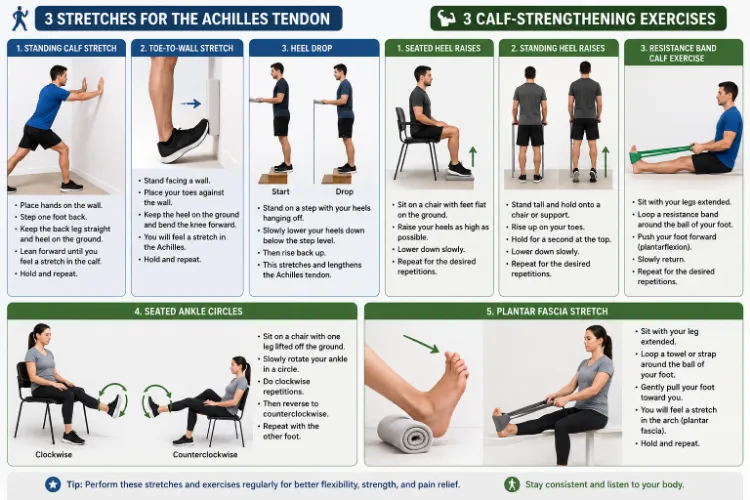
Top Exercises for Achilles Tendonitis
Introduction:
The thick tendon on the back of your leg that joins the calf muscle to your heel is called the Achilles tendon. It is the human body’s biggest and strongest tendon. Achilles injuries can occur in a variety of forms, from total tendon rupture to transient inflammation.
Stretching and strength training are frequently advised by medical experts and physiotherapists to assist in treating or preventing Achilles tendon issues.
What is the Achilles tendon?
Located in the rear of the lower leg, directly above the heel, is the Achilles tendon. By connecting your two calf muscles to your heel bone, it enables you to push up onto your toes. Walking requires a lot of tension as a result.
What is Achilles tendinopathy?
Achilles tendinopathy is a common condition that usually develops when the tendon is unable to adapt to the stress applied to it, such as while running, jumping, or standing for prolonged periods of time, or when there is a sudden rise in activity.
Among the symptoms are
- Pain
- Edema and stiffness in the back of the heel.
- The tendon may be sensitive to touch and feel warm.
- The tendon may appear red, swollen, or thicker.
Types of Achilles tendinitis:
The injured area of your tendon is described by the two forms of Achilles tendinitis:
- Noninsertional Achilles tendinitis: Your tendon’s main fibers begin to degenerate, swell, and thicken. People with this kind of Achilles tendinitis tend to be more active.
- Insertional Achilles tendinitis: The bottom portion of your heel, where the tendon attaches to your heel bone, gets injured by insertional Achilles tendinitis. Even those who are not active can be affected. However, those who misuse the tendon, like long-distance runners, are most frequently injured.
Causes and Symptoms:
Tendinitis is a type of inflammation that affects connective tissues. The Achilles tendon, the thickest tendon in the body, is particularly vulnerable to tendinitis, especially in the middle and lower parts of the tendon, even though it is strong enough to support the heel and calf during vigorous activity.
The following symptoms may be present in people with Achilles tendonitis:
- Achilles tendon pain
- Pain in the heel behind
- Increasing discomfort during or after exercise or sleep
- Severe ache the following day after exercise
- Inflammation and swelling
- Decreased range of motion when flexing the foot
- Achilles tendon thickening
- Calf muscles tightness
- The heel’s skin feels much warmer.
You may have Achilles tendinitis if you have one or more of these symptoms. It is advised that you get prompt treatment and stop any activities that might be aggravating this disease in order to prevent serious or long-term damage.
How is Achilles tendinopathy diagnosed?
Achilles tendinopathy is often diagnosed by a physician or physiotherapist through questioning and physical examination. Usually, scans and X-rays are not required.
Causes of Achilles tendinopathy:
While the specific cause of Achilles tendinopathy is unknown, there are a few things that could place more strain on the tendon and raise your risk:
- Age: The disease is more common after the age of thirty.
- Gender: Men are more likely to experience it.
- Diabetes: People with diabetes are more likely to develop Achilles tendinopathy.
- Weight: Achilles tendinopathy is more likely to occur in those who are overweight.
- Calf muscles that are weak or taut
- Stiff ankle joints
- Inadequate core stability around the hip and knee causes poor lower limb alignment.
- An abrupt rise in physical activity, such as jogging, walking, or participating in sports
- Training mistakes, such as an excessive amount of hill running or a lack of variation in training
3 Stretches for the Achilles Tendon:
Pain, stiffness, and edema may result from the Achilles tendon tightening due to inflammation.
Standing calf stretch:

By relaxing the Achilles tendon, the standing calf stretch can provide some relief.
This exercise requires a wall or other support, like a chair.
- Touch the chair or wall with your hands. Place your hands at eye level if you are using a wall.
- Take a step with the leg you wish to extend behind you. Point your toes directly forward while keeping your back heel on the ground.
- Maintaining a straight back leg, bend your opposite knee in the direction of the wall.
- You should feel a slight stretch in your calf as you lean toward the wall. Avoid bending so much that you get pain.
- Perform the stretch on the opposite side after 30 seconds of holding. Perform three repetitions.
Try doing a standing calf stretch with bent knees if straightening your leg hurts. Bend your back and knee until you feel a stretch, starting closer to the wall. Stretch on the opposite side after holding for 30 seconds. Do it three times.
Toe-to-wall stretch:
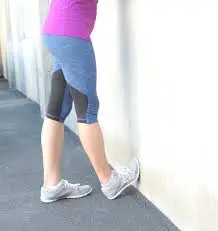
If the standing calf stretch causes shoulder pain, the toe-to-wall stretch is the best option. It can improve mobility by lessening the strain on the Achilles tendon, but it also puts less strain on the upper body.
Use these procedures on the limb that is painful.
- Put your toes up against the wall while facing it. The stretch is deeper the higher you position your toes.
- With your heel on the ground, bend forward.
- Stretch on the opposite side after holding for 30 seconds. Finish three reps.
Heel drop:
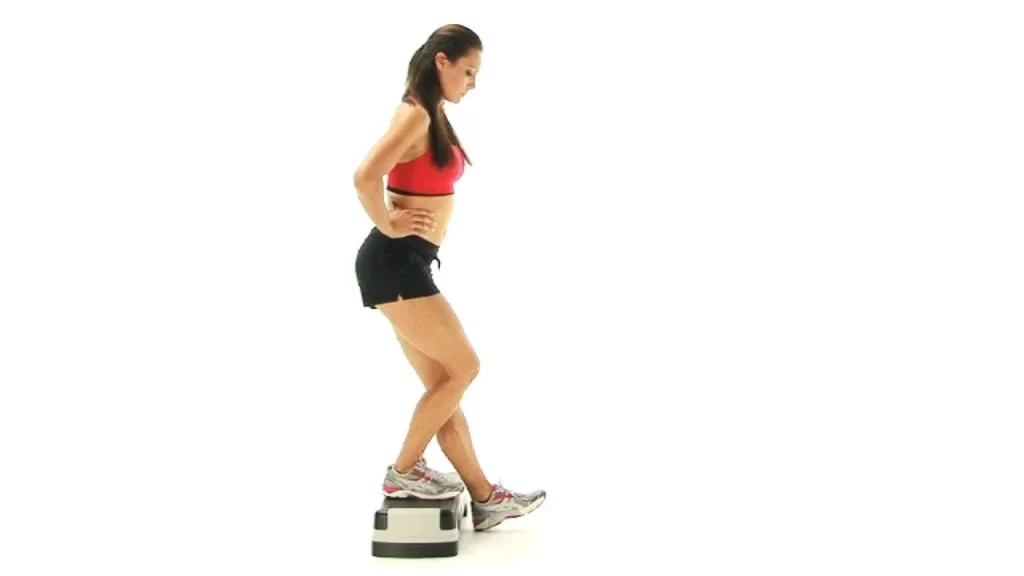
The heel drop is another stretch for the Achilles tendon. This stretch can be done on a sidewalk, step stool, stair step, or any other stable household object. A wall or chair might offer more support.
Stretch the leg that has a problem with the Achilles tendon.
- Place the ball of your foot on the lower step edge.
- Allow your other foot to relax while you lower your heel.
- Stretch on the opposite side after holding for 30 seconds. Finish three reps.
Perform this exercise under the direction of a medical professional if you have trouble balancing.
3 Calf-strengthening exercises:
Because they can reduce pain and improve Achilles function, exercises that strengthen your calf and heel muscles are frequently advised during Achilles tendon healing.
Seated heel raises:
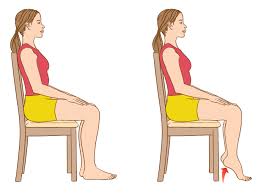
Your calf muscles contract to raise your heel when performing seated heel lifts. This strengthens and supports the Achilles tendon.
- Take a seat on a chair or on a bed’s edge. Put your feet shoulder-width apart and flat on the ground.
- Raise your heels as high as you can, pause, and then bring them down. Continue the motion and raise your toes instead of stopping at the bottom. Lower them to the starting position after pausing. It’s one rep.
- Perform 15 to 20 repetitions in one set. Repeat five to six times a day. Repeat.
Standing heel raises:
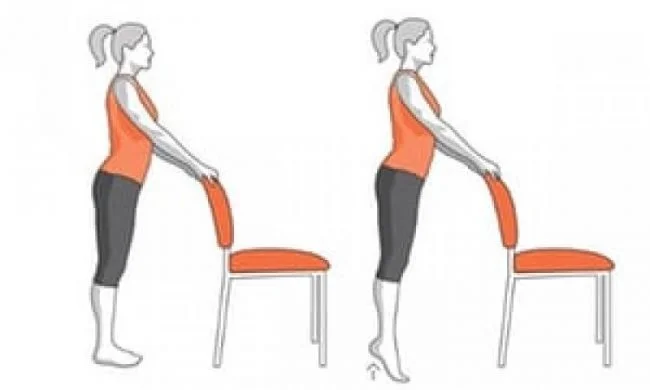
Heel lifts can be performed standing up if they are suitable when seated. This variation makes use of the muscles that are attached to your Achilles tendon.
- Place your feet shoulder-width apart and stand. For stability, grab onto a chair or countertop.
- Get up onto the balls of your feet by lifting your heels. Lower your heels gradually after pausing.
- Stand on the bottom of your heel by lifting your toes. Lower your toes gradually after pausing. One set is now complete.
- Perform 15–20 repetitions in a set. Do this up to five or six times every day.
Resistance band calf exercise:
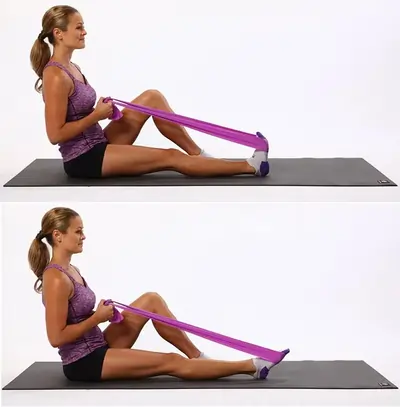
To tone your heel and calf muscles, you can also utilize a resistance band. By making these muscles work against resistance, this workout makes them stronger.
Use a band of light resistance first. You can use a thicker band with greater resistance as your tendon strengthens.
Seated Ankle Circles:
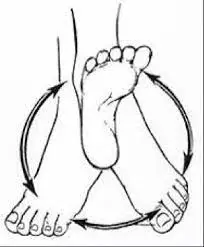
- Raise your foot off the ground while sitting normally with your leg out in front of you.
- Start turning your foot at the ankle in big, clockwise circles.
- To promote ankle joint mobility without putting strain on the Achilles tendon, concentrate on fluid, controlled motions.
- Rotate counterclockwise after completing ten to fifteen rounds. Continue with the opposite leg.
This exercise increases circulation to the Achilles tendon region, which is essential for healing and avoiding stiffness, and helps preserve ankle joint mobility. Ankle circles are particularly helpful for anyone seeking a low-impact method to aid in the healing of their Achilles tendon.
Plantar Fascia Stretch:
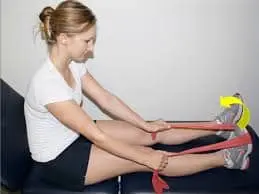
- Stretch the plantar fascia on the bottom of your foot by using your hand to gently pull back on the toes of your crossed leg while seated.
- Because Achilles tendon irritation can be increased by stiffness in the plantar fascia, this stretch is advantageous.
- After 15 to 30 seconds of holding the stretch, swap feet.
Achilles tendon stretching and strengthening tips:
Bend your Achilles tendon regularly for the best possible relief. Even if you don’t feel pain or stiffness, you should still stretch.
Remember these tips and techniques to maximize each stretch:
- Take your time: Move slowly, whether you’re changing positions or stretching. This will lessen the likelihood of suffering.
- Steer clear of bouncing: Sudden, fast movements will increase Achilles tendon problems. As you stretch, maintain your composure.
- Maintain a low heel: Plant your heel on the floor while performing a calf stretch.
- If you are in agony, stop: Stretch until you start to feel a little firm, then let go. Avoid pushing or straining your muscles. Stretching should be stopped right away if you feel extreme pain.
A physiotherapist or medical expert can assist you in creating an exercise regimen to help you manage your injury.
Other treatments for the Achilles tendon:
Stretches and exercises are frequently just one aspect of an Achilles tendon damage therapy regimen. Your doctor may make recommendations based on the extent of your injuries.
- Taking over-the-counter (OTC) painkillers and resting the leg for a while
- Wearing orthotics or a heel cushion in your shoes while applying a cold or warm compress
- Performing low-impact exercises like weightlifting, cycling, and swimming
Exercises to Avoid With Achilles Tendonitis:
While walking, stretching, and specific exercises can aid in the healing of your Achilles tendon, some activities can worsen your tendonitis. You might have to stay away from the following activities:
- Jumping and skipping
- Walking or running on an incline, upwards, or downwards
- Extreme stretching
- Running or walking on uneven ground
Who is at risk for Achilles tendinitis?
Achilles tendinitis is a common sports injury. Those who are at a high risk of developing Achilles tendinitis include:
- Participate in sports, particularly those that need fast stops and starts.
- Dance or run.
- work in jobs that put pressure on their feet and ankles.
- They play sports less often, which makes their bodies less used to the strain.
Your structure may also put you at greater risk for Achilles tendonitis. Example: if you have
- weak or stiff leg muscles.
- A different bone growth in your heel called a bone spur presses on a tendon, producing pain.
- Flat arches.
- When you walk, your ankles drop down due to overpronation.
What are the complications of Achilles tendinitis?
The following issues might arise if you don’t take it easy or get treatment for Achilles tendinitis:
Achilles tendinosis: The degeneration of your Achilles tendon begins.
Achilles tendon rupture: Your Achilles tendon tears, fractures, or separates from your heel bone.
When does Achilles tendinitis need surgery?
See your physician if you’ve tried nonsurgical treatments for six months and your discomfort persists. Surgery can be required. A foot and ankle surgeon can provide recommendations depending on your age, activity level, preferences, and injuries.
Some of the surgical possibilities are
- Gastrocnemius retraction: Your calf muscles are lengthened by a surgeon.
- Debridement and repair: If the majority of your tendon is healthy, the surgeon will only remove the damaged portion and sew the healthy tendon back together. You will need to wear a boot or cast for a few weeks following the treatment.
- Debridement with tendon transfer: There won’t be enough healthy Achilles tendon to function if more than half of it is damaged. An Achilles tendon transfer is required. The tendon that helps your big toe point down is transferred to your heel bone by the surgeon. The injured tendon gains sufficient strength to function after treatment. You will still be able to walk, run, and move your big toe. However, following this operation, you might not be able to participate in competitive sports.
- Hydrocision TenJet®: This ultrasound-guided, minimally invasive procedure breaks apart scar tissue in your tendon using high-velocity saline. Unhealthy tissue is selectively removed by the pressurized saline, which functions like a blade.
How Physical Therapy Can Help Achilles Tendonitis:
A complete approach to treating Achilles tendonitis is provided by physical therapy, which targets the underlying causes of suffering with customized evaluations, expert-guided exercises, and cutting-edge pain management methods.
PT helps address strength and flexibility imbalances around the Achilles tendon through a combination of individualized care, specialized treatments including manual therapy and custom orthotic support, and education on prevention and safe activity resumption.
Seeing a physical therapist can help you restore mobility and improve your quality of life if Achilles tendonitis is interfering with your everyday activities.
FAQs:
What is the fastest way to heal Achilles tendonitis?
Using the RICE approach (Rest, Ice, Compression, Elevation), ceasing high-impact activities, and beginning focused eccentric strengthening exercises as soon as possible are the quickest ways to treat Achilles tendinitis. Real healing requires rigorous consistency over a few weeks to months because tendons have a weak blood supply.
Is walking good for Achilles tendinitis?
If you walk gently and briefly to increase blood flow, it can help with Achilles tendinitis. Long treks, steep slopes, and uneven terrain, however, might exacerbate the discomfort and inflammation. Rest and exercise in moderation, and cease if your discomfort worsens.
Can Achilles tendonitis heal in 3 days?
Mild tendinitis: Achilles tendonitis may heal with two to four weeks of rest and conservative treatment. Moderate tendonitis: physical therapy and strengthening exercises for six to twelve weeks. Tendon degeneration or chronic tendonitis: three to six months or more, potentially requiring surgery or regenerative therapies.
What is the hardest tendon to heal?
Because of its poor blood supply and the daily weight it bears, the Achilles tendon is regarded as one of the hardest and slowest tendons to repair.
Can an Achilles tendon heal on its own?
A slight or partial rupture of the Achilles tendon may occasionally heal on its own, but severe ruptures need medical attention (such as a walking boot, casting, or surgery) to recover properly. Untreated large tears frequently result in long-term weakness, an extended tendon, and difficulty walking.
References:
- De Vos, R. J., Weir, A., Van Schie, H. T. M., Bierma-Zeinstra, S. M. A., Verhaar, J. A. N., Weinans, H., & Tol, J. L. (2010). Platelet-rich plasma injection for chronic Achilles tendinopathy. JAMA, 303(2), 144. https://doi.org/10.1001/jama.2009. 1986
- Alfredson, H., & Lorentzon, R. (2000). Chronic Achilles tendinosis. Sports Medicine, 29(2), 135–146. https://doi.org/10.2165/00007256-200029020-00005
- Kader, D., Saxena, A., Movin, T., & Maffulli, N. (2002). Achilles tendinopathy: some aspects of basic science and clinical management. British Journal of Sports Medicine, 36(4), 239–249. https://doi.org/10.1136/bjsm.36.4.239
- Watts, A. E., Yeager, A. E., Kopyov, O. V., & Nixon, A. J. (2011). Fetal-derived embryonic-like stem cells improve healing in a large animal flexor tendonitis model. Stem Cell Research & Therapy, 2(1), 4. https://doi.org/10.1186/scrt45
- Clement, D., Taunton, J., & Smart, G. (1984). Achilles tendinitis and peritendinitis: Etiology and treatment. The American Journal of Sports Medicine, 12(3), 179–184. https://doi.org/10.1177/036354658401200301