Top 5 Physiotherapy Exercises for Plantar Fasciitis Relief
Introduction:
The plantar fascia of the foot, particularly around the arch or heel, is affected by plantar fasciitis. Heel pain is linked to it. Overstressing the plantar fascia, the ligament that connects your heel to your toes, may put stress on your heel. Furthermore, overstretching yourself during any exercise can cause minor pain and tears.
Poor treatment of plantar fasciitis can result in both heel pain and heel spur pain, which is caused by the heel bone expanding. The majority of people who have plantar fasciitis begin to experience pain when they wake up in the morning or after spending a lot of time sitting down. The aches and stiffness are typically relieved by walking or taking a few steps.
Exercises that strengthen and lengthen the muscles surrounding the heel improve the foot’s function and flexibility. Pain and other symptoms can be reduced by performing exercises for plantar fasciitis, applying ice and heat packs, avoiding uncomfortable activities, giving your heel enough time to recover, and wearing the right shoe inserts.
Strengthening the muscles, tendons, and ligaments surrounding the heel and enhancing the general foot are two benefits of exercising for plantar fasciitis.
Physiotherapy Exercises for Plantar Fasciitis Video:
Physiotherapy Exercises for Plantar Fasciitis Relief:
Toe Curls with a Towel:
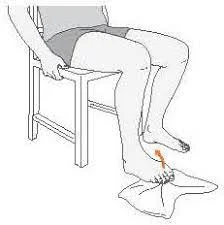
- Keep your heels below your knees while sitting (or standing, if you’d prefer).
- Both your legs and your feet should have toes that are parallel to one another and pointed forward.
- After spreading the towel out, place a level foot on it.
- When you elevate your toes and flex your foot back, keep your heel down.
- Stretch your foot equally over the middle and both sides of the towel, keeping your heel on the fabric, and step out as far as you can.
- Make sure your heel stays in position as you squeeze the towel in by utilizing your arch and toes.
- Aim the towel toward you.
- Directly under the arch, draw a wide circle with all five fingertips on both sides of the foot.
- Only a specific area of the towel can be moved with each extension and restriction.
- Next, go back to your neutral stance.
- After that, relax.
- 5–10 times over, repeat this workout.
Calf Stretch at the Wall:
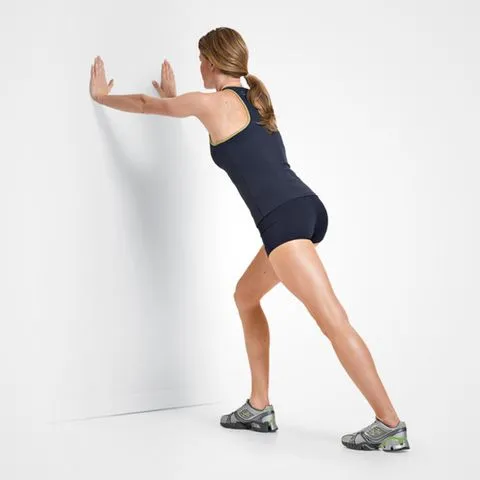
- Take a position now, facing a wall or other sturdy object.
- Take a single forward step and point both of your toes straight ahead.
- Common stretches include knee extension and leg backward.
- As you advance near the wall, extend your front knee to keep your arms supporting your body.
- As a result, your leg should be able to extend somewhat down the back.
- You can step in or out of the wall to change your stance so that your rear leg can lengthen.
- It is also possible to modify the front knee’s bend to enhance control over the stretch.
- Take a few seconds to hold this position.
- Next, go back to your neutral stance.
- After that, relax.
- 5–10 times over, repeat this workout.
Plantar Fascia Stretch:
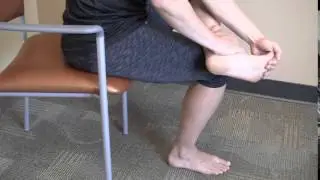
- Sit down and cross one leg over the other knee so that your ankle is on top of the other leg.
- Holding your ankle with one hand and your toes with the other, slowly pull your toes back until the bottom of your foot begins to spread.
- Take a few seconds to hold this position.
- Next, go back to your neutral stance.
- After that, relax.
- 5–10 times over, repeat this workout.
Towel stretch:
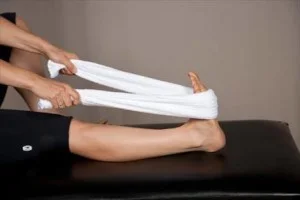
- You may do this simple stretch in bed or while sitting on the floor.
- Legs out in front of you, seated on the floor or in your bed.
- Once you have wrapped the ends of the towel, place it under your heels.
- Keep your leg straight as you slowly pull the material toward yourself.
- Take a few seconds to hold this position.
- Next, go back to your neutral stance.
- After that, relax.
- 5–10 times over, repeat this workout.
Rolling Massage:
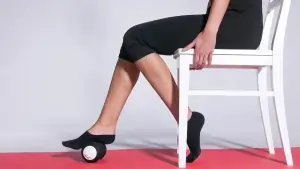
- Rolling massage is a self-myofascial release method that applies light pressure to soft tissues and muscles using instruments like a foam roller or massage roller.
- This method facilitates better blood circulation, less pain, and the release of tense muscles.
- Rolling slowly over several muscular areas, including the shoulders, thighs, calves, and back, can effectively alleviate tension and trigger points. Rolling massages are frequently used to warm up muscles before workouts and to promote flexibility and recovery afterward.
- Frequent practice can improve total muscle relaxation, decrease stiffness, and increase mobility, making it an easy yet powerful complement to any workout or recovery regimen.
Conclusion:
A thick band of tissue known as the plantar fascia runs from the heel to the toes. Overuse, strain, or injury can cause inflammation in this tissue, which can be painful.
The condition known as plantar fasciitis may be the cause of heel pain. Those of all ages and abilities can have it, but runners and those who spend a lot of time on their feet are more prone to getting it.
A severe, stabbing pain in the heel may be caused by plantar fasciitis. While runners may have it as an overuse injury, overweight people are more likely to have it. In the mornings or after standing for long periods of time, the pain is typically the worst.
In some cases, persons with plantar fasciitis can be cured without surgery. Instead, patients are improved by medical procedures, at-home therapies, and physical therapy.
FAQs:
If I have plantar fasciitis, do I require physical therapy?
Physical therapists assist patients with plantar fasciitis in reducing their pain and regaining their ability to walk. Experts in movement are physical therapists. Through patient education, hands-on care, and recommended mobility, they enhance quality of life. For an assessment, get in touch with a physical therapist directly.
When dealing with plantar fasciitis, which exercises should be avoided?
Avoid high-impact activities like running, jogging, leaping, dancing, and aerobics that put a lot of strain on the heels if you want to properly treat plantar fasciitis. Additionally, until symptoms go away, refrain from or adjust heavy lifting exercises like leg presses and squats, go barefoot, and work out on hard surfaces.
How quickly can plantar fasciitis be healed?
With conservative treatment, which includes stretching, icing the sore spot, and changing or avoiding unpleasant activities, the majority of patients with plantar fasciitis heal in a few months.
If you suffer from plantar fasciitis, what vitamin are you missing?
One of the main causes of plantar fasciitis is a lack of vitamin D3, which hinders healing, weakens muscles, and causes persistent inflammation. Magnesium (which interferes with calcium control) and vitamin B12 are two other contributory inadequacies.
Which physical therapy is most effective for plantar fasciitis?
Manual therapy, stretching, taping, foot orthoses, and night splints are the most often suggested PT interventions. Joint and soft tissue mobilization are essential components of manual therapy. Pain can be lessened by myofascial release. The gastrocnemius-soleus complex and plantar fascia should be stretched.
Do supportive shoes matter when you’re recovering?
Indeed, wearing shoes with enough arch support and cushioning helps ease plantar fascia tension and hasten healing.
At what point should I consult a physician or physiotherapist?
Consult a specialist if your heel pain intensifies, persists for more than a few weeks, or gets in the way of your everyday activities.
Is it possible for plantar fasciitis to resolve itself?
Plantar fasciitis frequently gets better with rest, stretches, and strengthening activities. Chronic heel pain can be avoided with early treatment.
Do these exercises require any extra equipment?
The majority of exercises don’t require any special equipment. For rolling, some people might utilize basic objects like a frozen water bottle, a towel, or a resistance band.
Can someone with plantar fasciitis still run or walk?
High-impact exercises like jogging should be avoided until pain subsides, but light walking is usually acceptable. It is strongly advised to wear supportive footwear.
If I have pain, should I quit working out?
Stretching can cause mild pain, but severe or acute pain is abnormal. If there is a noticeable increase in pain, stop the exercise.
How frequently ought I to perform these exercises?
The majority of plantar fasciitis physiotherapy exercises can be performed once or twice a day. For optimal effects, stretching exercises are most beneficial in the morning and right before bed.
References:
- CB Physiotherapy. (n.d.). Cbphysiotherapy. https://cbphysiotherapy.in/exercise/top-5-exercises-for-plantar-fasciitis
- Best exercises for plantar fasciitis. (2025, August 29). Loyola Medicine. https://www.loyolamedicine.org/newsroom/blog-articles/best-exercises-plantar-fasciitis
- Versus Arthritis. (n.d.). Plantar fasciitis. https://www.versusarthritis.org/media/21790/plantar-exercise-sheet.pdf
- Top 5 plantar fasciitis exercises to help you find relief – Alliance Orthopedics. (n.d.). https://allianceortho.com/top-5-plantar-fasciitis-exercises-to-help-you-find-relief/
- Villines, Z. (2024, June 25). Best stretches and exercises for plantar fasciitis. https://www.medicalnewstoday.com/articles/324353