How to Strengthen Your Shoulders at Home?
Introduction:
With its ability to rotate, lift, drop, and move in any direction, the shoulder is one of the body’s most flexible joints. In addition to enabling heavy lifting and protecting the unstable shoulder joint, shoulder muscles aid in maintaining proper posture. Therefore, learn the best shoulder exercises to perform at home without using a personal trainer or going to the gym in order to strengthen and define your shoulders.
Exercises for strengthening your shoulders and rotator cuff at home may be helpful if you’re experiencing pain or stiffness in these areas. Your arm may move in many directions thanks to the shoulder, which is a ball-and-socket joint composed of various bones, muscles, and tendons.
Although they regulate the arm and maintain the shoulder, the rotator cuff muscles are vulnerable to rips, inflammation, and repeated stress injuries. By strengthening these muscles, shoulder injuries can be avoided. Following surgery or an injury, your doctor might also recommend workouts to aid in your recovery.
Shoulder-strengthening exercises are covered in this article. It describes the anatomy of the shoulder and typical reasons for pain. Additionally, it offers detailed directions for seven rotator cuff exercises.
Exercises to Strengthen Your Shoulders at Home Video:
Exercises to Strengthen Your Shoulders at Home:
Arm Circles:
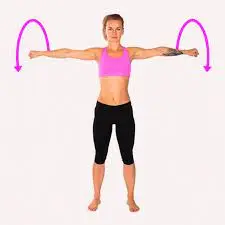
Arm circles are a quick and easy warm-up exercise that helps boost blood flow to the upper body and enhance shoulder mobility. Standing erect with your feet shoulder-width apart, you can perform this exercise by extending your arms straight out to the sides at shoulder height. Start by moving your arms in little circles, progressively enlarging the circles.
For 20 to 30 seconds, execute the movement forward; then, reverse the direction and repeat. Arm circles are a great way to warm up your arms, shoulders, and upper back before a workout, sporting event, or physiotherapy treatment. Because regular practice prepares the muscles and joints for movement, it can improve flexibility, decrease shoulder stiffness, and lessen the chance of injury.
Shoulder Shrugs:
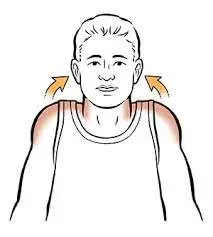
Shoulder shrugs are an easy strengthening exercise that helps with posture and shoulder stability by focusing on the upper trapezius muscles. Standing erect with your feet hip-width apart and your arms at your sides in a comfortable position is how shoulder shrugs are performed. This exercise can be done with or without weights, like a barbell or dumbbells.
Squeeze your upper back muscles as you slowly raise your shoulders straight up toward your ears, hold the position for a moment, and then gently lower them back to the starting position. Shoulder shrugs help improve upper body strength, ease tension in the neck and shoulders, and promote improved posture, particularly for those who spend a lot of time sitting down.
Front Raises:
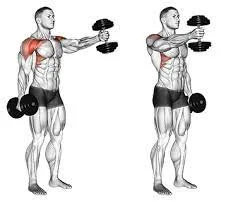
A useful exercise for developing the anterior deltoid (front shoulder muscles) is the front raise. This exercise involves holding a dumbbell in each hand, with the palms facing your body and the arms resting in front of your thighs, while standing erect with your feet shoulder-width apart. Lift the weights forward gradually until they are at shoulder height while maintaining a straight arm with a small elbow bend.
After a brief pause at the peak, carefully reduce the weights again. For greater muscle activation, move slowly and steadily rather than swinging your body or employing momentum. Front raises are useful for upper body exercises and rehabilitation programs because they enhance shoulder strength, stability, and muscular definition.
Lateral Raises:
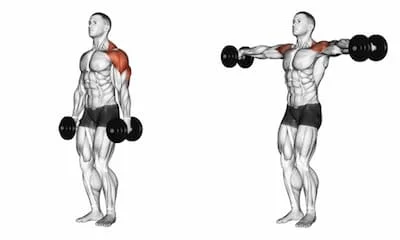
Targeting the middle deltoid muscles, lateral raises are a very powerful shoulder exercise that contributes to the development of stronger and wider shoulders. Hold a dumbbell at your sides, palms facing inward, and stand erect with your feet shoulder-width apart to execute lateral raises. As you progressively raise your arms out to the sides to shoulder height, maintain a small bend in your elbows. After a brief pause at the peak, carefully reduce the weights again.
Shoulder soreness might result from swinging your body or lifting weights too high. Lateral raises are frequently used in upper body exercises and rehabilitation programs to increase shoulder mobility and function because they increase shoulder strength, stability, and muscle definition.
Overhead Press:
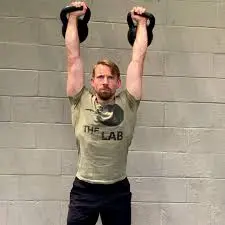
The overhead press is a potent upper-body strengthening exercise that works the triceps, upper chest, and core muscles in addition to the shoulders (deltoids). Hold a pair of dumbbells at shoulder level with your palms facing front while standing with your feet shoulder-width apart to do the overhead press. Press the weights up until your arms are completely extended overhead while maintaining a straight back and strong core.
After a brief pause at the top, carefully bring the weights down to shoulder level. Avoid using momentum or arching your lower back when lifting the weights. The overhead press is a crucial exercise for strength training, sports performance, and rehabilitation programs because it increases shoulder strength, stability, and overall upper body power.
Wall Angels:
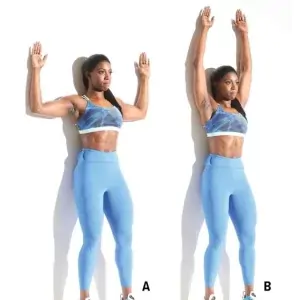
In addition to strengthening the upper back and improving shoulder alignment, wall angels are a great exercise for shoulder mobility and posture correction. Wall angels are performed by standing with your knees slightly bent, feet slightly off the wall, and back flat against the wall. Maintain a gentle pressure on the wall with your head, upper back, and lower back.
With the backs of your hands against the wall and your elbows bent at a 90-degree angle, raise your arms into a “goalpost” posture. While keeping your arms in contact with the wall, slowly slide them upward overhead. Then, carefully return to the starting position. Do not shrug your shoulders or arch your lower back.
Wall angels are particularly helpful for persons who sit for extended periods of time because they assist in minimizing rounded shoulders, improving posture, increasing shoulder mobility, and relieving tension in the neck and upper back.
Reverse Plank Hold:
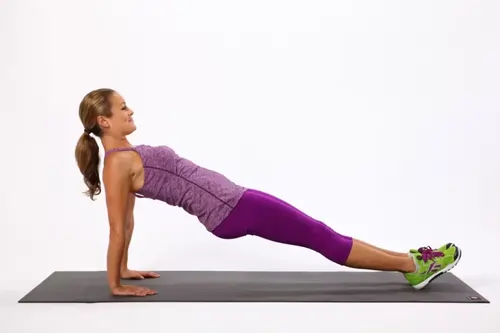
Reverse Plank Hold is a powerful exercise for developing the core and posterior chain that works the arms, shoulders, hamstrings, lower back, and glutes. This exercise involves sitting on the floor with your hands slightly behind your hips, fingers pointing toward your feet, and your legs straight out in front of you. Lift your hips upward until your body is in a straight line from head to heels after applying solid pressure via your palms and heels.
Keep your shoulders back, your core active, and your chest open. Slowly drop your hips back down after holding this position for 20 to 40 seconds while breathing steadily. Don’t allow your head fall back or your hips slump. The reverse plank helps offset the effects of prolonged sitting, strengthens the rear half of the body, increases shoulder stability, and improves posture.
Arnold Press:
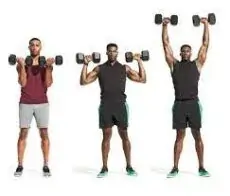
The Arnold Press is a dynamic shoulder-strengthening exercise that works the triceps and upper chest in addition to the three heads of the deltoid muscle. This form of the overhead press, which bears Arnold Schwarzenegger’s name, incorporates a circular movement to increase muscle activation. With your elbows bent and palms facing your body, hold a dumbbell in each hand in front of your shoulders while you sit or stand to complete the Arnold press.
At the peak of the exercise, turn your palms outward so they face forward while you push the weights upward. Lower the dumbbells back to the beginning position and slowly reverse the motion. Avoid arching your lower back and maintain an active core.
Bent Over Reverse Fly:
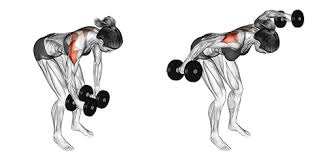
The middle trapezius, rhomboids, and rear deltoids are the main muscles worked by the efficient shoulder and upper back exercise known as the “Bent Over Reverse Fly.” Hold a dumbbell in each hand while standing with your feet hip-width apart to complete this workout. Maintaining a straight back and a tight core, bend forward at the hips and slightly bend your knees. With your palms facing one another, let your arms droop toward the floor.
Squeeze your shoulder blades together at the top as you slowly raise the dumbbells out to the sides until your arms and shoulders are in alignment. After a brief pause, carefully return the weights to their starting position. Don’t round your back or use momentum. Bent over reverse fly helps rectify rounded shoulders caused by extended sitting, strengthens the upper back, increases shoulder stability, and improves posture.
Conclusion:
To sum up, adding these upper-body and shoulder workouts to your regimen can greatly enhance your posture, strength, stability, and mobility. Exercises like the overhead press, Arnold press, lateral lifts, and bent over reverse fly help to build muscle strength and definition, while arm circles and wall angels improve joint health and flexibility.
Incorporating both strengthening and mobility workouts lowers the chance of injury and guarantees balanced shoulder development. You may develop stronger, healthier shoulders that support everyday tasks, athletic performance, and general fitness by using good technique and staying consistent.
FAQs:
Does shoulder training at home require any special equipment?
No, however, workouts may be made more versatile and effective using basic equipment like resistance bands, small dumbbells, or everyday objects.
Are shoulder exercises effective for alleviating shoulder pain?
Weakness or bad posture can cause moderate shoulder pain, which can be lessened by strengthening the surrounding muscles. However, if the pain is severe or chronic, see a physiotherapist.
Are novice shoulder workouts safe?
Yes, low-impact activities like wall push-ups, resistance band routines, and small weights are a good place for novices to start. Prioritize correct form before stepping up the intensity.
Before performing shoulder workouts, should I warm up?
Blood flow is increased, and injury risk is decreased with a good warm-up that includes shoulder rolls, arm circles, and gentle stretches.
Can posture be improved with shoulder exercises?
Indeed, posture may be improved, rounded shoulders can be lessened, and neck and upper back pain can be lessened by strengthening the shoulder and upper back muscles.
After working out, is it typical to experience shoulder soreness?
It’s common to experience mild DOMS, particularly if you’re new to exercising. Sharp or ongoing pain, however, can be a sign of poor form or damage, so you should rest or get professional help.
What is the duration required to observe results?
Within three to six weeks, you might notice an improvement in your strength and muscle tone with consistent training and a healthy diet.
Which exercises work best for strengthening the shoulders at home?
Shoulder taps, pike push-ups, arm circles, wall angels, resistance band lateral raises, and dumbbell or water bottle overhead presses are all good at-home workouts.
Can I strengthen my shoulders without using weights?
Indeed, bodyweight exercises like push-ups, pike push-ups, wall walks, plank shoulder taps, and resistance band workouts can help you build stronger shoulders. The secret is to be consistent.
How frequently should I do shoulder exercises at home?
Shoulder exercises can be done two to three times a week, with at least one day off in between. This lowers the chance of injury while promoting muscle growth and recovery.
References:
- Godman, H. (2023, December 1). 3 easy ways to strengthen your shoulders. Harvard Health. https://www.health.harvard.edu/exercise-and-fitness/3-easy-ways-to-strengthen-your-shoulders
- Cronkleton, E. (2025a, February 28). Top 10 exercises to relieve shoulder pain and tightness. Healthline. https://www.healthline.com/health/shoulder-pain-exercises
- Kirkup-Lee, A. (2025, October 10). The best shoulder exercises to build big shoulders. Gymshark. https://row.gymshark.com/blog/article/best-shoulder-exercises
- Tracey, A. (2025, July 25). 13 Best dumbbell shoulder Exercises. Men’s Health. https://www.menshealth.com/uk/fitness/a61944804/best-dumbbell-shoulder-exercises/
- Gold’s Gym. (2025, December 2). 7 Shoulder exercises for strength and stability | Shoulder workouts. Gold’s Gym. https://www.goldsgym.com/blog/7-shoulder-exercises-for-strength-and-stability/