Easy At-Home Exercises for Hip Pain & Stiffness Relief
Introduction:
Over time, hip pain and stiffness can restrict mobility and make daily activities like sitting, walking, and bending difficult. Gentle at-home exercises can effectively relieve pain and restore flexibility, regardless of the cause—poor posture, tight muscles, joint problems, or extended sitting.
From the comfort of your home, you can strengthen supporting muscles, increase joint mobility, and encourage improved hip alignment with these easy yet powerful exercises.
Benefits of Hip Pain & Stiffness Relief – Easy At-Home Exercises:
There are a number of advantages to doing simple at-home exercises for hip pain and stiffness that improve mobility and comfort. These exercises assist in releasing tense muscles that cause stiffness, lower inflammation, and improve blood flow to the hip region.
Additionally, they improve joint stability and support by strengthening the surrounding muscles. Frequent practice can enhance flexibility, balance, and posture, making daily motions easier and less painful while lowering the chance of developing hip pain in the future.
Hip Pain & Stiffness Relief – Easy At-Home Exercises Video:
Hip Pain & Stiffness Relief – Easy At-Home Exercises:
Hip Circles:
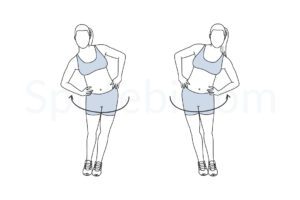
Hip circles are a mild yet powerful mobility exercise that enhances range of motion and releases tense hip joints. This exercise involves placing your hands on your hips, standing with your feet shoulder-width apart, and slowly rotating your hips in a circle, first clockwise and then counterclockwise. This fluid, deliberate movement improves joint lubrication, warms the hip muscles, and reduces stiffness caused by extended sitting or inactivity.
Hip Flexor Stretch:
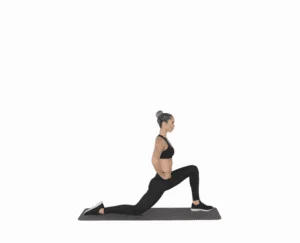
The muscles at the front of your hips, which frequently grow tense from prolonged sitting, are the focus of the hip flexor stretch. To do this, make a 90-degree angle at both knees by kneeling on your right knee with your left foot positioned in front.
Maintaining an upright torso, slowly move your hips forward until the front of your right hip begins to expand. This stretch encourages better posture and mobility, increases hip flexibility, and relieves tension.
Child’s Pose:
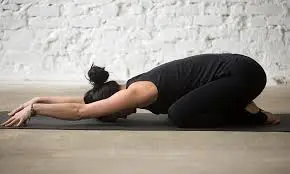
Child’s Pose is a mild yoga pose that relieves tension in the thighs, hips, and lower back. Starting on your hands and knees, slowly sit your hips back toward your heels while dropping your forehead to the floor and extending your arms forward.
Take a deep breath and let your hips open and your spine lengthen as you relax into the stretch. This relaxing pose increases hip and lower back flexibility, eases stiffness, and encourages relaxation.
Side-Lying Hip Abduction:
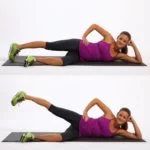
The gluteus medius and outer hip muscles, which are crucial for maintaining the hips and pelvis, are strengthened by side-lying hip abduction. This workout requires you to lie on one side with your legs straight and stacked. Lift your upper leg slowly to a 45-degree angle while keeping your lower leg relaxed.
Then, carefully lower it back down. Before swapping sides, repeat for a few repetitions. This exercise lowers the risk of hip pain and stiffness while enhancing hip strength, balance, and joint stability.
Prone Hip Extension:
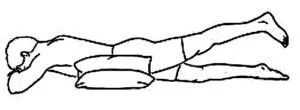
Prone hip extension is a great exercise for increasing hip mobility and strengthening the lower back and glutes. To accomplish it, lie face down on a mat with your arms by your sides and your legs straight.
Lift one leg slowly upward without bending the knee or arching your back while maintaining an engaged core, then carefully lower it back down. On the other leg, repeat. This exercise promotes appropriate hip alignment for more fluid movement, lessens stiffness, and strengthens and activates the hip extensors.
Knee to Chest Stretch:
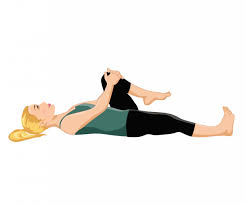
By gently extending the muscles and increasing flexibility, the knee-to-chest stretch relieves stress in the glutes, hips, and lower back. Lie on your back with your legs outstretched to do this stretch.
Bring one knee up to your chest, wrap your hands around your shin, and slowly bring the knee closer until your hip and lower back are comfortably stretched. This exercise improves spine mobility, eases stiffness, and encourages relaxation.
Straight Leg Raises:
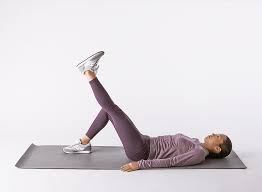
Without straining the lower back, straight leg raises are a great way to strengthen the quadriceps, hip flexors, and core muscles. Lie flat on your back with one leg bent and the other straight to do this exercise. Keeping your core active, tighten the thigh muscles of your straight leg and gradually raise it to the height of the bent knee.
After a few seconds of holding, gradually lower it once more. Do this on each leg multiple times. Leg strength, hip stability, and general lower-body control are all enhanced by this exercise.
Glute Bridge:
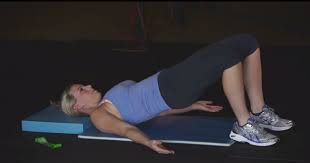
The glute bridge is an effective exercise that improves core stability and targets the lower back, hamstrings, and glutes. This exercise involves lying on your back with your feet flat on the floor, hip-width apart, and your knees bent.
As you raise your hips until your body forms a straight line from your shoulders to your knees, contract your glutes and engage your core. After a few seconds of holding the pose, gradually bring your hips back down. Glute bridges strengthen the posterior chain, enhance posture, and ease hip and lower back pain.
Clamshells:
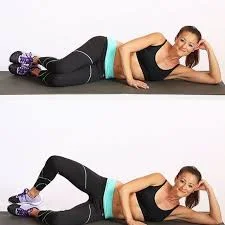
The gluteus medius and hip stabilizer muscles, which are crucial for preserving appropriate hip alignment and easing knee and lower back pain, can be strengthened using clamshells. This exercise involves lying on your side with your feet together and your knees bent at a 90-degree angle.
Without turning your pelvis, slowly raise your upper knee as high as you can while maintaining contact between your feet. After a little minute of holding, carefully lower your knee back down. Repeat on each side numerous times. Hip stability, balance, and general lower-body strength are all enhanced with clamshells.
Conclusion:
Hip strength, flexibility, and stability can be greatly increased by including exercises like clamshells, glute bridges, and straight leg lifts in your regimen. These exercises improve posture and mobility for everyday tasks in addition to reducing pain and stiffness.
Regular practice improves lower-body function and joint support, allowing you to move more comfortably and freely.
FAQs:
What is the most effective natural treatment for hip pain?
For hip joints to heal, rest is essential. Inflammation can be decreased, and joints can heal with rest. Inflammation and pain can be lessened by lying down and sitting comfortably. Additionally, rest means limiting and minimizing general activities that put undue strain on the hip and other joints.
Which painkillers work best for hip pain?
Hip pain is frequently treated with over-the-counter medications such as ibuprofen (Advil or Motrin) and acetaminophen (Tylenol). For short-term pain treatment, analgesics like muscle massages can be used. Additionally, we could suggest other prescription treatments, including biological response modifiers and antirheumatic medications.
Does heat help with hip pain?
As needed, apply heat or cold to your aching hips. Use whatever is most beneficial to you. Additionally, you can choose between hot and cold packs. To reduce pain and stiffness, apply heat two or three times a day for 20 to 30 minutes using a heating pad, hot shower, or hot pack.
What makes the hips stiff?
Causes of Stiff Hips
Osteoarthritis: Osteoarthritis is a major cause of hip stiffness, particularly in elderly persons. Over time, this disorder causes the hip joint’s cartilage to deteriorate, resulting in pain, stiffness, and inflammation. Tight Hip Flexors: Hip flexors are essential for leg and hip motion.
What is an effective painkiller at home?
Using heat or cold packs, administering topical treatments like clove oil or ginger, and adding mild activity like swimming or walking are all examples of home remedies for pain alleviation. Additionally, you can try ingesting anti-inflammatory foods and beverages like tart cherry juice or turmeric, as well as engaging in relaxation methods like meditation and deep breathing.
What kind of oil helps with hip pain?
The anti-inflammatory and pain-relieving qualities of castor oil have long been utilized. A castor oil pack applied to the hip can aid with pain relief, circulation improvement, and edema reduction. Soak a piece of cloth in heated castor oil and apply it to the sore spot to create a castor oil pack.
How can you determine whether hip pain is caused by a joint or a muscle?
Pain in the groin or on the inside of the hip is often caused by issues with the hip joint itself. Problems with the muscles, ligaments, tendons, and other soft tissues around the hip joint are typically the source of hip pain on the outside of the hip, upper thigh, or outer buttock.
What should I stay away from if I have hip pain?
Avoid applying direct pressure to the hip and bending it repeatedly. Avoid sitting for extended periods of time or sleeping on the affected side.
Which sleeping posture is ideal for those with hip pain?
Sleeping on your back or side with a pillow to support your hips and correct your body is the best option if you have hip pain. To avoid the upper leg dragging the pelvis out of alignment, side sleepers should position a pillow between their knees, while back sleepers should place a pillow beneath their knees.
Does stiffness in the hips go away?
If left untreated, some stiff hip symptoms may be transient, while others may cause chronic pain. The difference between everyday pain and pain-free activities can be made by knowing when to seek medical attention.
Which natural remedy works best for hip pain?
RICE stands for Rest, Ice, Compression, and Elevation.
This four-step method for treating an activity-related hip injury is simple to remember. Rest refers to avoiding any unpleasant activities with the hip, ideally by keeping it motionless at first. Ice refers to using ice on the hip to reduce pain and swelling.
What is the most effective exercise for hip pain?
Because they strengthen the muscles surrounding the hips, exercises like the hip bridge, side-lying hip abduction, and hip flexor raises are helpful for hip pain. Static stretches that are held for at least 30 seconds or gentle stretches like the pretzel stretch can also increase flexibility and decrease stiffness.
How may hip and leg pain be relieved during pregnancy?
Warm (not hot) baths or warm compresses with a heating pad or hot water bottle work well for hip pain during pregnancy. Applying warmth to the hip joints improves blood flow, which helps reduce painful muscular spasms caused by the release of relaxin and more weight strain on the joints.
Reference:
- Lillis, C. (2025, August 13). Exercises and stretches for hip pain. https://www.medicalnewstoday.com/articles/325029
- Davis, N. (2023, March 15). Try this: 12 exercises to relieve hip and lower back pain. Healthline. https://www.healthline.com/health/pain-relief/exercises-for-hip-pain
- Godman, H. (2025, July 1). 3 do-at-home stretches to release hip and buttock pain. Harvard Health. https://www.health.harvard.edu/pain/3-do-at-home-stretches-to-release-hip-and-buttock-pain
- Sports, S. (2023, December 20). Get Your Hip and Knee Joints Moving Again with These 5 At-Home Exercises. SMART Sports Medicine. https://smartsportsmed.com/get-your-hip-and-knee-joints-moving-again-with-these-5-at-home-exercises/
- Hip pain? 6 hip bursitis exercises to try at home. (n.d.). https://www.bswhealth.com/blog/hip-pain-hip-bursitis-exercises-to-try-at-home
- Hip & buttock exercises. (2021, November 16). Arthritis Foundation. https://www.arthritis.org/health-wellness/healthy-living/physical-activity/getting-started/your-exercise-solution/lower-body-movements/hips-and-buttocks-movements