14 Best Exercises For Lower Back Pain
Introduction:
A common problem that many individuals struggle with daily is back pain. Exercise often relieves back pain and keeps it from getting severe. Your back and the muscles that support it will be strengthened and stretched by the following exercises.
Repeat each exercise many times when you initially begin. Then, as an exercise becomes easier, increase the number of times you do it. Discuss safe activities with a physical therapist or another member of your healthcare team if you’re starting an exercise program because of chronic back pain or following a back injury.
What causes low back pain?
Among the possible reasons for lower back pain are:
- Bad Posture
- Muscle Spasms
- Muscle Strains
- Nerve Injuries
- Degenerative Changes
- Compression Fractures
- Spinal Canal Stenosis
- Disc Herniation
- Cancer
- Infection
- Arthritis
- Spondylolisthesis
- Sacroiliitis
- Osteoporosis
- Kyphoscoliosis
- Tethered Spinal Cord
- Neurological Disorders
How to get started:
Start by performing the good morning and cat-cow movements ten times, either once or twice a week. Depending on what you feel most comfortable doing, pick between the sitting and non-seated options.
You can start introducing more workouts once these get easier to follow. Stretch and strengthening exercises should be added one at a time, with 10 repetitions of each exercise.
If you can’t do some of the exercises, concentrate on the ones you can.
Increase the frequency and repetition of the exercises in each session as they get easier.
Use a yoga mat on a hard floor to do these movements. Try performing these poses on carpet if you don’t have a yoga mat.
Warm-up stretches:
It’s important to warm up before performing these workouts to avoid injury. For each of these stretches, take your time and carefully follow the directions:
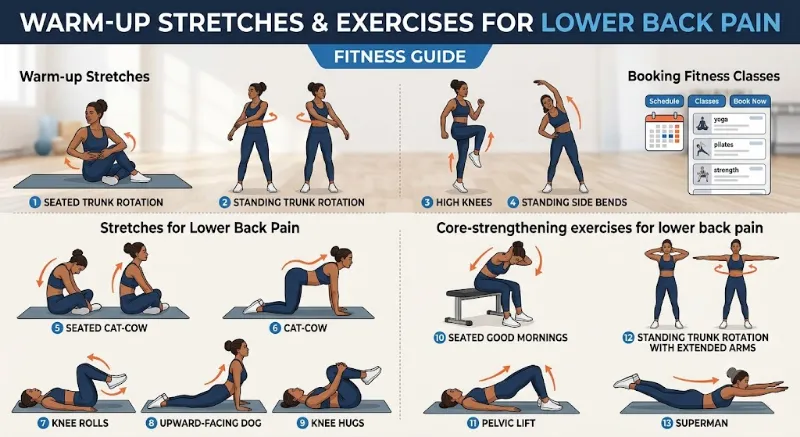
Seated trunk rotation:
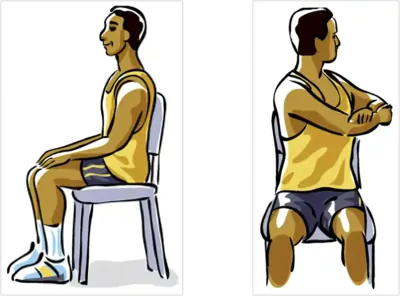
If you can stand easily, skip this step and go with the standing trunk rotation below.
- Choose a strong chair, such as a dining table chair.
- With your legs shoulder-width apart and bent at a 90-degree angle at the knee, sit slightly forward so that your back does not rest on the chair’s back.
- Your arms should be crossed across your chest.
- Always keep your hips looking forward.
- Make a gentle right turn before turning back to the front.
- Rotate gently to the left
- Then turn back to face the front.
- Ten times on each side, repeat the movement.
Standing trunk rotation:
- Keep your knees slightly bent and your legs slightly apart while maintaining a straight posture.
- Your arms should be crossed across your chest.
- Always keep your hips looking forward.
- Make a gentle right turn before turning back to the front.
- Make a gentle left turn and then return to the front. Ten times on each side; repeat the movement.
High knees:
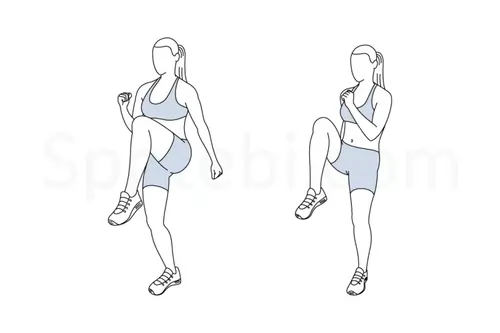
- Keep your legs slightly apart and maintain a straight position.
- Carefully raise your right knee to a 90-degree angle, then lower it back to the ground.
- Before lowering your left knee back to the floor, carefully raise it to a 90-degree angle.
- With each leg, repeat the movement ten times.
Advice: If you have difficulty staying balanced, grab onto the back of a chair or a desk. Consider asking a friend or relative to be nearby if you require further help.
Standing side bends:
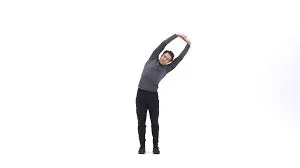
- Place your legs shoulder-width apart and stand erect.
- Arms should be by your sides.
- As you gradually shift your body to the right while keeping your posture straight, slide your hand down your leg to your knee.
- Go as far as you feel comfortable.
- Return to a straight position gently and repeat on your left side.
- Ten times on each side, repeat the movement.
Standing back stretch:
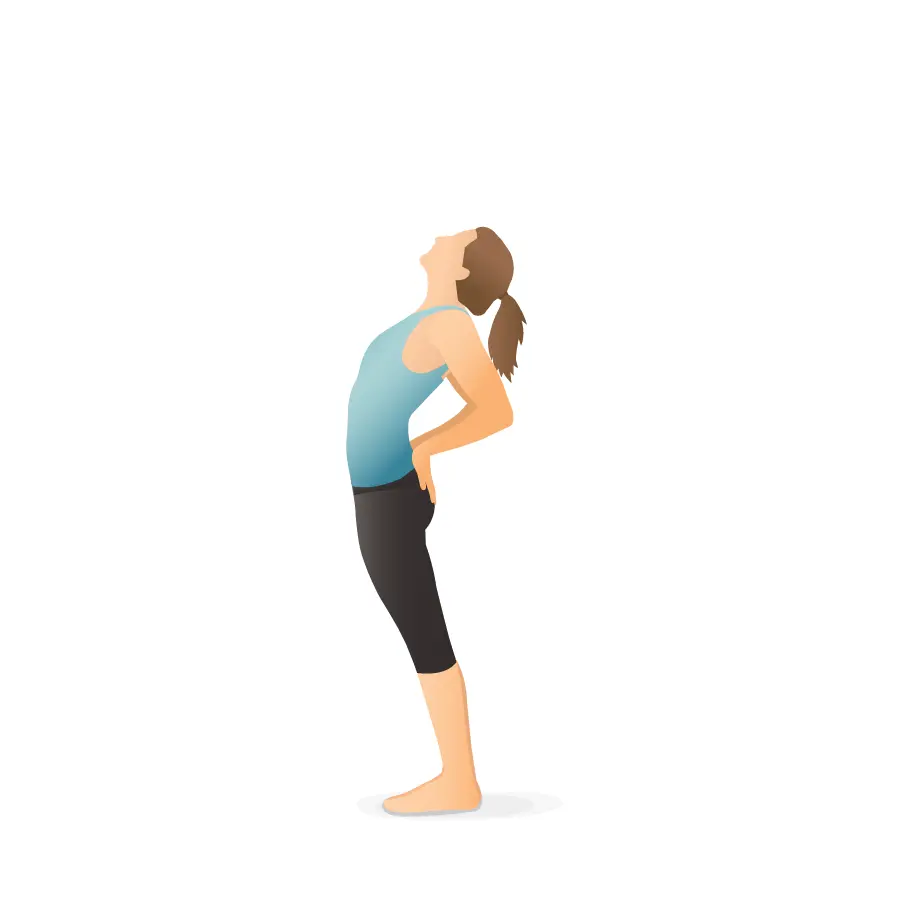
Avoid doing this if your balance is a concern.
- Place your legs shoulder-width apart and stand straight.
- Lower your shoulders, extend your hands to the floor, and curve your back toward the ceiling as you slowly bend forward.
- Relax your back muscles to create the illusion that your upper body is hanging down.
- Return to a straight posture with care.
- Do this five times.
Stretches for lower back pain:
Seated cat-cow:
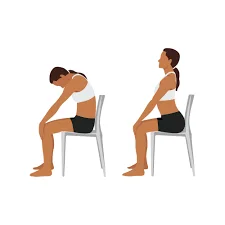
- Choose a comfortable chair without arms, such as a dining table chair.
- Take a straight seat 10 to 15 cm from the back of the chair with your feet slightly apart on the floor, your hands on your thighs, and your legs bent at a 90-degree angle.
- Exhale while bending forward and softly rotating your back. Pull your stomach in while lowering your chin to your chest and moving your hands forward and beyond your knees.
- Hold the movement for one to two seconds, then reverse it.
- Take a few deep breaths and sit back up straight. Next, push your abdomen out, arch your back, and raise your focus to the ceiling. You should move your hands up your thighs to bring them closer to your body.
- Restart after holding for one to two seconds.
Cat-cow pose:
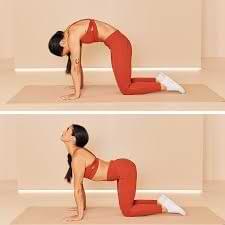
- Stand on all fours with your hands flat on the ground.
- Keep your knees slightly below your hips and place your arms exactly behind your shoulders.
- Breathe in as you lower your stomach toward the floor, arch your back, and look up at the ceiling.
- Hold the movement for one to two seconds before reversing it.
- Breathe out as you lower your head to the floor, curve your back, and bring your belly button toward your back.
Knee rolls:
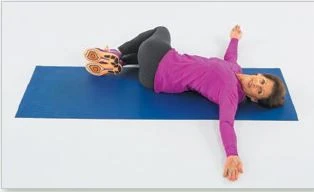
- Lie on your back with your knees bent and your feet flat on the ground.
- Stretch your arms out to the sides at a 90-degree angle to your torso.
- Exhale, then slowly roll both knees to the right with your legs and feet together.
- Hold for one or two seconds.
- Take a breath, then gently bring your knees back to the middle.
- On the left side, repeat.
Upward-facing dog:
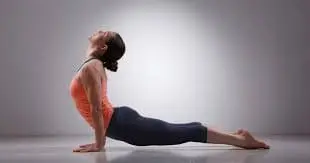
- With your legs outstretched, lie face down on your stomach.
- Put your hands on the floor around your lower ribs, close to your chest.
- Inhale deeply and contract your core.
- Straighten your arms, push your palms into the floor, and raise your head, neck, and back while you slowly exhale for three to five seconds.
- Try to keep your hips flat on the ground.
- Inhale, then bend your arms to bring yourself down to the ground.
Knee hugs:
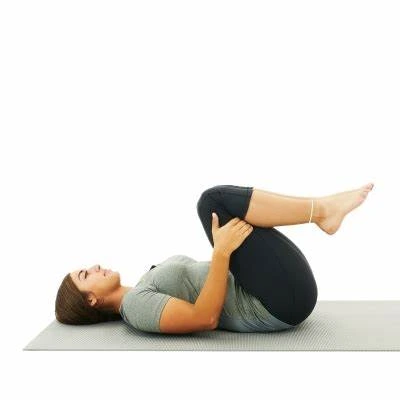
- Lying on your back, extend your legs straight.
- Bring your knees up to your chest.
- Holding your knees with both hands, gently draw them into your chest while exhaling.
- Hold for five seconds.
- Let go of your hands, take a deep breath, and return your legs to the floor while maintaining them straight.
Core-strengthening exercises for lower back pain :
Seated good mornings:
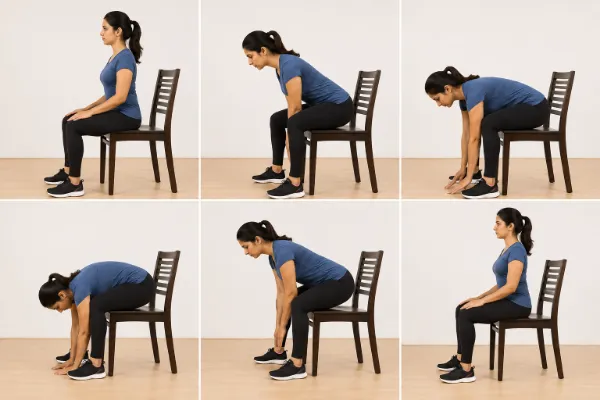
- Find a comfortable chair without arms, such as a dining table chair.
- If it’s not too uncomfortable, sit up straight with your legs bent at a 90-degree angle and your feet slightly wider than shoulder-width apart on the floor.
- Place your arms in between your legs.
- Slowly lower your hands to the floor while keeping your back straight and bending at the hips.
- Without facing any pain or bending your back, lower as far as you can.
- As you gradually return to sitting upright, keep your back straight at all times.
Pelvic lift (also known as a hip thrust):
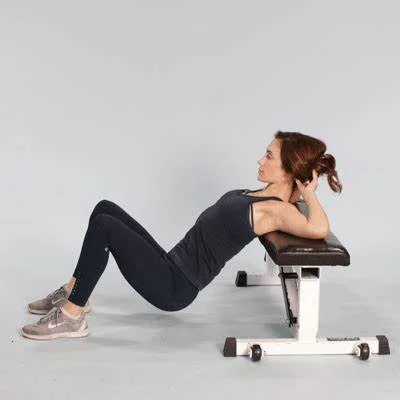
- Rest on your back with your knees bent and your arms by your sides.
- Inhale deeply.
- As you exhale, tighten your core and squeeze your buttocks.
- Raise your buttocks off the ground.
- Hold for one or two seconds.
- Inhale, then softly descend to the floor.
Standing trunk rotation with extended arms :
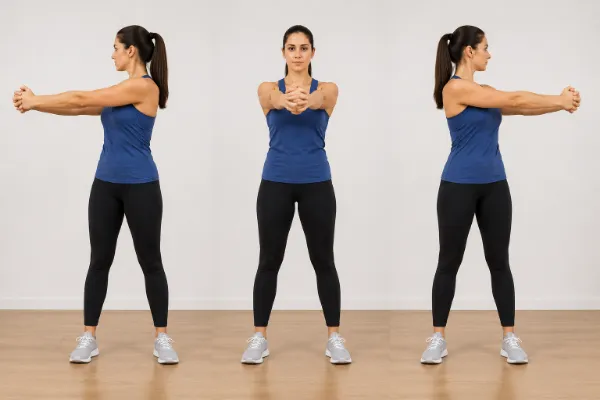
- Keep your legs slightly apart and maintain a straight stance.
- Put your core into action.
- Put your arms out in front of you at shoulder height or a height that works for you after clasping your hands together.
- Always keep your hips looking forward.
- Make a gentle right turn, then return to the front.
- Make a gentle left turn, then return to the front.
- Breathe in when you’re back in the center and out when you’re twisting.
- Just twist as much as is comfortable; you should feel a little tightness in the muscles.
Superman Exercise:
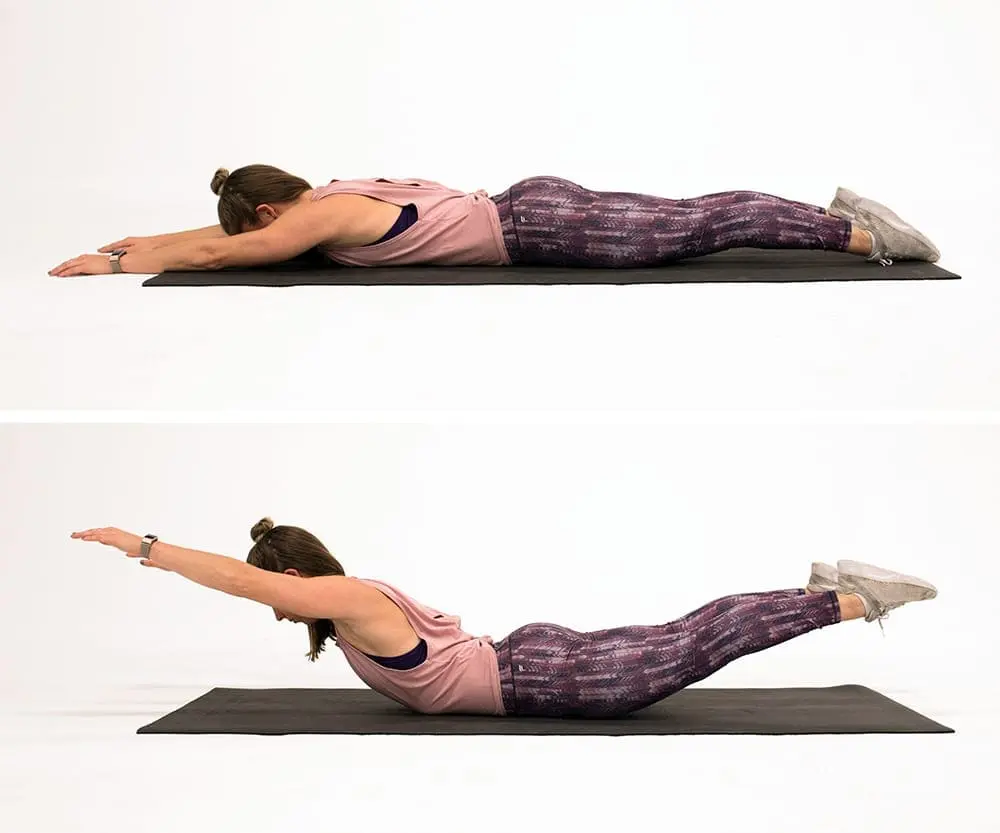
- Lie face down with your arms out in front of you and your legs straight.
- Squeeze your buttocks lightly as you slowly raise your arms, shoulders, and legs off the ground after taking a breath.
- Inhale deeply, then slowly return to the floor.
How should I feel while exercising?
Increase the exercise’s intensity until your muscles start to pull. If you experience any form of pain, immediately stop what you’re doing. Sharp pain is a sign that something is wrong or that you’ve gone too far.
During the exercises, using your core is essential. To achieve this, you have to drag your belly button up and in toward your spine. The muscles between your hips should tighten, and you should be able to breathe normally.
During the activities, you may realize that your muscles are becoming fatigued. This indicates that they are getting good exercise. It’s common to feel minor muscular soreness the next day. Give yourself some time to recover before doing the exercises again. However, if the exercises are causing you a lot of pain, see your doctor.
Advice: Don’t hold your breath while doing the exercises. While performing the exercises, it’s essential to keep breathing.
Since many lower back exercises are floor exercises, they may not be suitable for you if you experience weariness or fatigue after bending, sitting, or lying down.
How to prevent low back pain?
Treating back pain is more difficult than preventing it. Thankfully, there are several ways to avoid this kind of pain:
- Lift correctly. Use your legs instead of your back while lifting something. Hold the thing near your body while standing close to it. Tighten your core muscles and use your leg muscles to lift.
- Keep your posture correct. When sitting or standing, try not to slouch. Sit up straight with your back against the chair and your feet flat on the floor. With your shoulders back and your head raised, take a proud stance. Take frequent breaks from your chair: Take regular pauses to walk about if you work at a desk.
- Keep your weight in check. Your back will be less stressed if you reach and stay at a healthy weight.
- Continue to be active. Frequent exercise maintains the strength of your back muscles. Every week, try to get in at least 150 minutes of moderate-intensity aerobic exercise.
- Get enough vitamin D and calcium. These nutrients maintain the strength of your bones and aid in preventing osteoporosis, which, if it affects the spine, can result in back pain.
- Give up smoking. According to research, smokers experience back pain episodes more frequently than nonsmokers, and the risk increases with smoking frequency.
Do’s and Don’ts for Lower Back Pain exercises:
Do’s:
- Do begin with low-impact, moderate workouts.
- Warm up before working out.
- Do keep your spine straight and your posture correct.
- Exercises should be done carefully and gently.
- Gradually increase the number of repetitions and resistance.
- As tolerated, include frequent exercise and light walking.
- Be mindful of your body and take pauses as needed.
- If the pain continues or keeps coming back, go see a physiotherapist.
Don’ts:
- Avoid exercising when you’re in severe pain.
- Avoid making sudden, jerky, or jumping movements.
- When experiencing severe pain, avoid lifting large weights.
- Avoid overly twisting your spine or forcing stretches.
- Stay careful of sudden increases in training intensity.
- Unless otherwise instructed, avoid staying in bed for extended periods of time.
- Don’t ignore increasing leg pain, tingling, numbness, or weakness.
- If you have changes in your bowels or bladder or tingling around your groin, stop exercising and get checked out right away.
FAQs:
What precautions should I take to relieve lower back pain?
By keeping a healthy body weight, strengthening your core, and lifting with your legs rather than your back, you can avoid lower back pain.
How to exercise to prevent lower back pain?
Practice core-strengthening and flexibility exercises, such as bird-dogs, bridges, and knee-to-chest stretches, to avoid lower back pain. Performing these exercises a few times a week improves muscular tension and strengthens the spine.
What to avoid during lower back pain?
Prolonged bed rest, hard lifting, twisting your spine, slouching, and high-impact workouts like sit-ups or toe touches that strain your muscles and discs should all be avoided if you have back pain.
What sleeping position is best for back pain?
The best sleeping posture for back pain is flat on your back with a pillow under your knees. This lessens strain on the lower lumbar region, transfers weight equally, and preserves the natural curve of the spine. Another good option is to sleep on your side with a cushion between your knees.
What are the 5 best exercises for lower back pain?
The bird-dog, glute bridge, cat-camel stretch, pelvic tilt, and superman are the top five exercises to strengthen the lower back and reduce pain. These exercises target your spine, glutes, and core to enhance stability and posture.
Which fruits are good for reducing back pain?
Because they contain potent antioxidants that reduce inflammation, tart cherries and berries like blueberries and strawberries are the greatest fruits for back pain.
References:
- Airaksinen, O., Brox, J. I., Cedraschi, C., Hildebrandt, J., Klaber-Moffett, J., Kovacs, F., Mannion, A. F.,Reis, S., Staal, J. B., Ursin, H., Zanoli, G., & Pain, O. B. O. T. C. B. W. G. O. G. F. C. L. B. (2006). Chapter 4. European guidelines for the management of chronic nonspecific low back pain. European SpineJournal, 15(S2), s192–s300.
- Celenay, S. T., Akbayrak, T., & Kaya, D. O. (2016). A comparison of the effects of stabilization exercises plus manual therapy to those of stabilization exercises alone in patients with nonspecific mechanical neck pain: a randomized clinical trial. Journal of Orthopaedic and Sports Physical Therapy, 46(2), 44–55.
- Liddle, S. D., & Pennick, V. (2015). Interventions for preventing and treating low-back and pelvic pain during pregnancy. Cochrane Database of Systematic Reviews, 2015(9), CD001139.