Chair Exercises for People Who Sit All Day
Introduction:
Exercising in a gym is not the best option for People who spend their days sitting. These quick standing motions reopen the hips, mid-back, and shoulders—the same joints your chair locks up. Ten minutes is sufficient.
This article includes a complete 10-minute follow-along routine from a certified physical therapy practice, twelve exercises ranging from hip circles to forward folds, and information on how often to break up sitting and how quickly the effects show.
How effective are seated exercises?
Exercising when seated can be just as beneficial as exercising while standing, and it’s still more beneficial than doing nothing at all. Additionally, seated workouts can be made more difficult, much like standing exercises.
The advantages of various seated exercises can vary. Here are a few examples:
- Strength is increased in seated rows.
- Good posture is supported with seated chest openers.
- Seated cat-cow exercises improve movement.
- Hip flexor stretches while seated improve range of motion.
- Core muscles are strengthened by performing reverse chops while seated.
- Marches while seated increase cardiovascular fitness.
You can target certain muscles a little more deeply when you’re seated, but you won’t get the same advantages as if you performed these exercises while standing. For instance, people occasionally arch their backs when performing biceps curls while standing, which can make the activity a little bit easier. You can’t do it when you’re seated. It can be more difficult because you need to separate and concentrate more on form.
And keep in mind that sitting does not equate to being easy. To improve the difficulty of seated workouts, you might utilize bands, employ heavier weights, or increase the number of repetitions.
When to try seated exercises:
Exercises while seated are typically advised for people with physical restrictions, such as:
- Improper balance
- Pain in the joints
- Restricted range of motion
- Weakening of the muscles
- Insufficient mobility
- Damage
For example, by raising your risk of falling, these conditions can make standing workouts uncomfortable, challenging, or dangerous. Additionally, when their stomachs expand and they require more support, pregnant women may discover that seated activities are more appealing. Exercise and all of its advantages are available when done while seated. If you want to get in an extra workout while at work, you may also perform them at your desk.
Before you start seated exercises:
Although seated workouts are generally safe, there are a few precautions you should take to minimize dangers and optimize benefits, particularly if you have balance issues or are recovering from surgery or an injury.
- Select a four-legged chair. Stay away from chairs with rolling wheels.
- Verify the chair’s stability. A chair that can sustain your weight while you move is what you desire. Like a folding chair, it shouldn’t feel weak or like it could topple over.
- Choose a chair that is appropriate for your height. With your knees bent at a 90-degree angle, you should be able to place your feet flat on the ground.
- Select a firm seat. For more stability, the seat should be solid yet comfortable. Soft seats might not be as stable.
- Think about the armrests. Choose a chair with strong armrests that can support your weight if needed, if you have balance issues or require further assistance.
- Choose a secure place to work out. The space where you’ll be working out should be free of obstructions and have enough space for you to perform the exercises without running into anything.
- Look for slippage. To test the chair’s slickness, push it onto the ground. To stop the chair from moving as you work out, place a yoga mat underneath it if it slides easily.
- Start with warming up. To prepare your muscles for harder workouts or, if you’re using weights or resistance bands, more resistance, perform the exercises slowly and softly.
Exercises for People Who Sit All Day:
Complete them in the correct order. Every step in the program warms up the one after it because it runs from the spine outward. Hold times correspond to the video. Never push into severe pain, move slowly, and breathe through each position.
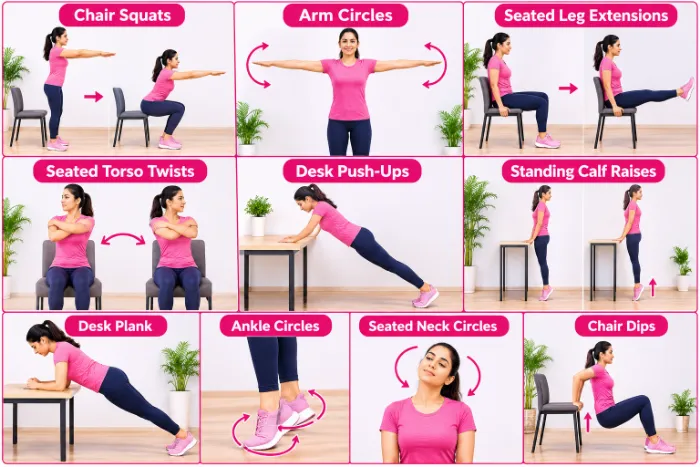
Chair Squats:
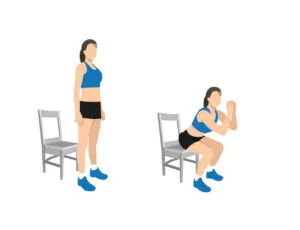
To perform correct squats, use your chair as a guide. Take it off your desk, get up, and do the following:
- Set your feet shoulder-width apart while maintaining a tight core and a high chest.
- As if you were going to sit in the chair, lower yourself toward it.
- To finish one repetition, tap your buttocks on the chair and instantly return to standing.
- Squat repeatedly until your muscles start to contract.
Arm Circles:
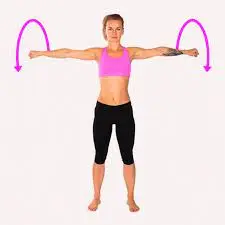
Arm circles can help you wake up quicker and improve circulation in your upper body. Stretch your legs by doing them while standing.
- Extend both arms to the sides at shoulder height.
- Make large forward circles with both arms while keeping your hands wide.
- Repeat the process in reverse, making an effort to truly reach the arms as you go around and overhead.
- Make many circles in both directions.
Seated Leg Extensions:
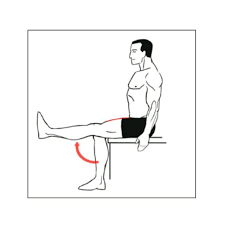
The seated leg extension is the ideal workout to get blood circulating without disturbing people if you’re trapped in a conference or are unable to move from your chair.
- With your feet flat on the ground, slowly extend one leg straight while seated on your chair.
- After a few seconds of holding, carefully drop it back down before switching legs.
- Focus on the contraction each time your knee extends as you perform 10–15 repetitions on each leg.
- Do multiple sets and divide them into several rounds if you’ll be sitting for a long period.
Seated Torso Twists:
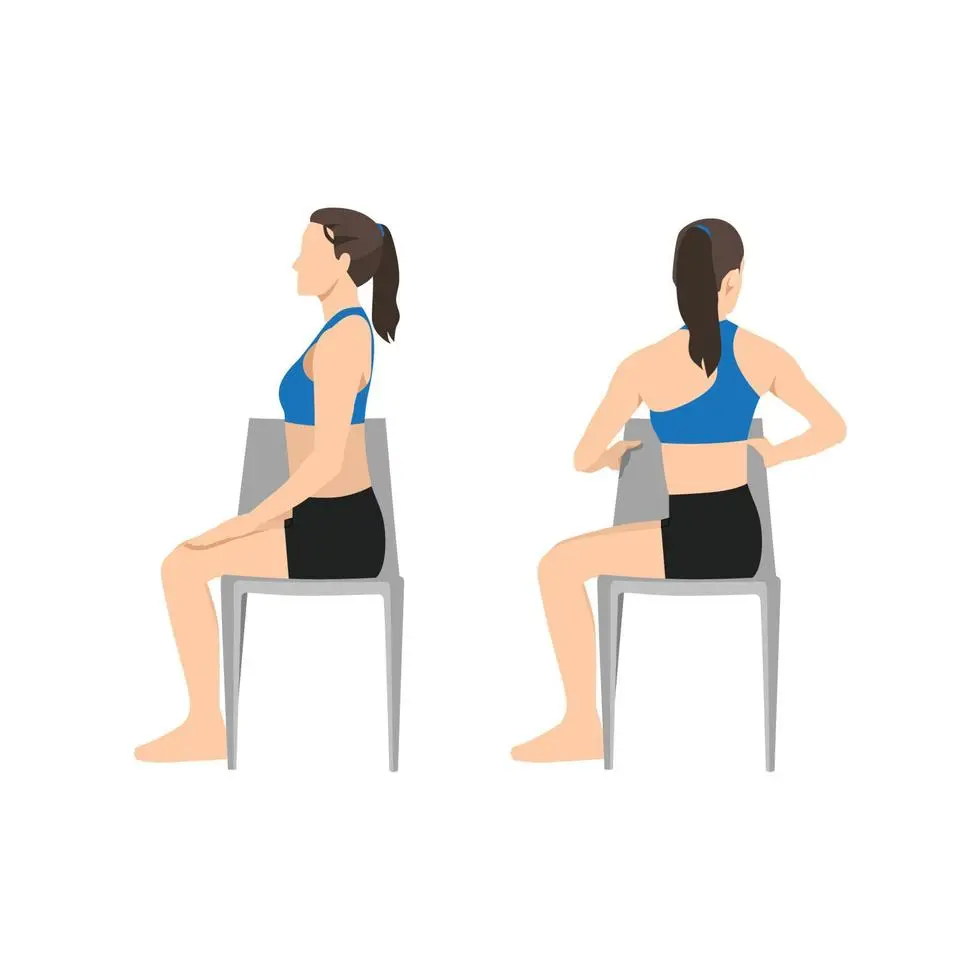
Sitting for extended periods of time can often result in a tight back. You may release that tension and give your upper body some movement by performing seated torso twists. If you flex your stomach and slowly exhale during the twist to fire your abs, you can even make it into a mini-core workout.
- With your chin raised and your eyes forward, sit up straight in your chair.
- Rest your hands gently behind your head or place them across your shoulders, whichever feels more comfortable.
- Look in the direction you are twisting as you gently rotate your torso left and right.
- Hold each twist for a few seconds for many repetitions.
- While doing this exercise, pay attention to your breathing, twisting, and exhaling.
Desk Push-Ups:
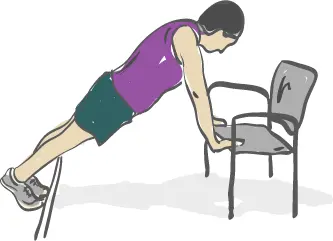
Your desk can serve as an exercise support device, much like your chair. If you’re feeling stiff, this push-up variation can help you wake up and strengthen your upper body.
- Place your hands shoulder-width apart on the edge of your desk.
- While keeping your core firm, take a step back so that your torso and lower body make a straight line from your head to your heels.
- Bend your elbows to gently and slowly drop your chest toward the desk; To finish the rep, push back up to the beginning position.
- Perform as many repetitions as you can safely before taking a break and finishing the next set.
Standing Calf Raises:
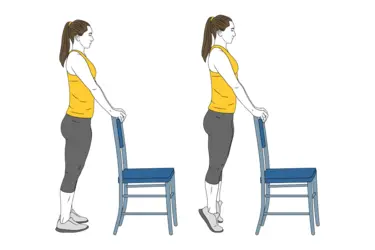
If you’ve been sitting for a while, standing calf raises are an easy and efficient approach to increase blood circulation.
- With your feet hip-width apart, stand up and look forward.
- Standing on your tiptoes, carefully lift your heels off the ground while slightly bending your knees.
- Feel the contraction, pause, and then descend again.
- Do this 20–40 times.
- For a true test, push yourself to the limit on each set until your calf muscles start to burn.
Desk Plank:
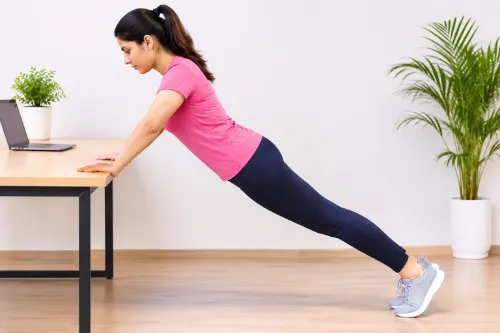
With the only difference of not lowering your chest to the desk, the desk plank is a variation of the desk push-up. Instead, your arms will function, and your core will activate as you hold motionless.
- Place your hands shoulder-width apart on the edge of your desk a few feet away.
- Retrace your feet until your body is in a straight line.
- Hold the plank position while maintaining a neutral head and a straight spine by using your core and tightening your stomach muscles.
- Hold until you begin to feel tired; walk your feet back further if you want to increase the difficulty.
Ankle Circles:
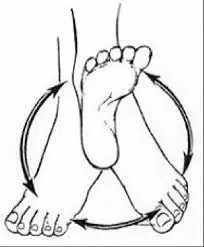
You can improve circulation without getting up by doing these beneath your desk. This easy workout will help ease any tightness in your lower legs and is excellent for your ankle joints.
- For ten to fifteen repetitions, raise one foot off the ground and move it in large clockwise circles.
- Make ten to fifteen additional counterclockwise circles.
- Continue back and forth until you’ve finished multiple sets.
Seated Neck Circles:
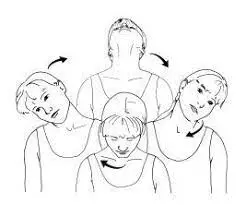
Sometimes, especially when you sit for extended amounts of time staring at your screen, your neck may get tense. Throughout the day, perform neck circles to release stress.
- Start by sitting or standing with your shoulders relaxed, your back straight, and your eyes forward.
- Move your head slowly in a clockwise circle while lowering your chin gently toward your chest.
- Reach the extremes of your range of motion and return your head to the beginning position by going all the way around.
- Once you’ve completed one complete rotation, turn counterclockwise and repeat a few times.
Chair Dips:

You can use your chair to perform dips, which are an excellent exercise for your chest, shoulders, and triceps.
- Place your hands on the seat with your arms shoulder-width apart while perched on the chair’s edge.
- With your butt off the seat, extend both legs straight and balance on your heels.
- Lower your body gradually toward the floor while bending your elbows to create a 90-degree angle.
- To raise your body back to the beginning position, press into your hands and extend your arms.
Benefits of seated exercise:
There are more advantages to seated exercises than you may imagine, such as:
- Stronger muscles. Muscle strength naturally changes as you get older. But as you age, your muscles can become stronger the more you move. However, you can see more significant muscle mass loss if you are unable to move as much. Exercises while seated can lessen the deterioration. According to the study, chair workouts improved people over 50’s upper and lower body strength and function, including their ability to stand up from a chair and grasp heavy objects.
- Enhanced adaptability. The majority of stretches can be performed while seated, and they can help offset any stiffness or decreased range of motion that may develop with aging or excessive sitting. We are designed to move. We shouldn’t spend ten hours a day sitting.
- Improved cardiac performance. Your heart is a muscle, and much like other muscles, it becomes stronger with increased effort. More blood and oxygen can be pumped by a robust heart to power your body. Additionally, you burn more calories as your heart rate rises, which makes it easier to maintain a healthy weight.
- Improved blood flow. To fight fatigue and stiffness, contract your muscles and move your joints to supply fluid and nutrients to every part of your body.
- Greater levels of energy. Even though it’s a tried-and-true energy booster, exercise could be the last thing on your mind when you’re tired. Exercises performed while seated can help you move more easily when you’re exhausted.
- Improved control over pain. Movement, even brief periods while seated, can alleviate stiffness and soreness that can be increased by inactivity. Exercise is a crucial part of managing chronic pain, and if you are unable to get up, sitting exercises provide an option.
- Decreased chance of disease. Your risk of getting long-term, fatal diseases, including cancer, diabetes, and heart disease, is reduced by exercise. Additionally, sitting activities are beneficial. A study published in the Journal of Exercise Science and Fitness found that older persons’ insulin resistance, a risk factor for diabetes, improved after just 15 minutes of chair exercises three days a week for 12 weeks.
- Increased protection against injuries. You may be more vulnerable to injuries due to aging-related declines in strength and flexibility or excessive sitting. Exercises done while seated can improve flexibility and strength.
- Quicker recovery following surgery or trauma. When recovering, rest is not always the best option. Because of this, a lot of people begin physical therapy a day or two after surgery or an injury. Exercises done while seated might be beneficial since they reduce joint strain and pain.
Does stretching counter the effects of all-day sitting?
Stretching won’t be able to reduce every adverse effect of prolonged sitting. However, it can be beneficial, particularly when paired with other exercises. Stretching both statically and dynamically may:
- Increase blood flow
- Minimize pain and stiffness in the muscles of the back, neck, shoulders, and hips.
- Expand your range of motion and flexibility
- Proper posture
- Reduce the chance of harm
- Boost athletic and functional performance
Long periods of sitting can be broken up by taking physical breaks throughout the day, according to research. According to one review, taking active breaks during the workday may improve mood, diminish fatigue, and lessen musculoskeletal pain. Stretching, walking, and strengthening exercises were all part of those pauses.
The best way to avoid or lessen the negative consequences of inactivity is to engage in regular exercise and movement throughout the day. People who sit all day at work are more likely to die from all causes, according to a large-scale study. However, the researchers found that increasing daily physical exercise by 15 to 30 minutes can reduce that risk.
The suggested 150 minutes of moderate cardio per week can be gradually increased. During your workday, try taking 5-minute breaks every 30 to 60 minutes. During that time, you can stroll, stretch, stand up, or perform strengthening activities. These periods of activity can significantly improve one’s health. When you go back to your desk, they might also help you maintain your concentration.
FAQs:
Do the chair exercises really work?
Depending on your objectives and technique, chair workouts actually work. Exercise regimens that are sitting and chair-based can greatly increase muscle strength, grip and arm power, leg function, and mobility, according to research, including systematic reviews of older persons.
What should I do if I sit all day?
Tight hip flexors, weak glutes, stiff shoulders, and a rounded upper back are all consequences of prolonged sitting. You must break up stillness with brief movement breaks, targeted stretches, and posterior-chain workouts to offset these effects.
Can I lose weight with chair exercises?
Chair workouts can help you lose weight if you combine them with a nutritious, low-calorie diet.
How many hours of sitting a day is bad for you?
Spending prolonged periods sitting each day may negatively affect overall health. Research suggests that remaining seated for over 10 hours daily is associated with a higher risk of heart failure, cardiovascular disease, and premature mortality.
How to reverse the damage of sitting all day?
You must combine regular movement breaks, focused stretches for tense muscles, and strength training to activate resting muscle groups in order to reverse the physical and metabolic harm caused by sitting all day.
Is sitting for 4 hours a day bad?
Compared to heavy sedentary habits of 8 to 11+ hours a day, sitting for 4 hours a day is comparatively low-risk and falls into a lower-risk tier.
What exercises can I do if I sit in a chair all day?
Chair-based exercises are a great way to strengthen your legs and back, stretch your tight hip flexors, and improve circulation without getting up from your desk.
How effective is chair exercise?
Chair workouts really work. They are a respectable, low-impact type of exercise that can increase cardiovascular fitness, strength, flexibility, and balance.
What happens if you sit all day every day
Sitting all day weakens your muscles, lowers your metabolism, and puts a lot of strain on your heart and spine. A completely inactive lifestyle gradually increases the risks to one’s bodily and emotional well-being.
References:
- Hinge Health. (2025, June 5). 7 best seated exercises to practice in your chair workout. Hinge Health. https://www.hingehealth.com/resources/articles/seated-exercises/
- Clinic, C. (2024, April 18). 11 chair exercises for seniors, older adults and people with limited mobility. Cleveland Clinic. https://health.clevelandclinic.org/chair-exercises-for-seniors
- Schlinger, A., CPT, A. M. W., & CPT, C. S. (2022, January 27). How to exercise after sitting all day: 6 moves to try if your day involves a ton of sitting. SELF. https://www.self.com/gallery/the-workout-you-need-to-do-if-you-sit-all-day
- Christensen, J. O., Benson, L. D., Butler, H. J., Hall, B. H., & Howard, D. H. (1989). An evaluation of reference desk service. College & Research Libraries, 50(4), 468–483. https://doi.org/10.5860/crl_50_04_468