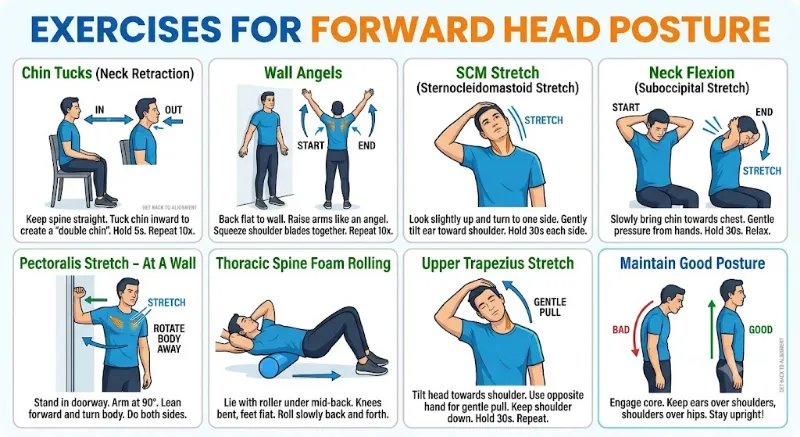
Top 7 Exercises for Fixing Forward Head Posture at Home
Introduction:
The position of your head with your ears in front of your body’s vertical midline is known as forward head posture (FHP).In a typical or neutral head position, your ears line up with your shoulders and midline.
Among its detrimental effects are stiffness, neck pain, and an uneven gait. Furthermore, kyphosis, which means rounded shoulders, is often associated with it.
The good news is that you can usually fix it by doing stretches and strengthening exercises and being mindful of excellent posture, which lessens negative effects and enhances posture.
FHP is also referred to as “text neck” or “nerd neck” since it is caused by extended bending toward a computer screen or crouching over a laptop or mobile phone. It is also associated with the loss of muscle strength that comes with aging.
What Is Forward Head Posture?
Forward head posture occurs when your head extends in front of your chest and moves forward in proportion to your shoulders.
Imagine your head as a bowling ball. Your neck hardly notices when it is positioned exactly over your shoulders. However, it adds around ten pounds of tension for every inch it moves forward. Forward by two inches? That would be like wearing an entire bowling ball around your neck. It makes sense why your neck muscles become tense and painful.
Your ears should normally be slightly above the center of your shoulders, with your head resting in line with your shoulders. The muscles in the back of your neck must exert more effort to prevent your head from falling further forward as it wanders forward.
What causes Forward Head Posture?
Some of the reasons for forward head posture include the following:
- Poor posture
- Weakness of your neck muscles
- Previous neck strains or sprains
- Sleeping with your head elevated too high on pillows
- Frequently sleeping on a sofa with your head propped on the armrest
- Extended computer use
- Extended cellphone use
- Prolonged driving
- Incorrect breathing habits
- Carrying heavy backpacks
- Playing sports that demand the dominant use of one side of the body, such as baseball, golf, tennis, hockey, and others
- Certain occupations—such as hair stylists, massage therapists, authors, computer programmers, painters, etc.—are especially vulnerable because of their repetitive bodily movements.
Forward Head Posture Symptoms:
- Muscle tightness
- Kyphosis
- Neck tightness/pain
- Dowager’s Hump
- Back pain
- Muscle spasms
- Restricted breathing
- Poor Balance
- Headaches and migraines
- Insomnia
- Trigger Points
- Chronic fatigue
- Numbness and tingling of the arms and hands
- Temporomandibular joint (TMJ)
FHP Can Lead To:
- Tension Headaches
- Osteoporosis
- Poor shoulder mobility
- Cervical (Neck) spine arthritis
- Shoulder blade pain
- Bulging Discs
- Herniated Discs
Forward Head Posture Exercises:
We teach these three fundamental exercises. When done regularly, they can significantly improve your posture over time.
Chin Tucks (Neck Retraction):
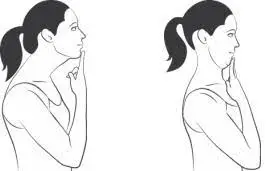
Why it’s important: reduces tension on your upper neck and strengthens your deep neck flexors.
- To maintain yourself, take a tall seat or stand, ideally against a wall.
- Make a double chin by pulling your chin straight back; to make sure you’re doing this correctly, try looking in the mirror.
- Avoid tipping your head downward into flexion and upward into extension.
- Hold the contraction for 5 to 10 seconds, then repeat 10 to 15 times, two to three times a day.
- You may use our step-by-step Neck Retraction/Chin Tuck Exercise tutorial for a more thorough explanation of this exercise.
Wall Angels:
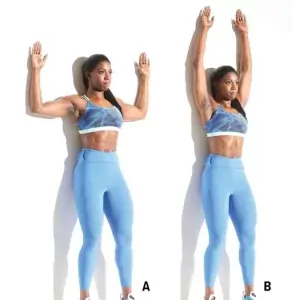
Why it’s important: It improves the postural muscles between your shoulder blades and opens your chest.
- The backs of your feet should be about 6 inches away from the wall you are leaning on.
- Your mid-back will stretch even more if you flatten your lower back. After that, gently press your head as close to the wall as is comfortable.
- With your elbows bent at about a 90-degree angle, place your arms at your sides in a “goalpost” posture. Without putting undue strain on your arms or shoulders, try to get your elbows and arms as close to the wall as you can. It may take some time, so be patient.
- Like a snow angel, slowly move your arms up and down the wall. It’s important to move slowly and deliberately; each repetition should last two to three seconds.
- Do 1-2 sets of 8–10 repetitions every day.
- Our Wall Angel Postural Exercise tutorial demonstrates how to perform this safely and successfully if you’d prefer a visual tour.
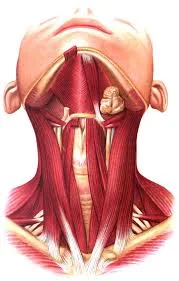
SCM Stretch (Sternocleidomastoid Stretch):
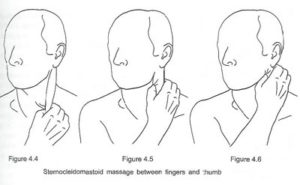
Why it matters: By pulling your head downward and forward, the SCM dramatically raises FHP. Restoring adequate shoulder-head balance is made easier by shoulder stretching.
- To extend your right SCM, sit up straight and place your right hand under your thigh.
- Turn your head to look at the ceiling after tilting it to the left. To better understand this, please view the SCM stretching video below. Your neck should feel stretched on both the front and the side.
- For 20 to 30 seconds, maintain this posture.
- Repeat two to three times on each side.
- It’s enough to stretch softly to moderately; don’t push yourself into severe pain.
- For a video presentation and more detailed tips, see our SCM Stretch Exercise instructions.
Neck Flexion (Suboccipital Stretch):
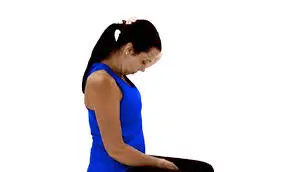
This will stretch the back muscles in your neck, particularly the suboccipital muscles.
- First, tuck your chin in using two fingers on one hand.
- As you bring your head closer to your chest, use your other hand to lightly press down on its back.
- When the back of your neck begins to extend, hold the stance for 20 to 30 seconds.
- Do this stretch three times.
- Keep your chin tucked in while you do this stretch.
Pectoralis Stretch – At A Wall (Do Both Sides):
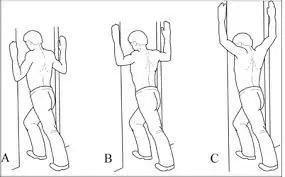
This will push the neck into an uncomfortable position and stretch the sometimes constricted chest area. By relaxing your pecs, you can reduce some of the pain and improve your posture.
- When you go close to a wall, extend one arm behind you and press the palm on the wall.
- Draw in your abdomen.
- Lean forward now, a little away from the outstretched arm.
- Your chest should feel stretched.
- Hold for thirty seconds.
- Continue on the opposite side.
- Make sure to extend both shoulder muscles and your chest. Adjust the position’s angle to target the muscles in your chest.
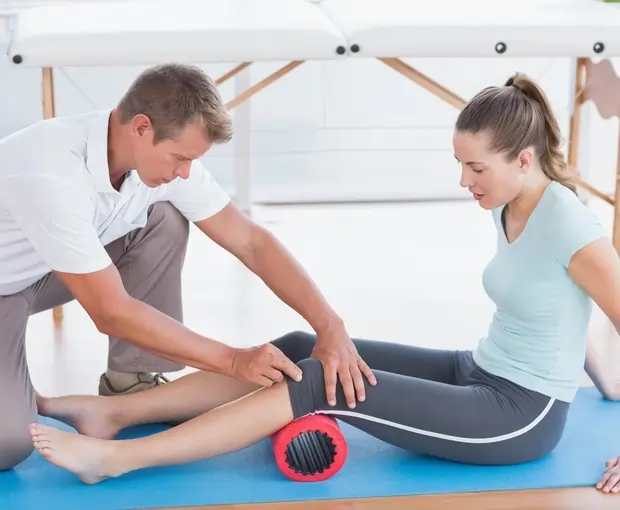
Thoracic Spine Foam Rolling:
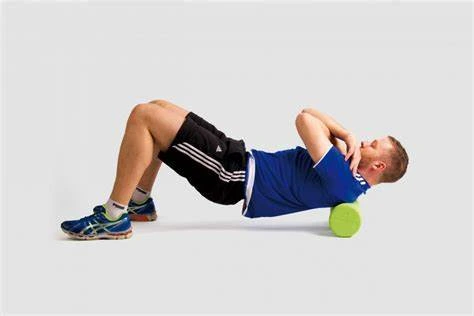
- This method can assist in relieving upper back pain.
- Lie on your back and position a foam roller beneath your upper back, supporting your head with your hands.
- Slowly move your body back and forth over the roller, beginning around the middle of your back and gradually moving toward your shoulders.
- Keep your core firm while you roll with your legs.
- Roll gently and slowly; don’t rush.
Upper Trapezius Stretch:
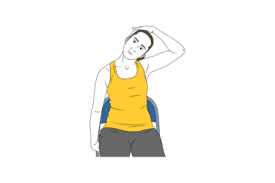
The neck and upper back muscles (Scalene & Upper Trapezius), which can become quite tight in people with forward neck syndrome, will be stretched out by this.
- Either rise or take a seat to begin.
- Place one hand on the opposite side of your head and tuck the other behind your back.
- Now bring your head down to your shoulder.
- Gently push your head down with your hand on top to get a deeper stretch.
- Once both sides have been worked, hold for 20 to 30 seconds.
Common Mistakes to Avoid:
- Tip your chin forward or downward rather than pulling your neck back straight. Keep in mind: double chins!
- Straining or extending your neck too much. Making adjustments will take time, so start off gently and gradually and work your way up.
- Rushing through movements rather than doing calm, careful repetitions. There is no quick reaction; therefore, this is a surefire way to get wounded.
- Ignoring severe pain: If this occurs, stop right away and think about making adjustments or doing different exercises. There is no one-size-fits-all approach to exercise.
Extra Tips for Success:
- You should expect a little stiffness at first when you start any new stretch or exercise.
- Every time, consistency triumphs over intensity.
- Use a mirror, a photo or video from your phone, or ask a friend to view it to get advice.
- Screens should preferably be close to eye level (for computers or even phones), and microbreaks from screen time should be taken every 30 to 45 minutes.
- Be patient; your poor posture didn’t happen overnight. The transformation will take time. But you’ll succeed if you’re patient.
- Little changes build up, so don’t underestimate the potential influence of a few minutes each day. Carry on.
Lastly, Proper Ergonomics:
If you spend a lot of time sitting at a computer, the most important thing you can do to improve your workstation is to make sure your computer display is positioned correctly to keep your neck in a calm, neutral position while working.
- Make sure the upper third of your screen is at eye level.
- The ideal distance between your display and your face is 18 to 24 inches.
- Your forward head position will be increased by an incorrectly positioned monitor, which causes neck pain and even forward slouching.
FAQs:
What is the root cause of forward head posture?
Forward head posture (FHP) is mostly caused by a combination of habitual slouching and continuous repeated postures, most frequently staring down at computer displays, laptops, and cellphones (“tech neck”), which over time trains the body into a chronic muscular imbalance.
How long will it take to fix forward head posture?
It usually takes two to six weeks for mild instances, two to four months for moderate cases, and six to twelve months or more for severe or long-standing behaviors to correct forward head posture.
How to fix head slouching forward?
In order to correct forward head posture, you must stretch your tight chest and suboccipital muscles while strengthening the weak muscles at the front of your neck and upper back.
How should I sleep to fix my forward head posture?
Sleep flat on your back with a low- to medium-height pillow or a cervical/contoured pillow that supports your neck’s natural curvature to correct forward head posture.
Is forward head posture permanent?
Although it takes persistent work over weeks or months, forward head posture may be fixed or much improved.
What muscles are weak with forward head posture?
Forward head posture causes opposing muscles at the rear of the neck and chest to become short and tense, while the muscles in the front of the neck and upper back become extended, weak, or inhibited.
Can I correct years of bad posture?
Yes, as long as there are no unhealed fractures or established structural bone alterations, years of poor posture may be greatly corrected at any age.
Is 25 too late to fix posture?
No, it’s still possible to improve your posture at age 25. At any age, your muscles, joints, and movement patterns are still flexible, and major advancements are entirely possible in your twenties.
References:
- Hecht, M. (2020, July 24). How to fix a forward head posture. Healthline. https://www.healthline.com/health/bone-health/forward-head-posture
- Bot verification. (n.d.). https://transformchiropractic.com/forward-head-posture-exercises-toronto/
- McQuilkie, S., DC, & McQuilkie, S., DC. (2024, November 21). How to fix forward head posture – 5 exercises. Back Intelligence (Creators of PostureFlow App). https://backintelligence.com/how-to-fix-forward-head-posture/