Exercises for Knee Stiffness In the Morning
Introduction:
Stretching in the morning is not about pushing your body into difficult positions or trying to achieve high levels of flexibility. The objective is to promote circulation, gradually increase movement, and loosen joints and muscles after rest.
Waking up with knee stiffness can make even routine morning tasks feel tough. When the knees, hips, shoulders, back, or fingers feel tight and hard to move after a few hours of inactivity, the stiffness may become more apparent. While anyone can experience occasional stiffness, particularly after sleeping in one position, chronic morning pain may also be associated with aging, tight muscles, osteoarthritis, or other joint conditions. Without placing undue strain on the joints, a mild stretching program can assist the body in moving.
Stretching in the morning is not about trying to reach excessive flexibility or forcing your body into challenging positions. The objective is to promote circulation, loosen muscles and joints after rest, and progressively increase movement. For those who feel stiff when they first get out of bed, slow, careful motions can be very helpful.
Why Are Joints Stiff In The Morning?
Morning stiffness can occur because the body remains essentially still throughout sleep. After hours of inactivity, muscles and connective tissues may suddenly tighten, and joints may feel less flexible.
Osteoarthritis, which typically affects the knees, hips, hands, and spine, may be the cause of stiffness in certain individuals. Significant morning stiffness can also be caused by inflammatory diseases like rheumatoid arthritis. Persistent symptoms shouldn’t be written off as a typical aspect of aging because the length and intensity of stiffness can offer helpful clues.
What causes knee pain in the morning?
Not everyone experiences morning knee pain in the same way. How creaky you feel when the alarm goes off depends on a number of factors. The following are some common underlying causes of knee pain in the morning:
Age and hormones:
According to him, lower estrogen levels in women over 50 have an impact on the entire musculoskeletal system, raising the risk of osteoporosis and reducing muscle mass. He also adds that having less muscle means your knee joints are less supported. The outcome is stiff, aching knees in the morning.
Your sleep position:
When we straighten our legs in the morning, we experience the long-term effects of this pressure, which is why we feel stiff. Sleeping with the knees bent increases the pressure on the knee joint, notably the patellofemoral joint, which is the joint behind the kneecap.
Extra weight:
Imagine how it would feel to carry a five- or ten-pound weight on your back all day; reducing just three to five percent of your body weight relieves the strain on your knee joints.
High blood sugar:
Diabetes can harm blood vessels if left untreated, which reduces the amount of blood that reaches your joints to aid in healing and repair. The key phrase here is if unchecked, so your knees will like it as long as you manage your diabetes.
Dehydration:
Lack of fluid in the body can lead to reduced blood flow, less synovial fluid to lubricate joints, and muscular spasms, which can cause knee pain in the morning and joint pain. As we age, this becomes even more crucial. We could be dehydrated without realizing it because those thirst cues are less effective. Drink two to three liters of water every day to keep our joints lubricated.
Why Morning Stiffness Happens
Synovial fluid is essential for your joints to absorb shock and avoid friction. This fluid thickens, and production slows while you sleep for extended periods of time. Inflammatory products build up in and around injured joints at the same time.
Your joints feel painful, tight, and locked when you first try to move. In osteoarthritis, stiffness usually goes away after 15 to 30 minutes of exercise, whereas inflammatory arthritis is characterized by morning stiffness that lasts longer than 30 minutes.
Your joints will loosen up more quickly the more gently you move.
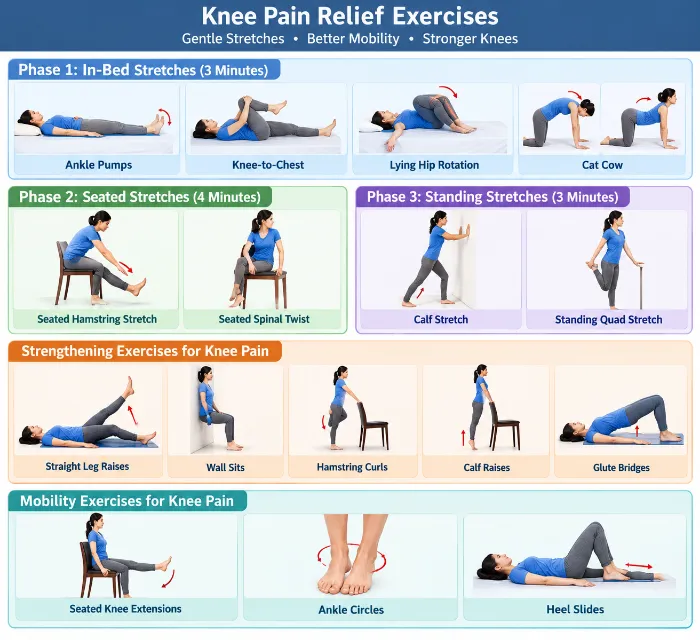
Phase 1: In-Bed Stretches (3 Minutes)
While you’re still in bed, begin these stretches. The bed offers support and soft cushioning.
Ankle Pumps:
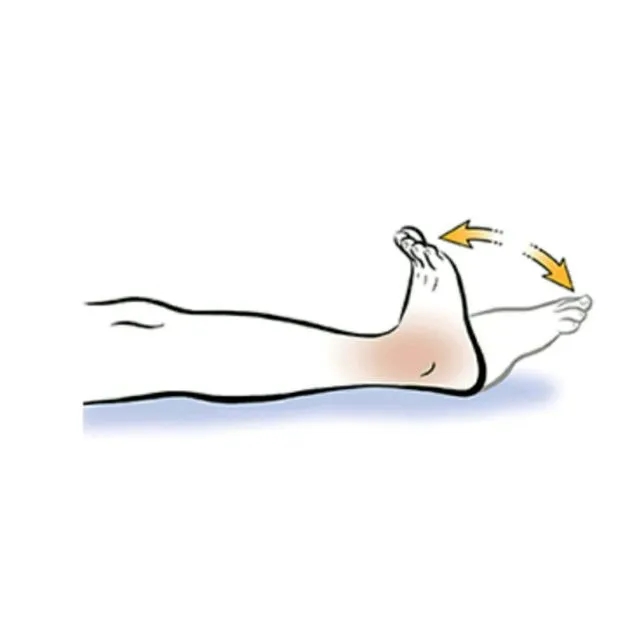
- Lie on your back and point your toes away from you.
- Bring your toes back to you.
- Ten times per foot, repeat.
Why it’s good: it improves blood flow to your feet and relaxes ankle joints before you put weight on them.
Knee-to-Chest:
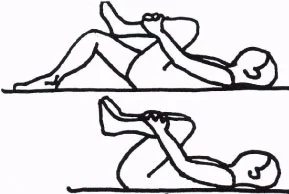
- Lying on your back, carefully bring one knee up to your chest.
- Gently pull while holding behind your thigh rather than on top of your knee.
- Hold for ten seconds.
- Slowly descend and switch legs.
- Repeat three times on each side.
Why it’s beneficial: It stretches your hip flexors and lower back, two muscles that become very stiff at night.
Lying Hip Rotation:
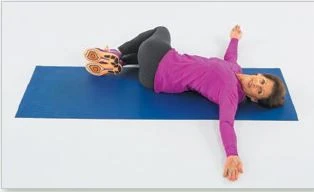
- Bend your knees and place your feet flat on the pillow while lying on your back.
- Allow both knees to slowly drop to the right.
- Hold for five seconds; you should experience a mild stretch rather than pain.
- Return your knees to the middle.
- Allow them to drop to the left.
- Repeat five times on each side.
Why it helps: It releases the sense of being locked up by mobilizing the lower spine and hip joints.
Cat Cow:
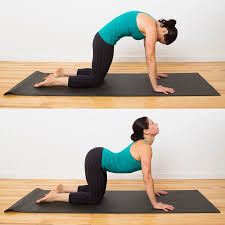
A tight back can benefit greatly from cat-cow.
- Start on the floor in the tabletop position with your knees behind your hips and your wrists just under your shoulders.
- Drop your stomach and raise your chest and tailbone to look up while taking calm breaths.
- As you exhale, look down by lowering your chin and rounding your spine.
Phase 2: Seated Stretches (4 Minutes)
Go to a firm chair or the edge of your bed. With both feet flat on the ground, take a high seat.
Seated Hamstring Stretch:
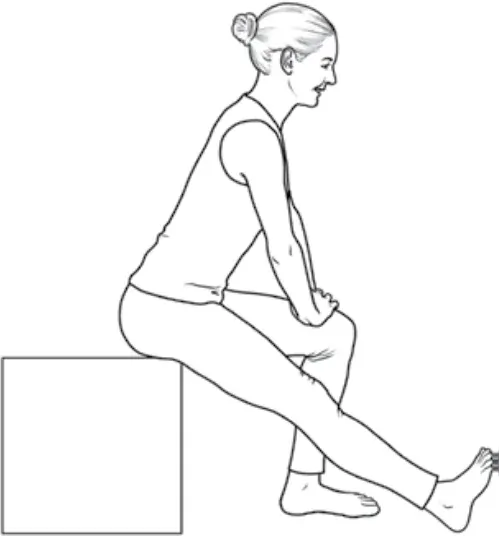
- With your heel on the ground, extend one leg straight ahead of you.
- Lean forward slightly from your hips while sitting upright.
- Reach for your toes.
- Hold for fifteen seconds.
- Change legs
- Repeat twice on each side.
Seated Spinal Twist:
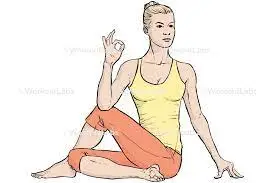
- Sit upright with your feet flat on the floor.
- Put your left knee on your right hand.
- Turn your upper body slowly to the left.
- Examine your left shoulder.
- Hold for ten seconds.
- Go back to the center and change sides.
- Repeat three times on each side.
Phase 3: Standing Stretches (3 Minutes)
Complete these standing exercises once you’re upright. If required, support yourself with a chair or counter.
Calf Stretch:
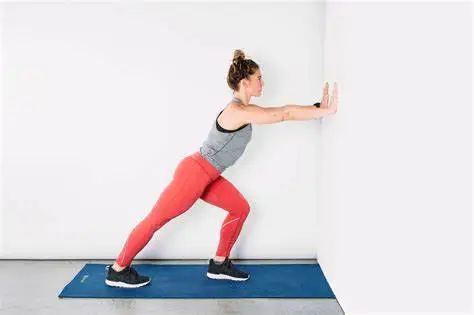
- Place your hands shoulder-high while facing a wall.
- Step back two feet while maintaining your heel on the ground.
- Gently lean against the wall until your back and calf start to stretch.
- Hold for fifteen seconds.
- Change legs
- Repeat twice on each side.
Standing Quad Stretch:
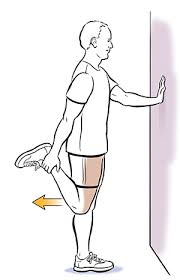
- Stand near a chair or table for balance.
- Bring your heel close to your buttocks while bending one knee.
- Hold your ankle in one hand if you can.
- If you find it too challenging, wrap a towel over your ankle and grasp the ends.
- Hold for fifteen seconds.
- Change legs
- Repeat twice on each side.
Strengthening Exercises for Knee Pain:
Strengthening the muscles surrounding the joint is the basis of any knee pain management program. The best exercises are included below, along with form guidance for each.
Straight Leg Raises:
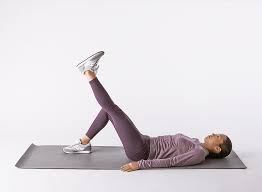
Because they build the quadriceps without straining the knee joint, straight leg raises are among the best exercises for strengthening the knee. They are therefore perfect for those who have knee pain and find it difficult to perform lunges or squats.
How to do it:
- Lie on your back with one leg bent and the other straight.
- Strengthen the straight leg’s thigh muscles.
- Raise the straight leg slowly, about 12 inches off the ground.
- Hold for three to five seconds, then gradually reduce
- Perform 2–3 sets of 10–15 repetitions per leg.
Wall Sits:

Wall sits are a great way to develop your quadriceps and work your glutes. They strengthen the muscles that maintain knee stability during standing and walking.
How to do it:
- Place your back flat against a wall.
- As long as it feels comfortable, slowly slide down until your thighs are level with the floor.
- The knees may move forward as your ankle mobility and proportions permit, but keep your heels planted and employ a depth that feels controlled.
- Hold for ten to thirty seconds, gradually increasing
- Repeat three or five times after taking a rest.
Hamstring Curls:
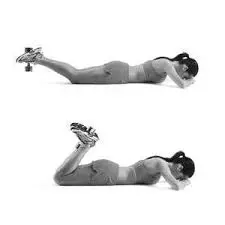
Strong hamstrings support the back of the knee and help balance the quadriceps. Without any equipment, standing hamstring curls are a mild method of strengthening your muscles. This exercise is very helpful for people who have back-of-knee pain.
How to do it:
- Hold on to a chair to help you stay balanced as you stand behind it.
- Bend one knee slowly, placing your heel close to your buttocks.
- Hold the position at the top for three to five seconds.
- Repeat 10–15 times per leg while lowering gently.
- Do two or three sets.
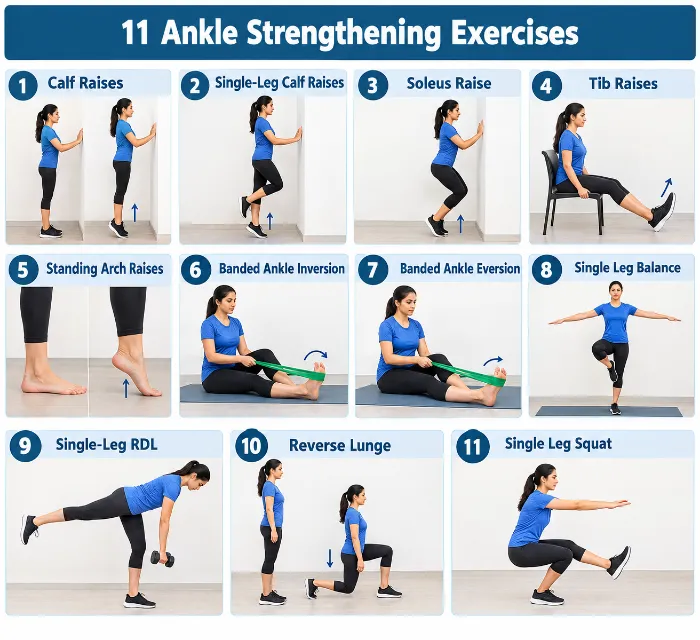
Calf Raises:
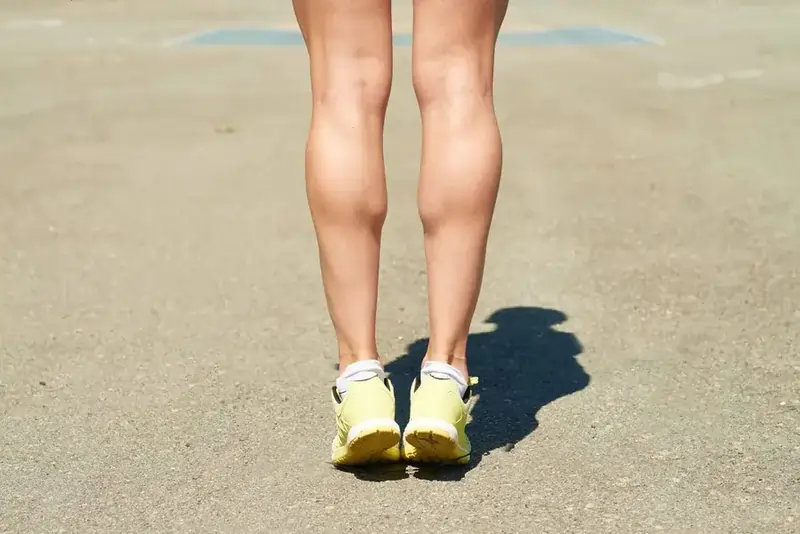
Ankle stability, which in turn affects knee position and support, is strongly impacted by calf strength. Knee-stressing compensatory movement patterns may be caused by weak calves.
How to do it:
- For support, stand behind a chair or counter.
- Carefully rise onto the balls of your feet.
- Maintain the position at the top for two to three seconds.
- Slowly fall again.
- Repeat 2–3 sets, 15–20 times.
Glute Bridges:
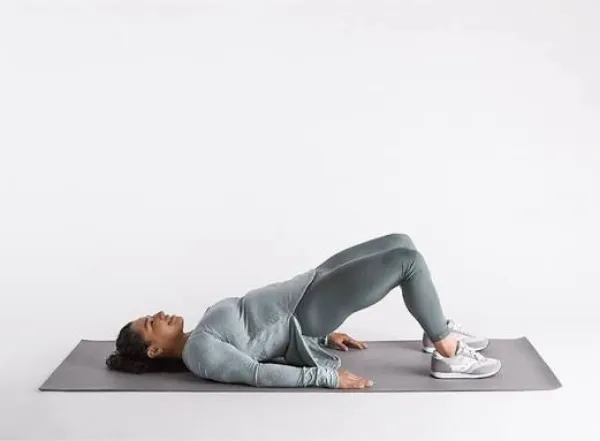
One frequent but often ignored cause of knee pain is weak glutes. By strengthening the posterior chain and enhancing pelvic stability, glute bridges reduce the strain on the knees when walking and climbing stairs.
How to do it:
- Bend your knees and place your feet flat on the floor, hip-width apart, while lying on your back.
- Then, lift your hips toward the ceiling by pushing firmly through your heels.
- For three to five seconds, squeeze your glutes at the top.
- Repeat ten to fifteen times while lowering gently.
- Do two or three sets.
Mobility Exercises for Knee Pain:
Knee mobility exercises assist in maintaining and improving range of motion, which is necessary for comfortable everyday movement. Strength alone is not enough. Those who have stiff knees after resting will find these exercises especially beneficial.
Seated Knee Extensions:
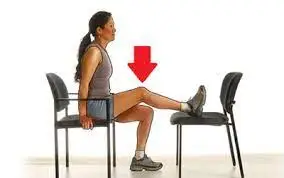
Without putting any weight on the joint, this mild exercise increases knee range of motion and quadriceps activation. It’s ideal for heating stiff knees.
How to do it:
- Sitting in a comfortable chair, place your feet flat on the floor.
- Straighten one leg slowly while completely extending the knee.
- Press down on the top part of the quadriceps and maintain the pressure for five seconds.
- Repeat 10–15 times per leg while lowering gently.
- Do two or three sets.
Ankle Circles:
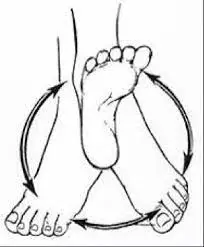
Although ankle stiffness can have a direct impact on knee position and comfort, ankle mobility exercises are often ignored in knee care. The knee compensates when the ankle is unable to move through its entire range, frequently in ways that make it more uncomfortable.
How to do it:
- Raise one foot just a little bit off the ground while seated.
- Rotate the foot slowly in 10 clockwise and 10 counterclockwise rotations.
- Repeat after switching feet.
- Do two sets for each foot.
Heel Slides:
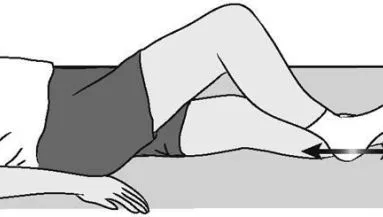
Knee flexion range of motion is slightly increased by heel slides. People who are recovering from stiffness or who find deep bending painful will find them very helpful.
How to do it:
- Extend both legs while lying on your back.
- Bend your knee and slowly bring one heel towards your buttocks.
- Hold for three seconds after sliding as far as feels comfortable.
- Return the heel to the starting position slowly.
- Perform two sets of ten to fifteen repetitions for each leg.
A Senior-Friendly Knee Exercise Program:
Gentle workouts for seniors can significantly improve daily comfort and independence for senior citizens and older adults. The key to success is to begin slowly, ask for help when needed, and focus on maintaining a steady routine rather than pushing too hard too soon.
Many seniors discover that a pleasant routine that promotes strength and flexibility may be created by combining regular warmth application with exercise.
Recommended Senior Routine (15–20 minutes):
- Knee extensions while seated, ten repetitions each leg (warm-up)
- Ten ankle circles per foot in each direction
- Performing hamstring curls while standing on a chair, with ten repetitions for each leg.
- 15 repetitions of chair-supported calf raises
- Straight leg lifts, either sitting or lying down, 10 repetitions per leg
- Ten repetitions of glute bridges (if at ease on the floor)
Senior Safety Tips:
- When performing standing workouts, always grasp onto a stable surface.
- If you experience sudden or intense pain, stop. Mild muscle strain is typical.
- Over the course of many weeks, gradually increase the number of repetitions.
- Work out on a yoga mat or non-slip surface.
- Before working out, warm your knees to ease any early pain.
When Exercises Help vs. When to Pause:
Knee pain exercises work well for:
- Mild daily soreness and general stiffness
- Soreness after walking, climbing stairs, or standing
- Joint stiffness and decreased mobility associated with aging
- Encouraging healing in addition to expert advice
- Tightness in the front knee following exercise
Think about stopping and seeking expert advice if:
- During an exercise, you feel sudden, severe pain.
- After exercise, swelling rises rather than falls.
- You recently sustained an injury that hasn’t been assessed.
- Even with mild effort, pain gradually gets worse over several days.
- You encounter severe instability, giving way, or locking.
FAQs:
How to reduce knee stiffness in the morning?
Applying heat, moving carefully before getting out of bed, and doing modest in-bed exercises can all help ease morning knee stiffness.
Can walking reduce knee stiffness?
In fact, walking can help ease knee pain by strengthening the surrounding muscles and lubricating the joint.
Does knee stiffness ever go away?
Yes, knee stiffness can go away, but whether it does so entirely relies on what caused it.
What are some natural treatments for stiff knees?
Simple heat therapy, mild mobility exercises, and anti-inflammatory practices can all help ease tight knees naturally.
What is the most typical mistake that causes pain in the knees?
Falling into the inactivity trap—either fully stopping all movement out of anxiety about pain or completely disregarding chronic pain until major damage occurs—is the greatest error that leads to damaged knees.
What 5 foods should I avoid for joint pain?
If you want to reduce joint pain and inflammation, stay away from additional sweets, refined carbs, red and processed meats, fried and fast meals, and excessive alcohol.
How can I repair my knees naturally?
Low-impact exercise, weight management, and targeted physical therapy can support natural knee healing and reduce pain.
Is climbing stairs good for knees?
While climbing stairs may aggravate previous knee pain or arthritis, it is typically beneficial for healthy knees since it strengthens the surrounding leg muscles and increases joint stability.
References:
- Einerman, C., Eleff, E., Ilijeska, A., & Zinberg, A. (2014). The effects of morning versus evening stretching exercises in hamstring flexibility gains. In CUNY Academic Works (City University of New York). https://academicworks.cuny.edu/gc_etds/654
- Mastrocola, K. (2026, March 16). Why you have sore knees in the morning and the 5-Minute fix that loosens stiffness fast. Woman’s World. https://www.womansworld.com/wellness/pain-management/sore-knees-in-the-morning-simple-tricks-that-ease-the-pain
- Team, J. P. A. (2026, February 18). 10-Minute morning stretching routine for joint stiffness. Joint Pain Authority. https://jointpainauthority.com/blog/gentle-stretching-routine-morning-stiffness/
- Mengi, G., Aydoğmuş, H., Taşkıran, Ö. Ö., Göğüş, F., & Beyazova, M. (2024). Is it possible to objectively determine morning stiffness in rheumatoid arthritis? Turkish Journal of Physical Medicine and Rehabilitation, 70(2), 180–187. https://doi.org/10.5606/tftrd.2024.12219
- FlexiKnee. (2026, February 28). Best knee pain exercises for strength, mobility & comfort. FlexiKnee. https://flexi-knee.com/guides/knee-pain-exercises-guide