Postpartum Core Strengthening Exercises:
Introduction:
The body is usually difficult throughout pregnancy, but the changes that occur during pregnancy particularly affect the core. After all, as the abdomen expands to accommodate the developing baby, a lot is going on around the core muscles during pregnancy. In the process, something must give, and that something is frequently the core’s strength. I recommend postpartum core workouts, as these changes are significant.
In addition to stabilizing the lower back, core strength enhances flexibility, balance, and posture. It also enhances everyday tasks and lowers the chance of chronic pain and damage.
Re-strengthening the core after pregnancy should be a top priority for these reasons, but it can be difficult to get back to core exercises after giving birth. Things don’t feel or look the same as they did before, and the last thing you want to do is make a mistake that could harm an already sensitive area.
It’s very important to perform certain workouts after giving birth to restore your strength and stability because your core muscles are weakened and strained during pregnancy.
What is the core?
The rectus abdominis, transversus abdominus, and obliques are the deep abdominal muscles that make up your core. These muscles support your abdomen, pelvis, and back by acting as a corset around your torso. The best method to ensure that your abdomen and spine have the support they need to prevent strain or damage is to have a strong core.
How to strengthen your core after pregnancy?
You might imagine a six-pack when you think of core muscles, but the core contains some important players like the transverse and oblique muscles and runs much deeper than the rectus muscles. Here are some strategies to focus on core exercises during the postpartum period, strengthen your abdominal wall, and avoid injuries.
Avoid incorrect movements:
Many people perform abdominal exercises incorrectly by squeezing when performing a sit-up or crunch, which pulls on the head and neck and prevents the belly button from returning to the spine and staying there.
When performing aerobic workouts, keep in mind to draw the belly button in toward the spine and hold it there to prevent this.
Focus on your breathing:
When performing abdominal workouts, keep in mind to breathe in as you relax and out as you perform the contraction. When you exhale, visualize dragging your belly button toward your back; when you relax and inhale, visualize extending your belly.
Why Does Pregnancy Affect Your Core?
Pregnancy causes fundamental changes that go beyond appearance. To make room for the developing fetus, the core muscles experience substantial physical changes. To accommodate the growing uterus, the rectus abdominis and other abdominal muscles may extend and split. Hormonal fluctuations also cause ligaments to loosen, which may impact core stability. During pregnancy, some women can experience diastasis recti, a disorder connected to the core.
Can You Do Core Exercises During Pregnancy?
As per common advice, you can safely continue exercising while pregnant if you make the necessary adjustments. Maintaining the strength and stability of the abdominal muscles during pregnancy may help with postpartum recuperation.
Your pre-pregnancy routine’s core exercises will simply look a little different. Deep breathing exercises should be the primary method of strengthening the core. Additionally, it’s advisable to consult your doctor for particular advice in the second and third trimesters, or if you have a noticeable belly, you can still perform standard aerobic workouts throughout the first trimester.
If you were practicing planks before becoming pregnant and there are no pregnancy-related issues, you can continue, but at some point they will need to be adjusted. Usually, this happens in the second trimester, but the precise time will depend on the person.
These adjustments typically include dropping your knees, using your core while sitting on a big medicine ball, or raising your hands to a higher surface for an incline plank. Coning, or doming, is when the linea alba pushes out farther than the rest of the abdominal wall, creating a tent or triangle shape of the abdomen. You simply want to make sure that you’re not coning, doming, or leaking throughout the movement, as that will be an indication of excessive internal abdominal pressure.
After giving birth, is it safe to perform postpartum core exercises?
One of, if not the most, physically fragile times in a woman’s life is the postpartum period, and the idea of performing any type of ab work during those early postpartum days might be frightening.
You shouldn’t be afraid to start exercising again after having a kid, but it’s crucial to take your time. It is possible to safely return to core work, but appropriate consultation and education are essential.
Benefits of Strengthening Your Core Following Childbirth:
In general, it’s crucial to start exercising again after giving birth once your doctor gives the all-clear. This is because moving your body has both physical and psychological advantages, which can be very significant at this emotionally sensitive period. Even if it’s just five or ten minutes, new parents must remember that they are complete individuals.
Because the core stabilizes the entire body, it’s especially important to train and strengthen it after giving birth. Core stability is necessary for all functional activities, including sitting, standing, squatting, walking, and sprinting. Lifting and carrying a rapidly growing baby is undoubtedly included in this.
The good news is that your core can and will recover regardless of how it is shaped after giving birth. We have very strong stabilizer muscles.
Postpartum core exercises:
You’re surely thinking about what exercises are safe to perform after having a birth, but remember that you should see your doctor before starting.
Your core will become stronger in roughly six to eight weeks if you follow this five-minute routine four or five days a week. Keep your navel pushed in toward your spine throughout each movement.
Keeping an eye on your ability to maintain the contraction during the workout is important for maintaining its safety and effectiveness. If you observe that the muscles in your abdomen are unable to contract and hold. It indicates that your muscles are not prepared for that degree of physical activity. Adjust the exercises by:
- Reducing the amount of distance your body moves while contracting.
- Cutting down on repetitions.
- To avoid starting from a supine position, shift your position by raising your body using a triangle or pillow.
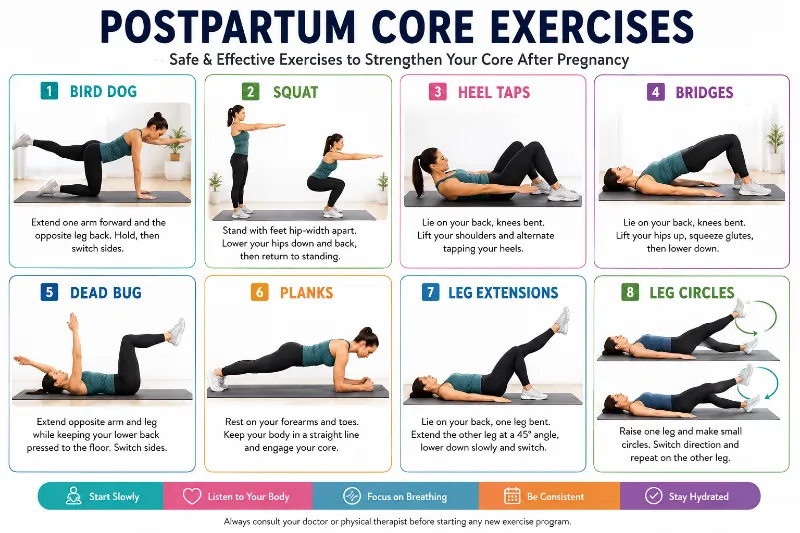
Bird dog:
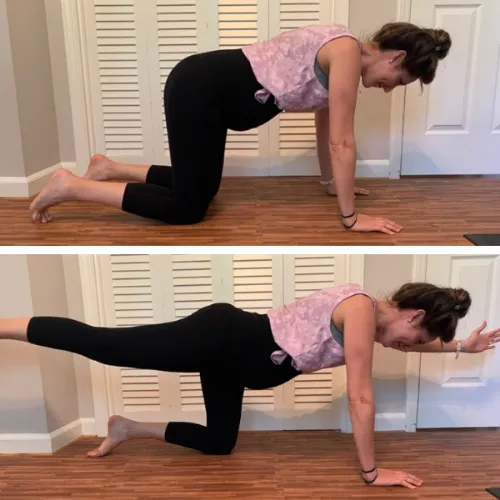
- The muscles in your back are strengthened by bird dog.
- Get on all fours to begin. Maintain the neutral alignment of your spine.
- Reach your right arm forward and look a few feet ahead of you. Stretch your left leg behind you at the same moment. Repeat on the opposite side after holding for one to two seconds.
- Work your way up to ten, starting with five on each side.
Squat:
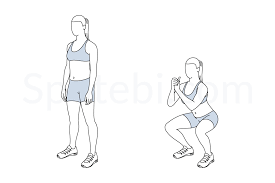
- One of the most adaptable, all-around workouts is the squat. It may not seem like a core exercise, but to maintain a straight back, you must stabilize your deep abdominal muscles.
- Stand with your feet slightly wider than hip-width apart to perform a squat.
- Consider bending your knees and pushing your butt behind you. Keep your back from arching or rounding. To get back up on your feet, push firmly.
- Work your way up to several sets after beginning with a set of ten. Weights can be added as well.
Heel taps:
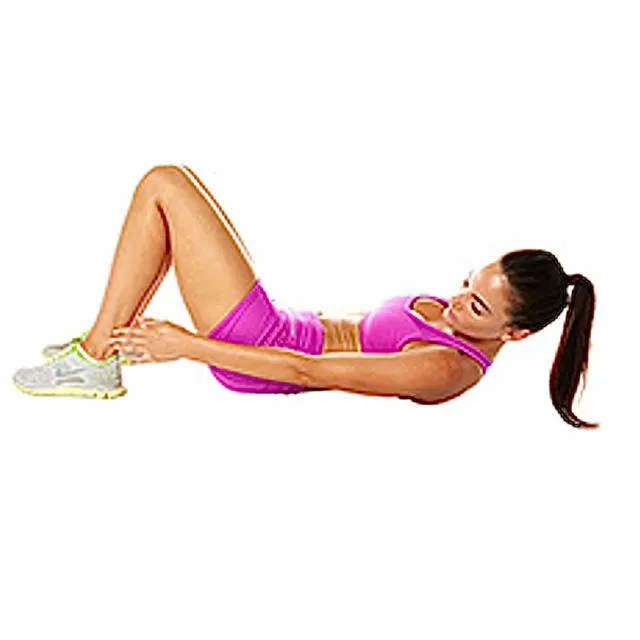
- Lie on your back. Both feet should be planted on the ground for beginners.
- Tap your right heel to the mat slowly and gently.
- On the exhale, use your abdominals to lift your leg back up to the tabletop position.
- Alternate legs and repeat for several reps.
- Starting with both legs in the tabletop posture, level up by gradually tapping one heel at a time down to the floor while switching legs. Repeat for several reps.
- And for even more of a challenge, begin with both legs on the tabletop. Following that, tap both heels to the ground simultaneously by lowering both legs at the same moment. Repeat for several reps.
Bridges:
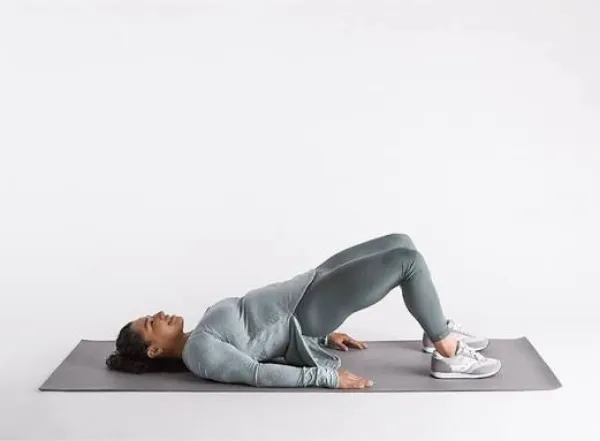
- The back part of your core can be toned with bridges.
- Rest on your back with your knees bent and your feet flat on the ground. You can experiment with the distance between your feet and your butt, but keep in mind that it gets harder the farther away.
- Raise your hips slowly toward the ceiling. Concentrate on lifting, holding, and returning to neutral with your core muscles.
- You can put a weight on your stomach or elevate one leg as your strength increases.
Dead bug:
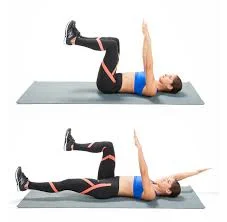
- From a lying-down position, a dead bug is basically a bird-dog.
- Start with both arms extended toward the ceiling with your legs positioned like a tabletop. As you extend your left leg, lower your right arm behind you. Go back to neutral and repeat on the opposite side.
- Be careful not to crane or arch your neck. Work your way up to several sets, starting with a set of ten.
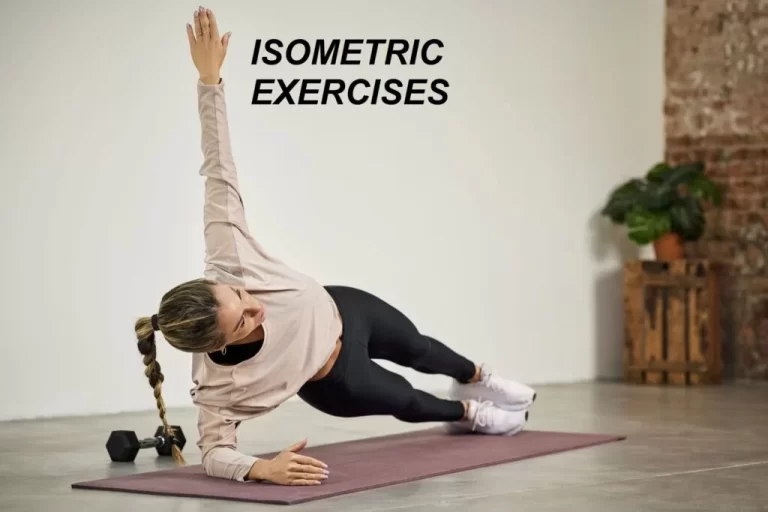
Planks:
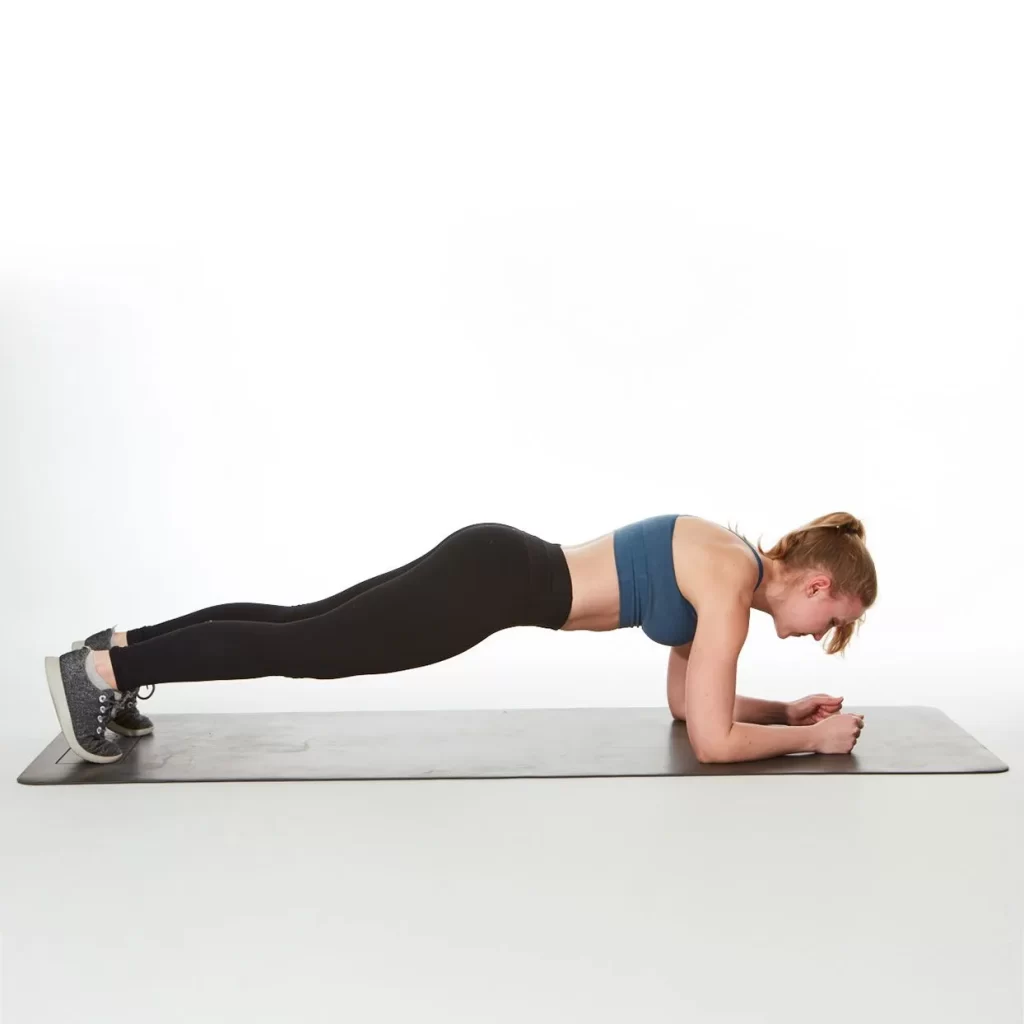
- One of the simplest deep core exercises is the plank. It’s a fantastic place to start or hold various core exercises.
- To hold: Balance on your toes and your hands or elbows while maintaining a straight line from your shoulders to your hips. Avoid arching your back. You must adjust your knees if you find yourself raising your butt into the air.
- Shoulder muscles are more often targeted by planks on your elbows.
- Planks can be used for rolling planks, shoulder taps, plank jumps, or mountain climbers. They are incredibly adaptable.
Leg Extensions:
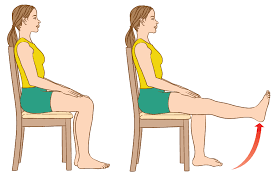
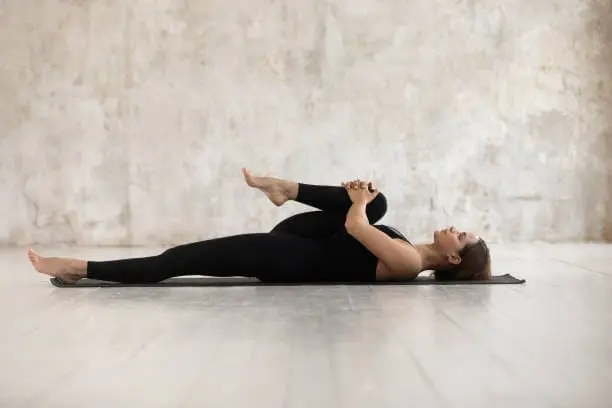
- Put your legs in a seated position while lying on your back.
- Straighten one leg to a 45-degree angle. The lower the leg, the more difficult the exercise; beginners can raise the leg to 90 degrees. Throughout, do not arch your lower back; instead, keep it grounded.
- Switch to the other leg.
- Do this many times.
Leg Circles:
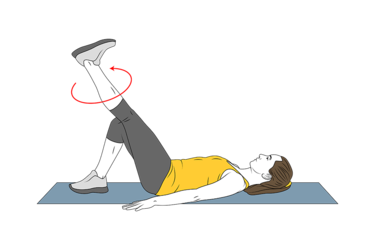
- Place your legs on the tabletop while lying on your back.
- Take a breath and raise one leg to the ceiling.
- Breathe out, lower the leg to the side, and then slowly and deliberately circle back up to the starting position. You can perform the circles with your knee bent if that seems too difficult. Here, the only objective is to make the circle as broad as possible while keeping the pelvis stable.
- After a few repetitions, switch sides.
- Next, perform each leg once more, circling them in the opposite direction from the first set of repetitions.
- Do this multiple times.
Avoid These Mistakes When Performing Postpartum Core Exercises:
When it comes to postpartum core exercises, form and safety are more important than ever. It’s important to avoid making the following two mistakes:
Rushing it: Women often make the error of returning too quickly to planking and crunching. Work your way up to the four-phase Postnatal Core series with these core exercises.
Not going deep: You want to make sure that you’re actually working on and engaging the deep core muscles. This is what the 360 breathing truly accomplishes; it’s deeper than superficial aerobics.
FAQs:
How to strengthen core postpartum?
Deep abdominal and pelvic floor stability is restored after pregnancy through postpartum core strengthening. Begin with light breathing exercises and work your way up gradually. Before beginning, always obtain approval from your physician or a pelvic floor physical therapist, particularly if you have had a C-section or diastasis recti.
What are three physical signs of a weak core?
Persistent lower back pain, obvious slouching or bad posture, and trouble with balance or stability are three physical indicators of a weak core. The surrounding joints and spine have to exert more effort to make up for weak core muscles.
What exercises should I not do postpartum?
Be clear of heavy lifting, high-impact workouts, and classic core exercises like complete planks, sit-ups, and crunches. These motions can exacerbate abdominal separation (diastasis recti) and place tremendous downward strain on your mending pelvic floor. Before beginning a new exercise regimen, always ask your doctor’s or midwife’s approval.
Does walking strengthen your core?
By requiring your torso, hips, and lower back to cooperate to keep you upright and steady with each stride, walking does, in fact, activate and strengthen your core muscles. But rather than significant muscle gain or obvious abs, it offers stability and physical endurance.
How long will it take to strengthen my core?
In two to four weeks, when your nervous system learns to engage the muscles, you should feel and observe a stronger core. It takes four to eight weeks of regular training to see noticeable and significant increases in physical strength.
References:
- Saunders, B., Sim, J., Kingstone, T., Baker, S., Waterfield, J., Bartlam, B., Burroughs, H., & Jinks, C. (2017). Saturation in qualitative research: exploring its conceptualization and operationalization. Quality & Quantity, 52(4), 1893–1907. https://doi.org/10.1007/s11135-017-0574-8
- Lazic, S. E. (2010). The problem of pseudoreplication in neuroscientific studies: is it affecting your analysis? BMC Neuroscience, 11(1), 5. https://doi.org/10.1186/1471-2202-11-5
- Selman, R., Early, K., Battles, B., Seidenburg, M., Wendel, E., & Westerlund, S. (2022). Maximizing Recovery in the Postpartum Period: A Timeline for Rehabilitation from Pregnancy through Return to Sport. International Journal of Sports Physical Therapy, 17(6), 1170–1183. https://doi.org/10.26603/001c.37863