Exercises For Flat Feet: 7 Easy Arch-Strengthening Exercises
Introduction:
Fallen arches, another name for flat feet, are more frequent than most people realize. While some people have flat arches from birth, others acquire flat feet later in life as a result of changes in posture, accidents, weakened muscles, or prolonged standing. The degree to which the surrounding muscles support the arch determines whether or not flat feet are uncomfortable.
The beneficial fact is that strength, stability, and comfort can all be improved with the best flat-foot exercises. The feet react positively to focused training, just like any other part of your body. When done consistently, exercises for flat feet can strengthen the muscles that support the arch, reduce overpronation, improve walking patterns, and ease strain on the ankles, knees, and even the lower back.
Why Do Flat Feet Develop?
There are several causes of flat feet, and not everyone who has them feels pain or discomfort. Fallen arches are frequently the result of a confluence of everyday lifestyle circumstances, muscular strength, and the inherent shape of the foot.
Some people’s feet automatically flatten when weight is applied because they are born with low or flexible arches. Others eventually have flat feet due to weakening or overstretching of the tendons and muscles supporting the arch.
Common causes of flat feet include:
- Genetics: Some people have flat arches by genetics, which may not cause any symptoms unless the foot is repeatedly strained.
- Muscle weakness: The arch is supported by the small stabilizing muscles inside the foot. The arch may collapse when standing or walking if these muscles are weak.
- Tendon strain or injuries: The foot’s capacity to maintain its arch may be compromised by damage to supporting tissues, especially the posterior tibial tendon.
- Walking and posture: The arch and surrounding joints are continuously stressed by overpronation, which occurs when the foot rolls inward excessively.
- Extended periods of standing or walking on hard surfaces can wear down your foot muscles and progressively weaken your arch support.
- Age-related changes: Tendons and ligaments become less elastic and less strong as we age, which might eventually result in the arch lowering.
Why do exercises matter for flat feet?
Exercises for flat feet are a crucial component of conservative treatment because the arch of the foot functions as a spring, absorbing shock and supporting body weight during walking and running. When the arch collapses or flattens, the feet can become less efficient, resulting in fatigue, instability, and pain. The muscles in the foot and lower leg play a crucial role in arch support; when these muscles are weak, flat feet may become more symptomatic.
Strengthening those deep foot muscles can:
- Improve stability and balance
- Encourage improved hip and knee alignment
- Minimize pain and fatigue when walking or doing sports
- Promote more effective weight distribution across the foot
Exercises that target the intrinsic foot muscles, the little muscles inside the foot, may assist persons with flexible flat feet in maintaining or increasing arch height, according to a growing body of physical therapy studies. Many people report increases in comfort within weeks if they stay consistent, even tho gains frequently happen gradually.
Best Exercises for Flat Feet:
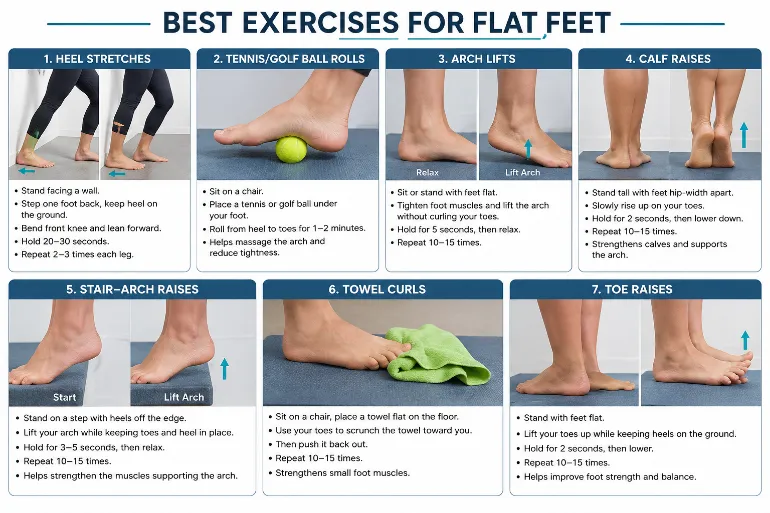
The top exercises for flat feet that physiotherapists frequently suggest to improve arch strength and foot stability are listed below.
Heel stretches:
- Keep your hands on a chair, wall, or railing.
- Maintain one leg out in front of you while extending the other leg behind you.
- Firmly plant both heels on the ground.
- Feel a stretch in your Achilles tendon and back leg as you bend your front leg and press yourself into the wall or support while maintaining a straight spine.
- For thirty seconds, maintain this posture.
- Repeat on each side four times.
Tennis/golf ball rolls:
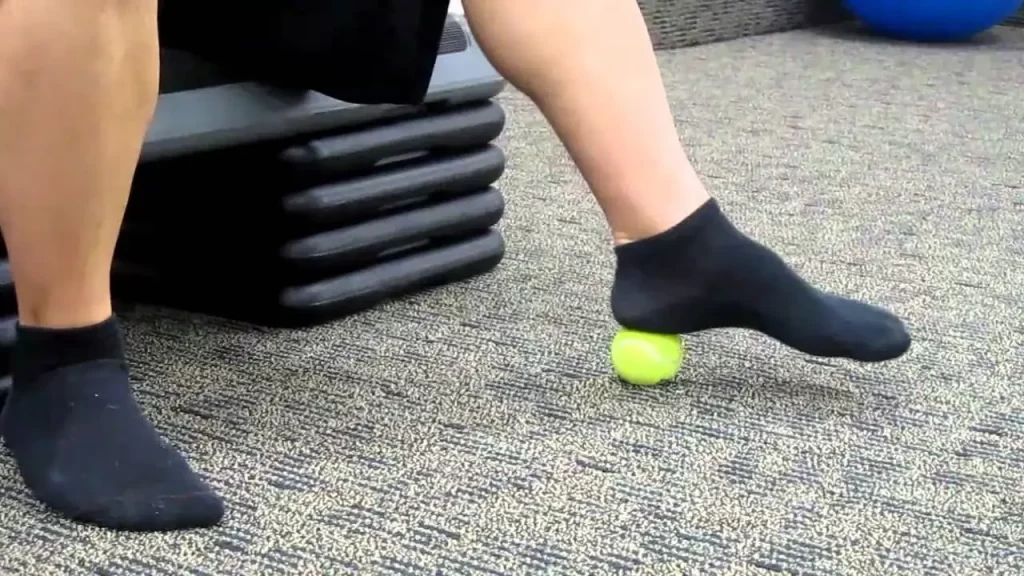
- Place a tennis or golf ball beneath your right foot while seated in a chair.
- As you move the ball beneath your foot, keep your back straight and concentrate on the arch.
- Spend two to three minutes doing this.
- Next, use the other foot.
Arch lifts:
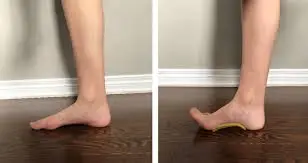
- As you stand, position your feet slightly below your hips.
- As you raise your arches as high as you can, roll your weight to the outside borders of your feet, being careful to maintain your toes in touch with the floor the entire time.
- Then let your feet drop once again. You will work out the muscles that elevate and supinate your arches.
- Perform 10 to 15 reps.
- Two to three sets.
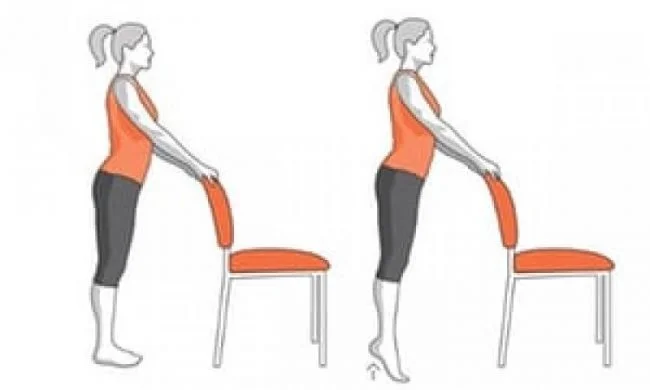
Calf raises:
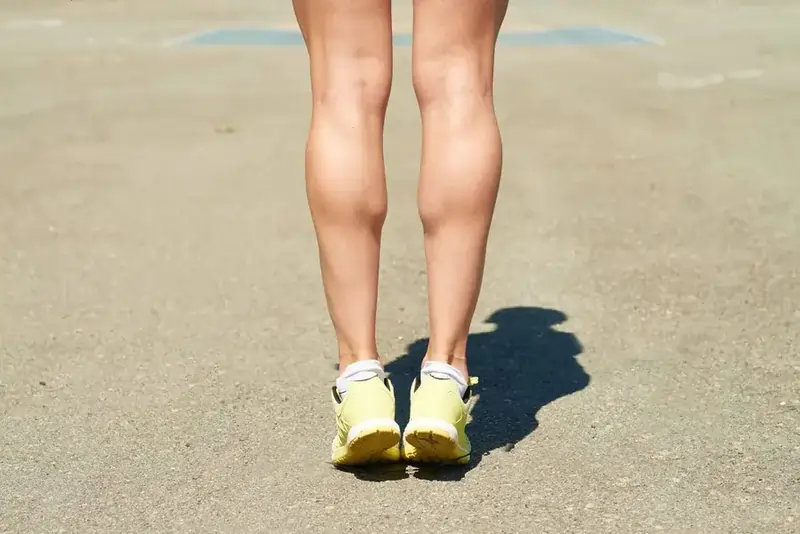
- As you stand, raise your heels as high as you can.
- You may assist your balance by using a wall or a chair.
- After five seconds of holding the higher posture, return to the bottom.
- Do 15–20 repetitions in two or three sets.
- After that, maintain the higher posture while pulsating up and down for thirty seconds.
Stair arch raises:
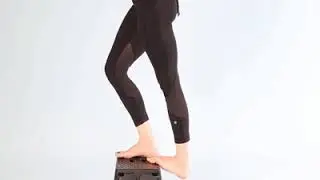
- Place your left foot one step higher than your right while standing on stairs.
- As you drop your right foot until your heel is lower than the step, use your left foot for balance.
- With an emphasis on strengthening your arch, slowly raise your right heel as high as you can.
- Raise your arch by twisting it inward as your leg and knee shift slightly to the side.
- Return to the starting position slowly.
- Perform two to three sets of ten to fifteen repetitions on each side.
Towel curls:
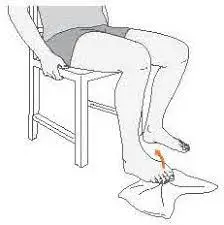
- Place a towel beneath your feet and take a seat.
- Scrunch up the towel by curling your toes and rooting your heels into the ground.
- Incorporate your toes into your foot.
- After a few seconds of holding, let go.
- Keep the ball of your foot firmly planted on the ground or towel. Continue to be conscious of the strengthening of your foot’s arch.
- Perform 10 to 15 reps.
- Two to three sets.
Toe raises:
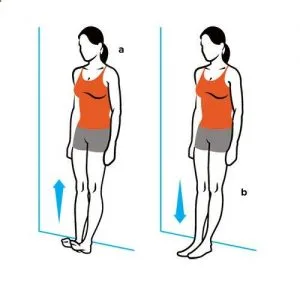
Try performing this exercise in standing yoga postures like Tree Pose, Standing Forward Bend, or Standing Split for variation.
- While standing, raise your other four toes and plant your right big toe firmly on the ground.
- Next, raise your big toe and press your four toes into the ground.
- Hold each lift for five seconds while you perform each method five to ten times.
- Next, perform the exercise with your left foot.
What exercises should you avoid with flat feet?
Where you land on the spectrum in terms of the strength and health of your feet determines which workouts to avoid as well as where to begin. If you’ve worked your way up to it and you haven’t experienced any pain or other undesired symptoms, like extreme tightness, then nothing has to be avoided.
Exercises that require you to leap aggressively and put additional strain on your feet should be avoided. You should exercise caution when performing exercises like distance jogging or basketball. You simply need to allow your body time to adjust to so much strain on the muscles, not that they should be avoided.
For example, if your body isn’t prepared to run a 10K or give it your all during a pickup basketball game, the muscles in your feet, ankles, and lower legs may be significantly overworked compared to what they’re used to, which might result in stiffness and injury.
A person is at risk for problems like severe pain, tight muscles, or injury if they do much more activity than they normally do.
Other treatment for flat feet:
To strengthen your arches and lessen the strain on your flat feet, you might choose to utilize an orthotic device. In addition to offering support, they could assist your feet to operate and align better.
Additionally, orthotic devices can lessen tension and absorb impact. You may purchase pre-built gadgets or have them manufactured to order. Additionally, stability shoes, like motion control shoes, can offer additional cushioning and support for your arches.
If flat feet are caused by poor form or technique, overuse injuries, or both, physical therapy may be able to help.
Surgery is typically not required for flat feet unless they are the result of a tendon rupture or tear or a bone abnormality. If you have persistent flat foot discomfort that hasn’t gone away after trying alternative treatments, surgery may occasionally be advised.
What to Expect and Be Patient!
As with any exercise regimen, consistency is essential. The majority of individuals gain from:
- As with any exercise regimen, consistency is essential. The majority of individuals gain from:
- Three or four times a week, perform flat-foot exercises.
- Beginning slowly and then increasing
- Exercises combined with supportive footwear
- Seeing a physical therapist if the pain doesn’t go away
Certain flat feet are frequently structural rather than completely shift-form. Instead of aiming for a perfect arch, the greatest workouts for flat feet focus on improving sensation, mobility, and long-term foot health.
Do people with flat feet need to wear special shoes or support equipment?
There are a few things that should help people with flat feet exercise properly, but it’s always advisable to talk to your doctor or physical therapist about what equipment might be most beneficial for you.
Make sure the toe box of your shoe enables your toes to expand or splay. An excessively narrow shoe toe box might alter how your foot supports your body and makes contact with the ground, which could result in further injuries.
When utilizing these instruments, people sometimes desire to push their bodies, but if they are properly situating their foot and supporting their muscles, using them should improve their condition rather than make it worse.
After taking them for a considerable amount of time—a few hours to a few days if your condition worsens—stop using them and speak with your physician or physical therapist.
It’s important that you exercise your feet in some way and don’t always depend just on those supports. Your muscles won’t get the exercise they require if you constantly support them with orthotics, which will reduce their strength and ability to help your foot compensate for the absence of support typically supplied by the bones and ligaments.
As with other muscles, make sure your feet are getting some activity, whether it’s through aerobic workouts or simply going barefoot around the home. Simply give your body more time to adjust to the increased difficulty those foot muscles face, and be aware that some stiffness will be a necessary part of the process. And there are several ways to assist in easing tense muscles, including self-massage or a therapist’s massage.
Can exercise and insoles be used to improve flat feet?
For people with fallen arches, orthotics for flat feet and frequent exercise are essential. Because they offer the stability and low arch support you require on a daily basis, Superior Low shoes are the finest for flat feet. In the meantime, physical therapy exercises aid in the correction of fallen arches and the strengthening of weak muscles.
Exercises for flat feet are important for obtaining overall foot health because using arch support inserts alone won’t enable the muscles to develop stronger. Even tho not everyone with flat feet can restore their arches, using orthotics and doing foot exercises could make it easier to move around and be active without experiencing pain.
FAQs
Can flat feet be corrected with exercise?
Exercise cannot usually completely heal flat feet or alter their structure, but certain exercises can help flexible flat feet become stronger, less painful, and have better arch function.
Can flat feet ever be corrected?
Yes, flat feet can occasionally be fixed; however, this will depend on your level of pain and how flexible or inflexible your foot is. Simple exercises, supportive inserts, and surgery are all part of the treatment.
What is the best treatment for flat feet?
Conservative care, which consists of supportive footwear, bespoke or over-the-counter arch supports, and physical therapy exercises, is the best treatment for flat feet. Surgery is only necessary for serious structural issues; treatment is only required if you experience pain.
What shoes are best for flat feet?
The greatest brands of shoes for flat feet are the New Balance Fresh Foam X 860, the ASICS Gel-Kayano series, and the Brooks Adrenaline GTS series. These shoes include built-in arch support, a strong midfoot, and stability characteristics to prevent your feet from sliding inward.
What is a Stage 4 flatfoot?
The most severe and advanced stage of adult-acquired flatfoot deformity is stage 4, which is marked by an inflexible foot structure, extensive arch collapse, and tilting of the ankle bone (talus) as a result of a failing inner ankle ligament.
How to fix flat feet naturally?
By extending tight lower leg tissues, staying barefoot, and engaging in certain strength activities, you can naturally treat or manage flexible flat feet. Building intrinsic muscle strength enhances arch control, stability, and pain relief, but structural bone changes in adults cannot be undone.
References:
- Evans, A. M., & Rome, K. (2011). A Cochrane review of the evidence for non-surgical interventions for flexible pediatric flat feet. PubMed, 47(1), 69–89. https://pubmed.ncbi.nlm.nih.gov/21448121
- Berdishevsky, H., Lebel, V. A., Bettany-Saltikov, J., Rigo, M., Lebel, A., Hennes, A., Romano, M., Bialek, M., M’hango, A., Betts, T., De Mauroy, J. C., & Durmala, J. (2016). Physiotherapy scoliosis-specific exercises—a comprehensive review of seven major schools. Scoliosis and Spinal Disorders, 11(1), 20. https://doi.org/10.1186/s13013-016-0076-9
- Lichota, M., Plandowska, M., & Mil, P. (2013). The arches of the feet of competitors in selected sporting disciplines. Polish Journal of Sport and Tourism, 20(2), 135–140.
https://doi.org/10.2478/pjst-2013-0013