5 Simple Exercises to Strengthen Every Hip Muscle
Introduction:
Smooth mobility, improved balance, and a lower chance of injury all depend on a strong and stable hip complex. Strengthening all of the key hip muscles can have a significant impact, regardless of whether you’re dealing with stiffness, weakness, or just want to develop a strong foundation for daily activities and workouts.
These five easy exercises assist in increasing mobility, stability, and general functional strength by focusing on the hip flexors, extensors, abductors, and adductors.
Benefits of Strengthening Every Hip Muscle:
Stability and general lower-body function can be enhanced by strengthening all of the major hip muscles. It improves balance, encourages good running and walking form, and lowers the chance of common problems like lower back pain, knee strain, and hip pain.
Additionally, strong hips enhance posture, increase athletic performance, and make daily tasks like standing up, lifting, and ascending stairs feel easier and more controlled.
5 Exercises to Strengthen Every Hip Muscle Video:
Simple Exercises to Strengthen Every Hip Muscle:
Chair Pose:
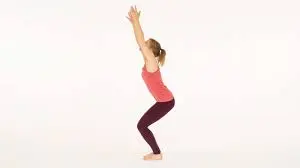
The chair posture is an effective hip-strengthening exercise that works the quadriceps, glutes, and core while promoting good hip and spine alignment. You can enhance balance, endurance, and lower-body control by activating the deep stabilizing muscles surrounding the pelvis by sitting your hips back as though you were lowering into an unseen chair.
Additionally, this pose increases hip mobility and develops the strength required for everyday activities like standing, squatting, and stair climbing.
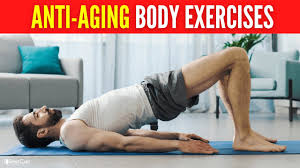
Bridge Pose:
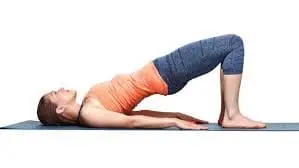
The bridge posture is a great exercise for strengthening and enhancing pelvic stability since it works the glutes, hamstrings, and deep hip stabilizers. The posterior chain is activated when you raise your hips off the floor, which helps mitigate the negative consequences of extended sitting and lessen lower back pain.
Additionally, this pose strengthens the muscles required for functional activities like walking, running, and lifting, improves hip extension mobility, and promotes improved posture.
Side-lying Hip Abduction:
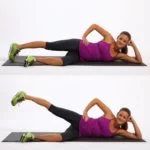
The goal of the side-lying hip abduction exercise is to develop the hip abductors, particularly the gluteus medius, which is crucial for hip stability and balance. You can activate the muscles that maintain your knees from folding inward during daily activities like walking and jogging by raising your upper leg while keeping your hips stacked.
This exercise improves lower-body posture, lessens hip and knee pain, and increases lateral hip strength.
Straight leg raises:
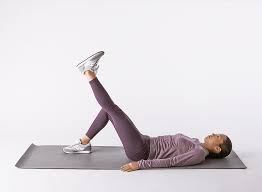
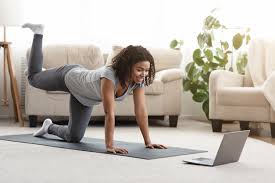
The straight leg raises exercise helps increase general hip stability while strengthening the quadriceps, hip flexors, and core. The muscles at the front of the hip that are necessary for walking, climbing stairs, and maintaining good posture are activated when you lift the leg with control while maintaining a straight knee. Additionally, this exercise improves knee alignment, lessens lower back strain, and increases functional strength for daily tasks.
Bird Dog Exercise:
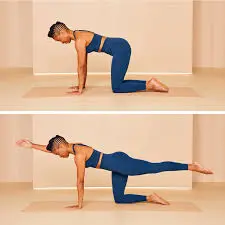
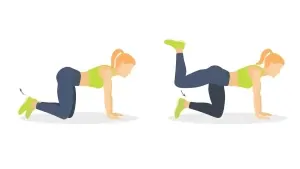
The bird dog exercise tests your body’s ability to maintain balance while extending opposing limbs, strengthening your hips, glutes, lower back, and core. The stabilizing muscles surrounding the hips contract to keep the pelvis stable while you extend one arm forward and the opposing leg back, enhancing coordination and general spinal alignment.
Walking, lifting, and other daily activities are made easier with this exercise, which also improves hip stability and lessens lower back pain.
Conclusion:
Improving stability, mobility, and general lower-body function requires strengthening all of the major hip muscles. You can develop balanced strength that promotes improved posture, more fluid movement, and a lower chance of pain or injury by adding basic exercises like chair pose, bridge pose, hip abduction, straight leg lifts, and bird dog into your program.
You can move with more confidence and keep your hips healthier over time by being consistent with these workouts.
FAQs:
What results in the hip’s blood flow being reduced?
Damage to adjacent blood arteries and decreased blood flow to bones can result from injuries like hip dislocation or fracture. using steroids. Avascular necrosis is frequently caused by the use of high-dose corticosteroids, such as prednisone.
How can hip bone density be increased?
Aerobic exercises using weight-bearing
Walking, dancing, elliptical training machines, low-impact aerobics, stair climbing, and gardening are a few examples. These exercises decrease bone loss by directly affecting the bones in the lower spine, hips, and legs. They are beneficial to the heart and enhance blood flow.
How can hip joint blood flow be improved?
Platelets are extracted from the patient’s blood, concentrated, and then injected into the affected hip joint as part of PRP therapy. Growth factors found in platelets promote angiogenesis and tissue repair, which may enhance blood flow to the injured femoral head.
How can one massage their own hip flexors?
Press down on the front of the hip while lying flat on a trigger point ball. The ball should rest on the hip flexor slightly below the hip crease. The idea is to tear apart the tissue by applying pressure to the ball with your bodyweight. Hold onto the tight locations as you move back and forth over the sensitive parts.
Which hip flexor muscle is the strongest?
The iliopsoas muscle
The hip joint’s strongest flexor is the iliopsoas muscle. A strong flexion of the thigh at the hip joint is produced when the psoas major and iliacus muscles activate together. However, when its distal end is stabilized, the psoas major can act independently on its attachment to the lumbar spine.
Is massage beneficial for weak hip flexors?
Increased Flexibility and Range of Motion
Frequent professional massages can also greatly increase hip range of motion and flexibility, which can be a terrific method to overcome exercise-induced hip flexor tightness.
How can hip weakness be treated?
Exercises and physical therapy are used to treat weak hip flexors. The muscles that attach the lower back to the hips, groin, and thigh bone are called hip flexors. The psoas muscle, which aids in pushing the upper leg upward, is part of this muscular group. The lower spine is stabilized by the hip flexors.
What feeling is stored in the hips?
Emotional strain, stress, and trauma are stored in the hips. Many people develop hip strain as a result of their sedentary lives, bad posture, and emotional repression. Emotional tension is known to be stored in the hip muscles, especially the psoas muscle.
How can the blood flow to the hips be increased?
One of the best strategies to reduce the symptoms of hip bursitis is to move. Exercise may seem illogical when engaging in activities causes hip pain, yet movement improves blood flow to the hips, eases inflammation and stiffness, and fortifies the muscles that surround the hips.
Hip exercise: what is it?
One repetition is raising and lowering your hips one more time. Start by placing your arms at your sides while lying on your back. The ceiling should be at the level of your knees. Push your hips slowly toward the ceiling while using your arms for support. After a few seconds of holding, carefully lower your hips back to the floor.
What symptoms indicate hip weakness?
Instability or a sense of weakness, hip, back, or knee pain, trouble walking or ascending stairs, a change in gait like a waddle, and poor balance are all indicators of weak hips. Additionally, you may find that you struggle to keep a leg raised or that your knees buckle during lunges or squats.
Do hip muscles get stronger when you walk?
Walking regularly improves range of motion and flexibility in the hip joint, increases blood flow to the area, activates nerve endings that interact with the brain, and strengthens the muscles surrounding the hip, making it a great strategy to minimize hip pain.
Why should the hips be strengthened?
Preventing injuries: Knee, back, and ankle issues are frequently caused by weak hips. Common problems, including ACL injuries, IT band dysfunction, and lower back pain, can be avoided with hip strength. Better balance and stability: Your pelvis and spine are stabilized by strong hips, which enhances your posture, balance, and coordination.
What is a hip-friendly exercise?
To stretch your quadriceps while standing upright, place your feet together and grasp the back of a chair. To feel a stretch in the front of your thigh, bend your right knee, grab your right foot, and drag it behind you, toward your buttocks.
Which workouts are best for strengthening your hips?
Compound exercises that are simple to advance with weights are the finest way to strengthen your hips. The ideal exercises for this are lunges, hip thrusts, deadlifts, and squats. What should you do, though, if your legs are too weak to perform these movements?
References:
- Cronkleton, E. (2025, July 3). 14 Exercises for strengthening and increasing mobility in the hips. Healthline. https://www.healthline.com/health/hip-exercises
- SportsMed, Y. (2025, March 12). 7 Best Hip Strengthening Exercises and How to do Them Effectively | Physiotherapists in Toronto | Yorkville Sports Medicine Clinic. Physiotherapists in Toronto | Yorkville Sports Medicine Clinic. https://www.yorkvillesportsmed.com/blog/7%20best%20hip%20strengthening%20exercises%20and%20how%20to%20do%20them%20effectively
- Co, P. (2021, May 19). 5 Daily exercises to strengthen your hip at home. The Physio Co. https://www.thephysioco.com.au/5-daily-exercises-to-strengthen-your-hip-at-home/
- TIMESOFINDIA.COM. (2021, January 17). 7 hip strengthening exercises that you must do every day. The Times of India. https://timesofindia.indiatimes.com/life-style/health-fitness/fitness/7-hip-strengthening-exercises-that-you-must-do-every-day/photostory/80271281.cms
- Davis, J., & Davis, J. (2023, February 23). The 5 best exercises to strengthen your hip muscles and prevent injury – Runners Connect. Runners Connect –. https://runnersconnect.net/the-top-5-hip-strengthening-exercises-for-runners-to-prevent-injury-and-improve-hip-drive/