
How To Relieve Buttock Pain From Sitting?
Introduction:
Long periods of sitting, whether at a desk, in a car, or on the couch, can cause buttock pain or pain. Poor posture, tension in the hips and lower back, or pressure on the gluteal muscles are common causes of this kind of pain.
Your spine and general mobility may also be impacted over time. Comfort can be restored, posture can be improved, and future strain can be avoided by being aware of the causes and taking action to treat sitting-related buttock pain.
Benefits of Relieve Buttock Pain From Sitting:
There are many health and lifestyle advantages to relieving buttock pain caused by extended sitting. It makes everyday activities more comfortable by easing stiffness and tightness in the muscles. Better blood flow keeps muscles from becoming numb and improves their general health.
You can improve spinal alignment, correct postural abnormalities, and reduce the likelihood of long-term hip or back problems by treating the underlying reasons of pain. In the end, reducing buttock pain improves energy, productivity, and general quality of life.
Relieve Buttock Pain From Sitting:
Supine Figure-4 Stretch:
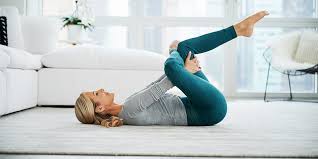
Particularly after extended periods of sitting, the supine figure-4 stretch is a great way to release tension in the hips and glutes. Bend your knees and place your feet flat on the ground while lying on your back. Pull the lower thigh gently toward your chest until the crossed leg’s hip and buttocks feel deeply stretched. This stretch eases lower back pain, increases hip flexibility, and releases tense glute muscles.
Knee-to-Chest Stretch:
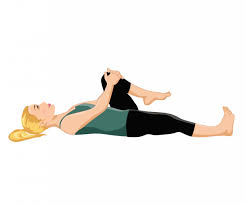
Stretching from knee to chest is a quick and easy way to relieve tension in the glute muscles and lower back caused by extended sitting. Keeping the opposite leg relaxed on the ground, gently raise one knee toward your chest while holding it with both hands.
Feel the relaxation in your buttocks and lower back after holding the stretch for 20 to 30 seconds. Then, switch sides. This exercise helps the hips and lumbar spine become more flexible, less stiff, and have improved circulation.
Glute Bridge:
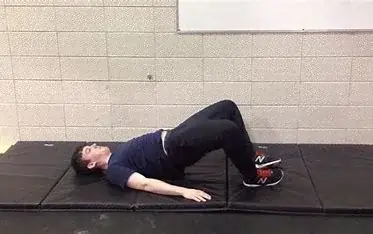
The glute bridge is a potent exercise that relieves pressure and stiffness caused by prolonged sitting while strengthening the glute muscles. As you raise your hips toward the ceiling, contract your core and tighten your glutes until your body is in a straight line from shoulders to knees.
Slowly descend back down after holding for a few seconds at the top. By reversing the consequences of sitting, this exercise strengthens the glutes, increases hip mobility, and promotes improved posture.
Clamshells:
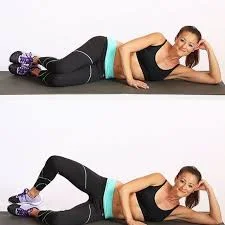
The gluteus medius, a crucial muscle that supports hip stability and balance, can be strengthened and activated using clamshells. This exercise involves lying on your side with your feet together and your knees bent at a 90-degree angle.
Lift your upper knee as high as you can without shifting your pelvis while keeping your feet in contact. Then, carefully bring it back down. Repeat the exercise ten to fifteen times on each side. By enhancing hip strength, alignment, and mobility, clamshells can lessen sitting-related buttock pain.
Straight Leg Raises:
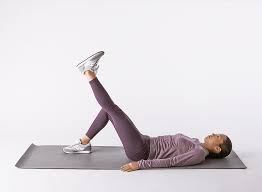
Straight leg raises are a great way to strengthen your lower back, hamstrings, and glutes while also easing the pain of extended sitting. Lay flat on your back with one leg bent and the other extended to execute this motion.
Using your core, steadily raise the outstretched leg to a 45-degree angle while maintaining its straightness. Hold it at the top for a moment, then carefully drop it back down. On each leg, repeat ten to fifteen times.
By strengthening the lower body muscles that frequently deteriorate from sitting, this exercise promotes improved posture, increases hip stability, and increases muscle endurance.
Standing Hip Extension:
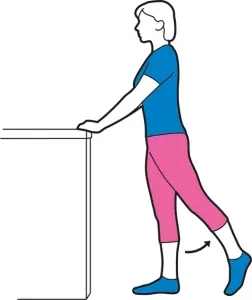
The standing hip extension is a straightforward yet efficient exercise that increases hip mobility and develops the glutes, both of which are critical for reducing sitting-related buttock pain. Hold onto a chair or wall for support while standing tall with your feet hip-width apart.
Slowly stretch one leg backward without arching your lower back while maintaining a straight leg and an engaged core. At the peak of the exercise, squeeze your glutes, then go back to the beginning position. On each leg, repeat ten to fifteen times.
In addition to improving balance and encouraging improved posture during daily tasks, this exercise helps stimulate the glute muscles.
Prone Hip Extension:
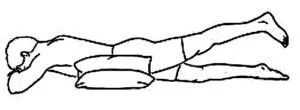
A focused exercise that improves hip flexibility and stability while strengthening the glutes, hamstrings, and lower back is the prone hip extension. To accomplish it, lie face down on a mat with your arms lying under your head or alongside you for support and your legs straight.
Keeping one leg straight, steadily raise it off the ground while using your glutes and core. After a few seconds of holding at the top, carefully drop it back down. On each leg, repeat ten to fifteen times. This exercise improves posture and lessens buttock pain by counteracting the muscle weakening and tension caused by extended sitting.
Conclusion:
Sitting-related buttock pain must be relieved in order to preserve comfort, range of motion, and general spinal health. Simple stretches and strengthening exercises, such as the glute bridge, hip extensions, and supine figure-4 stretch, can effectively relieve tense muscles, increase circulation, and improve posture.
You may avoid stiffness, support stronger glutes and hips, and have more mobility throughout the day by regularly performing these exercises and taking breaks from extended sitting.
FAQs:
How can buttock pain be massaged?
warms the glutes and surrounding muscles first. Find tender trigger points, which are frequently painful to palpate, along a line from the sacrum to the greater trochanter. Apply pressure or cross-fiber friction for 15 to 30 seconds until the pain subsides. Let go, take a break, and repeat.
Which position is ideal for buttock pain?
One of the most effective sleeping positions for Piriformis Syndrome is the back. This is because it equally distributes pressure and preserves the general alignment of your spine. It’s ideal to sleep in this posture with your hips straight and your arms parallel to your side.
Buttock pain is caused by which nerve?
Buttock pain is mostly caused by pressure or irritation on the sciatic nerve, which can result in sciatica. This may occur as a result of lower back problems such a herniated disc or when the sciatic nerve is pinched by a tight or irritated piriformis muscle.
When is pain in the buttocks serious?
Buttock pain can be caused by a variety of illnesses, including infections and small muscular strains. While the majority of these ailments are not life-threatening, some call for a doctor’s appointment. If the pain persists, worsens, or you also have symptoms like numbness or weakness in your leg, schedule an appointment.
What are the warning signs of buttock pain?
If buttock pain is accompanied by one or more of the following red-flag symptoms and/or indicators, it is best to see a doctor: numbness and soreness in the groin. either a strong, scorching, shooting feeling in the groin area or a dull pain. Additionally, some people may have numbness, which makes sitting challenging.
Which workouts should I stay away from if I have buttock pain?
If you have sciatica, stay away from high-impact activities like sprinting, leaping, crouching, and twisting. Some people’s symptoms may get worse when they bend forward with straight legs or elevate both legs off the ground during sitting or lying exercises.
Buttock pain is treated by what kind of physician?
A neurologist (a physician who specializes in the brain and nerve system) or an orthopedist (a physician who specializes in the muscles and skeleton) can assist you in receiving a precise diagnosis and a personalized treatment plan.
Buttock pain is caused by which vitamin deficiency?
However, a major factor in sciatic pain and treatment is vitamin deficits in B12, D, and magnesium. This may be the solution if you’ve tried stretches, painkillers, or even therapy and experienced little to no relief. For instance, sciatica symptoms and increased nerve pain are caused by a B12 vitamin deficiency.
What is the most frequent reason why buttocks hurt?
Numerous conditions, such as osteoarthritis, sciatica, piriformis syndrome, sacroiliac joint dysfunction, hamstring tendonitis, trochanteric bursitis, coccydynia, and hemorrhoids, can cause buttock pain.
How can I determine whether the pain I’m feeling is sciatica?
Sciatica pain is characterized by radiating pain, tingling, or numbness that begins in the buttocks or lower back and progresses down one leg. It is frequently described as searing, acute, or electric shock-like. Sitting, standing, or sneezing can worsen the pain, which can also lead to muscle weakness that makes walking challenging.
Which sleeping posture is ideal for sciatica sufferers?
Supporting your spine to lessen strain on the sciatic nerve is one of the greatest sleeping positions for sciatica. Try sleeping on your side with a pillow between your knees or on your back with a pillow beneath your knees. Your neck and lower back may be strained if you sleep on your stomach.
What causes my buttocks to hurt when I sit?
Long-term strain on the sitting bones, muscular imbalances from inactivity, or nerve compression like piriformis syndrome can all cause your butt to pain when you sit. Bursitis, bruises, or problems with the sacroiliac joint are additional causes. Try taking breaks to walk or stand, adjusting your posture, and gently stretching your hips and glutes to ease the pain.
How may buttock pain be relieved?
Try self-care techniques like relaxation, alternating heat and cold therapy, and mild exercises to increase blood flow and mobility to relieve buttock pain. Improving posture, taking over-the-counter (OTC) painkillers such NSAIDs, and using a cushion to ease pressure can all be beneficial. See a doctor if your pain doesn’t go away or gets worse. They might suggest physical therapy, injections, or other therapies.
What is the duration of buttock pain?
With rest and basic therapies, the majority of episodes disappear in a few days or weeks. However, if the pain was caused by an injury or if the symptoms persist for longer than a few weeks, consult your healthcare professional.
What is the reason of sciatica buttock pain during pregnancy?
Pregnancy can induce sciatica pain because the sciatic nerve is compressed by the mother’s growing uterus. Pain, discomfort, and inflammation may result from that pressure. Later in pregnancy, when the baby grows and puts more weight on the nerve, sciatica is more likely to develop.
References:
- Ames, H. (2025, January 6). What causes buttock pain when sitting? https://www.medicalnewstoday.com/articles/pain-in-bottom-when-sitting
- Watson, S. (2024, June 13). What’s causing this pain in my buttocks? Healthline. https://www.healthline.com/health/pain-in-buttocks
- Healthy Bodies Physiotherapy. (2022, January 14). Buttock pain when sitting. Physiotherapy Services Cheltenham. https://www.healthybodiesphysiotherapy.com.au/buttock-pain-when-sitting/
- Hip and buttock pain physiotherapy :: East Cheshire NHS Trust. (n.d.). https://services.eastcheshire.nhs.uk/physiotherapy/self-help/shoulder-pain-physiotherapy-2
- Dumain, T. (2023, June 2). How to relieve buttock pain: 7 exercises to try. CreakyJoints. https://creakyjoints.org/diet-exercise/buttock-pain-exercises/