Flutter Kicks Exercise
What Are Flutter Kicks?
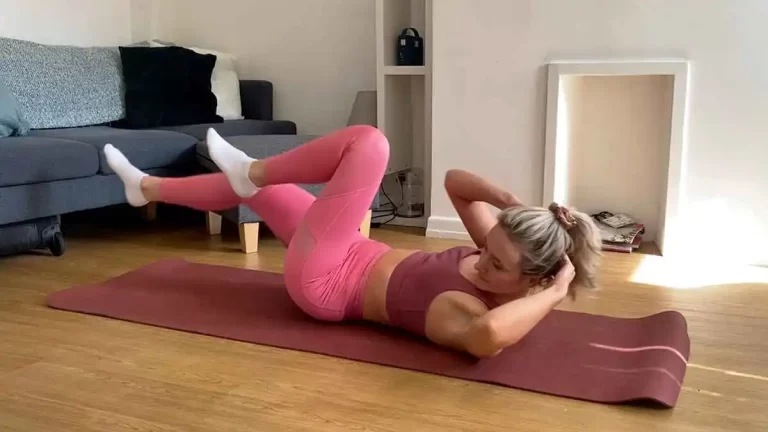
A rhythmic leg-lifting exercise, flutter kicks involve alternately raising and lowering your legs while maintaining a strong core. This exercise is a great option for developing lower-body muscle strength and endurance because it targets the lower abdominal muscles, hip flexors, quadriceps, and glutes while you are resting on your back.
Flutter kicks provide dynamic tension, which keeps your core active throughout and increases muscular endurance and posture, unlike crunches or leg lifts.
What Muscles Do Flutter Kicks Work?
The primary goal of flutter kicks is to improve core strength and leg mobility. Here are the basic and secondary muscles used:
- Primary muscles worked are the lower abs, hip flexors, and quads.
- Secondary muscles worked include the obliques (side abs), hamstrings, and lower back.
Perfect Your Form
patient can avoid back strain by performing flutter kicks with proper technique. Flutter kicks are less helpful for strengthening abs if performed incorrectly.
Here are five important tips:
- Maintain Neck Neutrality: Make sure your neck and spine are aligned and straight.
- Hand Position: Place the patient’s palms flat against the ground and beneath your glutes. This position will relieve lower back muscle pain and allow you to push through your maneuver.
- Keep Your Core Active: Brace your core and tuck it in to keep it active. You can also reduce the tension on the patient’s lower back while keeping your workout effective.
- Control Your Movements: To activate and maintain tension in your core muscles, control your upward and downward movements.
- Use a yoga mat. To avoid pain, be sure the patient lies on a yoga mat.
Flutter Kicks Exercise Video
How to do Flutter Kicks?
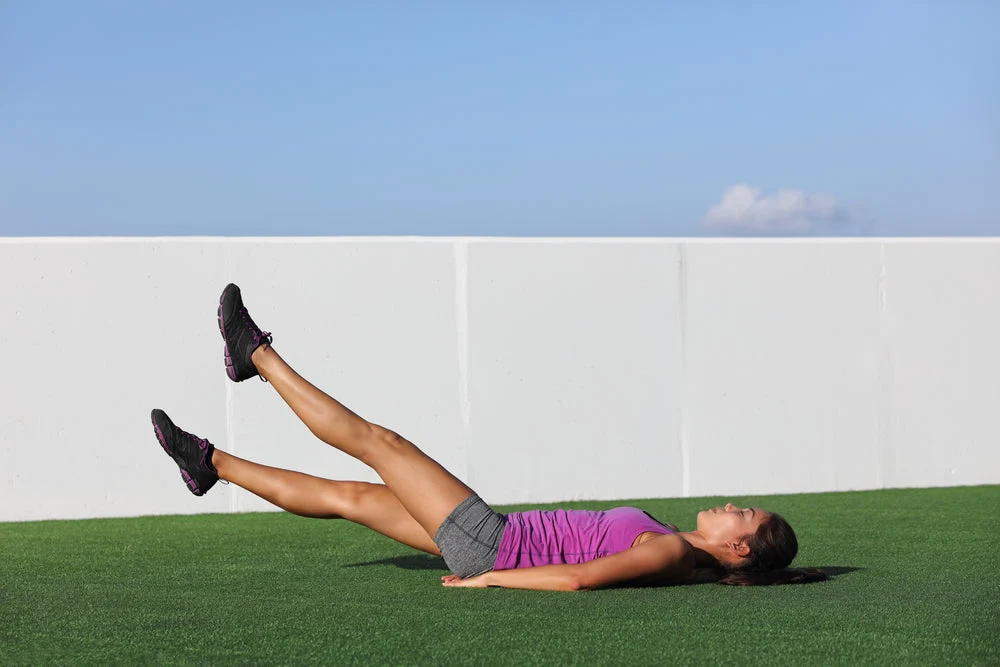
Step 1: Lie flat on your back.
For comfort and support, use a mat. For additional back support, put the patient’s arms behind your glutes or keep them at your sides.
Step 2: Use Your Core
Raise your shoulders off the ground a little. Maintain a solid lower back position on the mat.
Step 3: Lift Both Legs
Raise the patient’s legs four to six inches off the ground. Toes should be pointed, and legs should be straight.
Step 4: Change Up Your Leg Motion
In a fluttering motion, raise one leg while lowering the other. Move quickly, gently, and with little bouncing.
Step 5: Continue to Breathe
Throughout, breathe in and breathe out in a rhythmic manner. Holding the patient’s breath puts excessive pressure on your body.
Step 6: Repeat for Reps or Time
Start with 20–30 seconds or 15–20 repetitions each leg. Gradually increase intensity as your muscle strength develops.
The Benefits of Flutter Kicks
Strengthening Your Core
Flutter kicks work several core muscle groups. This exercise strengthens your upper abs and flexors as well as your lower abs, which are among the hardest to target. You can lift bigger weights and perform other workouts more easily with a stronger core.
Use these at-home ab exercises to achieve your ideal six-pack abs.
Increasing Muscle Stability and Balance
This exercise helps patients develop overall stability and balance by strengthening weak muscles in the body. Flutter kicks make it easier for you to perform regular responsibilities.
These ten stability ball exercises can help you become more balanced overall.
Increasing Muscle Endurance
Flutter kicks help your body improve agility and muscle endurance in addition to strength. Muscular endurance allows you to increase both your general flexibility and stamina. Additionally, you may teach your body to tolerate intense physical activity connected to sports or daily life.
Incorporate Hyrox exercises into the patient’s functional and endurance training.
Supporting Lower Back
This workout improves the patient’s lower body muscles since it works your hip flexors and lower back muscles. As a result, you may engage in regular activities like jogging, walking, and even standing without experiencing any additional pressure. This exercise not only corrects your posture but also protects against future health risks like sciatica and lower back pain.
Increasing the Burn of Calories
Because flutter kicks require a lot of movement, they are both a bodyweight ab workout and a component of aerobic conditioning. This implies that you’re burning calories, which results in fat and weight loss, in addition to toning your abs.
Common Flutter Kick Mistakes To Avoid
Arching Your Back
According to Matheny, your lower back should ideally be forced up against the ground. He suggested visualizing your butt tucked in or your belly button pushed into your spine.
Your pelvis will shift toward a more neutral posture if you consider tucking your butt, according to Matheny. Pull your ribs down and tuck your butt. It involves flattening your back on the ground and removing the bend from your spine.
Slide your hand beneath your lower back to easily determine whether you’re arching your back. You could be putting yourself at risk for injury if you can move your hand all the way across your back.
Not Engaging Your Abs
To get the most out of flutter kicks and lower your chance of damage, it’s essential to contract your abs, according to Matheny.
Keeping Tension in Your Neck
You will want to maintain a “neutral spine” while doing flutter kicks exercise, Matheny said. Meaning, your neck shouldn’t be arched.
Going For Too Long
In theory, you may perform flutter kicks for as long as you can keep proper form, although Matheny stated that sets of 30 to 60 seconds aren’t actually necessary.
- Keep your back straight on the mat at all times when arching your lower back.
- Using momentum: Make careful, controlled kicks.
- Holding your breath: To prevent stress and exhaustion, breathe steadily.
- Bending the knees: For maximum stress, keep your legs as straight as you can.
- Raising the patient’s legs too high: To engage your lower core, stay low.
Conclusion
Despite their apparent simplicity, flutter kicks provide significant aerobic, strength, and shaping advantages, particularly for your legs and lower abdomen. Therefore, this powerful exercise should be a part of your routine no matter your level of experience.
The finest aspect? No instrument, no justifications—you can do it anywhere. To achieve a stronger, more defined lower body, get down on that mat, activate your core, and flutter.
FAQs
What happens if you practice flutter kicks exercise every day?
Flutter kicks exercise in your workout will help you strengthen your core muscles and increase hip flexibility while maintaining good spinal alignment. By concentrating on method and safety, you may optimize the advantages while lowering your chance of harm.
What are some common flutter kick mistakes?
Kicking from the knee is one of the most common flutter kicking mistakes. Prone flutter kicking maintains the appropriate straight-leg technique of flutter kicking while also strengthening your abdominals and hip flexors.
What are the advantages of flutter kicking?
Flutter kicks in your exercise enhance core strength, endurance, and flexibility. And, by focusing on the abdominal muscles, it can help you lose weight because the activity strengthens your muscles and burns calories.
Why are my hips hurting when I practice flutter kicks?
Many people who have a hip flexor strain may experience severe pain when they conduct rapid or explosive actions like kicking or sprinting. This can happen when the patient elevates the leg into hip flexion or moves the leg behind them into hip extension.
How should your legs look during a flutter kick?
Many swimmers like to bend their knees when kicking, but maintaining those legs long and straight and pushing the water backward makes a significant difference. The aim is tiny, rapid kicks that go up and down from the hips rather than the knees.
References
- How to do flutter kicks: form, muscles worked & techniques. (n.d.). SQUATWOLF. https://squatwolf.com/blogs/fitness/how-to-do-flutter-kicks-correctly
- Dr.Pooja Rajput. (2026). Flutter Kicks Exercise -Benefits, Form, and Variations. Mobile Physiotherapy Clinic. https://mobilephysiotherapyclinic.in/flutter-kicks-exercise/
- Soumita Basu B.Pharma(Ayurveda). (2025). Netmeds. Netmeds. https://www.netmeds.com/c/health-library/post/flutter-kicks-exercise-benefits-variations-and-proper-form-for-lower-abs-and-core-strength?srsltid=AfmBOoquTUKhSteML_Vfm4IWqSjqKjRtyMVGNUPIZeRwXpJZvLMajRxJ
- (2022). Flutter Kicks: What Are They and What Muscles Do They Use?. Nike.com. https://www.nike.com/a/what-are-flutter-kicks